Klejner are a traditional Danish Christmas pastry, usually handed out during December: a sweet dough of flour, sugar, fat, eggs and cream, cut into diamonds, twisted through a slit in the middle and deep-fried until golden. You can buy klejner as a biscuit in Danish supermarkets, but the homemade version is the one this recipe makes.
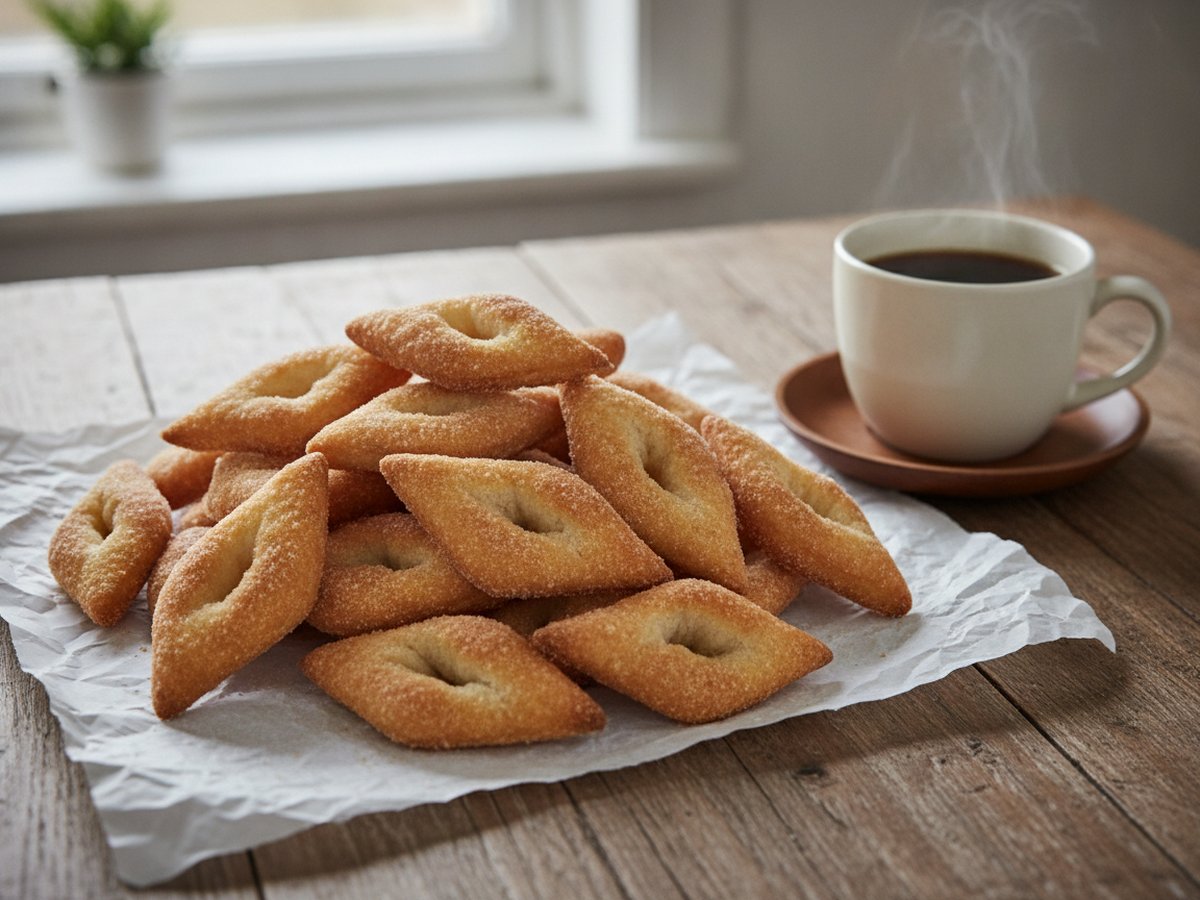
Last updated
Recipe
Klejner Recipe – A Delicious Traditional Danish Christmas Pastry
Ingredients
Method
- Mix flour, sugar and baker's ammonia (hjortetakssalt).
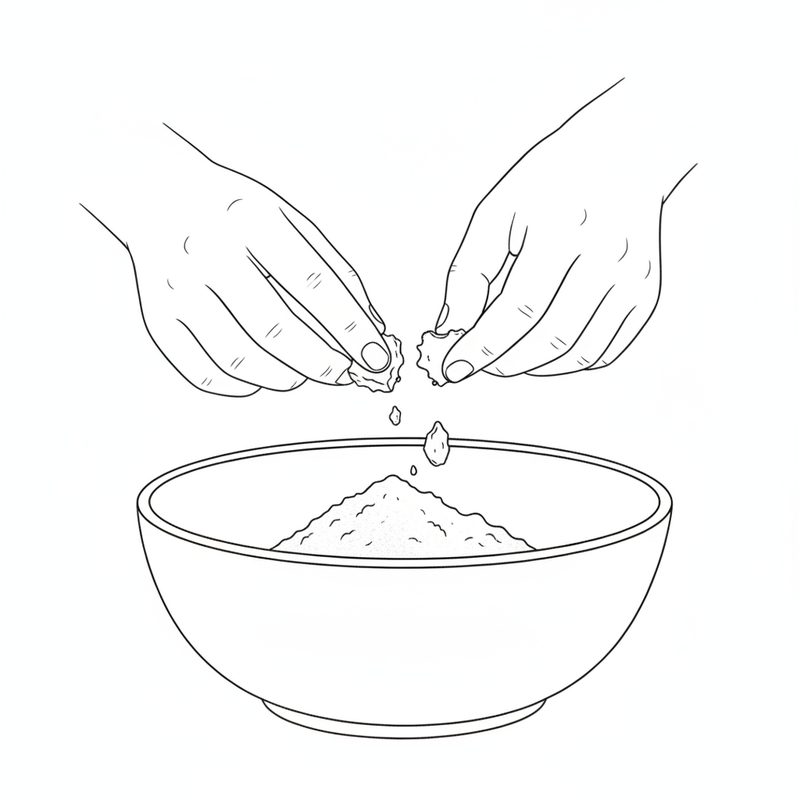
- Crumble the margarine into the mixture.
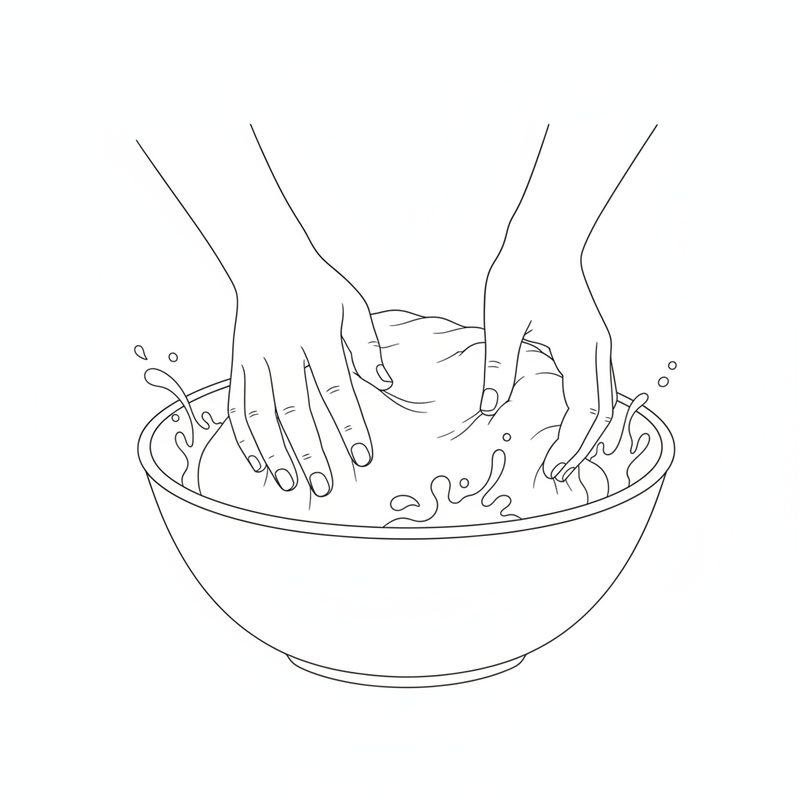
- Add eggs and cream, and knead it all well together.
- Put the dough in the fridge for an hour.
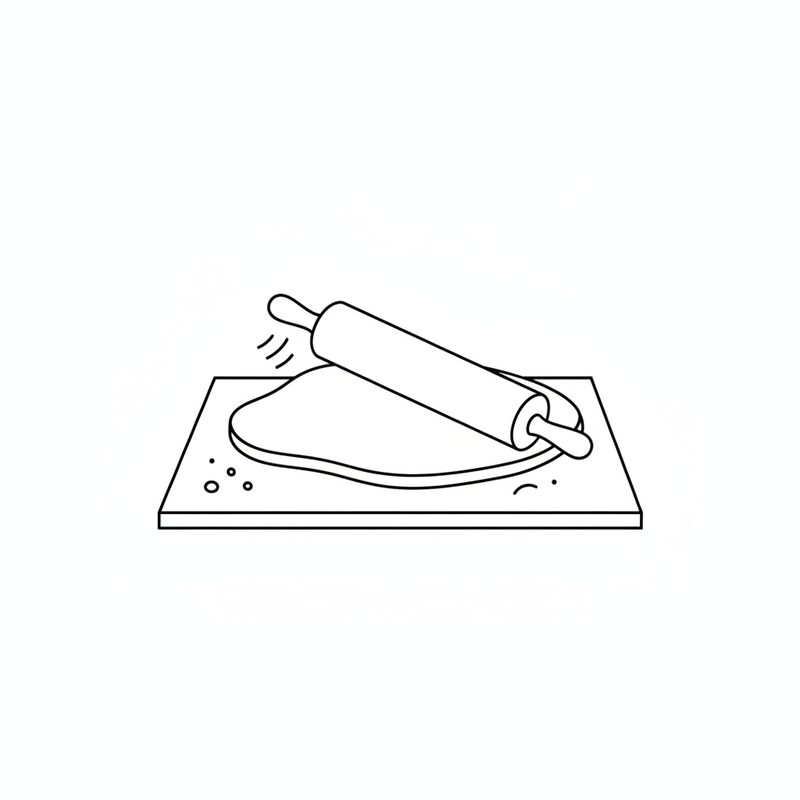
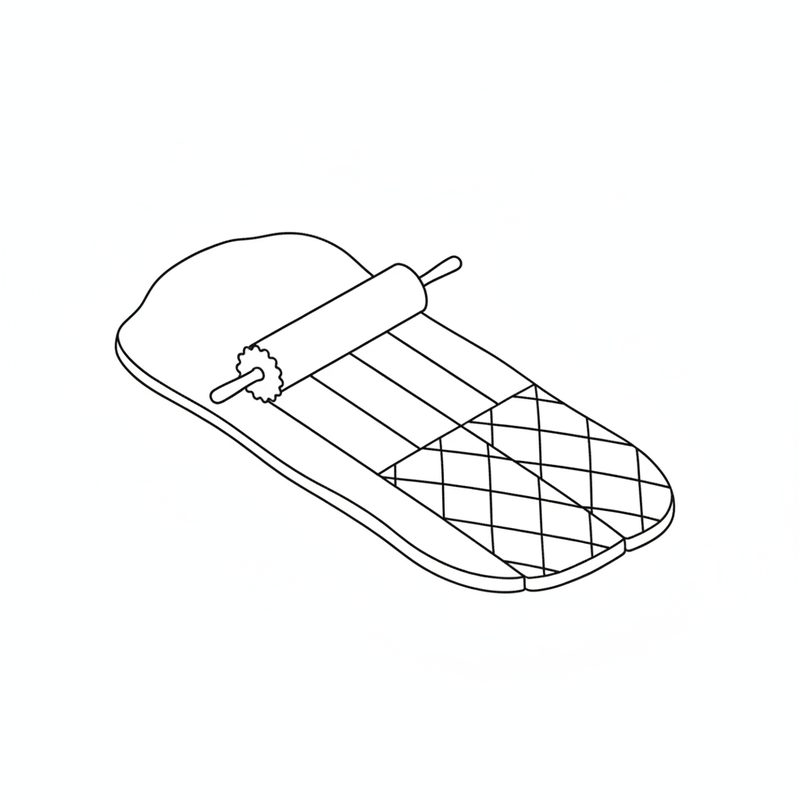
- Roll out the dough into approx. ½ cm thick.
- Cut it lengthwise into approx. 3 cm wide strips – preferably with a fluted pastry wheel.
- Cut the strips diagonally across so that they have a length of approx. 8 cm.
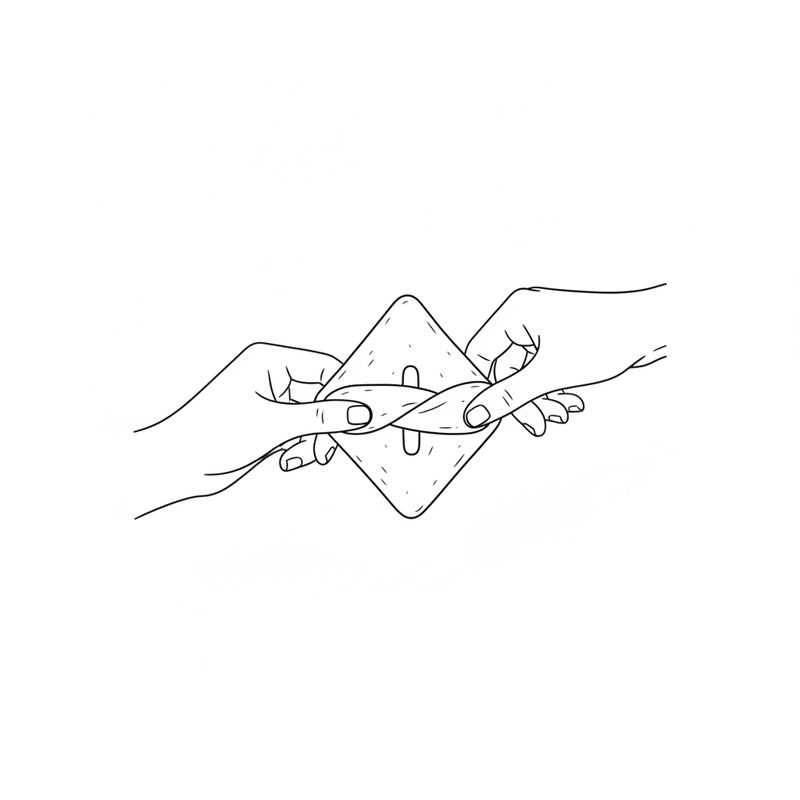
- Cut a small incision in the middle of each klejne and pull one tip through the cut so that the klejne gets its characteristic shape.
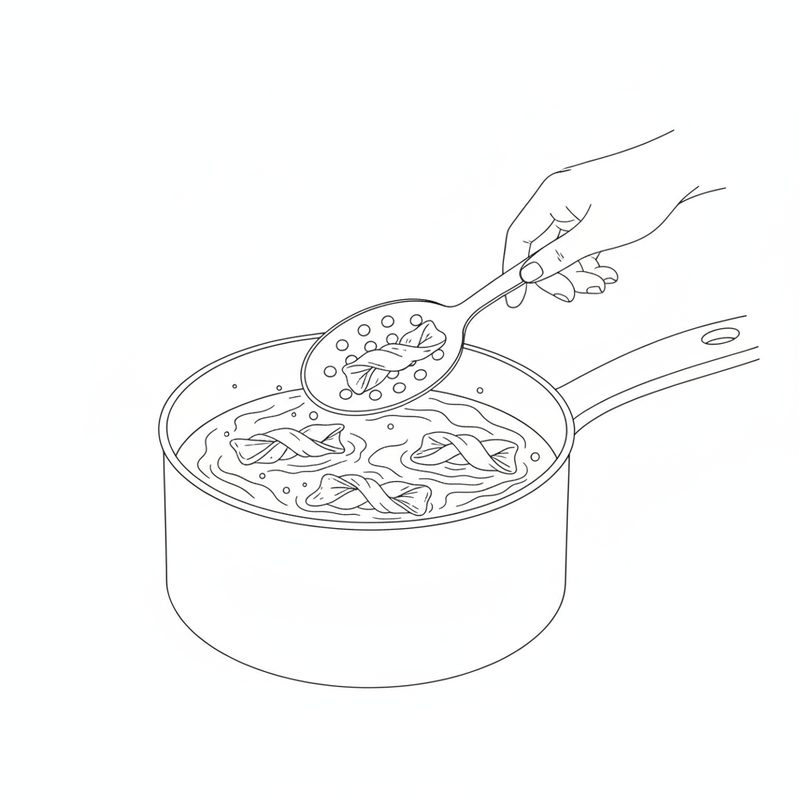
- Heat the Palmin in a saucepan over even heat. You only need to fill the pot half full with Palmin.
- Carefully add 2-3 klejner to the melted Palmin and fry them until golden – turn them a few times along the way. If the klejner do not rise quickly to the surface, your Palmin is too cold.
- Pick up the klejner, place them on greaseproof paper, and repeat the procedure until all the klejner are fried.
Step by step, in pictures
The six moves that matter, from crumbling the fat into the flour to frying the twisted diamonds.
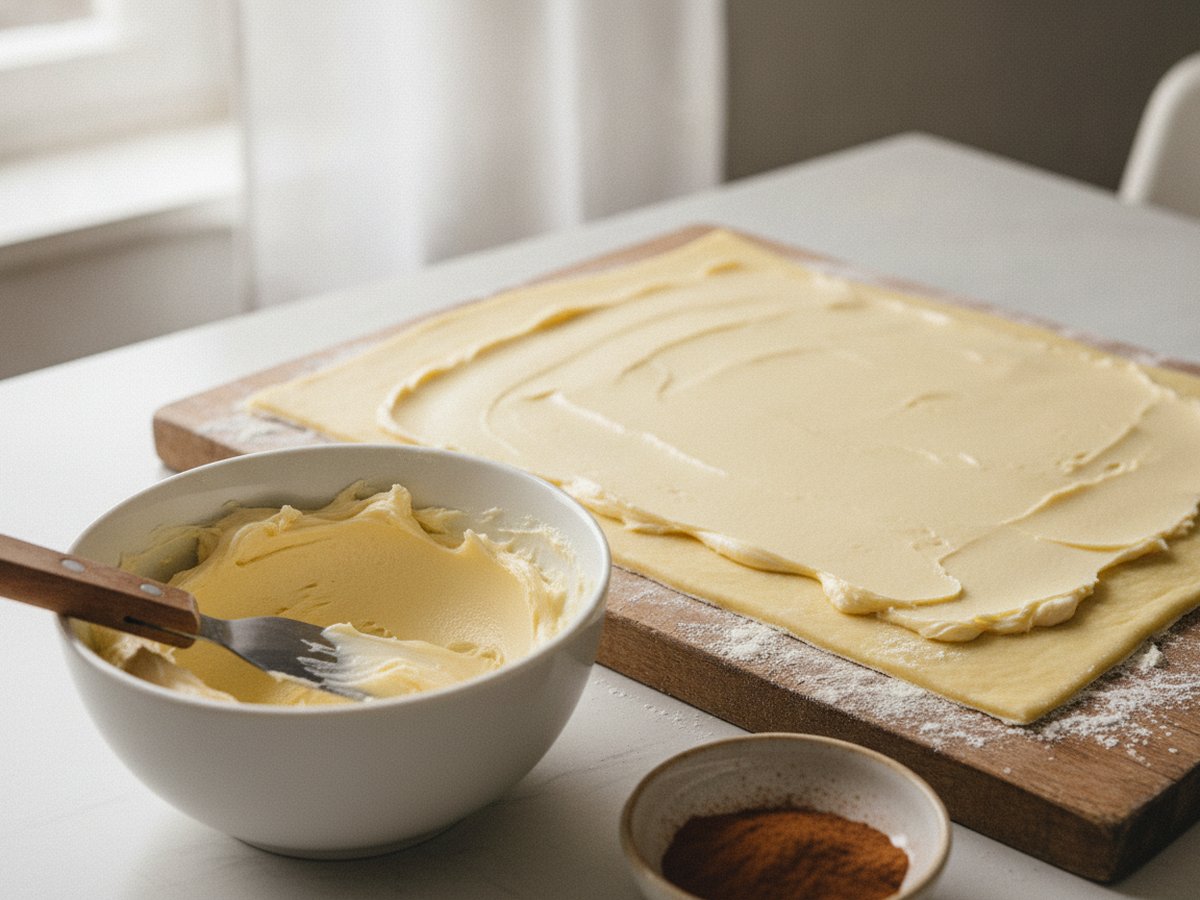
 Crumble the fat into the flour
- Knead in eggs and cream
- Roll the chilled dough ½ cm thick
- Cut strips, then diamonds
- Pull a tip through the slit
- Fry 2-3 at a time until golden
They are eaten on their own, most often with coffee or tea, and some cooks dust them with powdered sugar for a little extra sweetness. They are generally served fresh, while still slightly warm.
What temperature to fry klejner at
Heat the frying fat or oil to 175-180 °C (about 350 °F). That is the range most Danish klejner recipes give: Dr. Oetker and Nordic Food Living say 180 °C, Retromad 175-180 °C and Denmark.dk 175 °C. A kitchen thermometer clipped to the pan shows when the fat is hot enough.
Without a thermometer, use the test in the recipe card: a klejne dropped into the fat should rise quickly to the surface. If it sinks and sits, the fat is too cold and the pastry soaks it up. Fry only 2-3 at a time so the temperature does not drop, and turn them so both sides turn golden. Danish klejner recipes such as Denmark.dk’s and Valdemarsro’s give about a minute per batch. They are done when both sides are golden. Lift them out and drain them on greaseproof paper while the next piece of dough goes into the hot fat.
The recipe fries in Palmin, a solid coconut fat sold in Danish supermarkets. Some Danish recipes, such as Retromad’s, fry in lard (svinefedt) instead. Outside Denmark a neutral oil for frying works: Adamant Kitchen suggests neutral frying oil as the alternative to Palmin, and Nordic Food Living fries in sunflower oil heated to about 180 °C. As the card says, fill the saucepan only half full with fat or oil.
What is hjortetakssalt, and can you use baking powder?
Hjortetakssalt is baker’s ammonia, the traditional raising agent in klejner. The method calls it by its literal translation, “deer antler salt”. Valdemarsro says it is what gives klejner their particular crispness, which is why it is hard to replace.
Baking powder works as a substitute, but Denmark.dk notes the result will not be quite the same. Denmark.dk also warns that too much hjortetakssalt can leave the pastry smelling of ammonia, so measure it rather than guessing. This card uses ½ teaspoon for 500 g of flour, the same as Dansukker’s recipe; other Danish recipes, such as Oetker’s and Femina’s, use up to 1 teaspoon.
How to shape and twist klejner
The twist is what makes a klejne. Let the dough rest in the fridge for an hour, then roll the dough about ½ cm thick on a large, lightly floured work surface. Cut the dough into strips about 3 cm wide with a fluted pastry wheel, which gives the classic ridged edge, or a sharp knife. Cut the strips diagonally into diamonds about 8 cm long.
Make a short slit in the middle of each piece. Denmark.dk makes it about 2 cm long. Pull one pointed tip through the hole and out the other side. Twisting the dough this way turns it over on itself and forms the knot.
How long do klejner keep?
Let klejner cool completely, then store them in an airtight tin. Arla puts their keeping time at about a week in a cake tin, and Min Mad Opskrift notes that they start to dry out after a week.
Variations: butter, cardamom, lemon and cognac
- Butter instead of margarine. Most Danish recipes, including Oetker’s, Femina’s and Valdemarsro’s, use butter (smør) where this card uses margarine. Crumble cold butter into the flour mixture the same way.
- Cardamom or cinnamon. Danish encyclopedia Lex.dk says klejner have been spiced with cardamom or cinnamon since the mid-1800s. Ground cardamom is the more common choice today. To use it, add cardamom to the flour and sugar mixture before the fat goes in.
- Lemon. Grated lemon zest appears in many modern Danish versions, including Oetker’s, Retromad’s and Femina’s.
- Cognac. Arla’s klejner add a spoonful of cognac to the dough.
Where klejner come from
Klejner are one of the oldest Danish Christmas bakes, but they are not Danish in origin. Danish Wikipedia traces the name to the Low German kleinet. Videnskab.dk points to a 1500s list from Bishop Hans Brask’s household as the earliest Danish record of them.
The same fried twist is made across Scandinavia. In Norway it is called fattigmann, and in English it often goes by Danish fried twists or Danish fried cookies.
More Danish Christmas recipes
For more Danish Christmas baking and cooking on this site: Bake pebernødder, the small spiced Christmas cookies, or finish the Christmas meal with ris a la mande. On the savoury side, Danish rødkål is braised red cabbage, and kanelsnegle are Danish cinnamon rolls.