Understanding cooking measurements is essential for any home cook, and one of the most commonly asked questions is how many tablespoons are in a 1/4 cup. Whether you’re following a recipe or creating your own, precise measurements are key to achieving the desired results in the kitchen. In this section, we will explore the conversion process from cups to tablespoons and provide you with an easy-to-follow guide on how to accurately measure ingredients.
So, how many tablespoons are in a 1/4 cup? The answer is simple: there are 4 tablespoons in a 1/4 cup. This measurement is important to know as many recipes call for ingredients to be measured in tablespoons or cups.
To make the conversion from cups to tablespoons, keep in mind that one metric cup is equivalent to 16 tablespoons. Similarly, if you want to convert tablespoons to cups, simply divide the number of tablespoons by 16 to get the corresponding customary cup measurement.
Key Takeaways:
- There are 4 tablespoons in a 1/4 cup.
- One cup is equivalent to 16 tablespoons.
- Accurate measurements are crucial for successful cooking.
- Knowing how to convert between cups and tablespoons is essential in the kitchen.
- Measuring tools, such as cups, metric cup and spoons, should be used for precise measurements.
Understanding Cooking Measurements
Before getting into the specifics of tablespoons in a 1/4 cup, it’s important to have a solid understanding of cooking measurements. There are two main units of measurement used in cooking: cups and metric tablespoon.
Cups are typically used for larger quantities, such as flour or sugar, while tablespoons are used for smaller measurements, such as spices or extracts.
It’s also important to note that there are different sizes of measuring cups and tablespoons. The most common sizes for measuring cups are 1 cup, 1/2 cup, 1/3 cup, and 1/4 cup or quarter cup, while tablespoons are typically measured in 1 tablespoon, 1/2 tablespoon, and 1/4 tablespoon.
To accurately measure your ingredients, it’s crucial to use the correct measuring tool for the specific ingredient. For example, measuring quarter cup of flour using a metric tablespoon will result in an inaccurate measurement and potentially throw off the entire recipe.
Here’s a helpful table for converting between measuring cups and tablespoons:
| Measuring Cup | Tablespoons |
|---|---|
| 1/4 cup | 4 tablespoons |
| 1/3 cup | 5 1/3 tablespoons |
| 1/2 cup | 8 tablespoons |
| 1 cup | 16 tablespoons |
With this knowledge in mind, you can confidently measure your ingredients and ensure your recipes turn out delicious every time.
Converting Cups to Tablespoons – How Many Tablespoons in a 1/4 Cup
Converting cups to tablespoons is a common task in the kitchen, and it’s important to do it accurately to ensure your recipes turn out just right. Here are the steps to follow:
- First, you need to understand the conversion ratio between cups and tablespoons. There are 16 tablespoons in one cup.
- Next, determine how many cups you need to convert into tablespoons. A tablespoon is about 15 milliliters (mL) in the metric system. While a cup is not formally a part of the metric system of measurements, it is based on metric units whereby 4 cups is exactly 1 liter.
- Multiply the number of cups by 16 to get the total number of metric tablespoon.
- Round the final number to the nearest whole or half tablespoon, depending on your recipe’s level of precision.
For example, if you need to convert 3/4 cup of sugar to tablespoons:
“3/4 cup x 16 = 12 tablespoons”
So, 3/4 cup of sugar is equal to 12 tablespoons.
If you’re unsure about your calculation, you can use a conversion calculator to check the conversion from cups to tablespoons.
Table: Cups to Tablespoons Conversion Chart
| Cups | Tablespoons |
|---|---|
| 1/8 | 2 |
| 1/4 | 4 |
| 1/3 | 5 1/3 |
| 1/2 | 8 |
| 2/3 | 10 2/3 |
| 3/4 | 12 |
| 1 | 16 |
On the other hand, if you need to convert tablespoons to cups, you can use the reverse process:
- Understand the conversion ratio between tablespoons and cups. There are 16 tablespoons in one cup.
- Determine the number of tablespoons you need to convert.
- Divide the number of tablespoons by 16 to get the total number of cups.
- Round the final number to the nearest whole or half cup or customary cup.
By following these steps, you can accurately convert between cups and tablespoons and confidently measure out your ingredients for delicious recipes.

The Tablespoon to Cup Ratio
Understanding the relationship between tablespoons and cups is crucial for anyone working in the kitchen. The tablespoon to cup ratio is the key to converting between these two common measurements.
One cup contains 16 tablespoons. This means that one tablespoon is equal to 1/16 of a customary cup. It’s important to note that when converting between tablespoons and cups, precision is vital. Even small errors in measurement can significantly impact your recipe’s outcome. There is a slight difference in the conversion for ¼ imperial cups. Despite being derived from the metric system, metric cups do not belong to the modern metric system
Here is a helpful table to visualize the tablespoon to cup ratio:
| Tablespoons | Cups |
|---|---|
| 1 | 1/16 |
| 2 | 1/8 |
| 3 | 3/16 |
| 4 | 1/4 |
| 5 | 5/16 |
| 6 | 3/8 |
| 7 | 7/16 |
| 8 | 1/2 |
| 9 | 9/16 |
| 10 | 5/8 |
| 11 | 11/16 |
| 12 | 3/4 |
| 13 | 13/16 |
| 14 | 7/8 |
| 15 | 15/16 |
| 16 | 1 |
Referencing this table can help ensure accurate conversions between tablespoons and cups for all your cooking needs.
How Many Tablespoons in 1/4 Cup
If you’re wondering how many tablespoons there are in a 1/4 customary cup, the answer is 4 tablespoons. This measurement is essential in cooking and baking and can be easily converted from cups to tablespoons. To make this conversion, simply multiply the number of cups by 16, which will give you the number of tablespoons. If you need to convert ¼ cup into the metric system of measurement, it is equal to about 59 milliliters .
For a quick reference, here’s a helpful table showcasing common conversions between cups and tablespoons:
| Cups | Tablespoons |
|---|---|
| 1/8 | 2 |
| 1/4 | 4 |
| 1/3 | 5 1/3 |
| 1/2 | 8 |
| 2/3 | 10 2/3 |
| 3/4 | 12 |
| 1 | 16 |
It’s important to note that measuring accurately is key to successful cooking and baking. Utilizing a metric cup or spoon ensures that you’re using the precise amount of ingredients, leading to consistent and delicious results.
Next, we’ll take a look at the differences between measuring cups and tablespoons and why having both tools on hand is essential.
Measuring Cups vs. Tablespoons
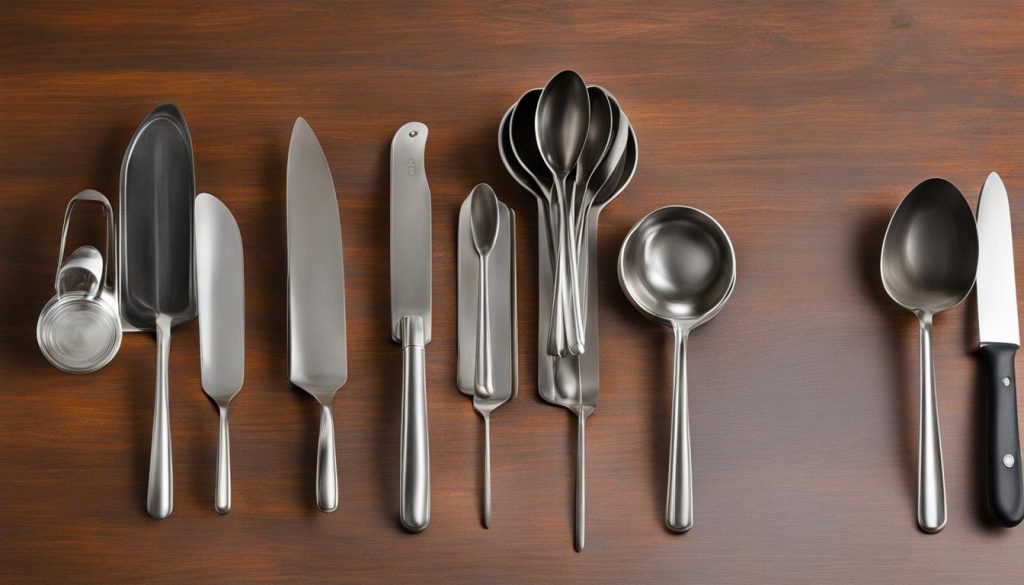
Measuring cups and tablespoons are both essential tools in the kitchen, but they serve different purposes. Measuring cups are used for measuring volume, while measuring spoons, such as tablespoons, are used for more precise measurements of smaller amounts.
For example, measuring cups are great for measuring liquids like milk or water, but not as accurate for measuring dry ingredients like flour or sugar. Measuring spoons, on the other hand, are perfect for measuring small amounts of dry ingredients or liquid ingredients like vanilla extract.
Having both measuring cups and spoons allows for accurate measurements for any recipe, whether it’s a tablespoon of cinnamon for your favorite waffle recipe or a customary cup of milk for your morning coffee.
Now that we’ve explored the differences between measuring cups and tablespoons, let’s take a look at some helpful tips for correct measurements.
Tips for Accurate Measurements
- Use the appropriate measuring tool for the ingredient you’re measuring.
- Make sure your measuring cups and spoons are clean and dry before using them.
- Ensure that the ingredient is level with the top of the customary cup, measuring cup or spoon for correct measurements.
- Avoid “eyeballing” measurements and always measure precisely for consistent results.
With these tips in mind, you can confidently measure out ingredients and create delicious meals and desserts every time.
Measuring Cups vs. Tablespoons
Measuring cups and tablespoons are both crucial tools for correct measurements in the kitchen. While measuring cups are used to measure large quantities of liquid or dry ingredients, tablespoons are used for smaller amounts. Understanding the difference between the two is essential for precision cooking.
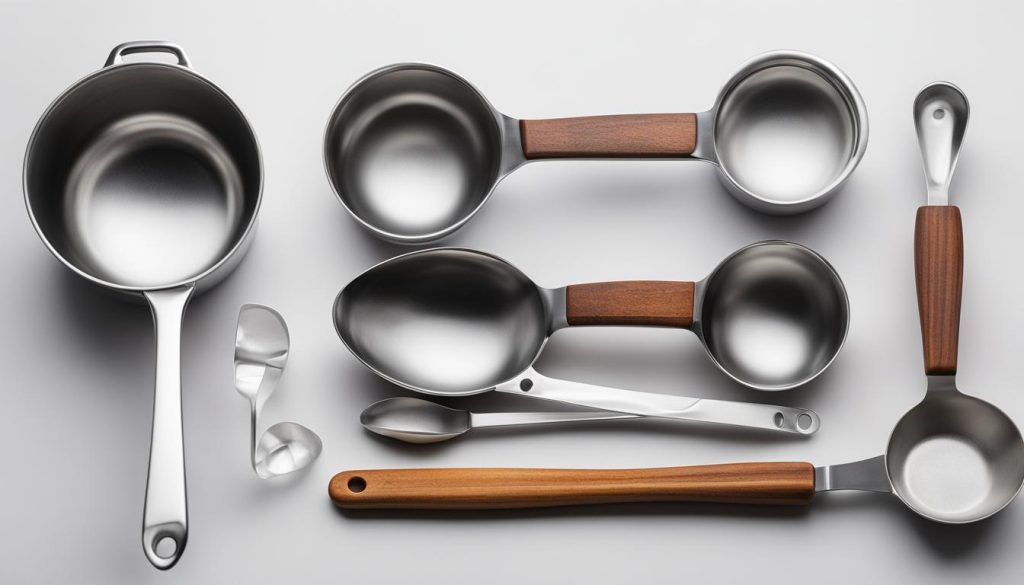
Measuring cups typically come in sets of four – 1 cup, 1/2 cup, 1/3 cup, and quarter cup. Each cup is marked with graduated lines to indicate the quantity when filled. Tablespoons, on the other hand, are smaller and more precise, commonly used to measure teaspoons and tablespoons. A standard set of measuring spoons includes 1 tablespoon, 1 teaspoon, 1/2 teaspoon, and 1/4 teaspoon. One-fourth cup is a quarter of one cup and is equal to 2 fluid ounces. 1 Imperial cup is 9.61 US fluid ounces but it is 10 imperial fluid ounces.
When measuring with cups or spoons, it’s important to note that the correct technique can affect the accuracy of your measurements. To measure dry ingredients with measuring cups, use a spoon to scoop the ingredient into the cup until it’s overflowing, then level off the top with a knife or flat edge. For liquids, pour the liquid into the cup until it reaches the appropriate line. When measuring with spoons, use the spoon to scoop the ingredient, then level off the top with a knife or flat edge.
Cups vs. Tablespoons Conversion Chart
| Cups | Tablespoons |
|---|---|
| 1/4 | 4 |
| 1/3 | 5 1/3 |
| 1/2 | 8 |
| 1 | 16 |
While measuring cups and tablespoons serve different purposes in the kitchen, having both tools on hand is critical for accuracy. Understanding how to convert between the two is essential for precise measuring and successful recipes.
Other Common Conversions – How Many Tablespoons in a 1/4 Cup
Aside from the conversion from 1/4 cup to tablespoons, there are many other common cooking conversions that you may come across. Whether you need to convert teaspoons to tablespoons or ounces to cups, a conversion calculator can be a valuable tool in the kitchen. Here is a handy calculator to convert quarter cup to tablespoons:
1/4 Cup = Tablespoons
When using a conversion calculator, it’s important to double-check your results to ensure accuracy. Additionally, it’s helpful to have a basic understanding of the conversion process, as this can come in handy if you don’t have access to a calculator. Remember, measuring accurately is key to successful cooking, so don’t be afraid to take the extra time to ensure your measurements are correct.
Tips for Accurate Measurements
Exact measurements are key to successful cooking. Even minor variations can greatly impact the taste and texture of your dish. Here are some tips to ensure your cooking measurements are accurate:
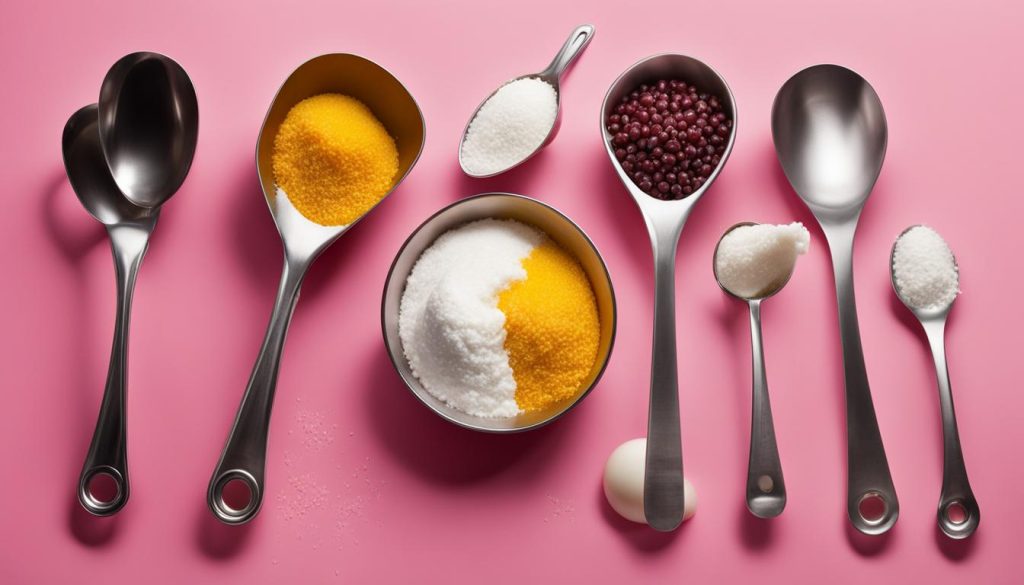
- Use the right tools: Measuring cups and spoons are essential for precise measurements. Make sure to use the correct size for each ingredient. For liquids, use a liquid measuring cup with clear markings.
- Level off dry ingredients: When measuring dry ingredients like flour and sugar, use a flat tool, such as the back of a knife, to level off the top and ensure an accurate measurement.
- Measure at eye level: When measuring liquids, place the measuring cup on a level surface and check the measurement at eye level for precise results.
- Don’t crowd the measuring cup: When measuring ingredients like brown sugar, spoon it into the metric cup and pack it down gently with your fingers. Avoid overpacking or crowding the cup, as this can throw off your measurements.
- Double-check measurements: Before adding an ingredient to your recipe, double-check the measurement to ensure it’s accurate. This will prevent any errors and save you from having to start over.
By following these tips, you can ensure your cooking measurements are precise and accurate, helping you achieve consistent and delicious results in the kitchen.
Converting Tablespoons to Cups
Converting tablespoons to cups is a common task in the kitchen, especially when working with small quantities of ingredients. Luckily, the conversion process is straightforward and simple.
There are 16 tablespoons in a cup, so to convert any amount of tablespoons to cups, you just need to divide the number of tablespoons by 16. For example, if a recipe calls for 8 tablespoons of flour and you want to know how many cups that is, you would divide 8 by 16, resulting in 0.5 metric cups of flour. An imperial cup holds 10 imperial fluid ounces instead of 9.61 US fluid ounces.
Here is a helpful table for converting common tablespoon amounts to cups:
| Tablespoons | Cups |
|---|---|
| 1 | 1/16 |
| 2 | 1/8 |
| 3 | 3/16 |
| 4 | 1/4 |
| 5 | 5/16 |
| 6 | 3/8 |
| 7 | 7/16 |
| 8 | 1/2 |
| 9 | 9/16 |
| 10 | 5/8 |
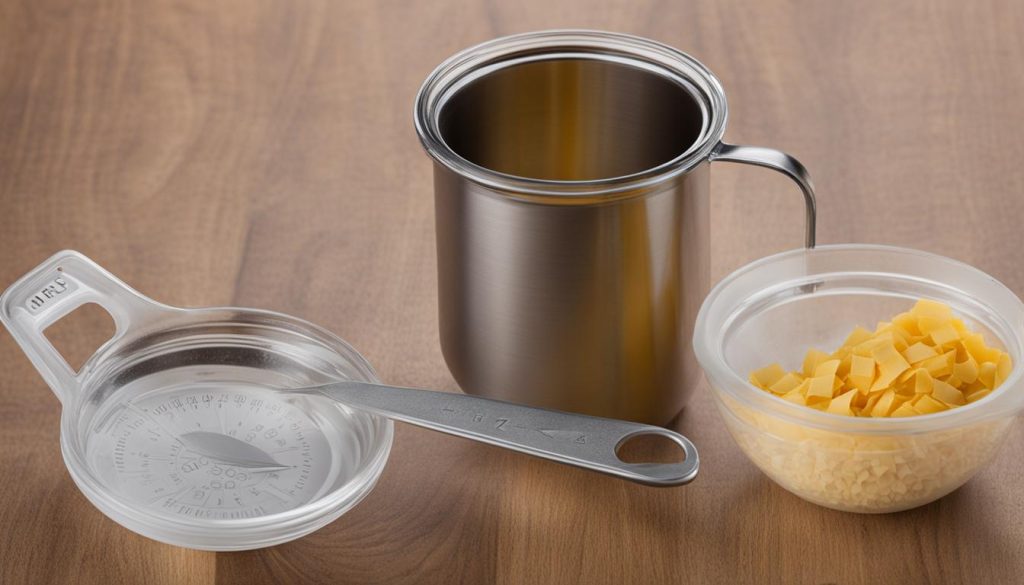
It’s worth noting that measuring tablespoons can vary slightly depending on the brand or type of measuring spoon. To ensure the most exact measurements, use the same set of measuring spoons consistently and level off each tablespoon with a straight edge.
Pro Tip: For easy conversions on the go, consider using a tablespoons to cups conversion calculator app on your smartphone or tablet. These apps can quickly and accurately convert any amount of tablespoons to cups, ensuring that your recipes turn out perfectly every time.
Exploring Measurement Variations
When it comes to cooking, precision is key. However, it’s important to note that measurement variations can exist in different regions or even between brands of measuring cups and spoons. These variations can cause confusion for home cooks, but there are ways to account for them.
One common example of measurement variation is the difference between US and metric measurements. In the US, we typically use cups, tablespoons, and teaspoons, while in other countries, metric measurements such as milliliters and grams are more common. If you’re following a recipe from a different region, make sure to convert the measurements before beginning to avoid any confusion or errors.
Another example of measurement variation is the difference between measuring devices from different brands. For example, one brand’s tablespoon may be slightly larger or smaller than another brand’s tablespoon. This can lead to inaccurate measurements if not taken into consideration.
To account for measurement variations, it’s always a good idea to use measuring tools from the same brand, if possible. If you find yourself using tools from different brands, make sure to double-check the measurements and adjust accordingly.accurate measurements
Ultimately, the key to correct measurements is practice. The more you work with different measuring devices and systems, the more confident you’ll become in your ability to convert between them and account for any variations.

Conclusion
In conclusion, we hope that this guide has been helpful in answering the question of how many tablespoons are in one fourth cup. Understanding cooking measurements and being able to accurately convert between cups and tablespoons is an essential skill for any home cook. By using accurate measuring tools and following our step-by-step guide, you can ensure that your recipes will turn out perfectly every time.
Remember to keep in mind the differences between measuring cups and tablespoons, and to be aware of any measurement variations that exist between brands or regions. With these tips in mind, you can confidently navigate conversions and achieve consistent and delicious results in the kitchen.
Tips and Tricks
Here are some additional tips and tricks to keep in mind when working with cooking measurements and liquid measurements:
- Always use level measurements, rather than heaping or rounded measurements
- Double-check your conversions, especially when working with larger quantities
- When using liquid measurements, be sure to use a clear measuring cup and check the measurement at eye level for accuracy
- For dry ingredients, use a spoon to gently fill the measuring cup and then level off with a straight edge
By following these tips and utilizing accurate measuring tools, you can ensure that your recipes will turn out perfectly every time. Happy cooking!
FAQ
How many tablespoons are in a 1/4 cup?
There are 4 tablespoons in a quarter cup.
What is the difference between cups and tablespoons?
Cups and tablespoons are both units of measurement used in cooking. Cups are larger than tablespoons and are typically used for measuring liquids or larger quantities of dry ingredients. Tablespoons are smaller and are often used for smaller amounts of liquid or dry ingredients, as well as for serving sizes.
How do I convert cups to tablespoons?
To convert cups to tablespoons, multiply the number of cups by 16. For example, if you have 2 cups, you would multiply 2 by 16 to get 32 tablespoons.
What is the tablespoon to cup ratio?
The tablespoon to cup ratio is 1 tablespoon equals 1/16 cup. So, there are 16 tablespoons in 1 cup.
How many tablespoons are in a 1/4 cup?
There are 4 tablespoons in a 1/4 cup.
What is the difference between measuring cups and tablespoons?
Measuring cups are designed to measure larger quantities of ingredients, typically in cups or fractions of a cup. Tablespoons, on the other hand, are smaller in size and are used for measuring smaller amounts, typically in tablespoons or teaspoons.
Are there any other common conversions I should know?
Yes, apart from the 1/4 cup to tablespoons conversion, there are many other common conversions you may encounter in cooking. You can use a conversion calculator to easily convert between different measurements.
How can I ensure Correct measurements in my cooking?
To ensure accurate measurements, it’s important to use proper measuring tools such as measuring cups and spoons. Make sure to level off ingredients when using dry measuring cups and use a liquid measuring cup for liquids. Additionally, following the recipe instructions precisely and practicing careful measuring techniques can help achieve correct measurements.
How do I convert tablespoons to cups?
To convert tablespoons to cups, divide the number of tablespoons by 16. For example, if you have 32 tablespoons, you would divide 32 by 16 to get 2 cups.
Are there any measurement variations in cooking?
Yes, measurement variations can exist in different regions or even between brands of measuring cups and spoons. It’s important to be aware of these variations and adjust your measurements accordingly for consistent results in your cooking.