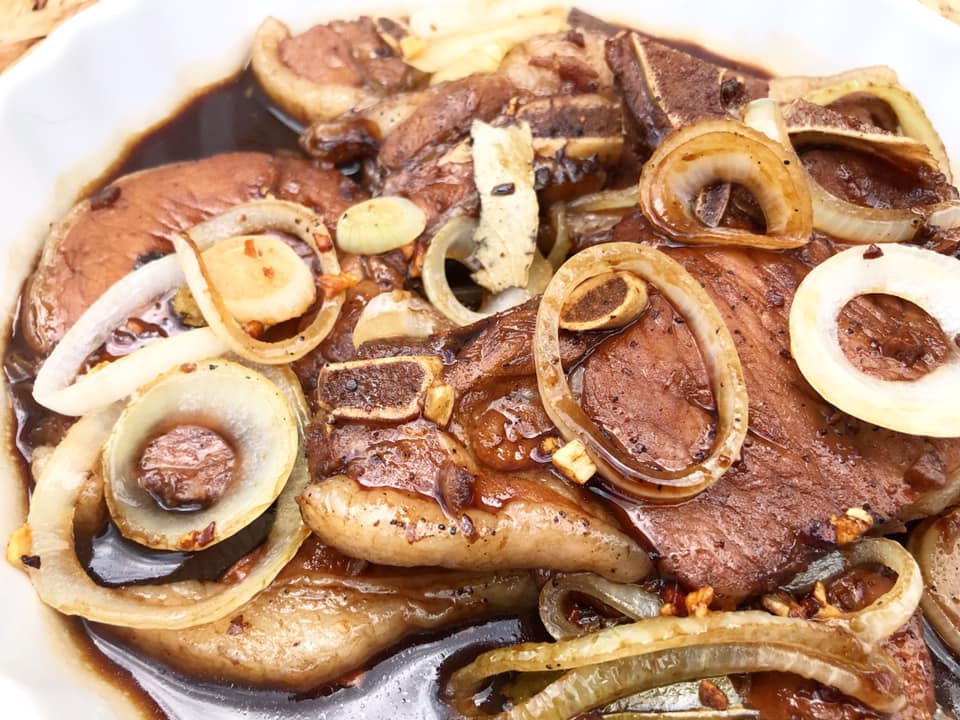
Pork Bistek Tagalog Recipe – this savory dish is a different way to enjoy a pork steak. This Filipino dish is a different take to the classic beefsteak dish. What makes this dish what it is, is the sauce which brings a savory touch with a tangy and acidic depth. When making this dish, it usually involves pork chop cuts. However, there are recipes that give the option for leaner cuts of pork. The main thing to remember with this dish is the sauce. Overall, the dish is not too difficult to make and is a flavorful dish you can enjoy with some rice and complementary sides.
What is Pork Bistek Tagalog Recipe?
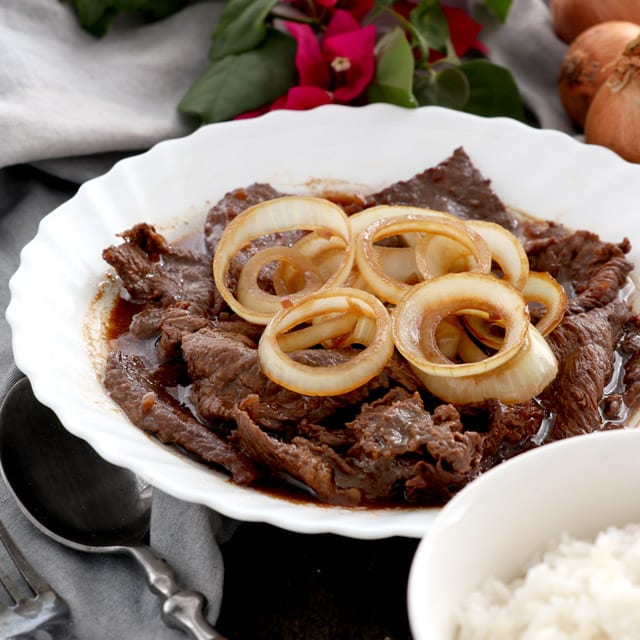
What makes this pork dish a different take comes down to the word “bistek.” “Bistek” translates to beefsteak and it is a Filipino adaptation of the Spanish “bistec” made of thin slices of beef cooked with onions and spices. However, the term broadened over the years. Basically, you can any meat or fish stewed in soy sauce, calamansi juice, and onions as “bistek.” So in turn, you can understand Pork Bistek as pork chops cooked “bistek” style.
Tips when Making Pork Bistek
Just like with any recipe there are different tips and tricks that come with making Pork Bistek. If you want to pack a punch with the flavors of the dish, make sure to use the same pan for the entire process. Speaking of process, make sure not to make the marinating process too long. A good maximum for marinating is four hours. If you go over this maximum, the acids in the citrus will break down the protein fibers and make the texture of the meat mushy.
Citrus is one of the key components of the sauce. Usually, you’ll want to use calamansi as the citrus for this dish. If you are not familiar with calamansi, it is a hybrid citrus fruit. You can find it primarily grown in the Philippines and southern China. Think of it as a more tart version of lime with a hint of sweetness. It can be hard to find this fruit in certain areas so lemon and lime juices work just fine.
When cooking the meat and ingredients, make sure to not overcrowd the pan. More space will allow for more juices to be spooned out for even more flavor.
If you’re interested in trying another Filipino pork dish, check out “Lechon Paksiw“, “Crispy Pata“, or “Pork Efotada.” You can also try a dessert with our “Ube Hopia Recipe.”