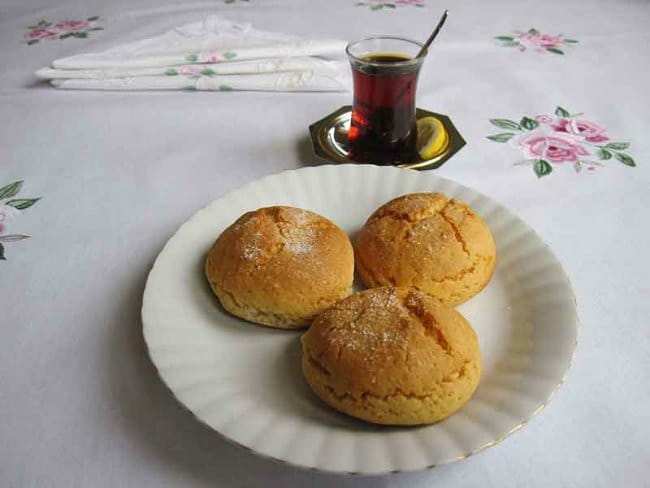
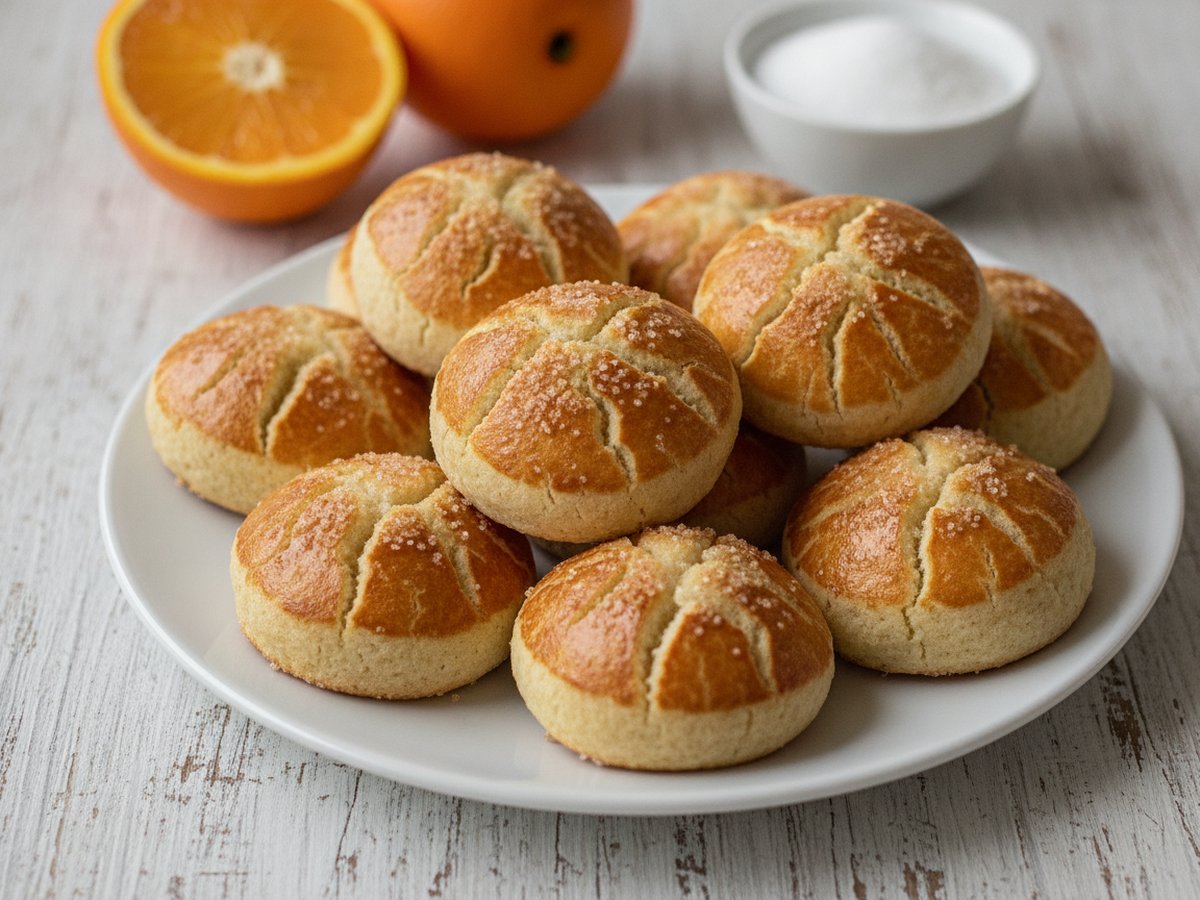
Qurabiya is a name used for a family of small butter biscuits baked across West Asia, North Africa and the Balkans, related to Turkish kurabiye and Greek kourabiedes (Wikipedia). This version is softer than the usual almond shortbread: eggs, crème fraîche and baking soda make small orange-scented cakes that are crisp outside and soft inside, finished with an egg wash and sugar that crack in the oven. It makes 16–18 pieces and takes about 3 hours, most of it in the fridge.
Last updated
Recipe
Qurabiya
Ingredients
Method
- First of all, make sure that all ingredients are in room temperature.
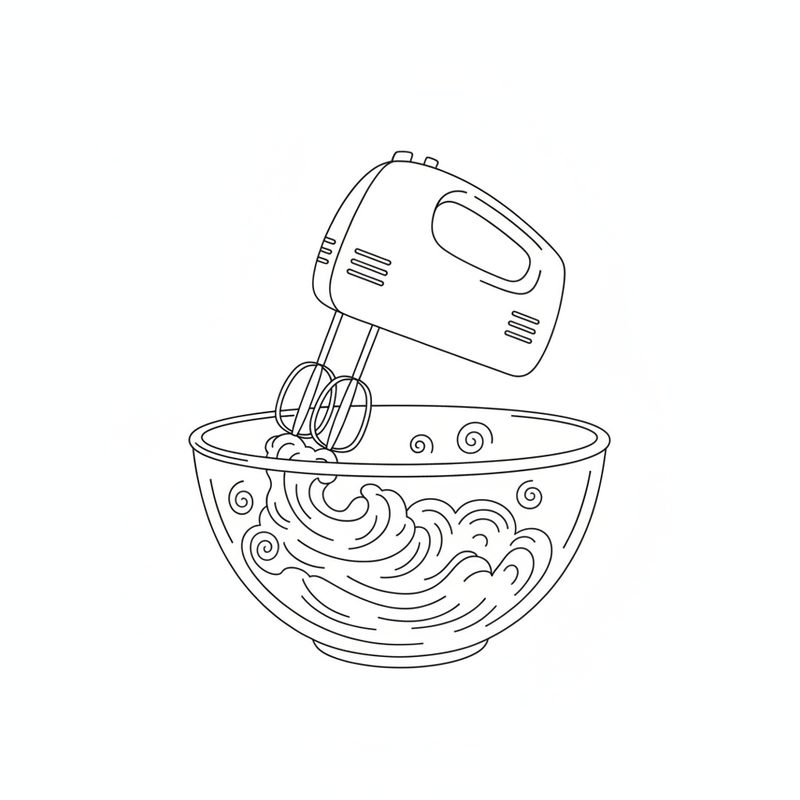
- Whip butter, sugar and vanilla powder together. It must be light and airy. Use a stirrer or an electric pointer.
- Whip the eggs together and add ¾ of the flour.
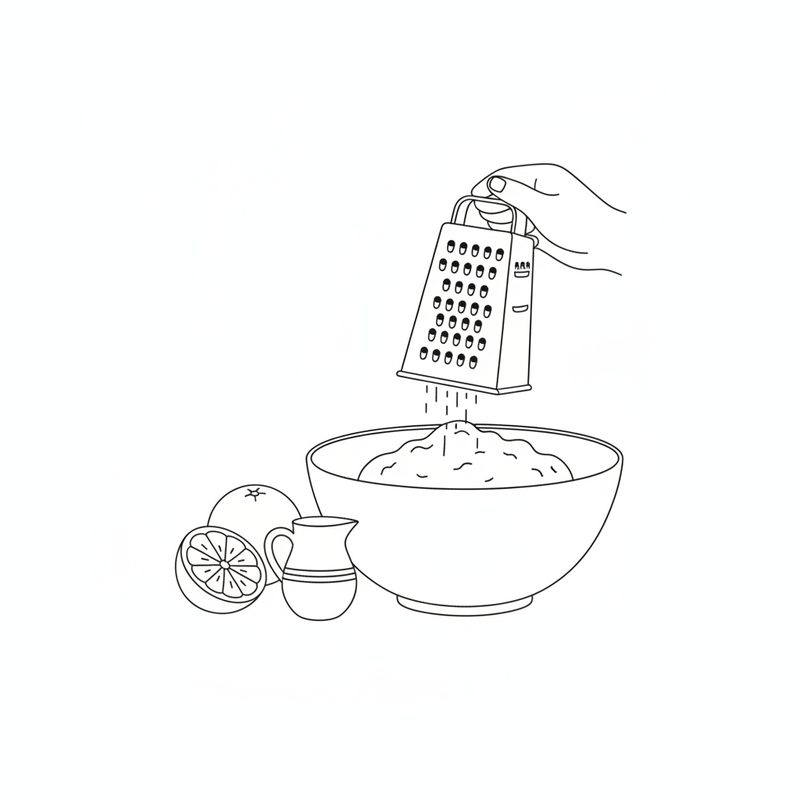
- Add orange juice and grated orange peel, crème fraiche and oil.
- Beat it well together.
- Mix the remaining flour and baking soda, place it in the dough and turn it all until the flour mixture is mixed thoroughly into the dough.
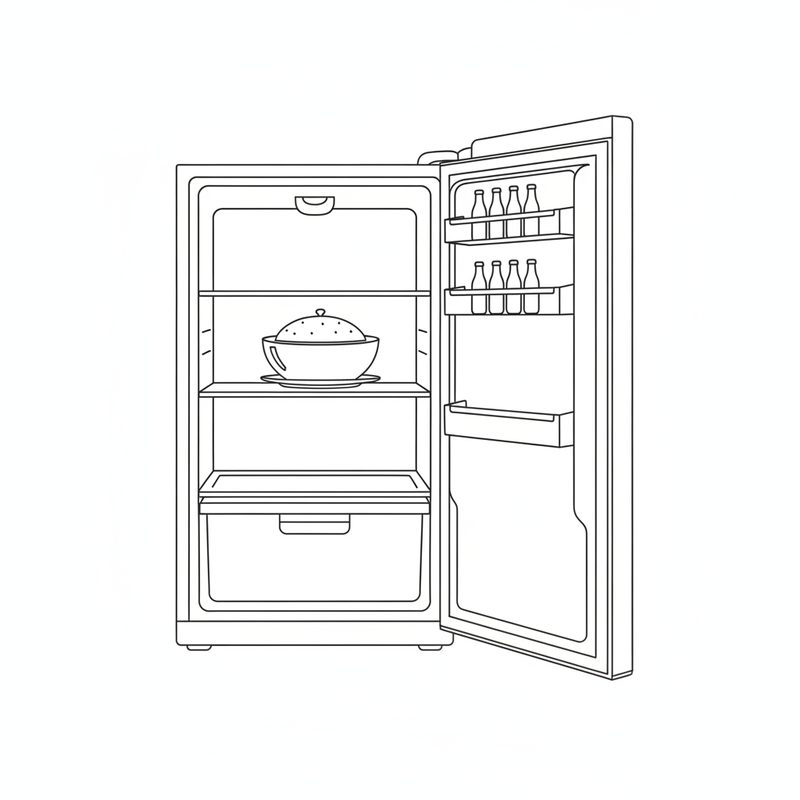
- Leave the dough covered in the refrigerator for a minimum of two hours.
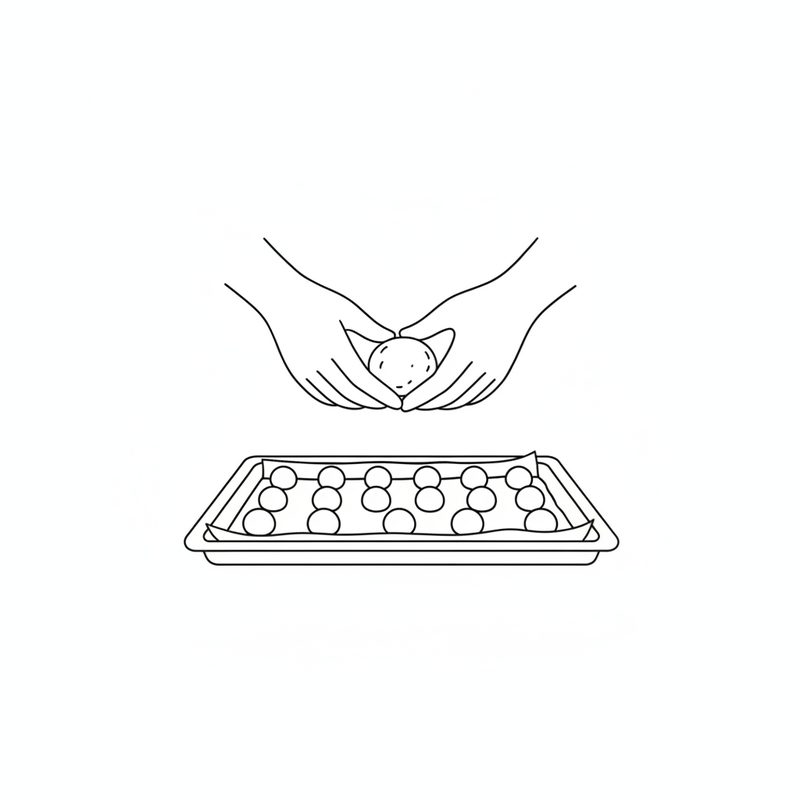
- Make a ball form out of the dough of approximately the same size – slightly larger than a walnut – use if necessary a spoon.
- Put the balls on a baking sheet covered with baking paper. There must be some distance between them as they raise during baking.
- Place the baking sheet / plates in the refrigerator and allow them to rest for a minimum of ½ hour. It's important that you keep the cooling time, as it helps to give the "cracks" on the surface of the cake.
- Heat the oven up to 175 ° C.
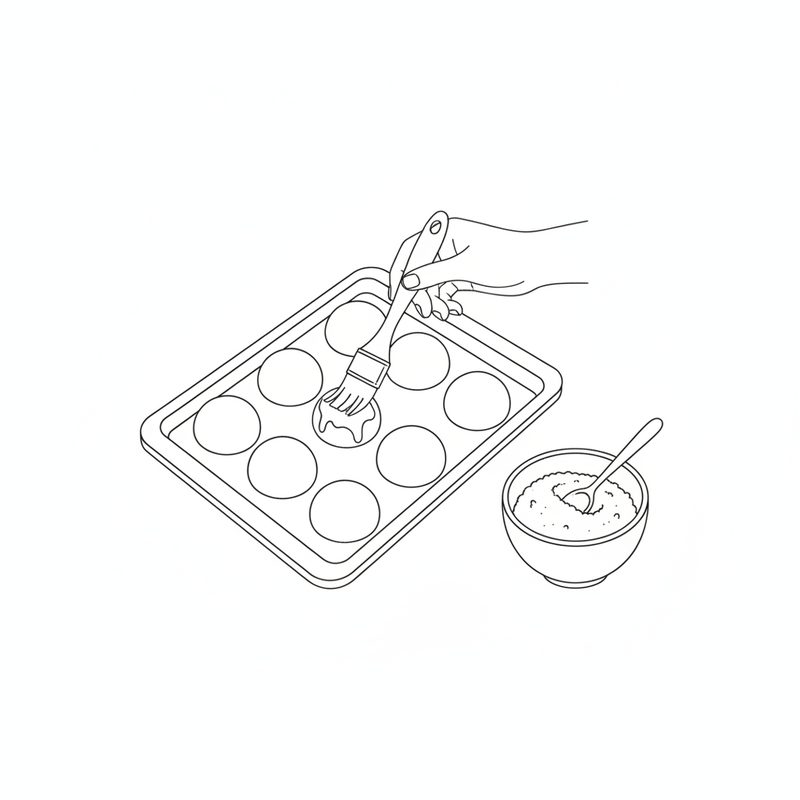
- Brush each qurabiya with the rest of the egg and sprinkle with a little sugar.
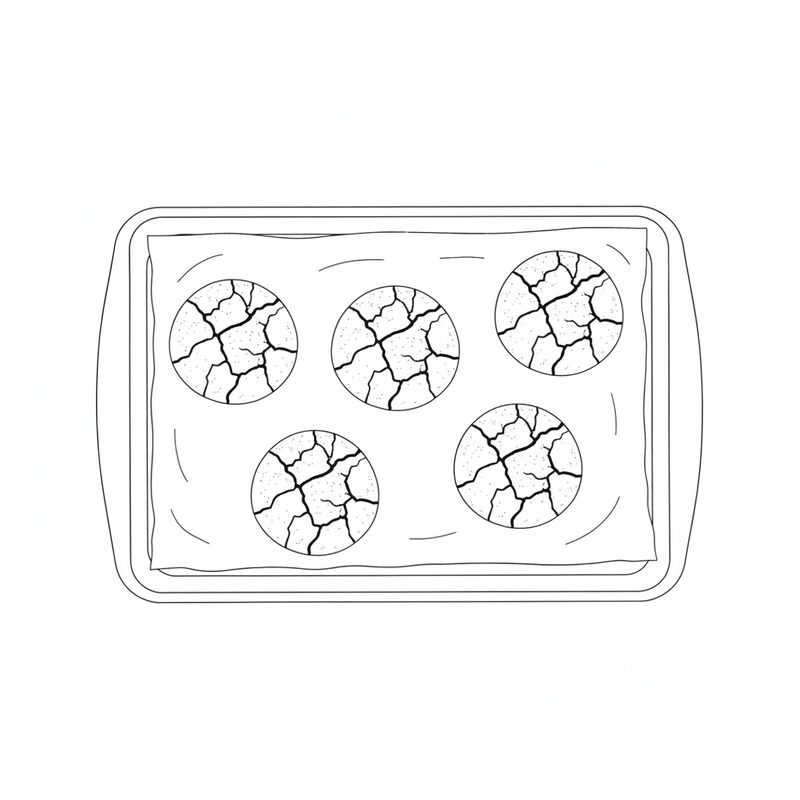
- Put them in the oven and cooked them for approx. 13-14 minutes, they must not bake too long as they become dry. Cook only until you notice a golden color and the sugar is totally melted.
Step by step, in pictures
The six moves of the method, from creaming the butter to the cracked tops coming out of the oven.
 Whip butter, sugar and vanilla until light
- Add eggs, flour, orange juice and zest
- Chill the covered dough for 2 hours
- Roll walnut-sized balls and space them out
- Chill 30 minutes, brush with egg, add sugar
- Bake at 175 °C for 13–14 minutes
What is qurabiya?
Qurabiya is a small, round sweet bake often served with tea or coffee. Wikipedia groups it with ghorayeba, the shortbread-type biscuits of Arab, Ottoman and Balkan baking, which go by names such as kurabiye in Turkish and kourabiedes in Greek.
The first version of this post calls it a Turkish tea cake and describes it as a cross between a muffin, a scone and a biscuit. There is no single recipe: this one uses orange, and versions with chocolate and other flavourings exist too.
How this qurabiya differs from almond shortbread versions
Most qurabiya recipes that rank in search are crumbly shortbread made from flour or ground almonds, sugar and butter or ghee. This one is built differently, and the ingredient list shows it:
- Eggs and crème fraîche make a soft dough — soft enough that the recipe suggests a spoon to help shape it.
- Baking soda makes the balls rise in the oven, which is why they need space on the sheet.
- Orange juice and zest carry the flavour, where almond-based versions lean on the nuts.
- An egg wash and a sprinkle of sugar give the glossy, cracked top.
How long qurabiya takes: about 3 hours
About 3 hours from start to finish, of which roughly 35 minutes is mixing and baking. The rest is chilling. From the recipe’s own steps:
- 20 minutes to mix the dough
- at least 2 hours chilling the covered dough
- at least 30 minutes chilling the shaped balls on the sheet
- 13–14 minutes baking at 175 °C
To split it over two days, shape the balls the evening before, keep them in the fridge overnight and bake them the next day, a tip from the first version of this post.
Tips for cracked tops and a soft middle
- Start with every ingredient at room temperature.
- Whip the butter, sugar and vanilla until light and airy before anything else goes in.
- Keep both chilling times. The recipe says the second chill, after shaping, is what helps the surface crack.
- Hold back a little of the beaten egg: the tops are brushed with the rest of it just before baking.
- Take them out once they are golden and the sugar has melted. Baked too long, they turn dry.
More sweet baking from the site: baklava, or an orange cake if you want more of the orange.