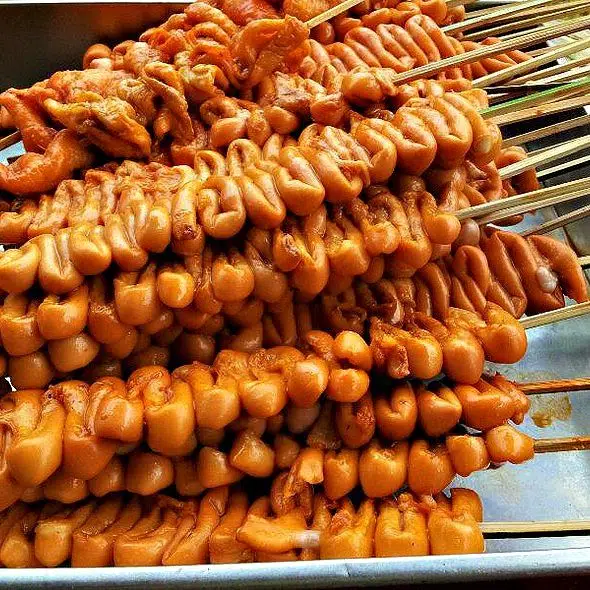
Isaw is Filipino barbeque made from chicken or pig intestines: cleaned thoroughly, boiled with aromatics, then coiled onto skewers and grilled while being brushed with a sweet-savoury sauce. It is street food — Wikipedia’s entry on Filipino barbecue traces the skewer-and-grill tradition in the Philippines to the 1950s, built on marinated pork, chicken and offal.
Last updated
Recipe
Isaw
Ingredients
Method
- If you bought cleaned intestines, it’s advised to clean them again yourself for safety reasons.
- Clean the intestines lightly to squeeze out any remaining waste and use a pair of scissors to cut them open and clean them under some running water.
- Slice the pork intestines horizontally into 1-inch/2.5cm long pieces, and the chicken intestines into 6-inch/15cm long pieces. Coil the intestines onto skewers, adding about 3 to 4 pieces to each stick.
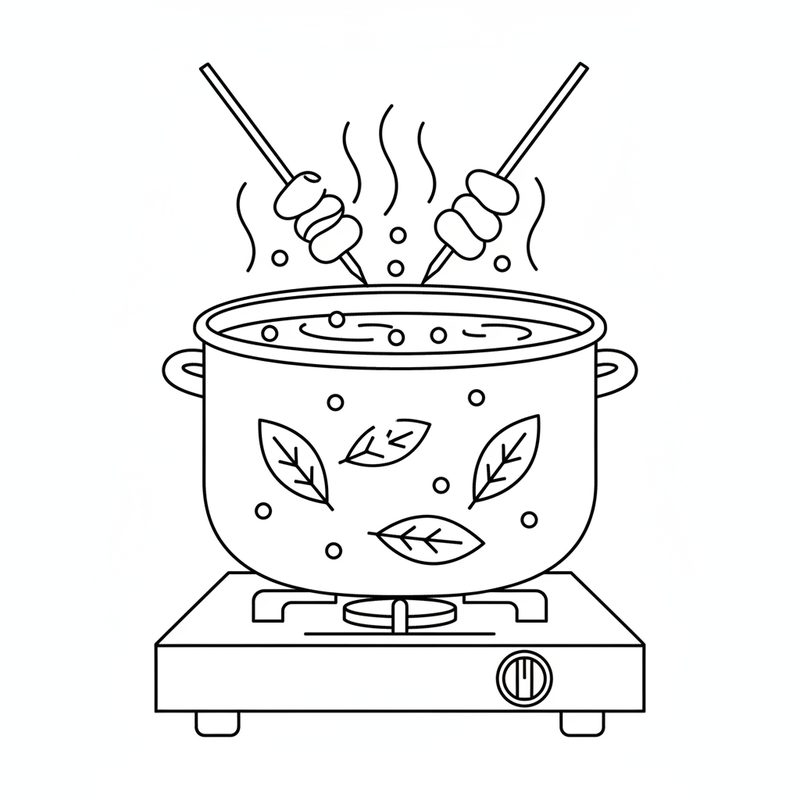
- In a big pot, boil water with salt, peppercorns, and bay leaves. Once the water is boiling, place the skewered intestines into the pot and cook over a low flame for a few minutes.
- When the heat is low, add the vinegar and simmer the meat for approximately half an hour or until it is soft and tender. After this, turn off the heat and let the meat cool.
- Mix the soy sauce, cooking oil, and ketchup to make the grilling sauce.
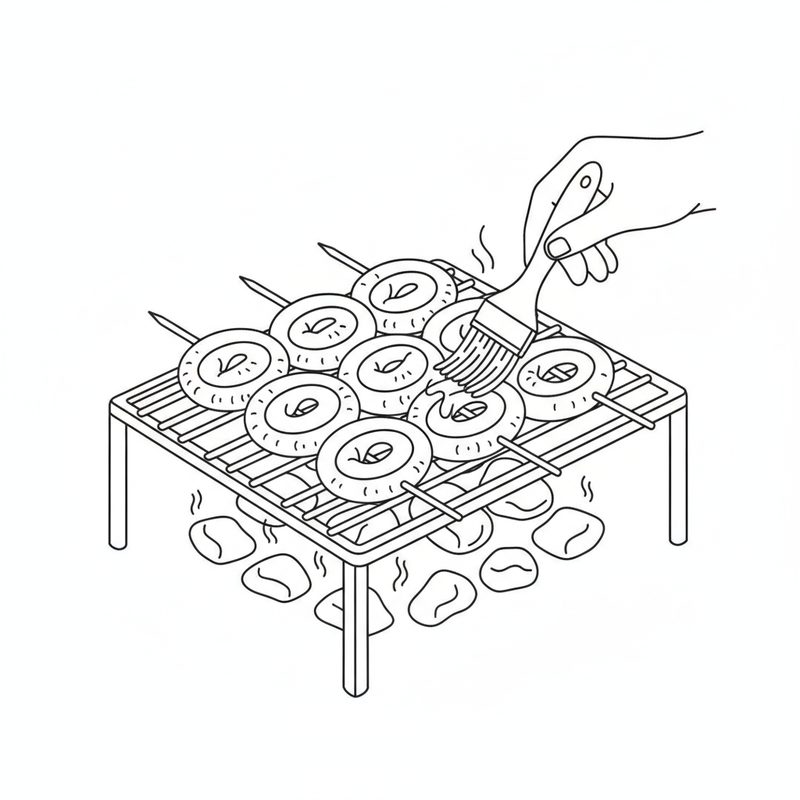
- Grill the intestines, brushing them with the prepared sauce, for approximately 5-10 minutes, or until they turn reddish-brown.
- Once the barbecue is done, serve it with some soy sauce or a spiced vinegar dip.
Step by step, in pictures
The eight steps in the card, condensed to six.
 Cut them open and clean under running water.
- Coil 3 to 4 pieces onto each skewer.
- Boil the water with salt, peppercorns and bay leaves.
- Add the vinegar and simmer about half an hour.
- Mix the soy sauce, oil and ketchup into a grilling sauce.
- Grill 5-10 minutes, brushing with the sauce.




Filipino isaw and Korean gopchang are both “intestine bbq”, and they are not the same dish
Searches for intestine barbeque land on two different traditions, which is why the results for the term are split between Filipino recipes and Korean restaurants. It is worth knowing which one you are looking at before you shop.
| Filipino isaw | Korean gopchang | |
|---|---|---|
| What it is | Chicken or pig intestine, coiled onto a bamboo skewer and grilled. | Wikipedia’s entry on gopchang gives it as the small intestines of cattle or the large intestines of pigs; the grilled form is called gopchang-gui. |
| How it is cooked | Boiled first with salt, peppercorn and bay leaf, then grilled with a baste brushed on as it cooks — the method in the card below. | Grilled at the table. The Korea Tourism Organization’s description of the beef small-intestine dish notes the meat being marinated in onion juice before it reaches the grill, to tenderise it. |
| Where you meet it | Street stalls, sold by the stick. | Restaurants. Eater’s 2021 piece on gopchang in Los Angeles describes it as a fixture of all-you-can-eat Korean barbecue menus. |
| Texture | Both are chewy. Wikipedia describes gopchang as chewy with elastic fibres, and the same springy bite is what the long boil in this recipe is there to soften. | |
This page is the Filipino one. If you came looking for gopchang or daechang, the sources above are the better starting point — there is no recipe for them here.
Why the intestines get cleaned twice
Clean them again even if the packet says they are already cleaned. That is the first instruction in the card, and it is the step most likely to decide whether the finished skewer is pleasant to eat. The method is mechanical rather than clever: squeeze the length out, open it up with scissors, and rinse it under running water.
The boil that follows does the rest of the work. Salt, whole peppercorn and bay leaf go into the water, the skewers go in, and the vinegar goes in once the heat is low. The card is explicit that this simmer runs until the intestine is soft and tender, and that the grilling which follows takes only five to ten minutes — so the tenderness has to come from the pot rather than from the fire.
Grilled or fried: the two ways isaw is eaten
A classic isaw is boiled and then grilled, which is the version in the card. The other common treatment is to fry it: the boiled isaw is dipped in an egg mixture and deep-fried, which gives a crisp coating and a different layer of flavour from the grilled version. Both start from the same boiled skewer, so the decision can be made after the pot rather than before it.
Either way it is served with a dip: soy sauce, or a spiced vinegar dip, is what the card calls for.
Questions people ask about intestine barbeque
What is barbeque intestine? It is animal intestine — pig, cow or chicken — cleaned, cooked through, and then grilled over coals on a skewer or a grate. The two versions that dominate English-language searches are Filipino isaw and Korean gopchang.
What type of meat is intestine? It is offal, also called variety meat or innards: an internal organ rather than a muscle cut. This recipe uses chicken or pig large intestine.
What does beef intestine taste like? The descriptions that exist are about texture more than flavour — Wikipedia characterises gopchang as chewy, with elastic fibres. Flavour comes largely from what it is basted or marinated with, so the answer changes with the recipe rather than being fixed by the ingredient.
Is it okay to eat beef intestines? Intestine is eaten as food in many cuisines, Korean and Filipino among them. What it asks for is thorough cleaning and cooking all the way through, which is why this recipe cleans the intestines a second time and boils them before they ever reach the grill. Deliberately not given here: internal temperatures, holding times or storage windows — none of those could be sourced to a food-safety authority for this page, and a guess at a food-safety number is worse than no number. Check your own national food-safety guidance for handling offal.
Where to go next
The nearest neighbour to this one is Filipino chicken skin, or proben — the same stall, the same skewer, another cut from the same bird. For something off the grill rather than out of the fryer, there is Chicken Inasal, and for the sweet-savoury pork that shares this recipe’s flavour family, Longganisa.
If intestine is a step too far today, the same street-food table also holds Filipino Lumpia and, at the sweet end, Ube Turon.