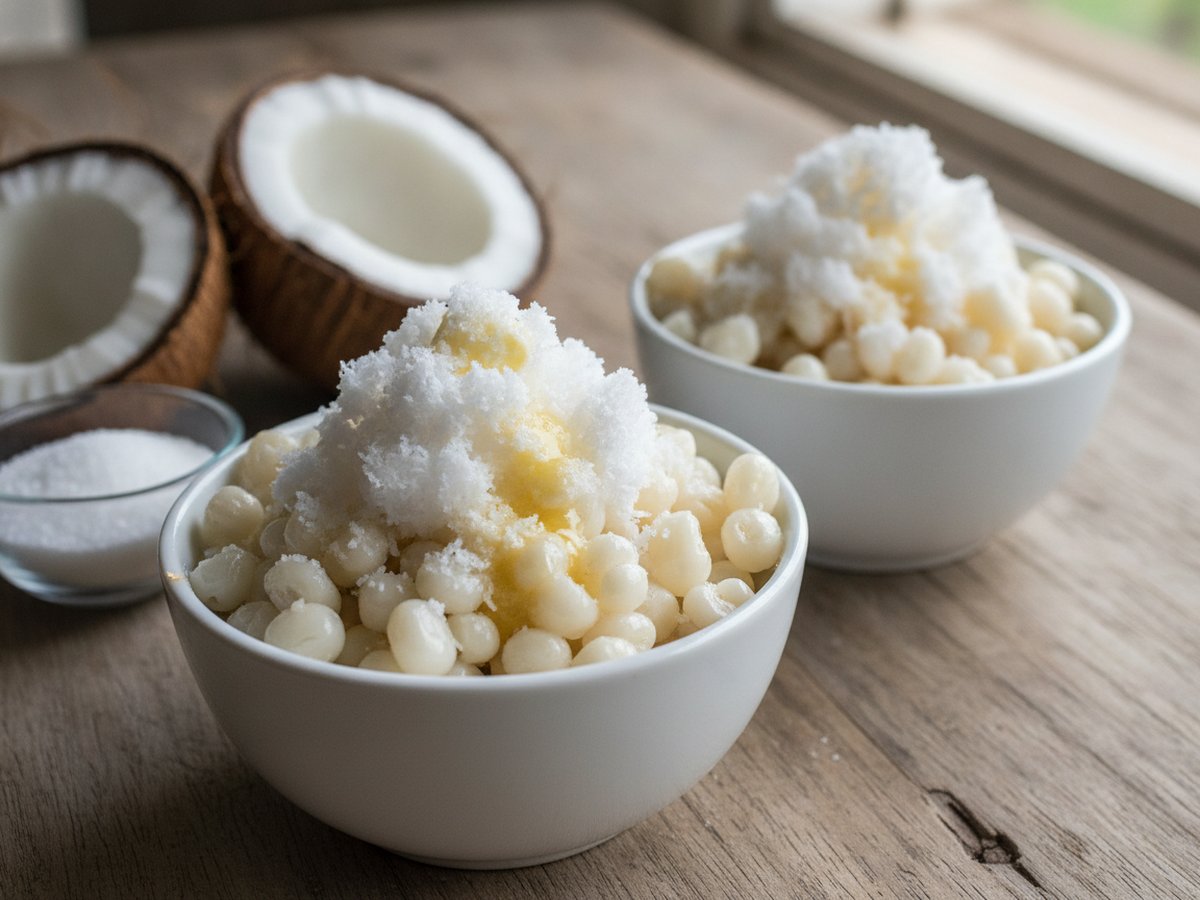
Binatog (Filipino boiled white corn with coconut) is plump white corn kernels, boiled until they burst open, then served warm under a heap of freshly grated coconut, a little butter and a pinch of sugar or salt. It tastes mild and milky, with chewy, soft kernels against the sweet crunch of fresh coconut.
The quick way uses one large can of white hominy and takes about 25 minutes. Drain it, simmer it in fresh water until the kernels split, drain again, and top each bowl. That is the version on the card below.
Last updated
Recipe
Binatog (Filipino Hominy with Fresh Coconut)
Ingredients
For the corn
To serve
Method
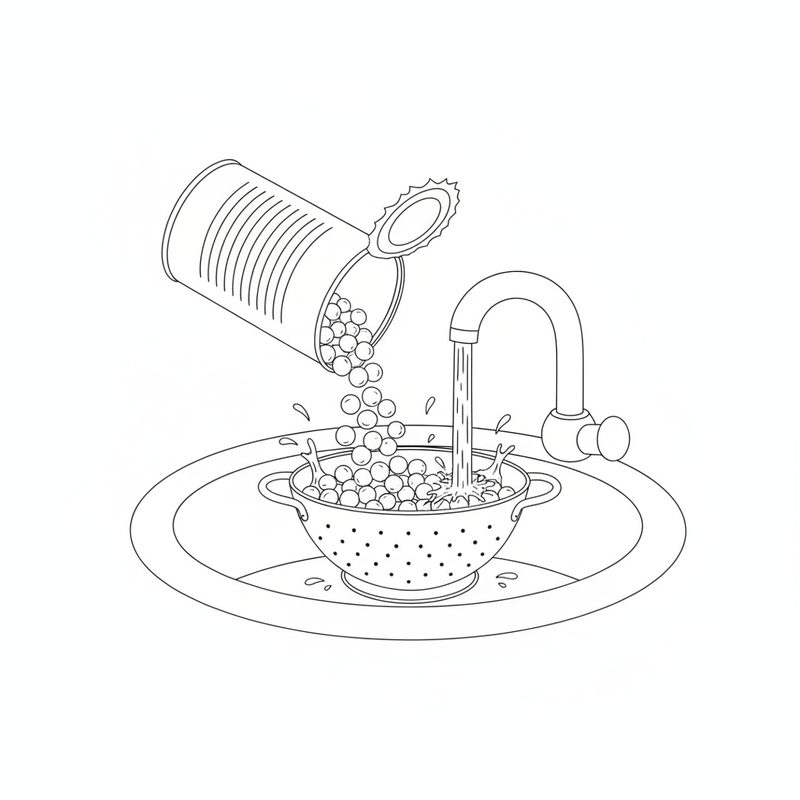
- Drain the hominy in a colander and rinse it well under cold running water.
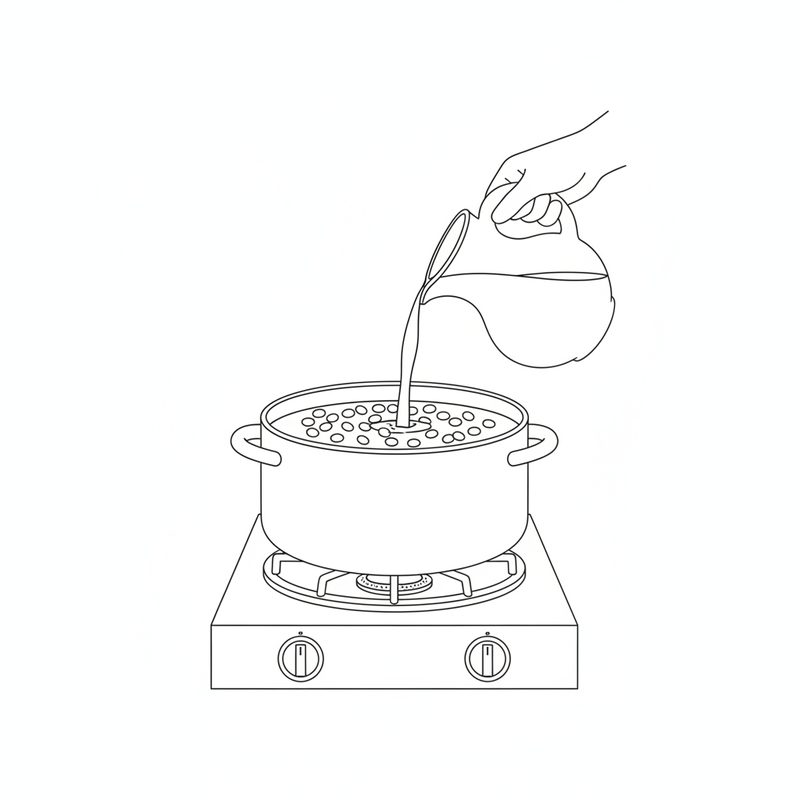
- Tip the hominy into a pot and pour in enough water to cover the kernels. Bring to a boil over high heat.
- Lower the heat and simmer 15 to 20 minutes, until most kernels have burst open at the top and are soft all the way through.
- Drain the corn well.
- Divide the warm corn among small bowls and top each with a generous amount of grated coconut.
- Add a little butter or margarine and sugar or salt to taste. Serve warm.
What is binatog?
Binatog is a Filipino merienda of boiled white corn topped with grated coconut, butter or margarine, and salt or sugar. It is also called bualaw or kinulti, and it is sold as street food in the northern Philippines.
The sellers are known as magbibinatog. They carry the corn in big tin cans, much like taho vendors. One container holds the warm corn, a smaller one holds the coconut, and each cup is topped to order.
In English, binatog is usually described as boiled hominy, or boiled white corn kernels with grated coconut. Most modern versions use canned Mexican hominy to skip the long soak, which is why recipes written outside the Philippines start with a can.
Binatog ingredients
You need five things, and only one of them needs a measuring cup.
- White hominy. Dried corn that has been soaked and cooked in an alkaline solution. Canned hominy is already cooked, so it only needs a short simmer. Look for white, not yellow.
- Freshly grated coconut. Mature coconut, grated into fine white shreds. This is the flavour of the dish, so use more than feels polite.
- Butter or margarine. Margarine is a common swap, and Kawaling Pinoy tops with it. Either works.
- Sugar or salt. Sweet or savoury is your call.
- Water. Enough to cover the kernels in the pot.
A note on the coconut amount. Recipes do not agree on it. For one 29-ounce can, Panlasang Pinoy uses 3/4 cup and Kain Na uses 1 cup. Kawaling Pinoy tops a fresh-corn batch with 2 cups. So the card says “to taste” rather than pretend there is one right number. Start with a spoonful per bowl and keep going until the corn is mostly hidden.
How to make binatog with canned hominy
Rinse, simmer, drain, top. The only thing to watch is the simmer: you want the kernels split open and soft all the way through, not just hot.
 Drain and rinse the hominy.
- Cover with water, bring to a boil.
- Simmer until the kernels burst.
- Drain well.
- Top with grated coconut.
- Add butter and sugar or salt.
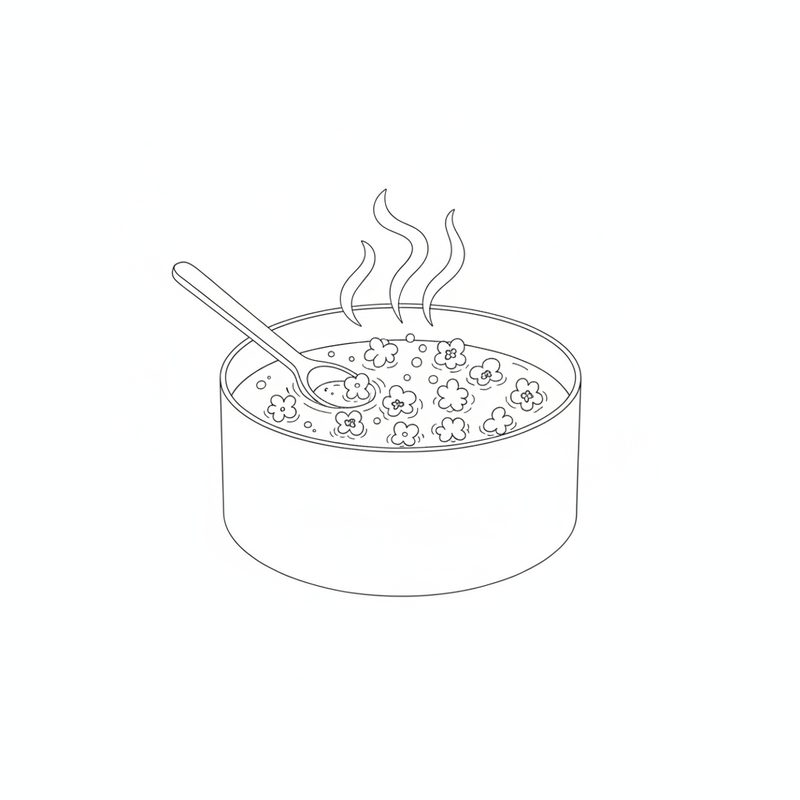
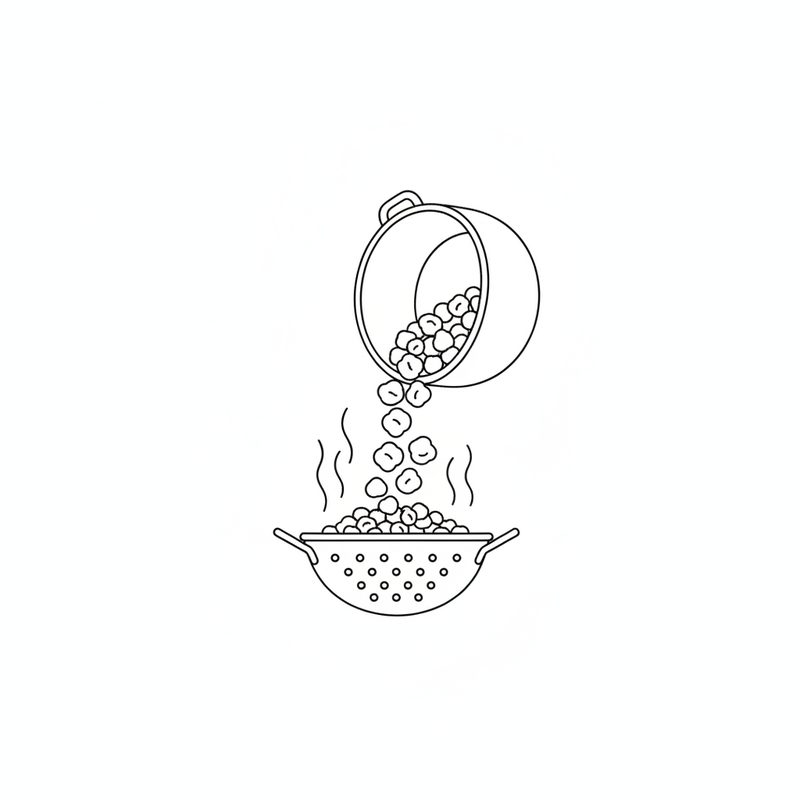
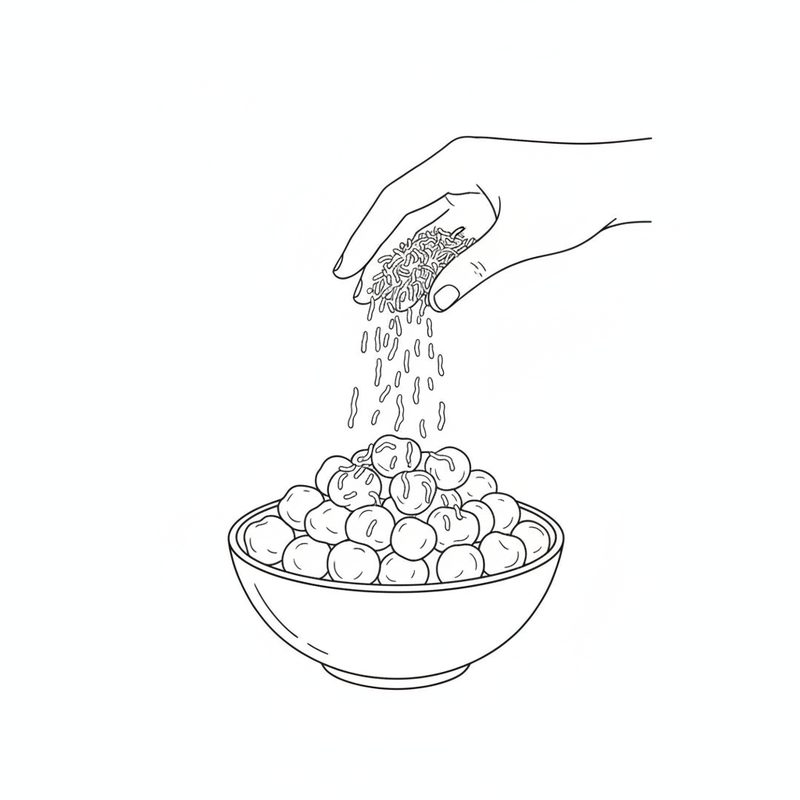
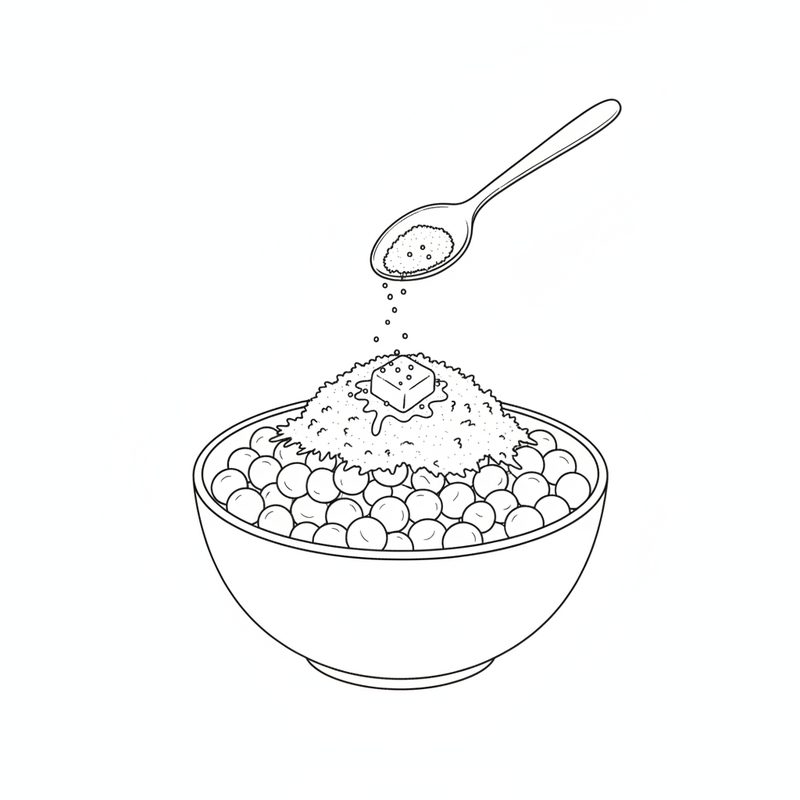
Done is easy to see. Most kernels will have burst at the top, opening like small white flowers, and one pressed between your fingers squashes with no hard core. If they are still tight and round, give them another five minutes.
Rinsing matters. Kain Na and Jun Belen both rinse the canned hominy before it goes in the pot. Panlasang Pinoy simmers it in its own liquid plus a cup of water instead, then drains. Either way, the corn is drained before it is topped.
Canned hominy or dried corn?
Canned hominy is the shortcut, and it is a good one. It gives you the same puffed, chewy kernel in about 25 minutes instead of a day.
The traditional binatog starts with dried mature lagkitan, a waxy, sticky white corn grown in the Philippines. The kernels are soaked until they puff up, then washed and boiled until very soft. Some cooks soak in salted water. Others use apog, which is food-grade lime (calcium hydroxide), not the citrus fruit. Foxy Folksy simmers dried corn with an apog slurry for 30 minutes to an hour, rinses it until the water runs clear, then simmers again until the kernels double or triple in size.
That lime step is the same process that turns dried corn into hominy, called nixtamalization. It softens the tough outer skin. A can of hominy has already been through it, which is why you can skip it.
Fresh corn is the third route. Kawaling Pinoy strips the kernels off white corn cobs and simmers them 15 to 20 minutes. It is a different kernel from hominy, but the toppings are the same: coconut, margarine, salt or sugar. If you have fresh corn and coconut milk, try ginataang mais instead.
Sweet or salty: how to serve binatog
Serve binatog warm, in small bowls or cups, with the toppings added just before eating. Warm corn softens the butter and makes the coconut cling.
- Sweet: white or brown sugar over the coconut.
- Salty: a pinch of salt and butter, which tastes closer to buttered popcorn.
- Binatog sa gata: a splash of coconut milk or evaporated milk over the top.
- Richer: some cooks add a drizzle of condensed milk or a little grated cheese.
It is a merienda, an afternoon snack, so a small bowl is a serving. If you want more corn sweets on the table, maja blanca uses corn and coconut milk in a firm, sliceable pudding.
Storing and reheating binatog
Store leftover binatog plain, without coconut, butter or sugar. Keep it in a container with a tight lid in the fridge for three to five days.
To reheat, put the corn back in a pot of water and bring it to a boil, then drain. Grate or open the coconut only when you serve, and add the toppings bowl by bowl.
Because it keeps plain, binatog is easy to make ahead. Simmer a double batch, chill half, and the rest of the week only needs a reheat and the toppings.
Binatog questions
Questions people ask
What is binatog in English?
Binatog is usually translated as boiled white corn or boiled hominy with grated coconut. There is no single English name, so recipes outside the Philippines describe it by its ingredients.
What is binatog called in other regions?
Binatog is also known as bualaw and kinulti. All three names refer to the same boiled corn topped with grated coconut.
What is a popular Filipino corn snack?
Binatog is one of the best-known Filipino corn snacks, alongside ginataang mais, corn cooked in coconut milk, and maja blanca, a corn and coconut milk pudding.
Can I use fresh corn for binatog?
Yes. Cut the kernels from white corn cobs, cover them with water and simmer 15 to 20 minutes until tender. Then drain and top it like any other binatog.
Is apog the same as lime juice?
No. Apog is food-grade lime, or calcium hydroxide, a white powder used to soften dried corn. It is not the citrus fruit, and lime juice will not do the same job. You do not need apog at all when you start with canned hominy.
Can binatog be made ahead?
Yes. Cook the corn, store it plain in a covered container in the fridge for three to five days, and reheat it by boiling it again in water. Add the coconut, butter and sugar only when serving.