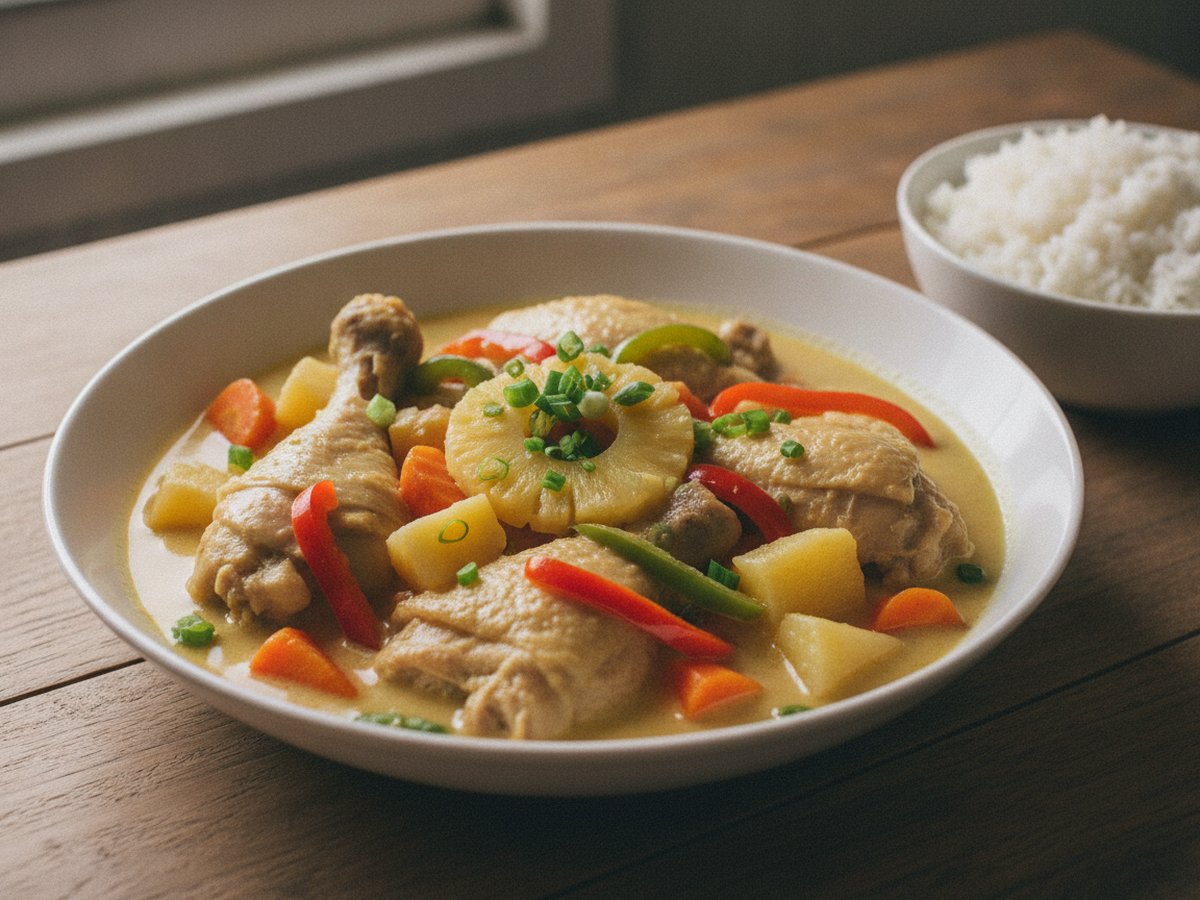
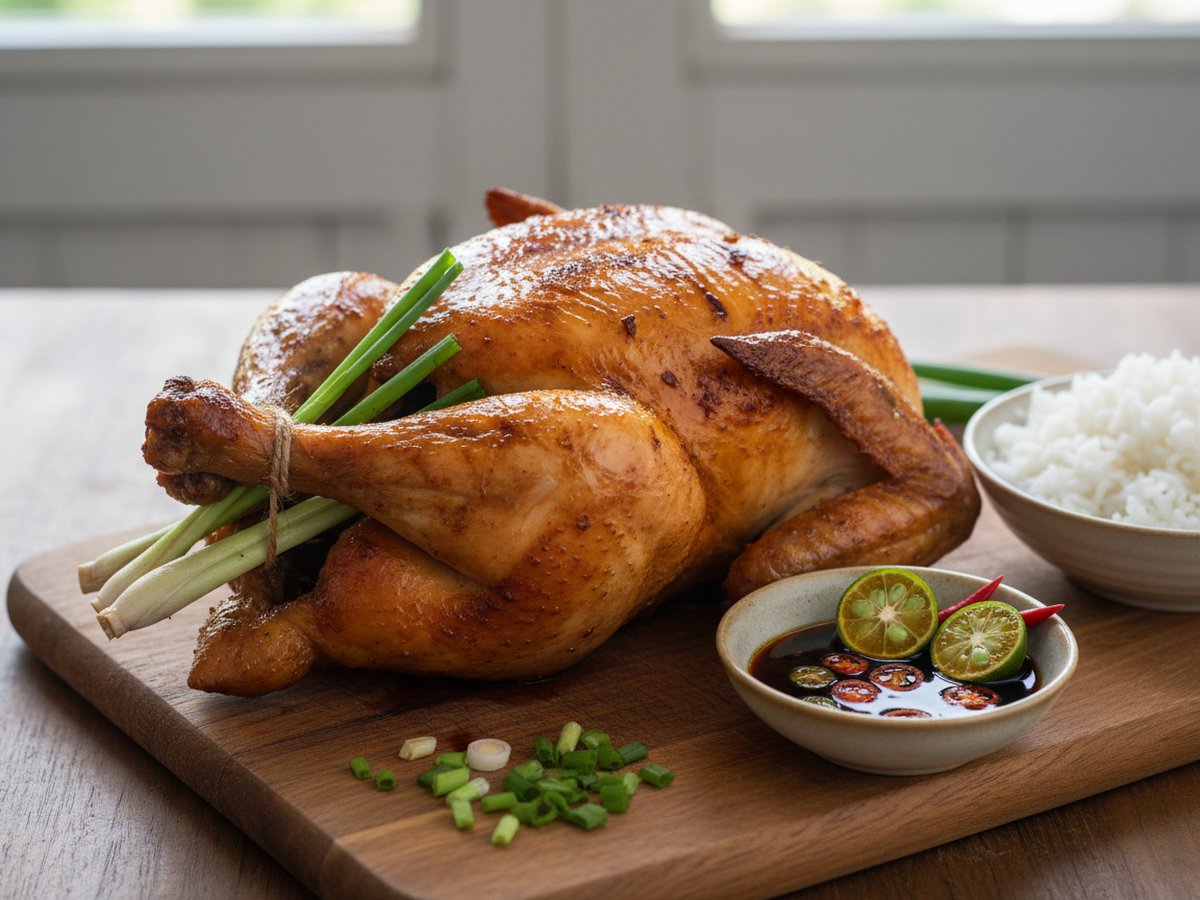
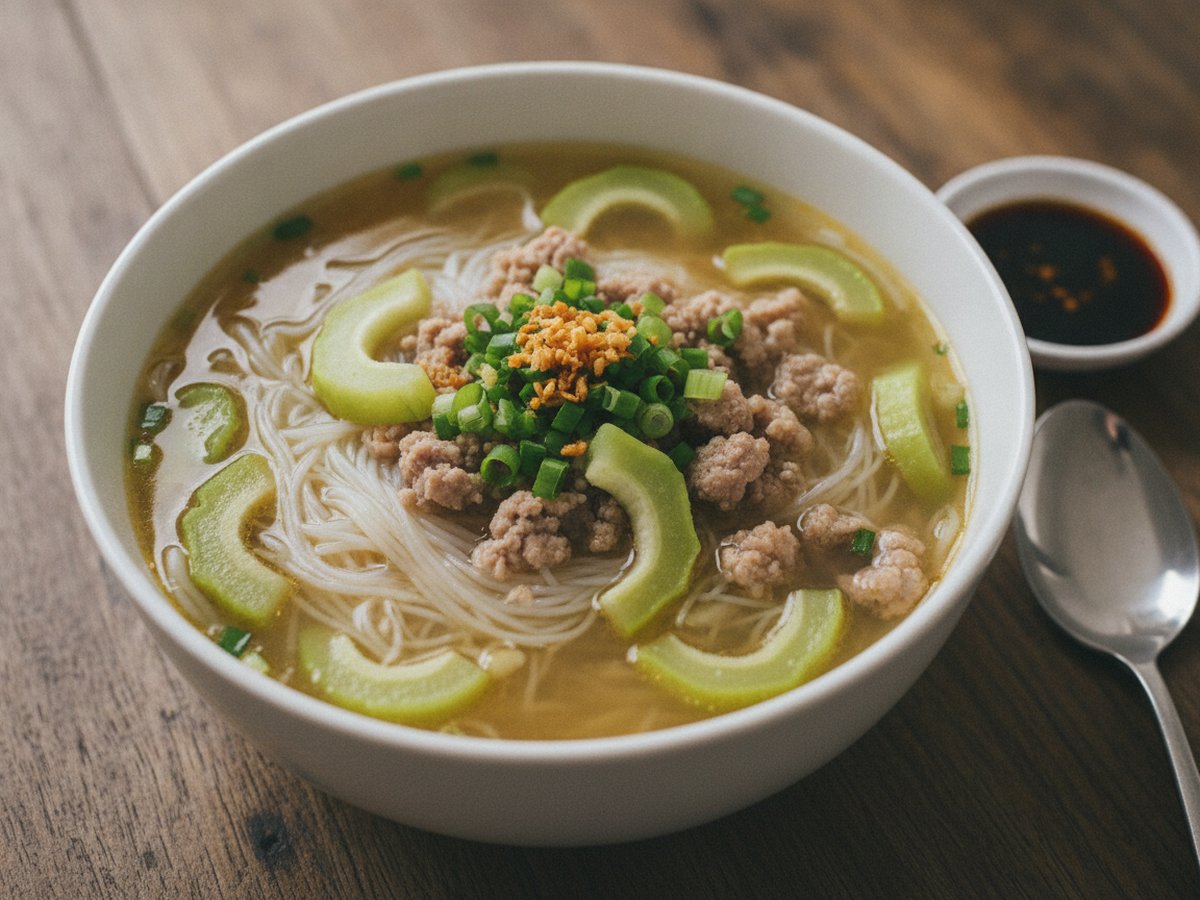
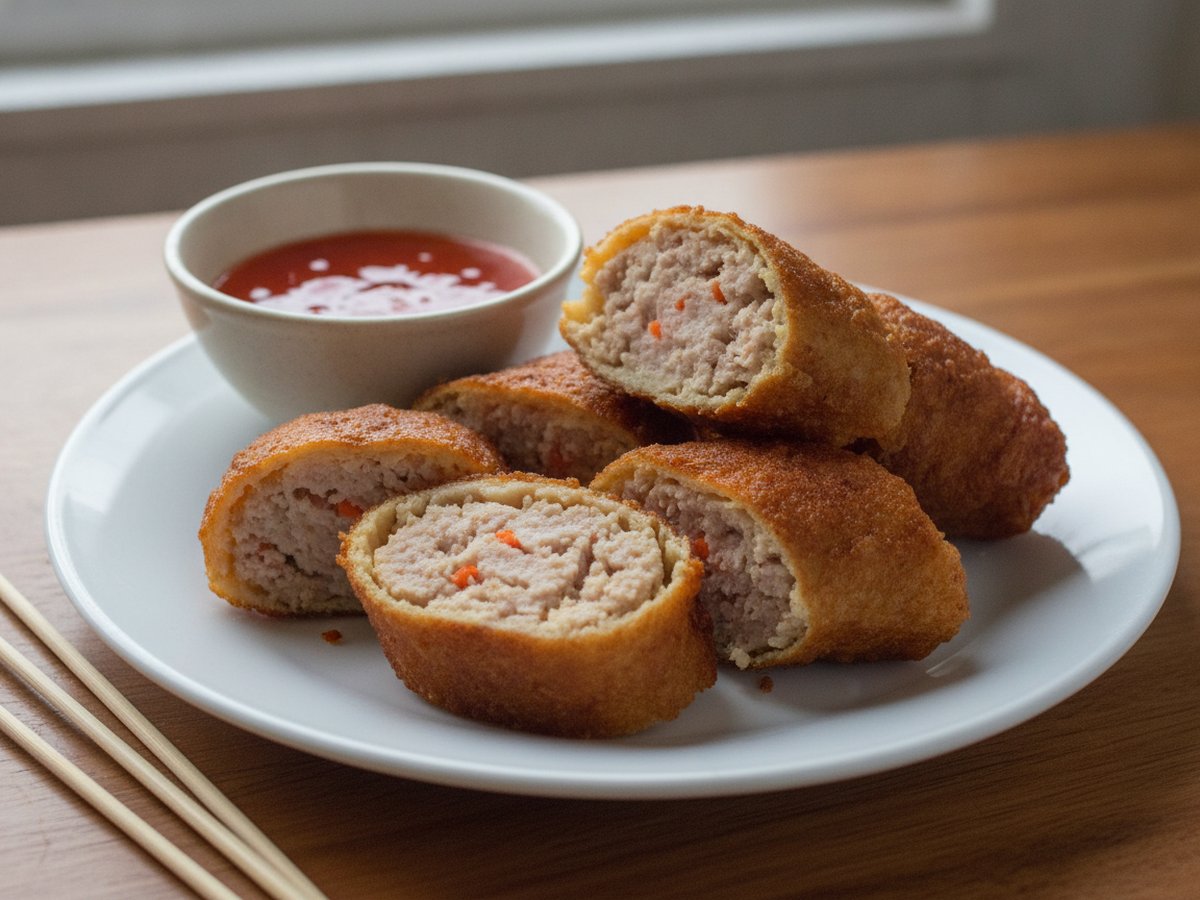
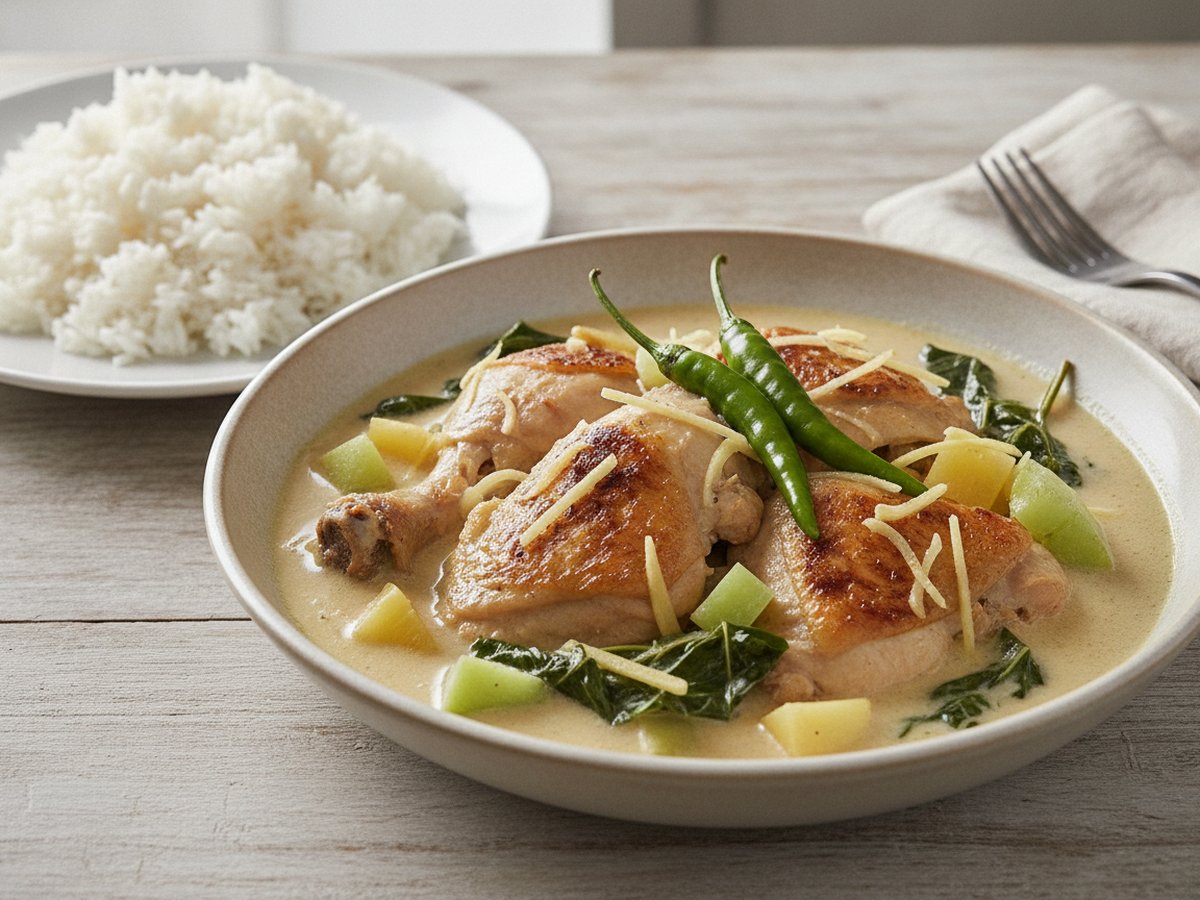
Ginataang manok (Filipino chicken in coconut milk) is chicken pieces simmered in coconut milk with ginger, garlic and onion, then finished with green papaya, long green chilies and a handful of leaves. It tastes mild and creamy first, then warm from the ginger, with the salt coming from fish sauce rather than soy.
It takes about 15 minutes to prep and 45 minutes to cook. This recipe uses 2 lb (about 900 g) of bone-in chicken and serves 4 to 6 with rice.
Last updated
Recipe
Ginataang Manok (Filipino Chicken in Coconut Milk)
Ingredients
Method
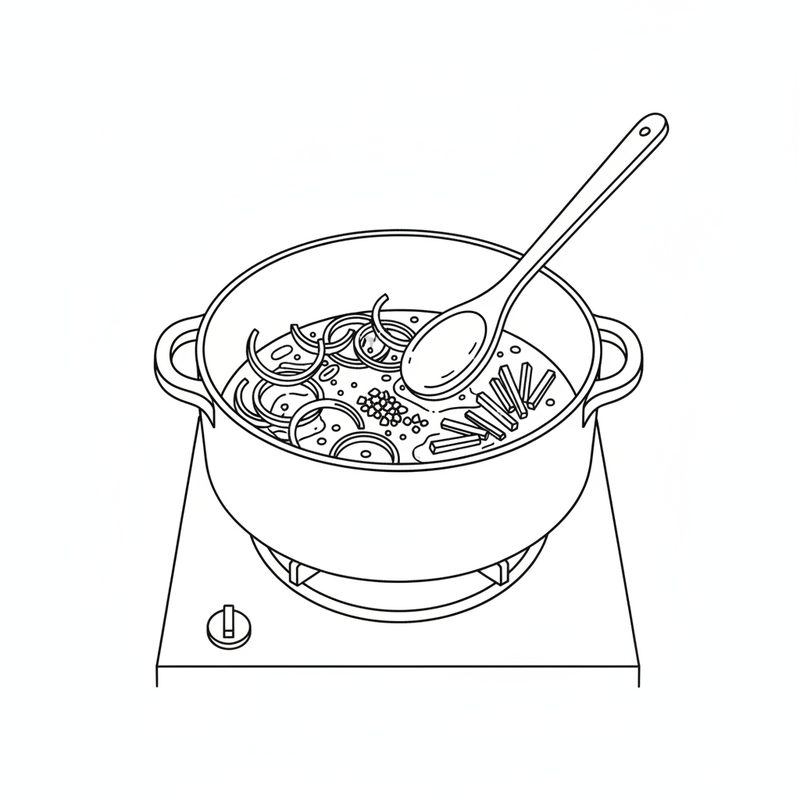
- Heat the oil in a wide pot over medium heat. Sauté the onion, garlic and ginger for 2 to 3 minutes, until the onion is soft and the ginger smells sharp.
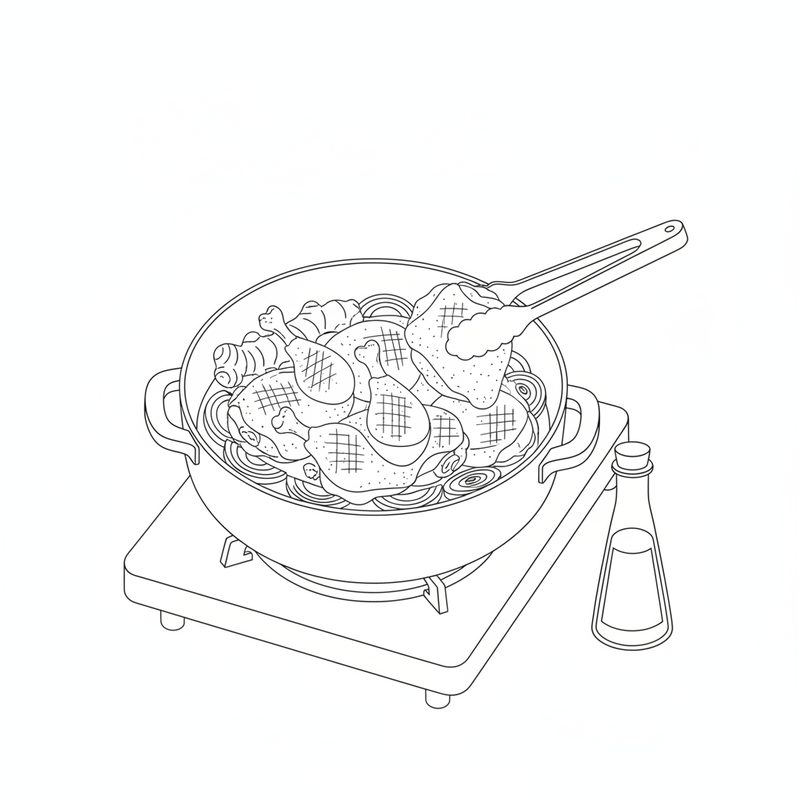
- Add the chicken and cook, turning, until the outside is light brown, about 10 minutes. Pour in the fish sauce and stir for 1 minute.
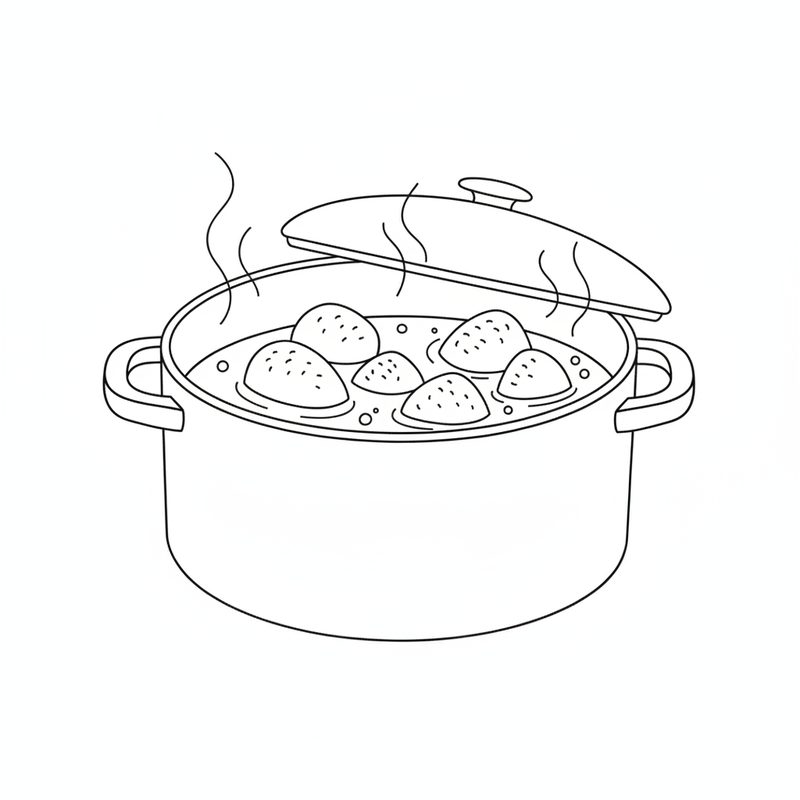
- Pour in the water and bring it to a boil. Cover and simmer over low heat for 15 minutes.
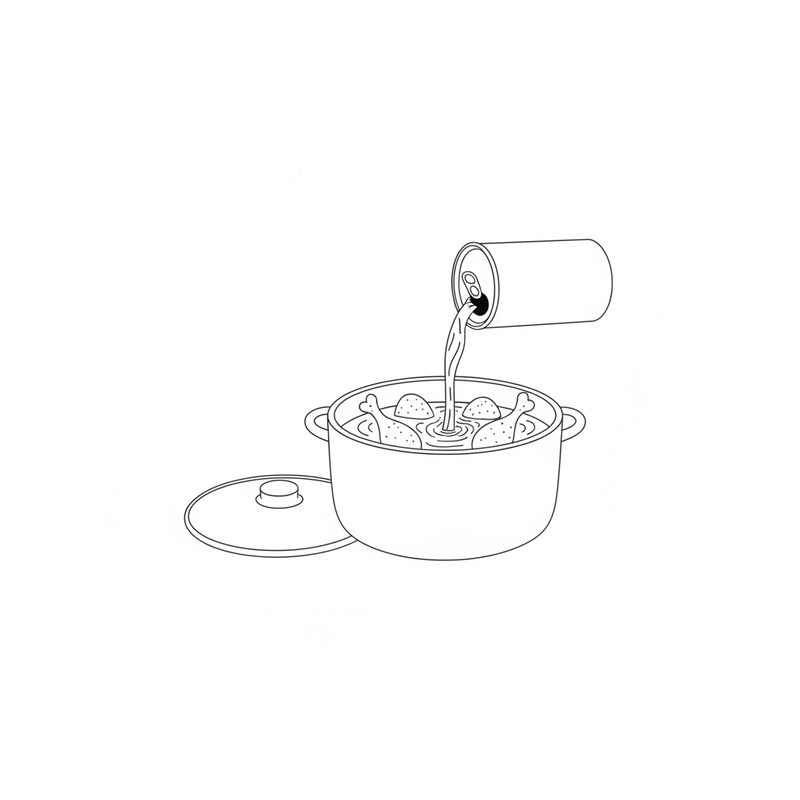
- Pour in the coconut milk while stirring and bring it back to a boil. Lower the heat and simmer uncovered until the sauce has reduced by about half and the chicken reaches 165°F (74°C) at the bone.
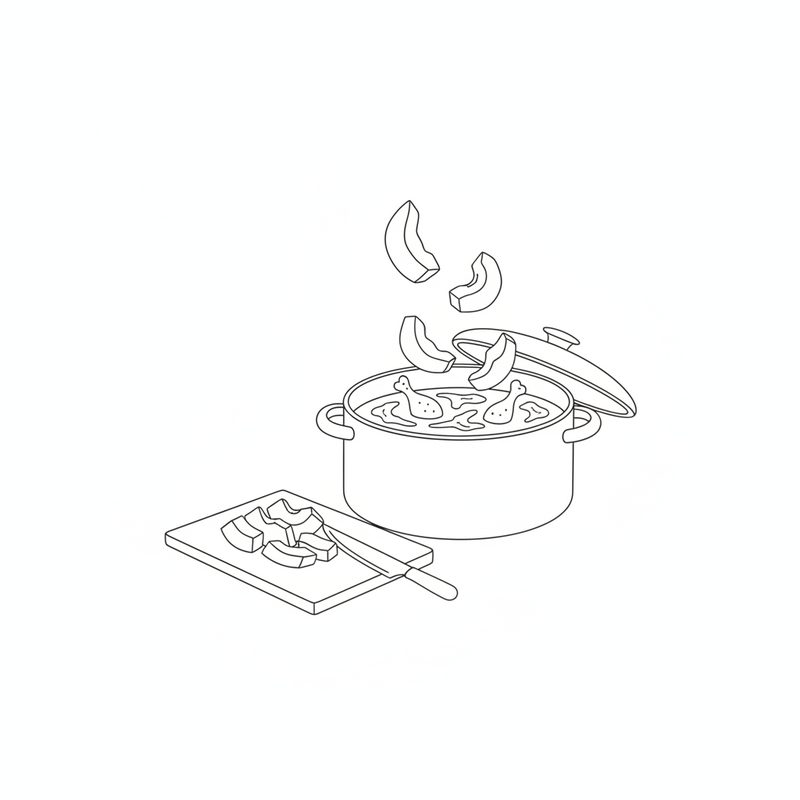
- Add the green papaya and simmer until a fork slides through it with no crunch, 5 to 15 minutes depending on the size of the pieces.
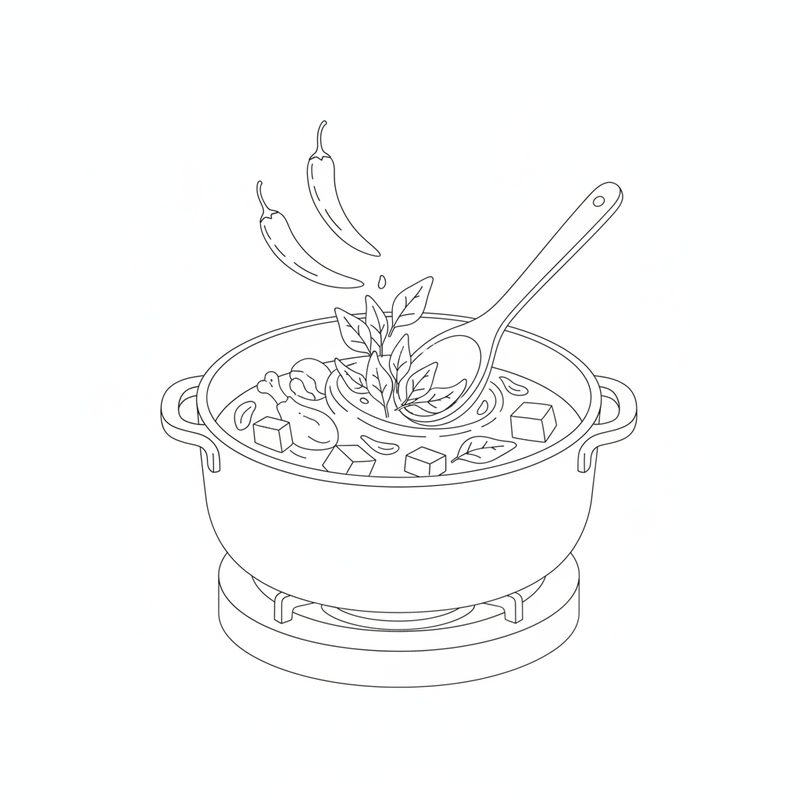
- Add the long green chilies and simmer for 5 minutes. Stir in the leaves and cook for 1 to 2 minutes, just until wilted. Season with fish sauce and black pepper and serve hot with steamed rice.
What is ginataang manok?
Ginataang manok is a Filipino chicken stew cooked in coconut milk. Manok means chicken. The sauce is not a curry: there is no spice paste, just aromatics, coconut milk and fish sauce, so the chicken and the ginger do the talking.
Most versions share the same bones. Sauté onion, garlic and ginger. Brown the chicken. Simmer it, add the coconut milk, then add a vegetable and some leaves at the end. The vegetable and the leaves are where cooks differ.
What does ginataang mean?
Ginataang means “cooked in coconut milk”. It comes from gata, the Filipino word for coconut milk, and ginataan is the name for the whole family of dishes made that way. Put a main ingredient after it and you have the dish name: ginataang manok, ginataang isda, ginataang langka.
How it differs from tinola and other ginataan
Think of ginataang manok as tinola made creamy. Both use chicken, ginger, green papaya and chili or malunggay leaves. Tinola is a clear ginger broth. Ginataang manok swaps most of that broth for coconut milk and lets it reduce into a sauce that coats the rice.
Against the other ginataan on this site, the difference is the main ingredient and the timing. Ginataang isda cooks fish in coconut milk in minutes, because fish falls apart. Ginataang langka is young jackfruit, often with pork or shrimp. Ginataang bilo-bilo is not savoury at all: it is a sweet merienda of rice balls in coconut milk. Chicken needs the longest simmer of the four, which is why this one takes an hour.
Ingredients and what each one does
- Chicken. Use bone-in pieces: thighs, drumsticks, or a whole chicken cut into serving pieces. The bones give the sauce body. Three of the published versions this card is built from use 2 lb or 1 kg of chicken.
- Coconut milk. 2 cups, which is a little more than one 13.5 oz can. Canned is fine here, and full-fat, not “lite”. If you want it richer, replace half a cup with coconut cream (kakang gata).
- Ginger, garlic and onion. Cut the ginger into thin matchsticks so you can eat it. Two tablespoons is the amount most versions agree on.
- Fish sauce (patis). 1 tablespoon goes in with the chicken, following Panlasang Pinoy. Then add more at the end, a teaspoon at a time, until it tastes right to you.
- Green papaya. Unripe, firm and pale. It cooks to soft and slightly sweet, and it stretches the dish. If you cannot find it, chayote (sayote) or potato work the same way.
- Long green chilies (siling haba). They add aroma more than heat. Leave them whole for a mild pot. For heat, add a few chopped Thai chilies too.
- Leaves. Chili leaves (dahon ng sili) are the classic choice, with malunggay (moringa) close behind. Spinach and watercress are what most US kitchens can find, and both are used in published versions.
Two amounts on the card come from a single source and are named so you know: the 2/3 cup of water and the 2 tablespoons of oil follow Panlasang Pinoy. The other versions either leave the water out or say only “enough to almost cover”, so treat it as a starting point.
How to make ginataang manok, step by step
Six stages, and the only one to watch closely is the coconut milk.
 Soften the onion, garlic and ginger in the oil.
- Brown the chicken lightly, then add the fish sauce.
- Add the water, cover and simmer 15 minutes.
- Pour in the coconut milk. Simmer uncovered.
- Add the green papaya and cook until fork-tender.
- Chilies in, then the leaves. Season and serve.
What goes wrong, and how to avoid it
- The sauce splits or goes oily. Coconut milk boiled hard for a long time can separate. Bring it to a boil once, then keep it at a steady simmer. A little oil on top is normal; curdled-looking sauce means the heat was too high.
- The sauce is thin. Keep the lid off after the coconut milk goes in. The sauce is ready when it has reduced by about half and coats the back of a spoon.
- The papaya is mushy. It goes in near the end. Large chunks need about 15 minutes; thin slices need 5 to 8. Stop when a fork slides in with no crunch.
- The leaves turn dark and stringy. Add them last, off a high heat, for a minute or two. They should just wilt.
- The chicken is underdone at the bone. The USDA safe minimum for chicken is 165°F (74°C). Check the thickest thigh with a thermometer, or cut to the bone: the juices should run clear with no pink.
Variations
- With turmeric (luyang dilaw). Sauté sliced fresh turmeric with the aromatics. The sauce turns golden and a little earthy. Panlasang Pinoy publishes this version.
- With shrimp paste. Recipes by Nora stirs a tablespoon of bagoong alamang into the coconut milk. It adds depth and salt, so go easy on the fish sauce.
- With vinegar. Chef Ron Bilaro adds a splash of palm vinegar with the coconut milk. It sharpens the sauce and cuts the richness.
- With potato and carrot. Use them in place of papaya. Cut them small and add them with the coconut milk, because they take longer than papaya.
- With mushrooms. Sliced button or oyster mushrooms go in with the papaya and cook in about the same time.
- With chicken breast. It works, and it is quicker. Skip the covered water simmer and pull the pot once the chicken reaches 165°F, or it turns dry.
Is ginataang manok the same as Thai coconut chicken?
No. Thai coconut chicken dishes usually build on curry paste, or on galangal, lemongrass and lime leaves, as in tom kha gai. Ginataang manok uses none of those. Its flavour is plain ginger, garlic, onion and fish sauce, so it tastes softer and more savoury than sharp or herbal.
What to serve with it
Steamed white rice, and plenty of it. The sauce is the point. Something sour or crisp on the side balances the richness: atchara (pickled papaya), a tomato and onion salad, or plain sliced cucumber.
Storage, make-ahead and leftovers
Ginataang manok keeps in the fridge for 3 to 4 days in a covered container, which is the USDA guideline for cooked leftovers. Cool it and refrigerate it within 2 hours of cooking.
To make it ahead, cook it through step 5 and stop before the leaves. Reheat gently on the stove, add a splash of water if the sauce has thickened in the fridge, and stir in the leaves just before serving. Reheat only what you will eat, and bring it to a steady simmer, not a hard boil, so the coconut milk stays smooth.
Questions people ask
What is ginataang manok in English?
Chicken cooked in coconut milk. Manok is chicken, and ginataang means cooked in gata, coconut milk.
Can I use coconut cream instead of coconut milk?
Use it for part of the liquid, not all of it. Replace about half a cup of the coconut milk with coconut cream for a thicker, richer sauce.
What can I use instead of green papaya?
Chayote (sayote) is the closest swap. Potato, squash (kalabasa) or carrot also work; cut them small and give them a few minutes longer.
Is ginataang manok spicy?
Only as spicy as you make it. Whole long green chilies add aroma with little heat. Chopped Thai chilies make it properly hot.
Do I need to brown the chicken first?
It is worth it. Light browning gives the sauce more flavour. Every version this recipe is built from browns the chicken before any liquid goes in.