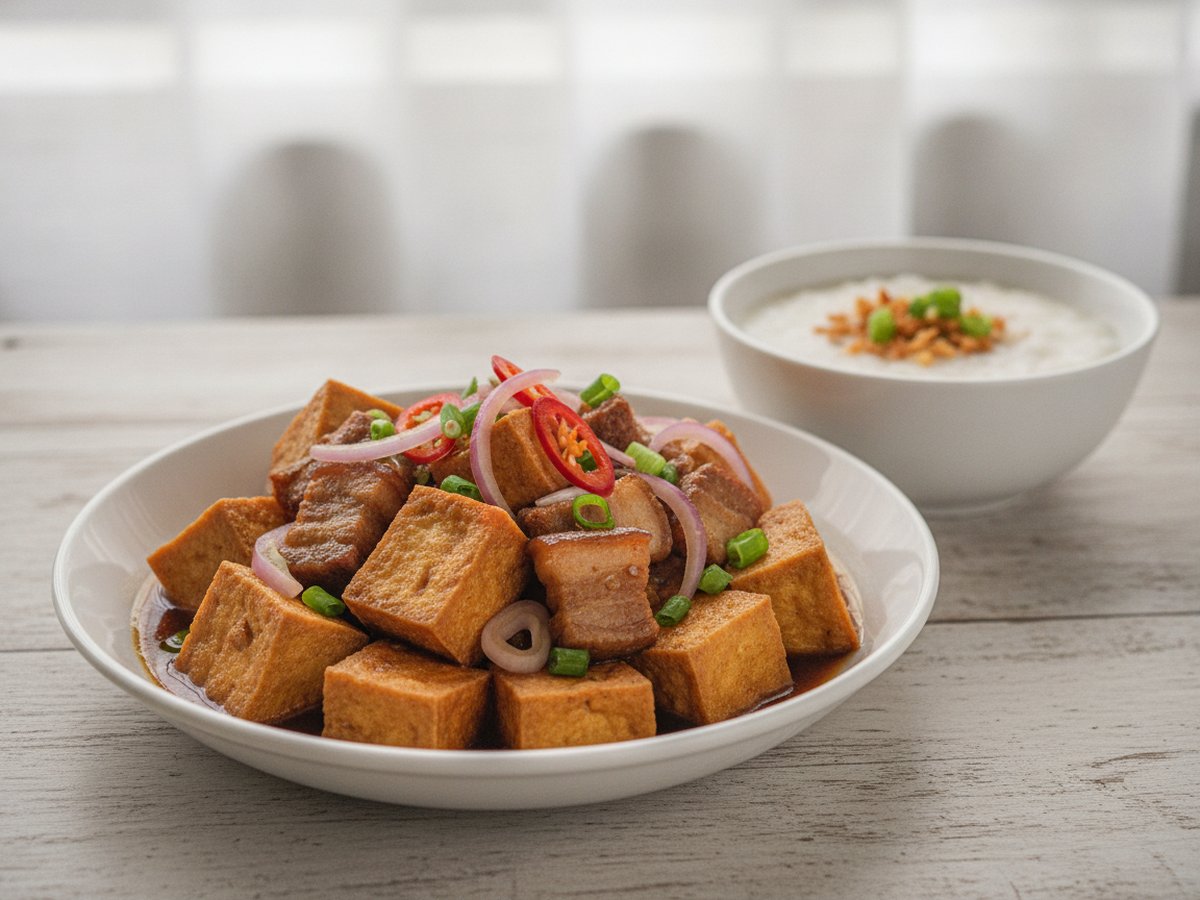
Tokwa’t baboy (fried tofu and pork) is boiled pork belly and crisp deep-fried tofu, cut into bite-size pieces and dressed in a sharp vinegar and soy sauce with raw onion and chili. It tastes sour first, then salty, then rich. The crust on the tofu soaks up the sauce while the pork fat keeps every bite soft.
You need pork belly, firm tofu, vinegar, soy sauce, sugar and onion. The pork simmers for about an hour. Everything else happens while it cooks. Serve tokwa’t baboy as pulutan with drinks, with steamed rice, or next to a bowl of lugaw.
Last updated
Recipe
Tokwa't Baboy (Filipino Fried Tofu and Pork)
Ingredients
For the pork
For the tofu
For the sauce
Method
- Put the pork belly in a pot with enough water to cover. Add the bay leaves, a few peppercorns and a pinch of salt. Bring to a boil, skim the grey foam, then lower the heat and simmer 45 minutes to 1 hour, until a fork slides in easily. Drain and let it cool.
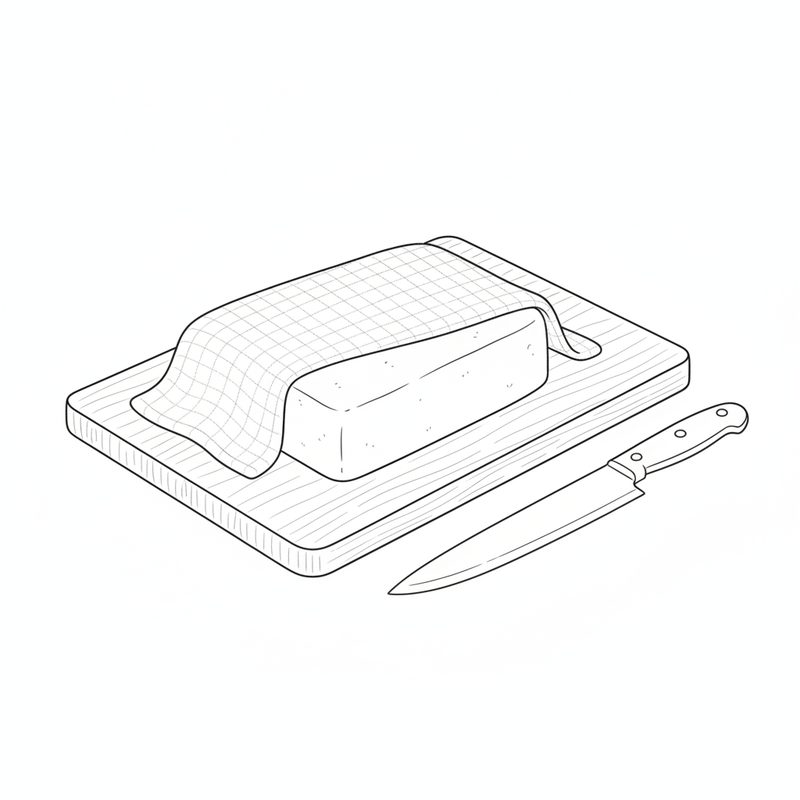
- While the pork simmers, drain the tofu and pat it dry with a clean towel. For a crisper crust, wrap it in paper towels and weigh it down with a plate for 15 to 20 minutes.
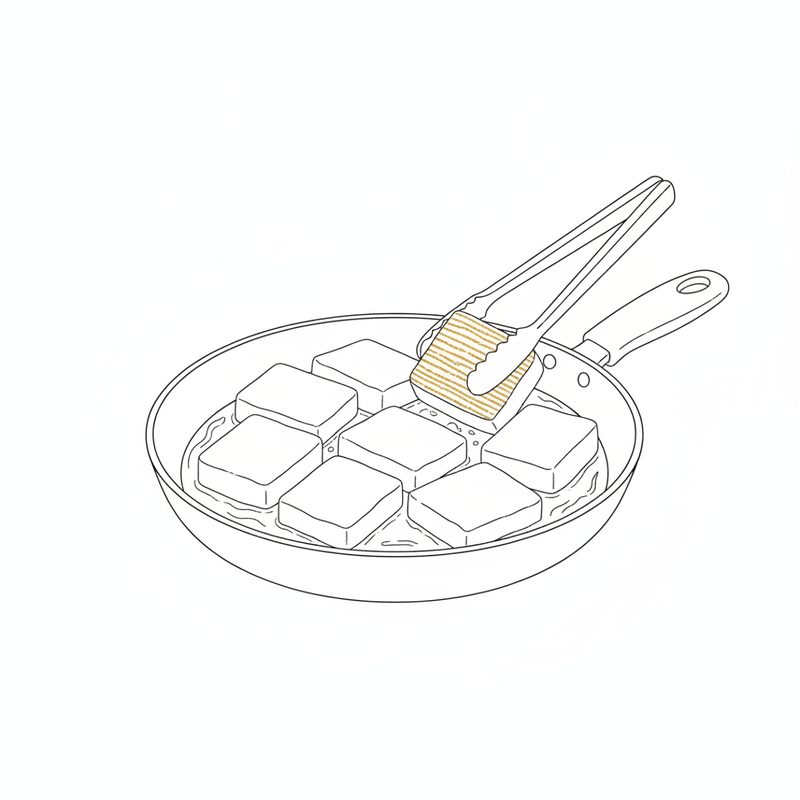
- Heat the oil in a wide pan over medium-high heat. Fry the tofu, turning it, until every side is golden brown and crisp. Drain on paper towels.
- Cut the tofu into 1-inch cubes and the cooled pork into bite-size pieces.
- Stir the vinegar, soy sauce and sugar together until the sugar dissolves. Add the onion, chilies and a little ground pepper. Taste and adjust.
- Pile the pork and tofu in a serving dish. Pour the sauce over, or serve it in a bowl on the side for dipping. Scatter scallions on top and serve warm.
What is tokwa’t baboy?
Tokwa’t baboy is a Filipino appetizer of boiled pork and fried tofu in a vinegar-soy dressing. In English it is simply tofu and pork.
The name is three words squeezed together. Tokwa is the Lan-nang (Philippine Hokkien) word for firm beancurd. Baboy is the Tagalog word for pork. The ‘t in the middle is short for at, which means “and”.
The older form of the dish has no tofu at all. Wikipedia records it as kulao, or kilawin na tainga ng baboy, among the Tagalogs of Cavite: pig’s ears dressed in vinegar, a kind of kinilaw. That is why some cooks still call this dish kilawing tokwa’t baboy, and why the traditional version uses ears and other cheap cuts, the same thrift behind sisig.
Tokwa’t baboy ingredients
The dish is pork, tofu and a vinegar sauce. Here is what each part needs.
- Pork belly (liempo). Boiled in one piece, then cut. The fat layer is what makes it taste rich against the vinegar.
- Pig ears, if you can get them. They are the traditional cut and give a chewy, cartilage crunch. Panlasang Pinoy uses a pound of ears with a pound of belly; Kawaling Pinoy uses one ear, about half a pound. The card keeps them optional, so add one to the pot if you have it.
- Extra-firm tofu (tokwa). Soft or silken tofu falls apart in the oil. You want the dense block that holds a cut edge.
- White vinegar and soy sauce. Cane vinegar works too. Use a plain soy sauce, not a sweet one.
- Sugar, onion and chili. Sugar rounds off the vinegar. Raw onion gives crunch. Siling labuyo or Thai chilies give the heat.
How the amounts were chosen: the pork, tofu, vinegar and soy sauce on the card match both Panlasang Pinoy and Kawaling Pinoy exactly. The oil and the single onion match Panlasang Pinoy and Nestlé Goodnes. The sugar is the one place recipes split, which the sauce section below covers.
How to make tokwa’t baboy
Simmer the pork, fry the tofu, cut both, then dress them. The pork takes the time. The tofu and the sauce fit inside that hour.
 Simmer the pork belly.
- Dry and press the tofu.
- Fry the tofu until golden.
- Cut pork and tofu bite-size.
- Mix the vinegar-soy sauce.
- Pour the sauce and serve.
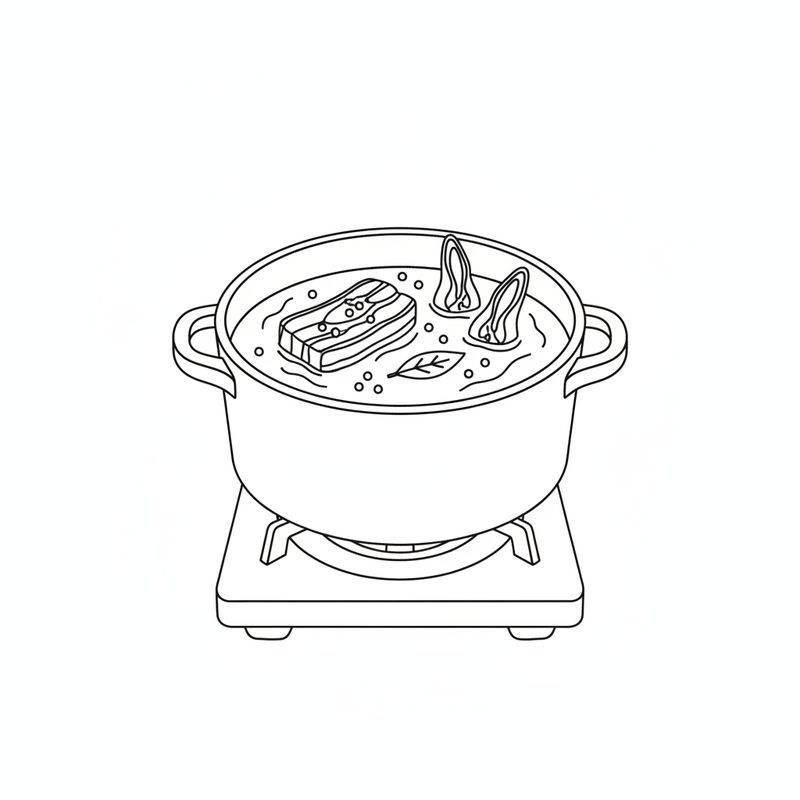
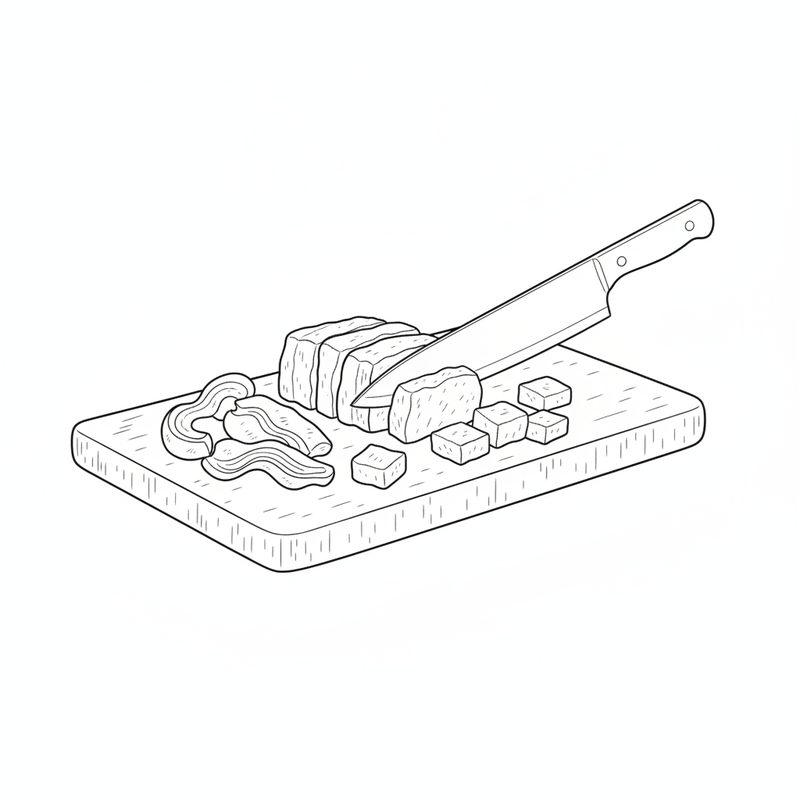
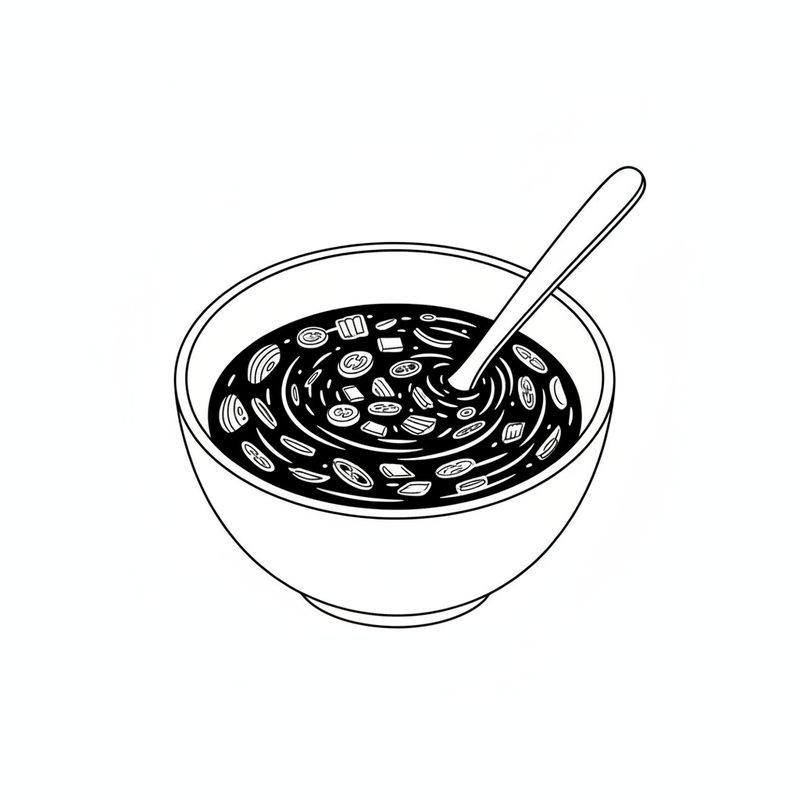
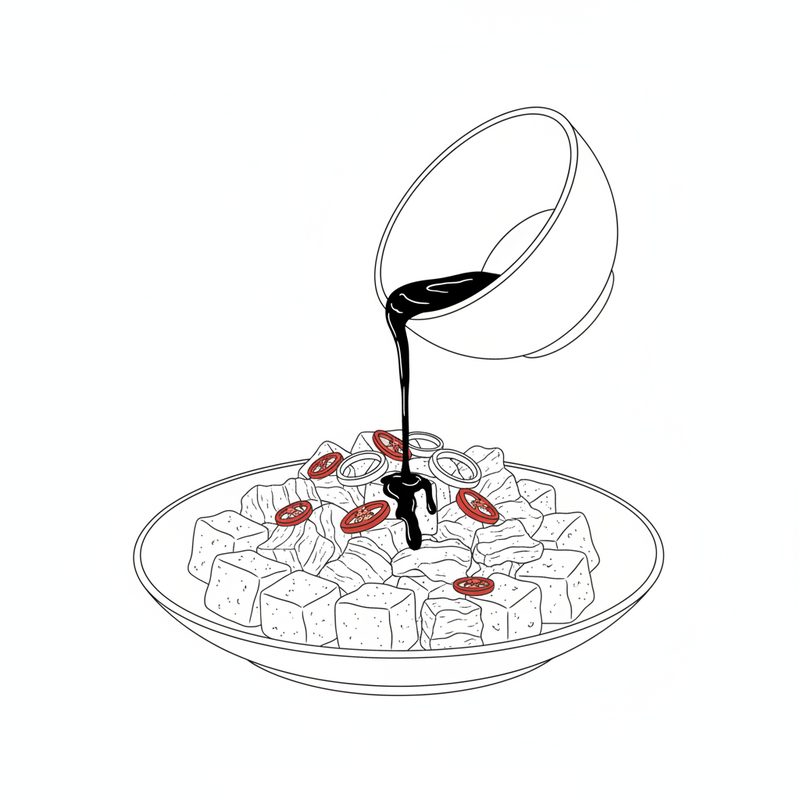
The pork is done when a fork goes into the thickest part of the fat with no push back. If the skin still feels rubbery, give it another 10 minutes. Let it cool before you cut it. Hot pork belly shreds; cooled pork belly slices clean.
Dry tofu is crisp tofu. Wet tofu spits in the oil and steams instead of browning. Pat it dry, press it if you have time, and lower it into the oil away from you.
Fry the tofu as a whole block or in thick slabs, then cube it after. A small cube fried on its own dries out in the middle. A big piece fried and then cut keeps a soft centre inside the golden crust, and the cut sides drink up more sauce.
Tokwa’t baboy sauce
The sauce is vinegar, soy sauce and sugar with raw onion and chili, at roughly six parts vinegar to one part soy. It should taste sour first. If it tastes like soy sauce, add vinegar.
Sugar is where recipes disagree. Kawaling Pinoy and Nora’s Recipes both use about 4 teaspoons of sugar per cup of vinegar, which gives the 2 tablespoons on the card: tangy, but balanced. Panlasang Pinoy and Bite My Bun use about 1 teaspoon per cup, which gives a much sharper sauce. Start with 1 tablespoon, taste, and add the second if it bites too hard.
Two ways to finish it. Kawaling Pinoy brings the sauce to a boil for a few minutes with half a cup of the pork’s cooking liquid, which softens the raw vinegar edge and adds body. Panlasang Pinoy only warms it briefly. Both work. If you use the broth, save some before you drain the pork.
Pour the sauce over everything for a dish that eats like a salad, or keep it in a bowl on the side for dipping. Dipping keeps the tofu crisp longer, so it is the better choice for a party plate.
Variations
The common changes are fried pork instead of boiled, a quick no-boil version, and black beans in the sauce.
- Fried pork. Nestlé Goodnes and Nora’s Recipes fry the boiled pork until golden before cutting it, much like lechon kawali. You get a crackling edge on every piece.
- Quick version. Some cooks skip the boil and deep-fry raw pork pieces. It is faster, but the meat is chewier and the fat does not render as well.
- With tausi. Salted black beans stirred into the sauce add a deep, savoury note.
- Crispy pata leftovers. Chopped leftover crispy pata is a fine stand-in for boiled pork.
How to serve tokwa’t baboy
Serve it three ways: as pulutan with drinks, as a main with steamed rice, or as a side to rice porridge. The last one is the classic pairing. Hot, plain lugaw, arroz caldo or goto needs something sour and crunchy next to it, and a spoon of the vinegar sauce over the porridge does the same job.
Make-ahead and leftovers
Boil the pork and mix the sauce ahead of time; fry the tofu just before serving. The sauce keeps in a covered jar in the fridge, and the boiled pork keeps covered in the fridge too.
Store leftovers with the sauce separate if you can. Tofu that sits in vinegar overnight goes soft. To bring it back, fry the tofu again in a little oil until the crust firms up, then add the cold pork and fresh sauce.
Questions people ask
What's the difference between tofu and tokwa?
Tokwa is the Filipino name for firm tofu. The word comes from Lan-nang, the Hokkien spoken by Chinese-Filipino families, and it means the dense, pressed beancurd you fry, not soft or silken tofu.
What is baboy in Filipino?
Baboy is the Tagalog word for pork, or pig. Tokwa’t baboy therefore means tofu and pork.
What are the ingredients of tokwa't baboy?
Pork belly (and often pig ears), extra-firm tofu, oil for frying, white vinegar, soy sauce, sugar, onion and chili, with peppercorns and bay leaves in the pot for the pork.
What is a good dish with pork and tofu?
Tokwa’t baboy is the Filipino answer: boiled pork and fried tofu in a vinegar-soy sauce. Serve it with rice, with drinks, or next to a bowl of rice porridge.
Can I make tokwa't baboy without pig ears?
Yes. Pork belly on its own is the most common modern version. Ears add a chewy crunch, but the dish works without them.