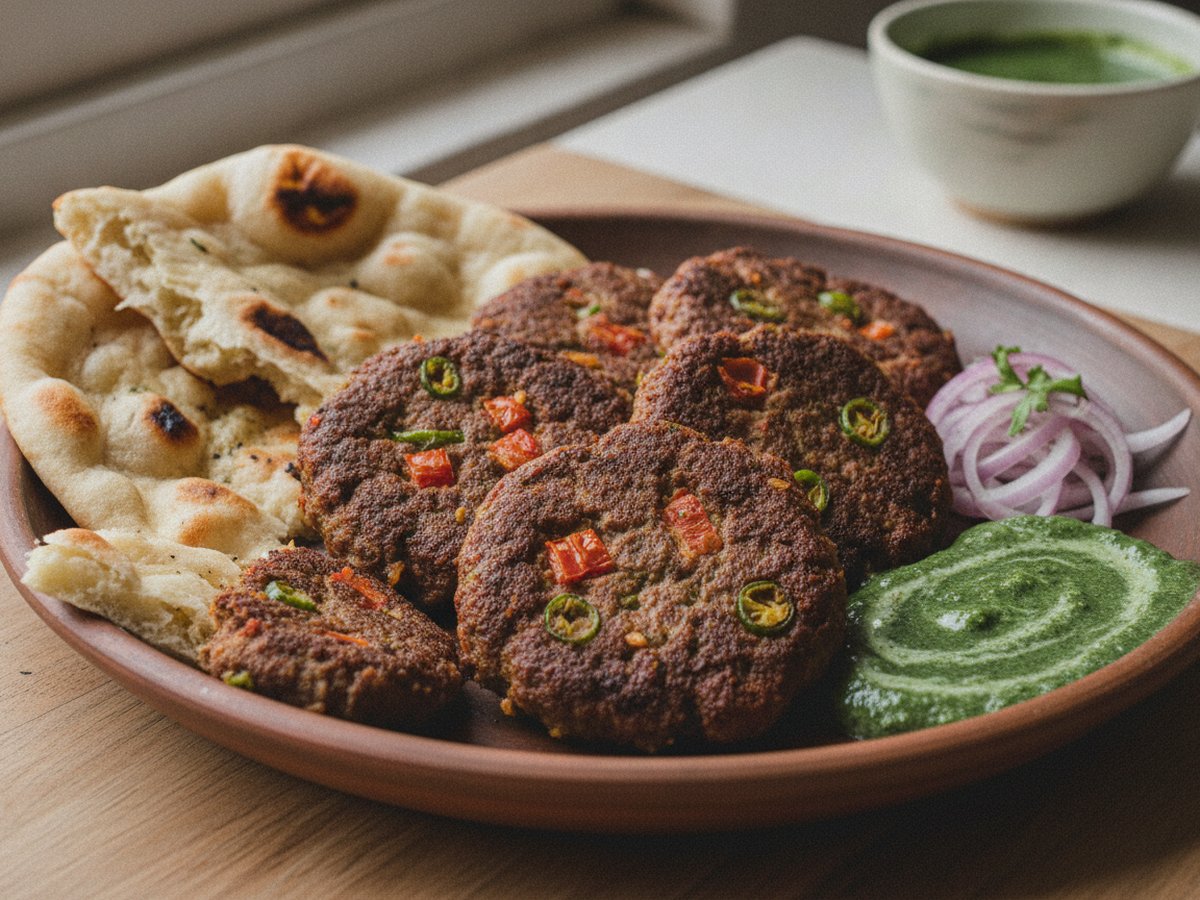
Chapli kabab is a large, thin, flat patty of fatty beef mince, seasoned with crushed coriander seeds, dried pomegranate seeds (anardana), green chilli, tomato and fresh coriander, then shallow-fried until the outside is dark and crisp and the inside stays juicy. It is the kabab of Peshawar, and it is eaten hot with naan, raita and lemon.
One thing decides whether it works: fat. Use mince with about 20% fat and press the patties thin. Lean mince and thick patties give you a dry spiced burger, not a chapli kabab.
Last updated
Recipe
Chapli Kabab Recipe (Peshawari Minced Beef Kebab)
Ingredients
For the spices
For the kababs
Method
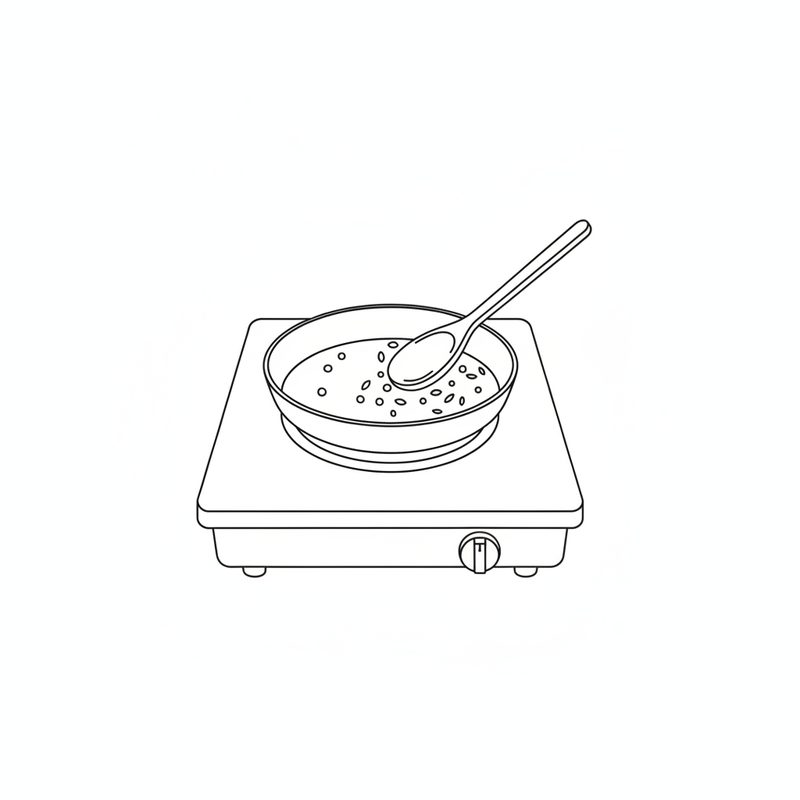
- Toast the coriander seeds, cumin seeds and ajwain in a dry pan over medium-low heat for 3–4 minutes, stirring, until they darken a shade and smell toasted. Tip them out.
- Toast the gram flour in the same pan, stirring, until it darkens slightly and smells nutty. Let it cool.
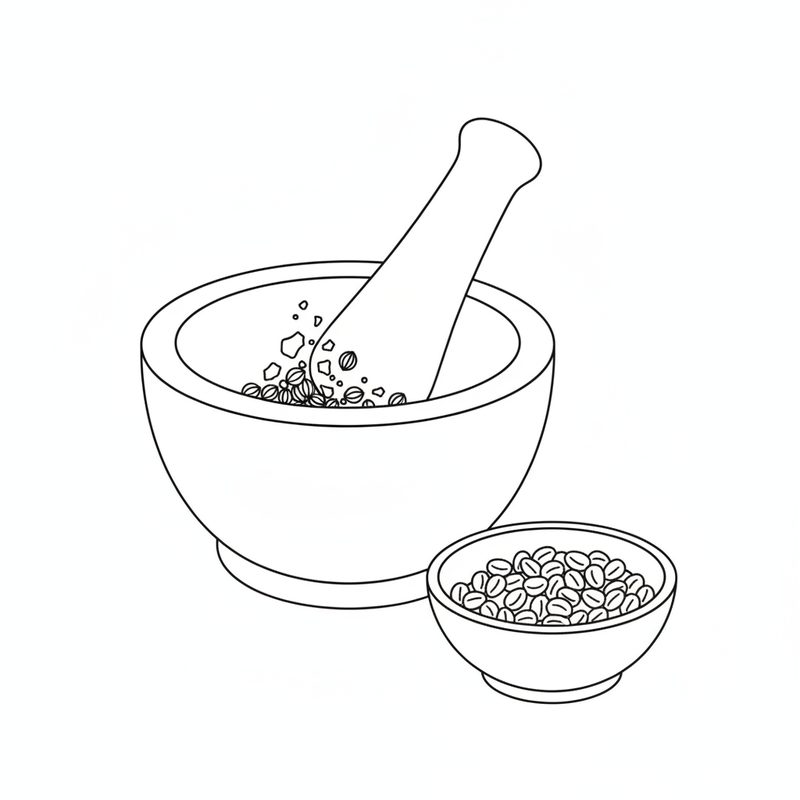
- Crush the toasted seeds and the anardana coarsely in a mortar and pestle. You want broken seeds, not powder.
- Put the mince in a large bowl with the crushed spices, toasted flour, onion, spring onions, green chillies, garlic, ginger, coriander leaves, chilli flakes, black pepper, salt and egg. Add the squeezed tomato last.
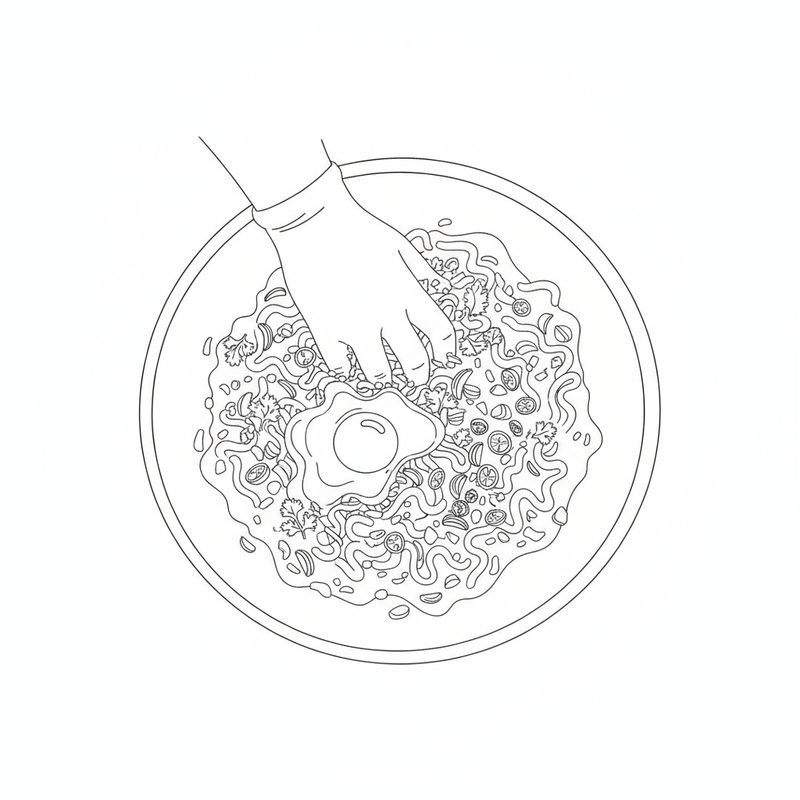
- Knead with a gloved hand for 3–4 minutes, until the mixture turns sticky and holds together when pressed.
- Divide into 10 portions. With wet or oiled hands, press each one into a thin round no more than ¾ cm thick. Ragged edges are fine.
- Heat enough oil to cover the base of a wide heavy pan over medium-high heat. Fry the kababs in batches for 3–4 minutes a side, spooning oil over the top, until the crust is deep brown and the edges crisp.
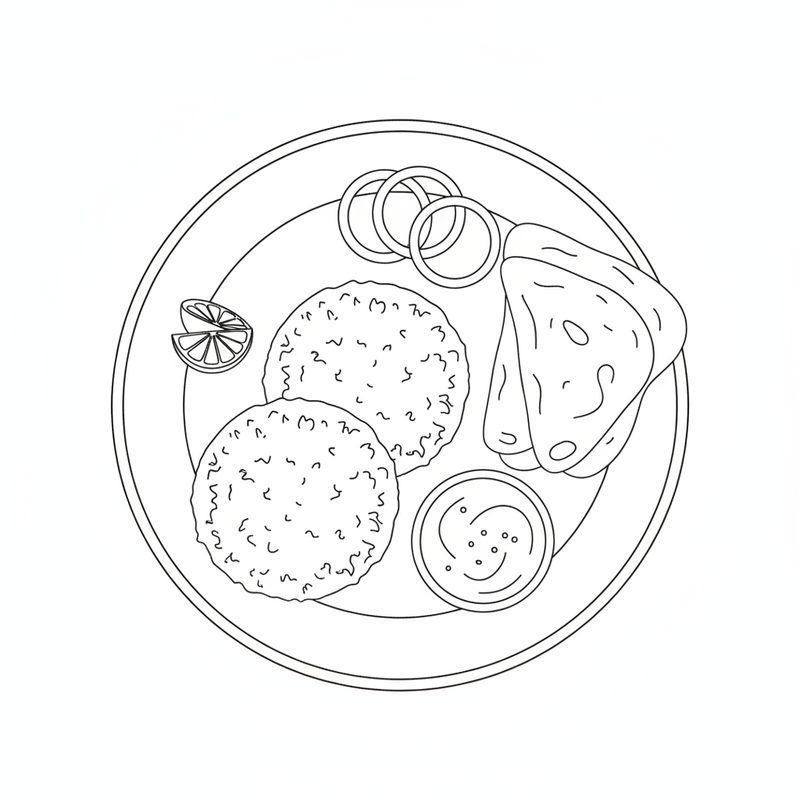
- Drain on kitchen paper and serve hot with naan, raita and lemon wedges.
What chapli kabab is made of
Minced beef or mutton with a good amount of fat, whole spices that are toasted and coarsely crushed, a little flour and an egg to bind, and a lot of fresh chopped vegetables. The spice base is coriander seed, cumin and chilli flakes, and the sour note comes from anardana. Onion, tomato, green chilli, spring onion, ginger, garlic and coriander leaves are mixed straight into the raw meat.
The recipes compared for this page agree on that list almost completely. Where they differ is in quantity, especially coriander seed: two of them use 1 to 1½ tbsp for 500 g of meat, and two others use roughly double. The card gives 1½ tbsp as the default and the range beside it, because this is the spice that shapes the flavour most and it is easy to add more next time.
The step most people get wrong
Using lean mince. Chapli kabab is fried hard and fast in a thin layer of fat, and the fat inside the meat is what keeps the middle soft while the outside crisps. With lean mince the crust forms, the inside dries out, and the patty cracks when you turn it.
The second mistake is a wet mixture. Tomato and onion carry a lot of water, so the tomato is deseeded and squeezed before it goes in. If the mixture feels loose after kneading, it will spit in the pan and fall apart. What you want is a mixture that is sticky, holds its shape when pressed, and leaves a slight film on your glove.
Toasting the flour matters too. Raw gram flour tastes raw in a kabab that only cooks for a few minutes. Toasted, it smells nutty, binds better and adds to the colour of the crust.
Where chapli kabab comes from, and what the name means
Chapli kabab is generally attributed to Peshawar, in Khyber Pakhtunkhwa, Pakistan, and it is strongly associated with Pashtun cooking. Wikipedia gives Peshawar as the origin, and the Bloomsbury Handbook of Indian Cuisine (2023) says it may have originated there, which is a more careful claim.
The name has two explanations and neither is settled. One reads it from a Pashto word meaning flat. The other reads it from chappal, a sandal, because of the shape. Both describe the same thing: a kabab that is wide and thin rather than round or long.
So is it Pakistani or Afghan? It is most closely tied to Peshawar, and Pashtun cooking spans the border between Pakistan and Afghanistan, so the dish is not confined to one side of it, and today it is eaten across South Asia. A one-word answer is tidier than the facts.
Beef, mutton or chicken
Beef is the most common choice in the recipes compared here, and mutton is the other classic. Both work for the same reason: they have enough fat. Lamb mince can be used exactly like beef.
Chicken chapli kabab is a real and popular variation, but it is a different dish to cook. Chicken mince is lean, so it needs more binding and gentler frying, and it will never be as juicy. If you want a chicken kabab from this kitchen, the chicken seekh kabab is built around chicken from the start.
Restaurant style and home style
Restaurant style means a wide pan and a generous amount of fat, and some cooks fry in beef tallow rather than oil. One of the sources compared here lists tallow as an option, and another fries in ghee. Tallow adds a beefy flavour and holds a steady high heat.
That is also why the oil in a chapli kabab pan turns so dark. Flour, crushed spices, chilli and meat juices fall out of every patty and fry in the fat. Batch after batch, the fat darkens and colours the next kababs. At home you fry one pan in fresh oil, so your oil will stay lighter and your kababs will be slightly paler. That is expected, not a fault.
Home style in this recipe means a heavy frying pan, enough oil to cover the base, and batches of two or three. You get the crisp edge and the dark crust without a deep pan of fat.
Chapli kabab, step by step
 Toast the coriander and cumin seeds in a dry pan.
- Crush the seeds coarsely with the anardana.
- Mix the mince with everything else and knead.
- Press each portion into a thin round.
- Shallow-fry until the crust is deep brown, then turn.
- Serve hot with naan, raita and lemon.
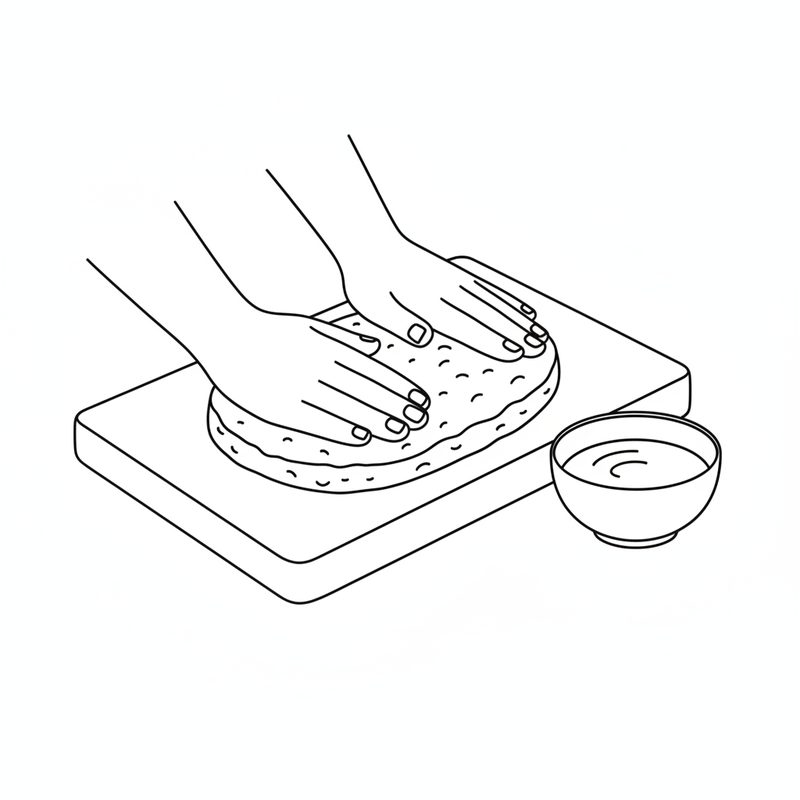
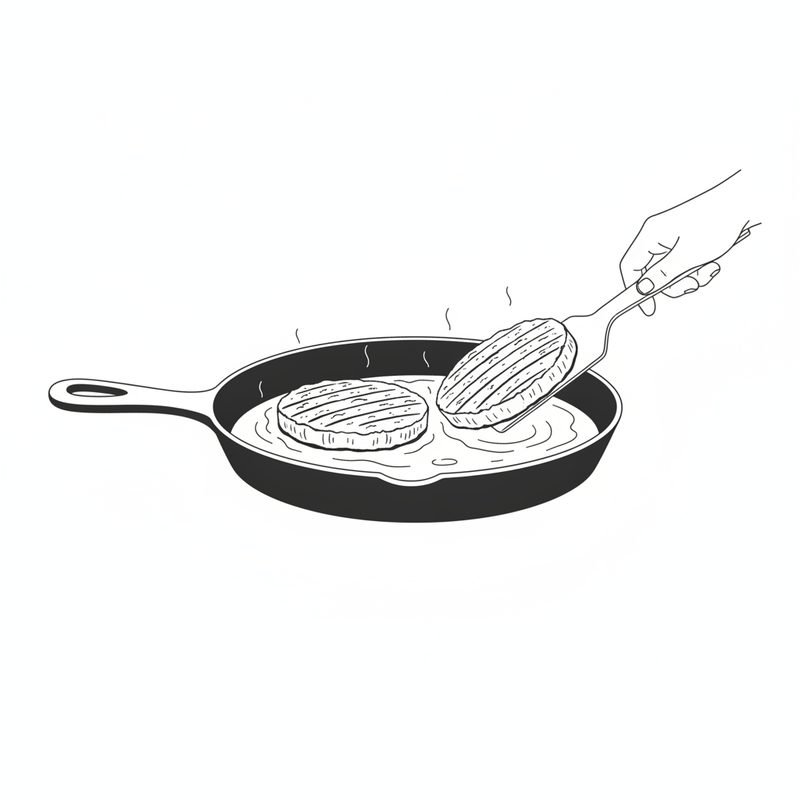
Press the patties on a board or directly in the hot pan with a flat spatula. Aim for no more than about ¾ cm thick, which is the figure one of the sources gives. Ragged edges are good; they are the crispest part.
Fry over medium-high heat and spoon a little oil over the top while the first side cooks. The kabab is ready to turn when the underside is deep brown and the edge has lifted and crisped. Minced beef is safe to eat when it reaches 71°C (160°F) in the centre, which is the USDA guideline for ground beef, and a thin patty gets there quickly.
A shorter route
Use ready-made ginger and garlic paste, a food processor for the onion, and ground coriander and cumin instead of toasting and crushing whole seeds. The kababs will still be good. What you lose is texture: crushed seeds give small bursts of flavour and a slight crunch, while ground spices blend into the meat evenly and taste flatter.
A packet chapli kabab masala, such as the one Shan sells, replaces the dry spices in one go. Use it in place of the coriander, cumin, anardana, chilli flakes and salt, not as well as them, or the kababs will be too salty.
What to serve with chapli kabab
Hot naan, raita and lemon wedges are the standard, with sliced onion and a simple salad of tomato and cucumber. Chapli kabab also works folded inside a naan as a wrap, or on the side of a chicken karahi or a plate of biryani.
Storing, freezing and reheating
Raw shaped kababs freeze well. Lay them on baking paper, freeze them flat, then stack them with paper between each one. Thaw them in the fridge before frying so the middle cooks through before the outside burns.
Cooked kababs go into the fridge within two hours of cooking, which is the standard USDA food-safety rule for cooked meat. Reheat them in a dry frying pan over medium heat rather than in the microwave, because a pan brings the crust back and a microwave makes it soft.
Is chapli kabab healthy?
It is a fried dish made with fatty mince, so it is rich rather than light. It also carries a lot of fresh vegetables and herbs, and shallow-frying uses far less fat than deep-frying. To make it lighter, drain the kababs well on paper, serve them with salad and raita rather than extra bread, and treat them as part of a meal rather than the whole of it. For meat cooked with less fat in the pan, chicken tikka is the leaner choice.
Questions people ask
Why do my chapli kababs fall apart?
The mixture is too wet or too lean. Deseed and squeeze the tomato, use mince with about 20% fat, and knead until the mixture turns sticky. Wait until the first side is properly browned before turning.
Can I air fry chapli kabab?
Yes, but they will be drier and less crisp than shallow-fried. One of the sources compared here air fries them at 200°C (400°F) for 15 minutes, turning halfway, with a light spray of oil on both sides.
Can I make the mixture ahead?
Yes. Mix and shape the kababs, cover them and keep them in the fridge until you fry them later the same day, or freeze them raw between sheets of baking paper.
Do I have to use anardana?
It gives chapli kabab its sour note, so leave it out only if you cannot find it. A squeeze of lemon over the finished kabab is the closest easy substitute, though it tastes sharper and less fruity.