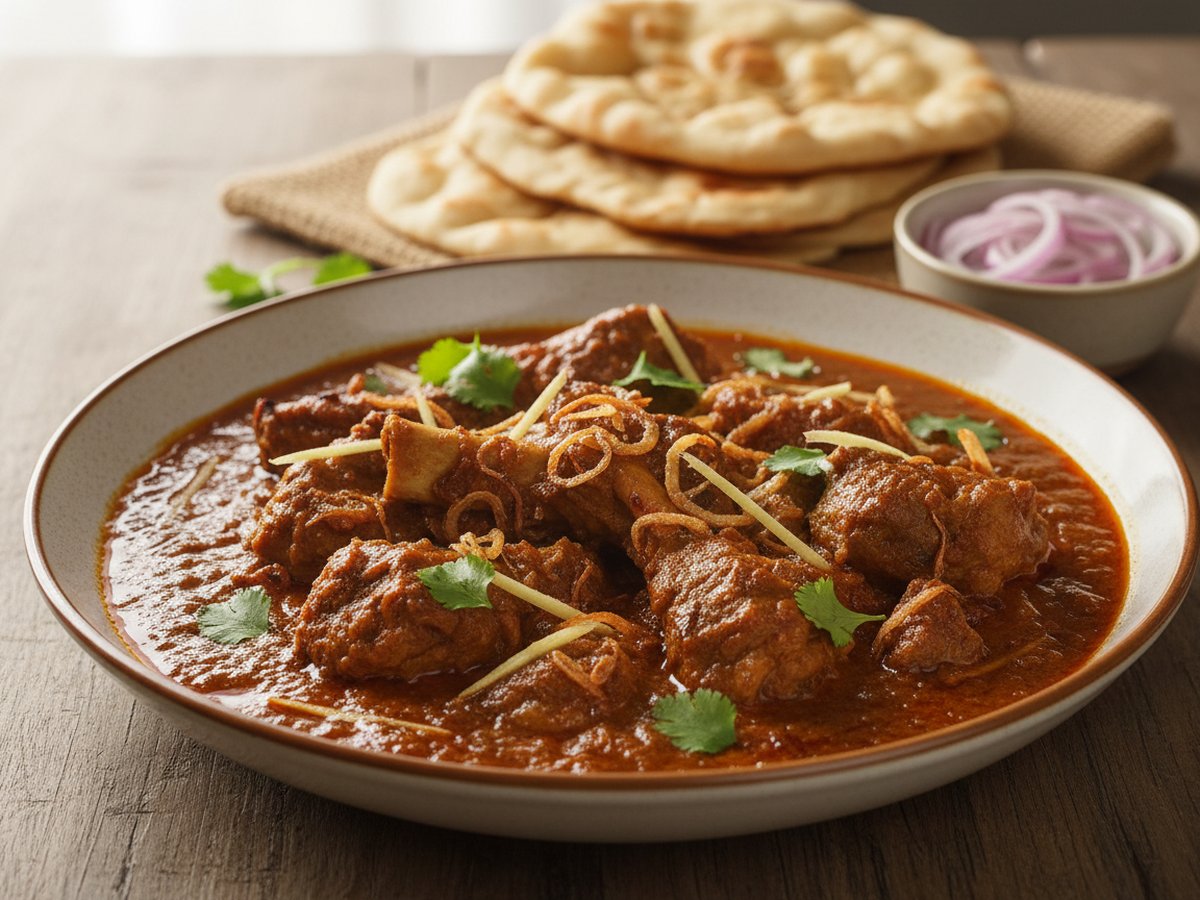
Goat korma is bone-in goat braised slowly in yogurt and crushed fried onions with whole spices, then finished with mace, nutmeg, ground cardamom and a few drops of kewra water. For 500 g of meat, serving 4, plan on about 2 hours, most of it quiet simmering.
One thing decides whether it works: the onions. Fried evenly to deep golden and crushed, they give korma its colour, its body and its faint sweetness. Pale onions give a thin, sweet sauce; burnt ones make the whole pot bitter, and nothing added later fixes either.
In Pakistan and India, mutton korma and goat korma are usually the same dish, because mutton there normally means goat. Lamb works with the same method and a shorter simmer.
Last updated
Recipe
Goat Korma (Mutton Korma)
Ingredients
To finish
Method
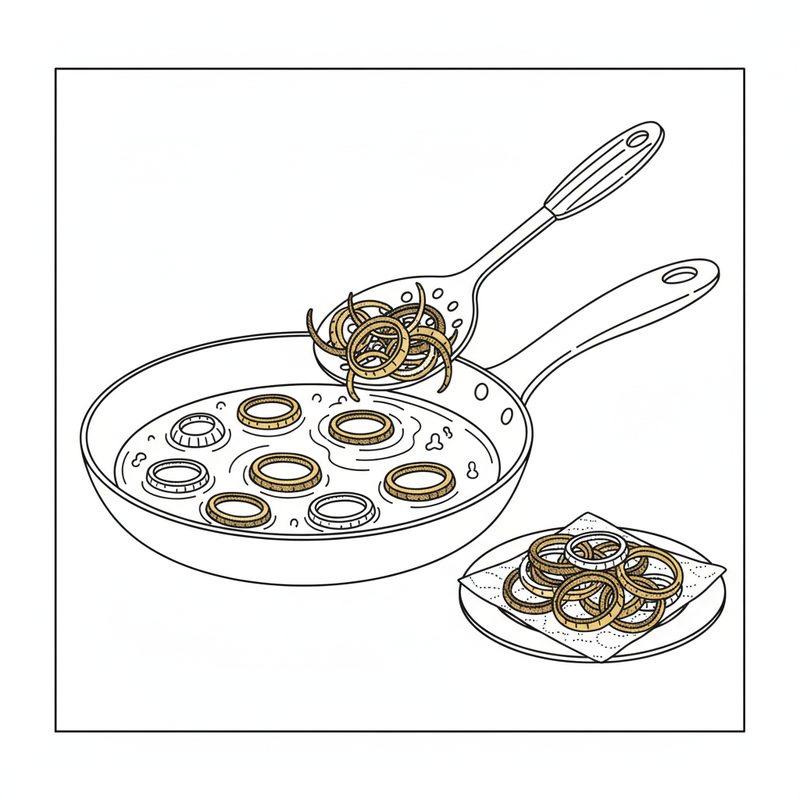
- Heat the oil or ghee in a wide, heavy pan over medium heat. Add the onions, separated into rings, and fry for 10 to 14 minutes, stirring only once the edges start to colour, until every slice is evenly deep golden. Lift them onto paper towel with a slotted spoon and keep the fat.
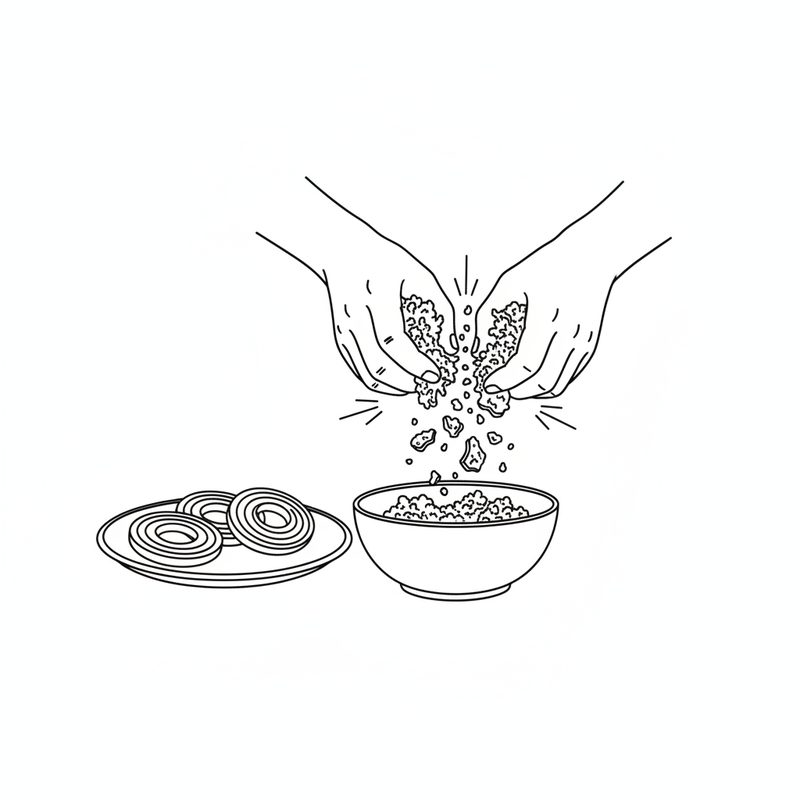
- Let the onions cool until crisp. Keep a small handful for the top and crush the rest finely with your hands, or pulse them with 2 to 3 tablespoons of the yogurt.
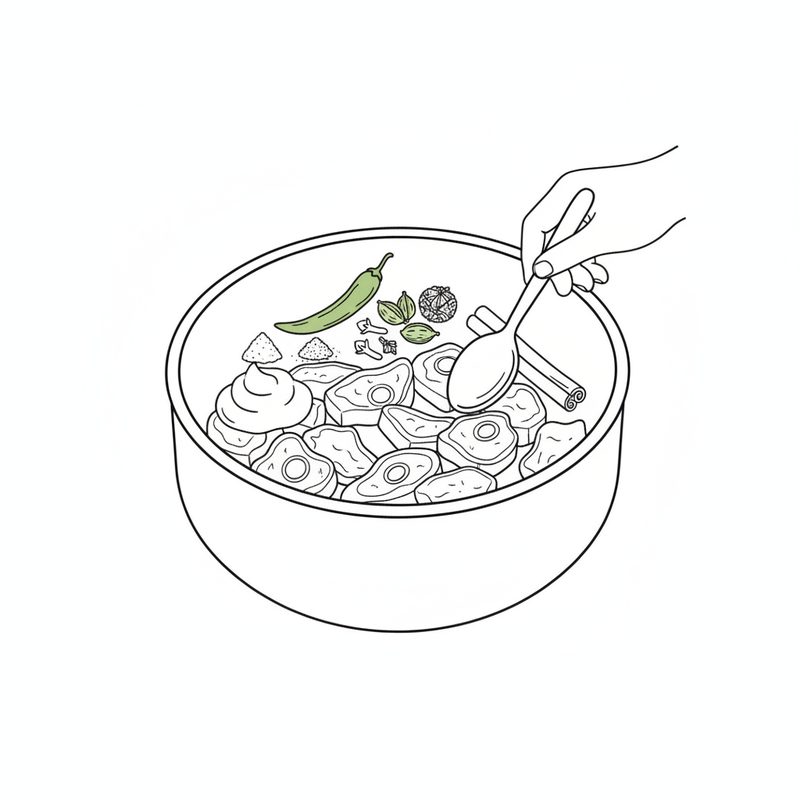
- In a heavy pot, mix the goat with the yogurt, ginger-garlic paste, chilli powder, ground coriander, turmeric, salt, green chilli, cloves, green and black cardamom and cinnamon. Leave it while the onions cool, or cover and refrigerate overnight and bring it back to room temperature for 1 to 1 1/2 hours before cooking.
- Add 3 tablespoons of the onion-frying fat to the pot. Cook over medium heat, stirring, for 12 to 15 minutes, until most of the liquid from the yogurt has cooked off and the meat has browned.
- Stir in the crushed onions and the hot water. Cover and cook on low for 1 to 1 1/2 hours, stirring every 10 to 15 minutes and adding a splash of hot water if the sauce catches, until the meat comes away from the bone and oil rises to the surface.
- Stir in the mace, nutmeg, ground cardamom and kewra water. Taste for salt, cover and simmer on low for 5 minutes more.
- Scatter over the ginger and the reserved fried onions. Rest for 10 to 20 minutes before serving with naan, roti or rice; the sauce thickens as it stands.
What is goat korma?
Goat korma is a braise, not a fried curry. The meat cooks in its own juices and a yogurt-and-onion masala until it comes away from the bone, and the sauce ends thick enough to coat a spoon, with oil showing at the edges.
Four ranking recipes were compared for this page: Indian Healthy Recipes, Tea for Turmeric, Sinfully Spicy and Licious. All four build the sauce from yogurt and browned onions, all four use whole cloves and cardamom, and all four finish with mace, nutmeg and kewra. None of the four uses tomato. That shared core is what the card below follows.
Korma is mild in heat but not plain. The chilli powder is there mainly for colour, and the finishing spices are warm and floral rather than hot.
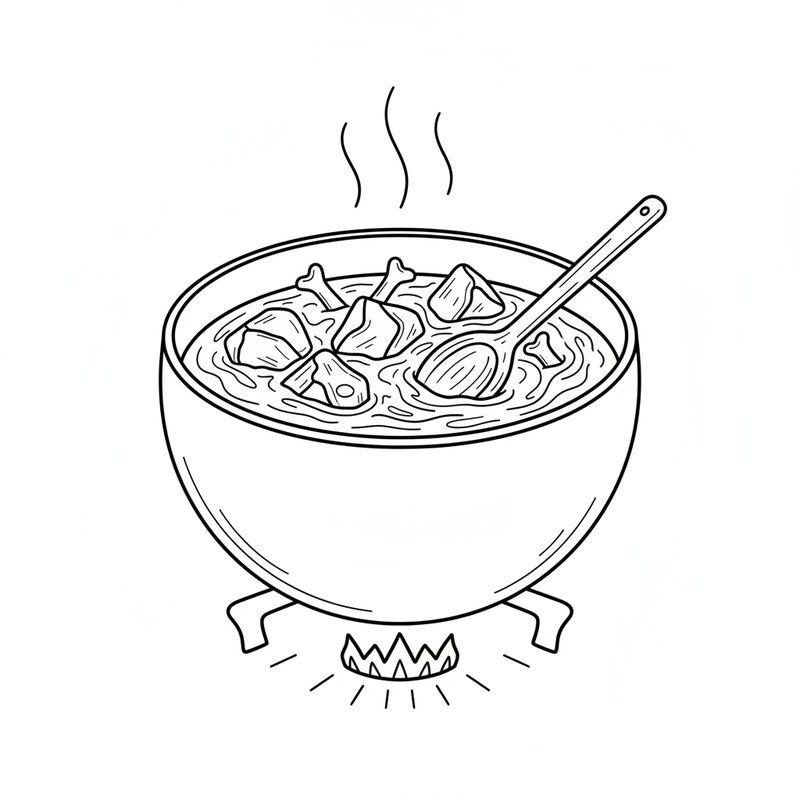
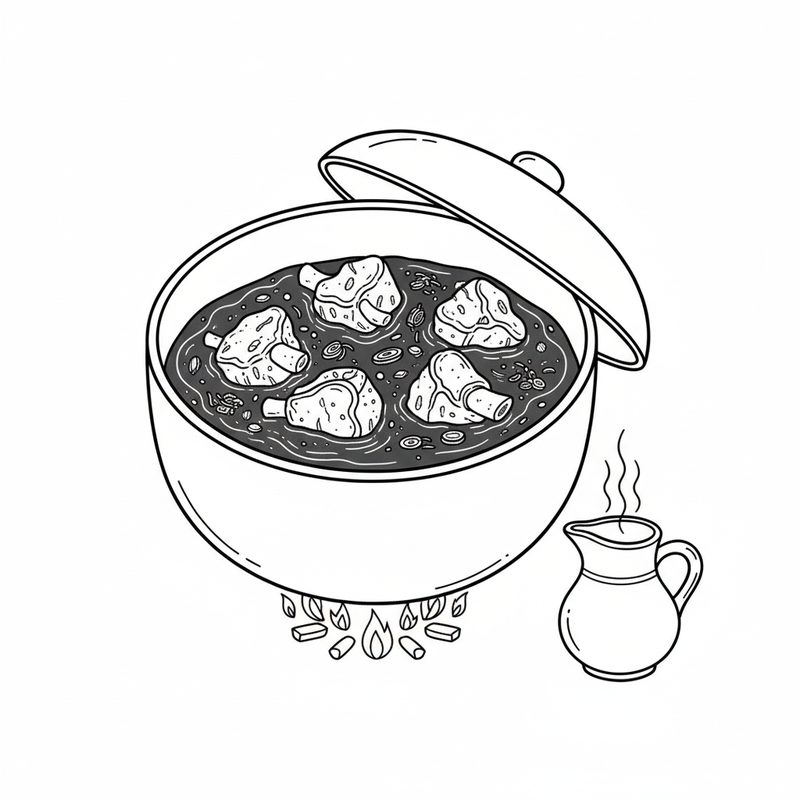
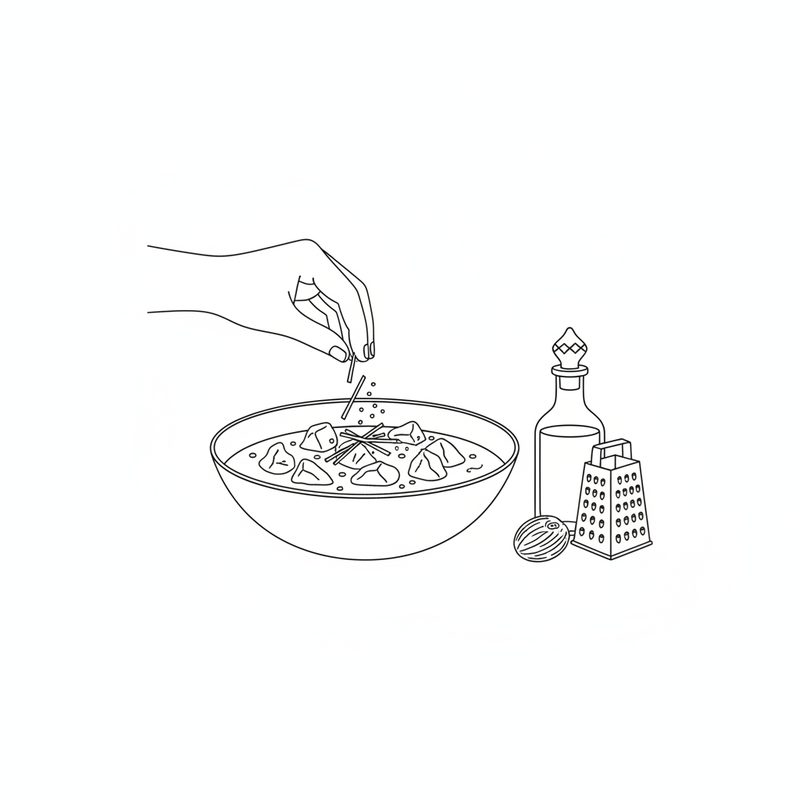
Goat korma, step by step
 Fry the sliced onions until evenly deep golden, then lift them out.
- Crush the cooled, crisp onions; keep a few whole for the top.
- Mix the goat with yogurt, paste, ground and whole spices.
- Fry the meat in a little onion fat until the yogurt liquid cooks off.
- Add crushed onions and hot water, cover and simmer low until tender.
- Finish with mace, nutmeg, cardamom, kewra and ginger.
The onion step most people get wrong
The onions are done when every slice is an even deep golden brown, the colour of strong tea, and they crisp as they cool. That takes 10 to 14 minutes over medium heat in a wide pan.
The usual mistake is crowding them in a small pan. The slices steam in their own water, go limp and brown unevenly, and the dark edges turn bitter before the middles colour. A wide pan and enough fat to cover the base properly avoid it.
Leave them alone for the first few minutes while they soften and release water. Stir once the edges begin to colour, and lift them out a shade lighter than you want, because they keep darkening on the paper towel.
Store-bought fried onions (birista) are a fair shortcut. Indian Healthy Recipes gives about 75 g of them as the swap for the fresh onions here. What you lose is the onion-flavoured fat, which this method uses to cook the meat.
Goat or mutton: which meat to buy
Buy bone-in goat cut for curry, in 4 to 5 cm pieces, ideally a mix of shoulder and leg with some rib. The bone and the connective tissue are what give korma its body; boneless leg cooks faster but the sauce is thinner.
On South Asian menus and at South Asian butchers, mutton normally means goat. In the UK and Australia it means older sheep. Both work, as does lamb; the difference is time. Lamb is usually tender sooner, while older goat can need the full 90 minutes or more.
Judge by the meat, not the clock. It is ready when a piece pulls away from the bone with a spoon and no resistance.
Mutton korma vs mutton curry
The difference is the base. Korma is built on yogurt and fried onions with no tomato, and finished with mace, nutmeg and kewra. A typical mutton curry is built on onion and tomato with more ground spice and a looser gravy.
| Mutton korma | Typical mutton curry | |
|---|---|---|
| Base | Yogurt and crushed fried onions | Onion and tomato |
| Finishing spices | Mace, nutmeg, cardamom, kewra | Garam masala |
| Sauce | Thick, glossy, oil at the edges | Looser, more gravy |
| Heat | Mild to medium | Medium to hot |
Bhuna dishes sit on the other side again: bhuna gosht is simmered and then fried hard until the sauce is almost gone, where korma keeps its sauce.
How the sources differ
The card uses a quantity when at least two of three sources agree once scaled to 500 g of meat. Where they did not agree, one source was chosen and is named here.
- Yogurt. Tea for Turmeric and Sinfully Spicy both land on about 120 g (1/2 cup) per 500 g. Indian Healthy Recipes uses twice that, which gives more sauce and a sharper tang.
- Ginger-garlic paste. The sources range from about half a tablespoon to three. The card follows Indian Healthy Recipes at one tablespoon.
- Cinnamon. Amounts range from none to a 5 cm piece. The card follows Sinfully Spicy at about 1 cm, so it supports the mace and cardamom instead of leading.
- Chilli. Tea for Turmeric, Sinfully Spicy and Licious all come to about 2 tsp per 500 g. Use 1 tsp for a very mild korma; Kashmiri chilli gives the red colour with little heat.
- Time. Prep is the median of the stated prep times, leaving out one that folds overnight marinating into prep; cook time is the median of the three stovetop recipes. Overnight marinating is optional and not counted.
- Servings. The three stovetop sources serve 3 to 5 from 500 to 600 g; the card uses the median, 4, with bread or rice.
Home style and restaurant style
Home-style korma is the card: yogurt, onions, spices and time. Restaurant-style korma usually adds richness on top, most often cream and a paste of almonds or cashews.
To go that way, stir in 2 tbsp cream with the finishing spices, as Tea for Turmeric does, or blend a small handful of blanched almonds into the yogurt. The sauce turns paler and rounder, and the onion flavour steps back.
Some cooks also add ground cumin and a pinch of garam masala; Tea for Turmeric and Licious both do. It is a fair variation, but it moves the korma toward a curry and is left off the card.
The pressure cooker route
A pressure cooker cuts the simmer from 60 to 90 minutes to roughly 25. Tea for Turmeric gives 25 minutes at high pressure in an Instant Pot with a natural release, using less water because almost none evaporates.
Fry the onions and the meat exactly as on the card, then pressure cook. What you lose is the slow reduction: the sauce comes out thinner and needs a few minutes uncovered at the end, stirring, until the oil separates again.
What to serve with goat korma
Serve it with flatbread or plain rice, something that soaks up a thick sauce. Naan, roti and paratha are the usual choices; a sweet peshwari naan works well against the mild spice.
A bowl of sliced raw onion with lemon and a green salad cut the richness. For a larger spread of meat dishes, korma sits well next to a mutton leg roast or a chicken karahi, which is drier and sharper.
Storing and reheating
Refrigerate leftovers within 2 hours of cooking and eat them within 3 to 4 days, which is the USDA leftovers guidance. It also freezes; thaw it overnight in the fridge before reheating.
Reheat gently with a splash of water until it is steaming hot all the way through, stirring so the bottom does not catch. The sauce thickens in the fridge and loosens again as it warms.
Questions people ask
What is the authentic recipe for korma?
There is no single authentic recipe, but the ranking recipes agree on a core: meat braised in yogurt and crushed fried onions with whole cloves and cardamom, finished with mace, nutmeg and kewra water, and no tomato.
Is goat korma spicy?
Goat korma is mild to medium. The 2 tsp of chilli powder is mostly for colour, especially if it is Kashmiri chilli; use 1 tsp for a very mild pot.
Can I use lamb instead of goat?
Yes. The method is the same, but lamb usually becomes tender sooner, so start checking well before the hour is up.
Why is my korma sauce thin?
Usually too much water, or the lid stayed on at the end. Simmer uncovered for a few minutes, stirring, until the sauce coats a spoon and oil shows at the edges.
Does korma have tomatoes?
Not in this style. None of the four recipes compared for this page uses tomato; the body of the sauce comes from yogurt and fried onions.
How long does goat take to become tender?
On the stove, 1 to 1 1/2 hours of low simmering for bone-in curry-cut goat, longer for older meat. In a pressure cooker, about 25 minutes at high pressure.