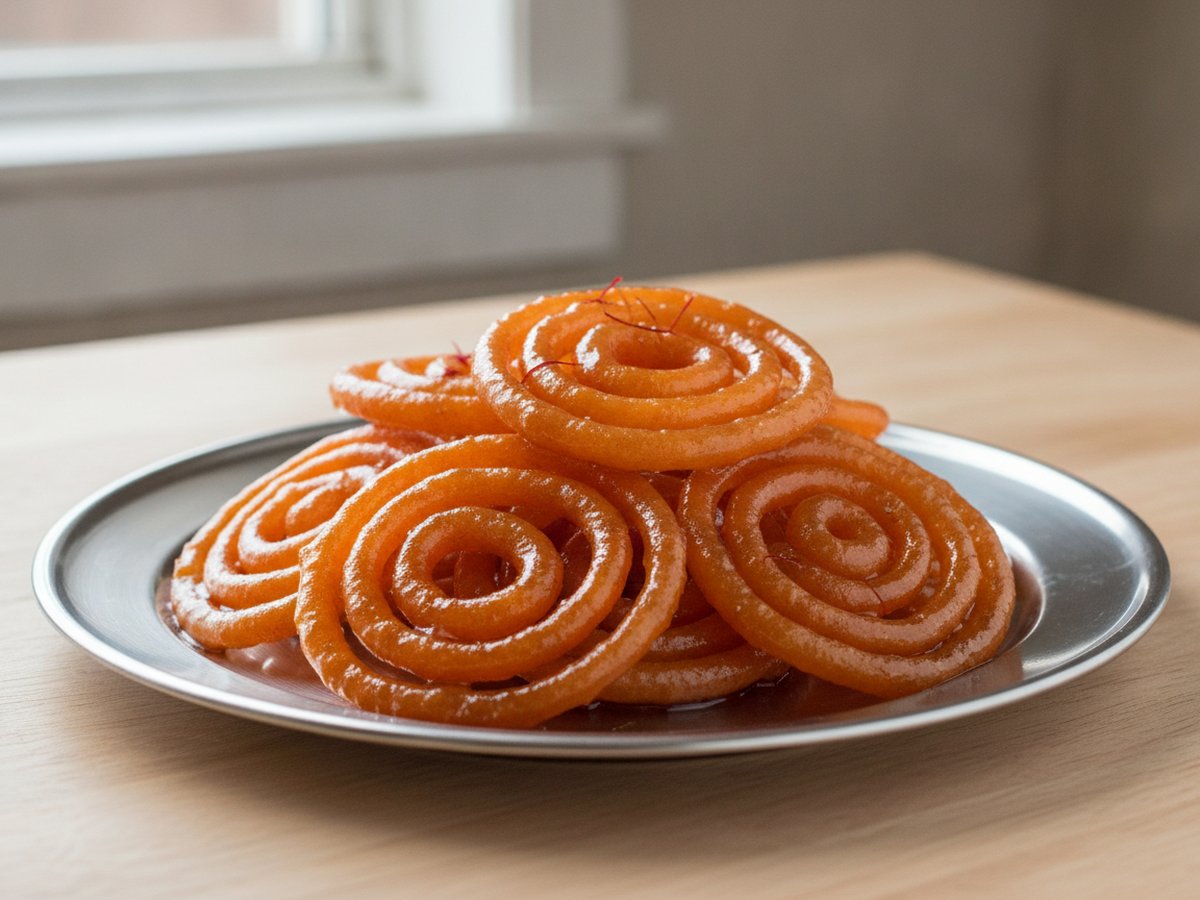
Jalebi is a spiral of fried batter soaked in warm sugar syrup: a crisp, crackling shell with syrup held inside each coil, usually bright orange or saffron-yellow. This is the instant version. A plain-flour and yogurt batter with a little baking soda goes straight from the bowl into the oil, and the whole batch takes about 40 minutes.
One thing decides whether it works: the syrup must be warm, not hot, and only sticky, not thick. Hot or heavy syrup turns a crisp jalebi soft in seconds, and no amount of good frying brings the crunch back.
Last updated
Recipe
Jalebi (Crisp Syrup-Soaked Spirals)
Ingredients
For the batter
For the syrup
To fry
Method
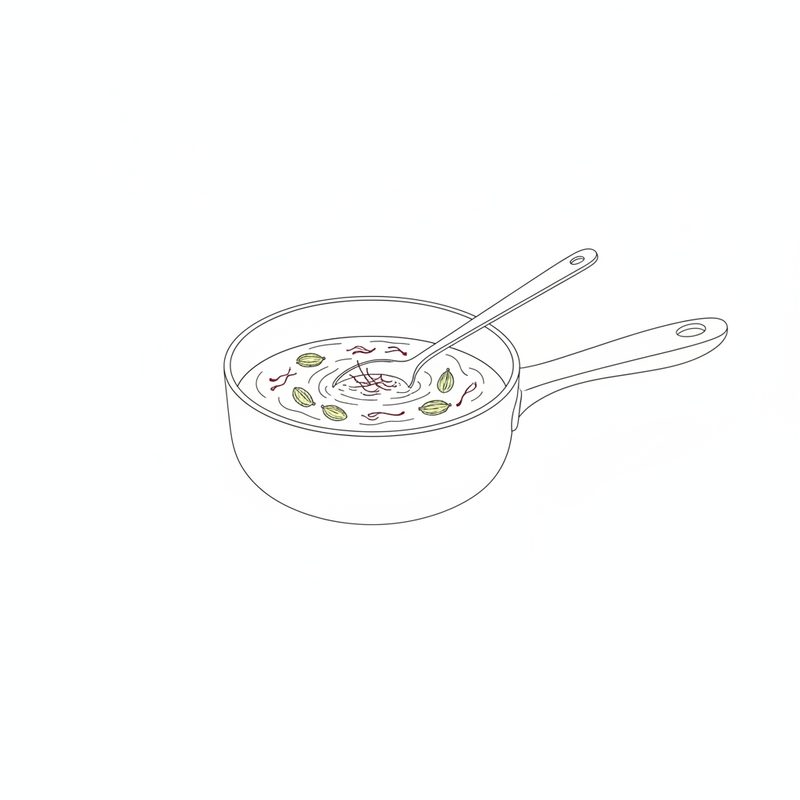
- Put the sugar and water in a wide pan over medium heat and stir until the sugar dissolves. Simmer for 5 to 7 minutes, until a cooled drop feels sticky between two fingers but does not pull into a firm thread.
- Turn off the heat. Stir in the cardamom, saffron and lemon juice, and leave the syrup to cool until warm.
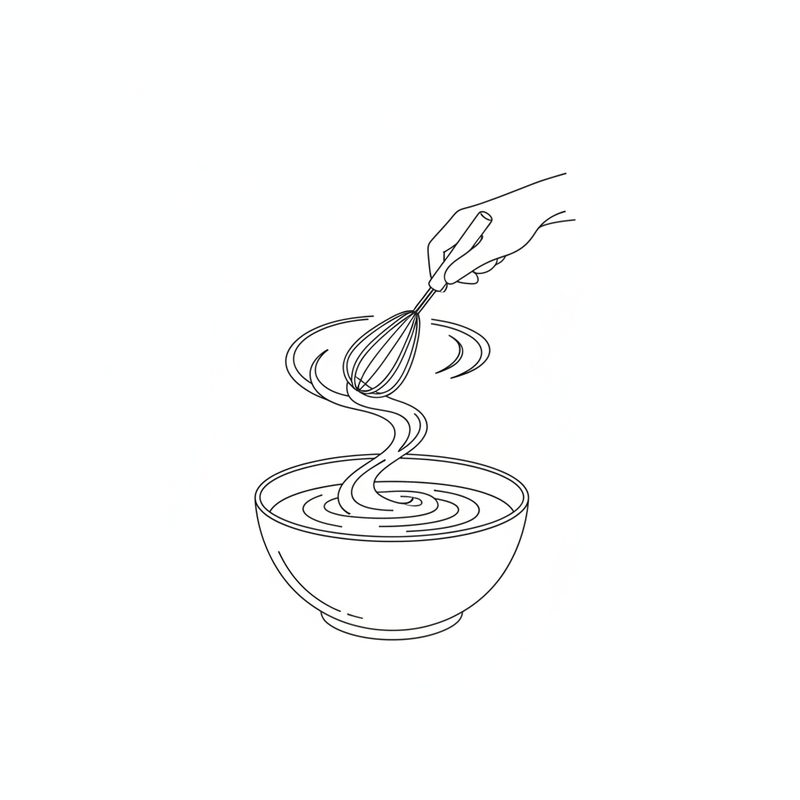
- Whisk the flour, cornflour or besan and baking soda together. Add the yogurt, melted ghee, colouring if using, and most of the water, and whisk until smooth and lump-free. Add water a spoonful at a time until the batter falls from the whisk in a thick, unbroken ribbon.
- Heat the oil and ghee in a wide, shallow pan over medium heat. Drop in a little batter: it should rise at once without browning.
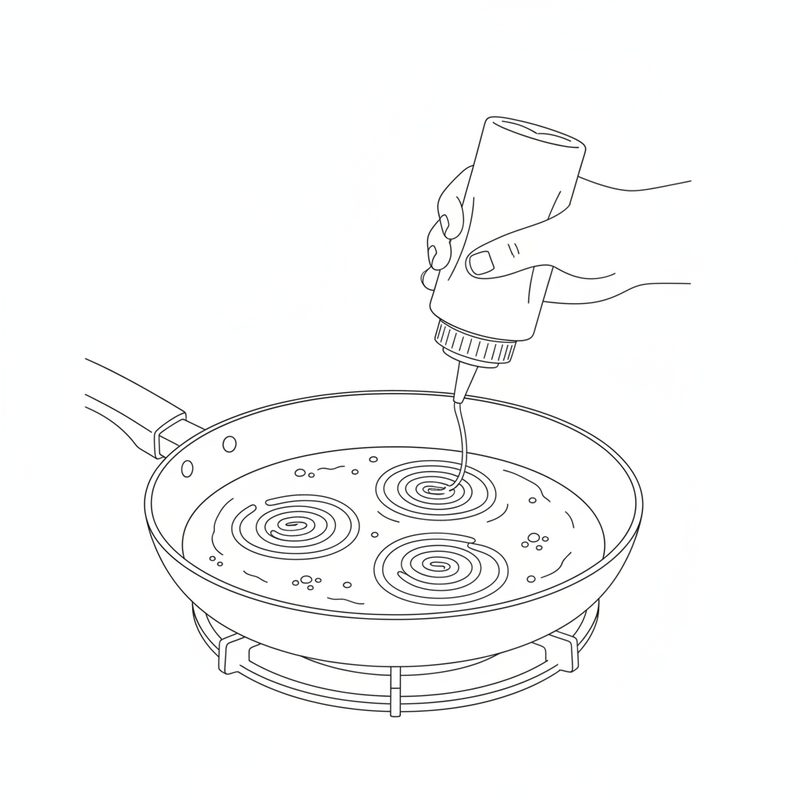
- Fill a squeeze bottle or piping bag with a 2 to 3 mm opening. Squeeze the batter into the oil in spirals, starting in the centre and working outwards for two or three rounds, then close the end across the spiral.
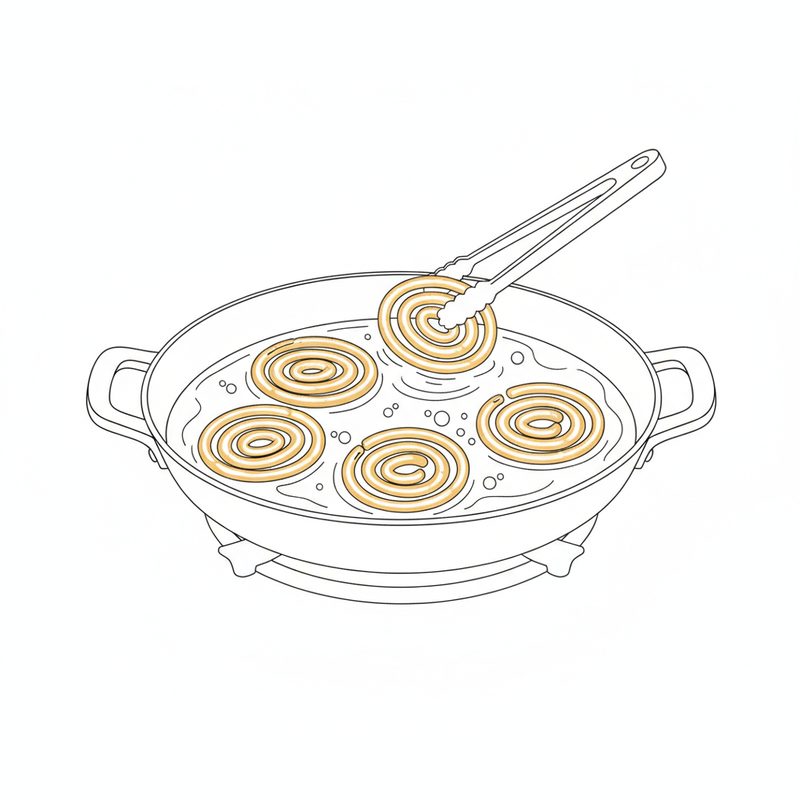
- Fry a few at a time, turning once, until both sides are crisp and light golden.
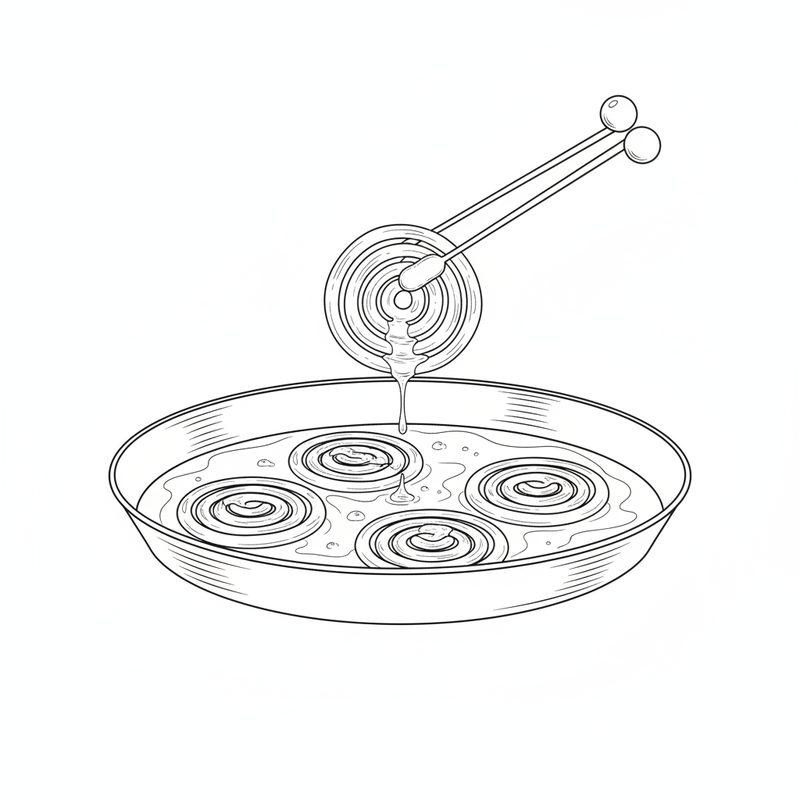
- Lift the jalebis out, let the oil drip off, and dip them in the warm syrup for a few seconds on each side. Lift onto a plate and serve warm.
What jalebi is
Jalebi is a deep-fried sweet made by piping a flour batter into hot oil in loose spirals, then dipping the spirals in sugar syrup. It is eaten across South Asia, West Asia and parts of Africa, and the South Asian kind is made with maida, plain white flour.
In Pakistan it is eaten at home and at weddings and festivals. In winter it is paired with warm milk for breakfast, and it turns up with evening tea or on a plate beside samosas and gulab jamun, according to the Wikipedia entry on jalebi. Pakistani and Indian jalebi is usually coloured orange; Afghan jalebi skips the colouring, so it is yellow and thinner.
Where jalebi began is contested. The earliest known recipe for a related fritter, zalabiya, is in a 10th-century Arabic cookbook, the Kitab al-Tabikh of Ibn Sayyar al-Warraq. The Hobson-Jobson dictionary of 1903 traces the word to the Arabic zulabiya or the Persian zolbiya, and a Jain text from around 1450 mentions jalebi at a merchant’s dinner. No single place can honestly claim it.
What jalebi is made of
Jalebi is made of plain flour, yogurt, a raising agent, water and ghee for the batter, and sugar, water, cardamom, saffron and lemon juice for the syrup. Every recipe compared for this page agrees on that core:
- Maida (plain flour), the base of the batter in every version.
- A little cornflour, rice flour or besan, which makes the shell crisper.
- Yogurt, for tang, and the acid that sets off the baking soda.
- Baking soda or baking powder in instant jalebi; yeast or a long rest in fermented jalebi.
- Sugar syrup with cardamom, saffron and lemon juice.
- Oil for frying, often with a spoonful or two of ghee added for flavour.
Orange food colouring is optional. Indian Healthy Recipes uses a pinch of turmeric instead.
Is jalebi made from besan or maida?
Jalebi is made from maida. Besan, gram flour, is only a small addition: 1 tablespoon per cup of flour in the Cook with Manali recipe and 2 tablespoons in Ministry of Curry‘s. Indian Healthy Recipes uses cornflour in its instant batter and switches to besan only when the batter is fermented. Either works in this card.
Instant or fermented jalebi
Instant jalebi is ready to fry as soon as the batter is mixed; fermented jalebi needs hours. Both are real methods, and they are not interchangeable in timing:
- Instant (this card). Yogurt and baking soda make the bubbles. Ministry of Curry rests the batter 20 minutes; Indian Healthy Recipes stirs in the soda only once the oil is heating, and fries straight away.
- Overnight yogurt batter. Cook with Manali leaves the batter 10 to 12 hours to ferment, longer in a cold kitchen, until small bubbles show on top.
- Yeast batter. Sinfully Spicy blooms 1 teaspoon of active dry yeast and ferments the batter 2 to 3 hours in a warm place, until it is light and airy.
Fermentation adds a gentle sourness and more air to the batter. The instant route gets its tang from the yogurt instead, and what it gives up is that fermented depth. For an afternoon decision, it is the right trade.
How the quantities on this card were chosen
The card follows the three instant recipes that rank for this search: Ministry of Curry, Indian Healthy Recipes and Flour & Spice. Where two of three agree, the card uses that number. Where they all differ, the middle value is used and named:
| Ingredient | Ministry of Curry | Indian Healthy Recipes | Flour & Spice | This card |
|---|---|---|---|---|
| Plain flour | 1 cup (120 g) | 1 cup (125 g) | 1 cup | 1 cup (125 g) |
| Starch or besan | 2 tbsp besan | 2 tbsp cornflour | 1 tbsp rice flour or cornflour | 2 tbsp |
| Yogurt | 4 tbsp | ½ cup | ¼ cup | ¼ cup (60 g) |
| Water (batter) | ½ cup | ½ cup | ½ cup | ½ cup (120 ml) |
| Ghee (batter) | 1 tbsp | none | 1 tbsp | 1 tbsp |
| Baking soda | ¼ tsp | ½ tsp | ⅛ tsp, plus 1 tsp baking powder | ¼ tsp |
| Sugar (syrup) | 1 cup | 1 cup | 2 cups | 1 cup (200 g) |
| Water (syrup) | ½ cup | ½ to ¾ cup | 1½ cups | ½ cup (120 ml) |
The baking soda is the one real disagreement. The three sources use 1/8, 1/4 and 1/2 teaspoon, and Flour & Spice adds baking powder on top. The card uses Ministry of Curry’s 1/4 teaspoon, the middle value. The times are medians too: 10 minutes to prepare, 30 to cook, 40 in total.
Jalebi, step by step
 Whisk the batter until it falls from the whisk in a thick, unbroken ribbon.
- Simmer the sugar syrup, then add the cardamom, saffron and lemon juice.
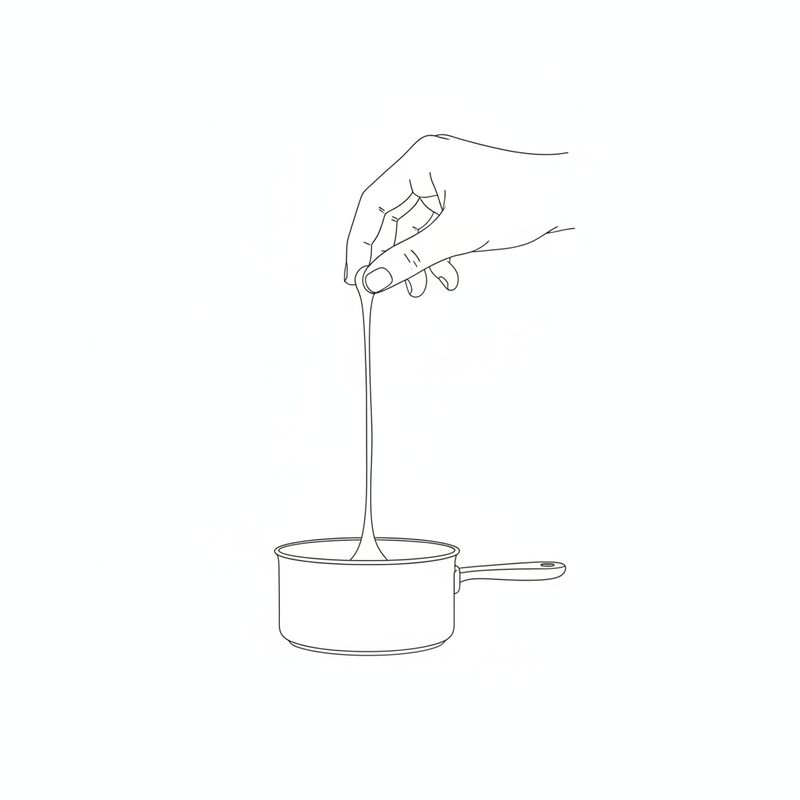
- Check the syrup by touch once a drop has cooled.
- Squeeze the batter into the hot oil in spirals, centre outwards.
- Fry, turning once, until both sides are crisp and golden.
- Dip in warm syrup for a few seconds on each side, then lift out.
The syrup: sticky, not stringy
The syrup should be sticky, not at one-string consistency. This is the step most people get wrong, because older instructions ask for a one-string syrup, and Cook with Manali still does. Indian Healthy Recipes says plainly that it should not reach one string, and Sinfully Spicy looks for no string at all.
Here is the test. Let a drop cool on a spoon, then press it between thumb and forefinger and open them. Right means tacky, a short pull that breaks at once. Too far means a firm thread that holds; add a splash of water and bring it back to a simmer.
Temperature matters as much as thickness. Flour & Spice and Ministry of Curry both want the syrup warm when the jalebis go in, not hot, because hot syrup softens the shell. Make the syrup first, so it has cooled by the time the first batch is fried.
Batter and oil: the two checks before frying
The batter is right when it falls from the whisk in a thick, smooth ribbon and squeezes out of the bottle like toothpaste. Squeeze a test spiral before filling the whole bottle; if it spreads, the batter is too thin, and if it comes out in thick ropes, too thick.
The oil is right when a drop of batter rises to the surface at once without browning. Use a wide, shallow pan, so the spirals lie flat. A few spoonfuls of ghee in the oil, as Indian Healthy Recipes and Flour & Spice suggest, add a buttery flavour without the cost of frying in ghee alone.
Piping the spirals
Pipe from the centre outwards, two or three rounds, then bring the end back across the spiral to close it. Ministry of Curry uses a 2 to 3 mm opening. A smaller opening gives thin, very crisp jalebis; a wider one gives fatter, softer ones.
No squeeze bottle is needed. A zip-lock bag with a corner snipped off, a piping bag or a cloth bag all work. The first few spirals are usually uneven, and that is expected: they taste the same.
When jalebi goes wrong
Most jalebi faults come from batter thickness, oil heat or syrup heat:
- The spirals spread flat or break apart in the oil. The batter is too thin, or the oil is not hot enough. Whisk in a spoonful of flour, and test the oil again before the next batch.
- The jalebis come out thick and doughy. The batter is too thick or the nozzle too wide. Thin the batter with a spoonful of water, or use a smaller opening.
- They go soft soon after soaking. The syrup was too hot or too thin, or they sat in it too long. Let the syrup cool to warm and keep the dip to seconds.
- They brown before they crisp. The oil is too hot. The drop test should bring batter up at once without colouring it.
- The syrup turns grainy. The sugar has started to crystallise. The lemon juice is there to prevent that, so do not leave it out.
Serving and storing jalebi
Serve jalebi warm, within a few minutes of soaking, when the shell is still crisp. A glass of warm milk is the Pakistani winter-breakfast pairing; at tea time, a cup of masala chai does the same job. On a dessert table it sits well beside ras malai and zarda.
Jalebi is best eaten the day it is fried. As it sits, the syrup soaks through the shell and the crunch fades. Keep leftovers covered at room temperature and eat them soon; they will be softer, but still good.
Frying safety is not negotiable here. Never leave hot oil unattended, keep children well back, and keep a lid nearby in case the oil catches.
Questions people ask
What are the main ingredients of jalebi?
Plain flour (maida), yogurt, baking soda, water and a little ghee for the batter, and sugar, water, cardamom, saffron and lemon juice for the syrup. Oil is used for frying.
Why are my jalebis not crispy?
Usually the syrup was too hot or too thick, or the jalebis sat in it too long. Soak them in warm syrup for seconds, not minutes. Oil that is not hot enough also gives soft, greasy jalebis.
Can I make jalebi without food colouring?
Yes. Leave it out for pale golden jalebi, add a pinch of turmeric as Indian Healthy Recipes does, or rely on the saffron in the syrup for colour.
How long do you soak jalebi in syrup?
Only a few seconds on each side. Flour & Spice dips them for 8 to 10 seconds; Cook with Manali gives a few seconds per side. Longer soaking makes them sweeter and softer.
Can I make jalebi with yeast?
Yes. Sinfully Spicy uses 1 teaspoon of active dry yeast per cup of flour and ferments the batter 2 to 3 hours in a warm place before frying. The syrup and frying are the same.