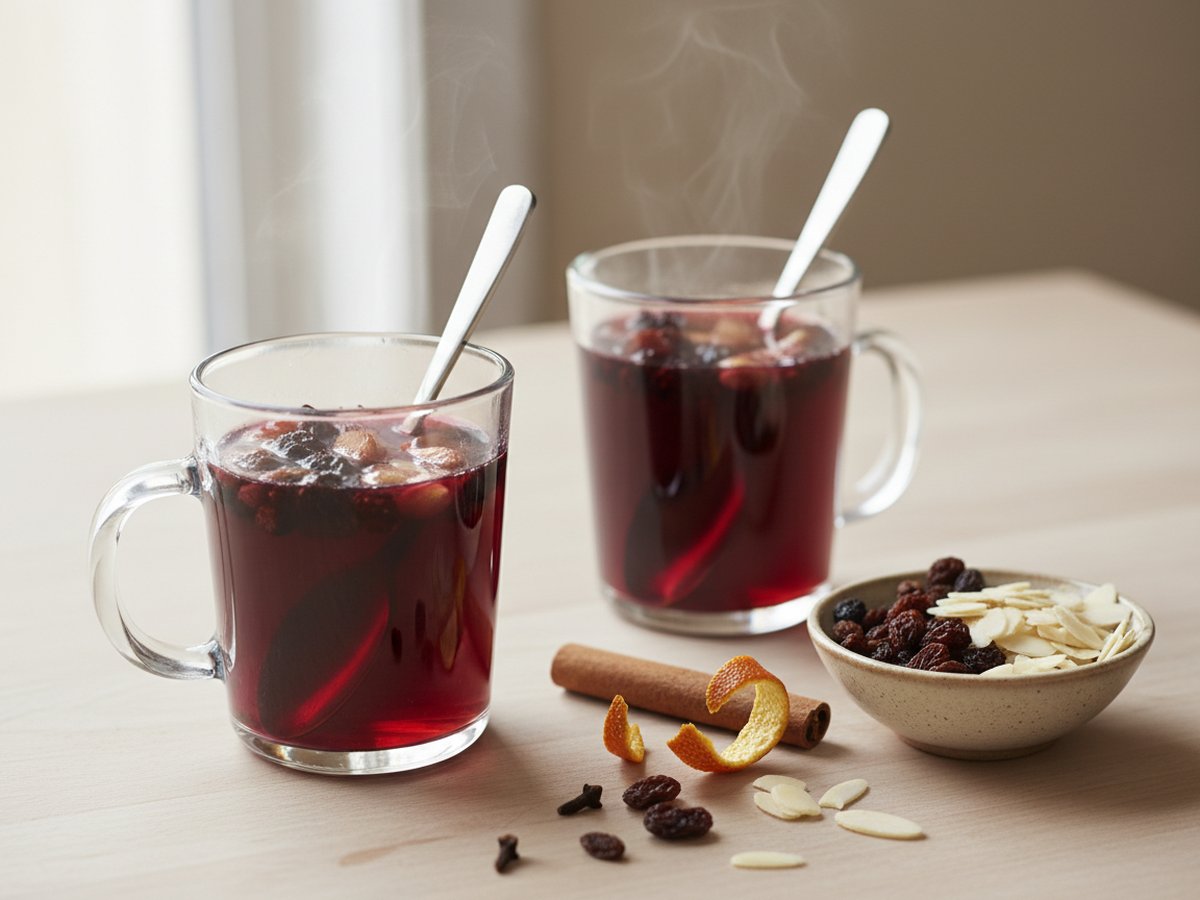
Danish gløgg (say it roughly “glurg”, with a short rounded vowel) is red wine heated gently in a syrup of sugar, orange, cinnamon and cloves, then served hot with raisins and slivered almonds in the glass. One bottle of wine makes four to eight cups.
What makes the Danish version different from the mulled wine most people know is the order and the garnish. The spices are cooked into a syrup first and the wine only goes in at the end, so it is warmed rather than stewed. And the raisins and almonds stay in the cup, which is why gløgg in Denmark comes with a teaspoon.
Last updated
Recipe
Danish Gløgg (Mulled Wine)
Ingredients
Spiced syrup
Gløgg
Method
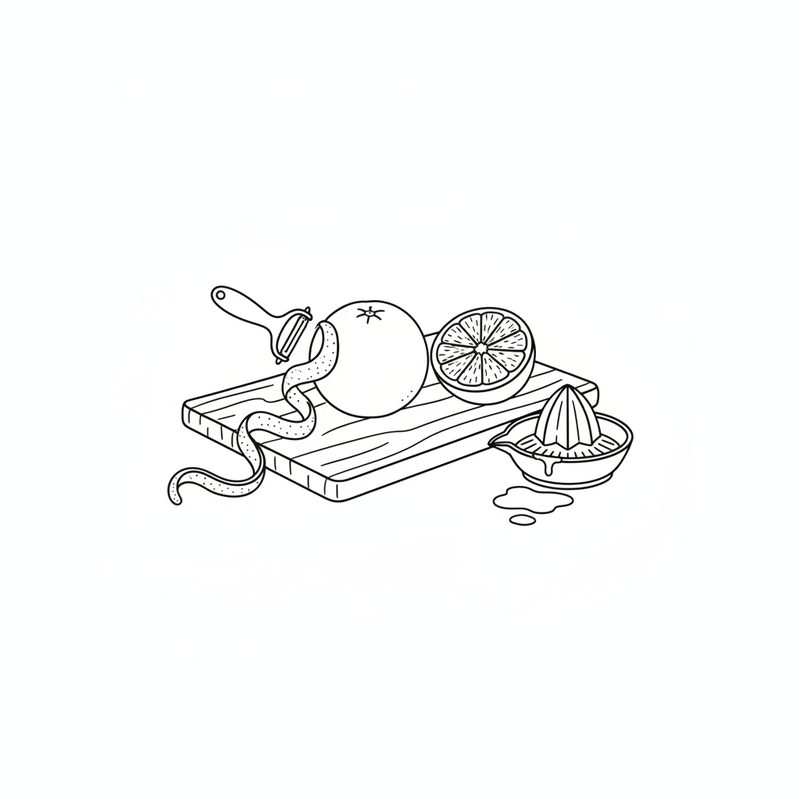
- Pare the peel from the orange in wide strips with a vegetable peeler, leaving the white pith behind, then squeeze out the juice.
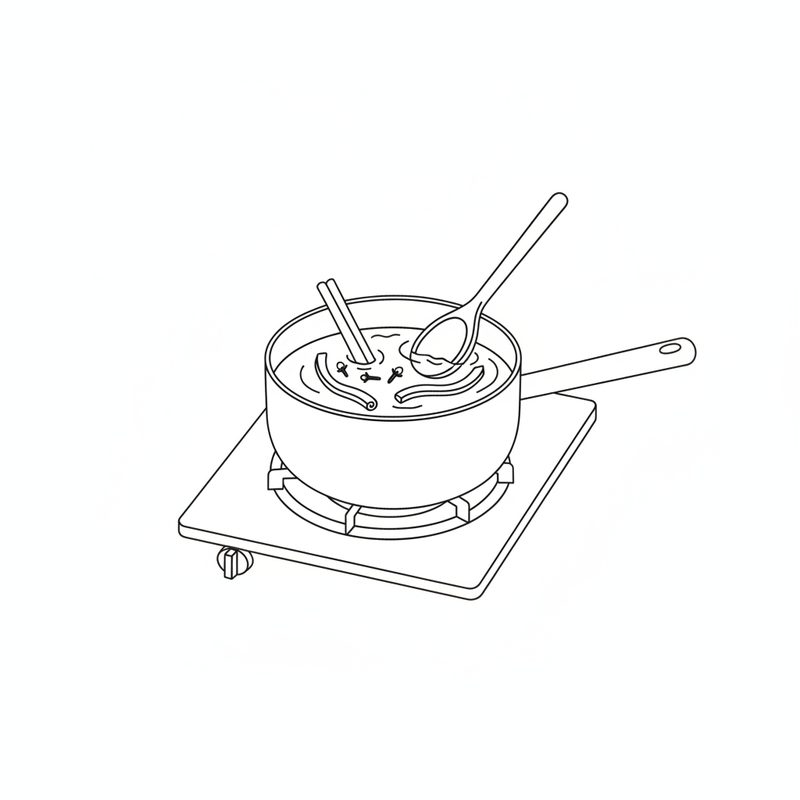
- Put the water, sugar, orange juice, orange peel, cinnamon sticks and cloves in a saucepan. Bring to a simmer, stirring until the sugar has dissolved.
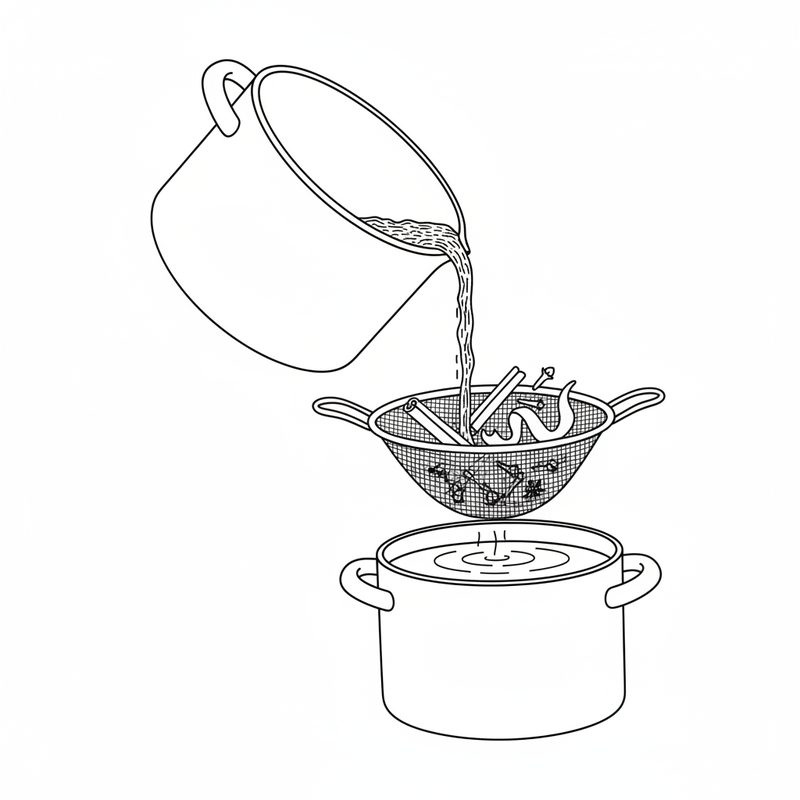
- Let the syrup simmer gently for 10 to 30 minutes, then strain out the cinnamon, cloves and peel.
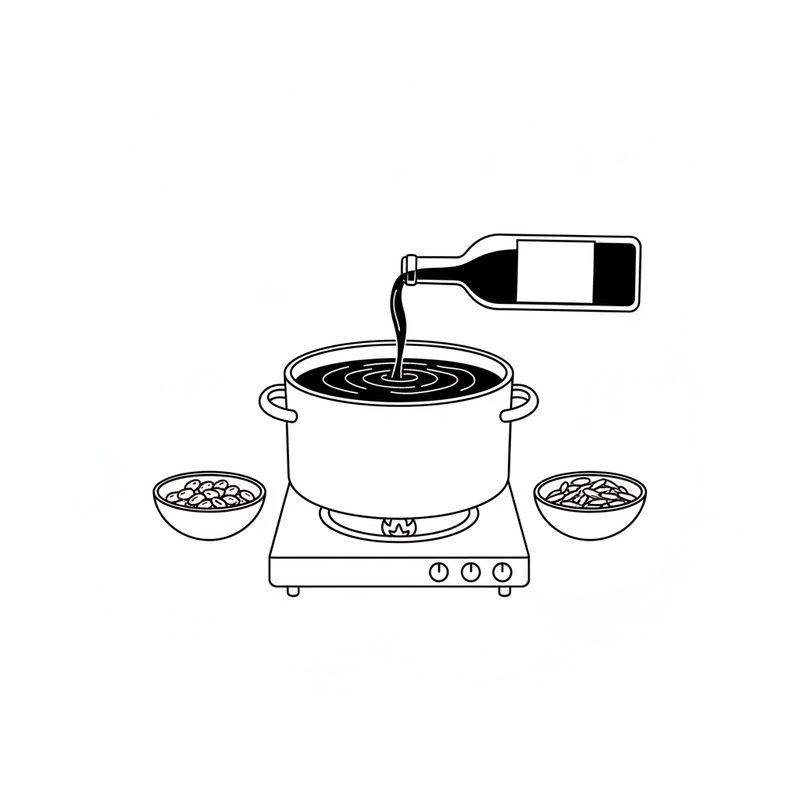
- Pour the red wine into the syrup and add the raisins and almonds. Heat gently until it steams, without letting it boil: no hotter than 80°C (180°F).
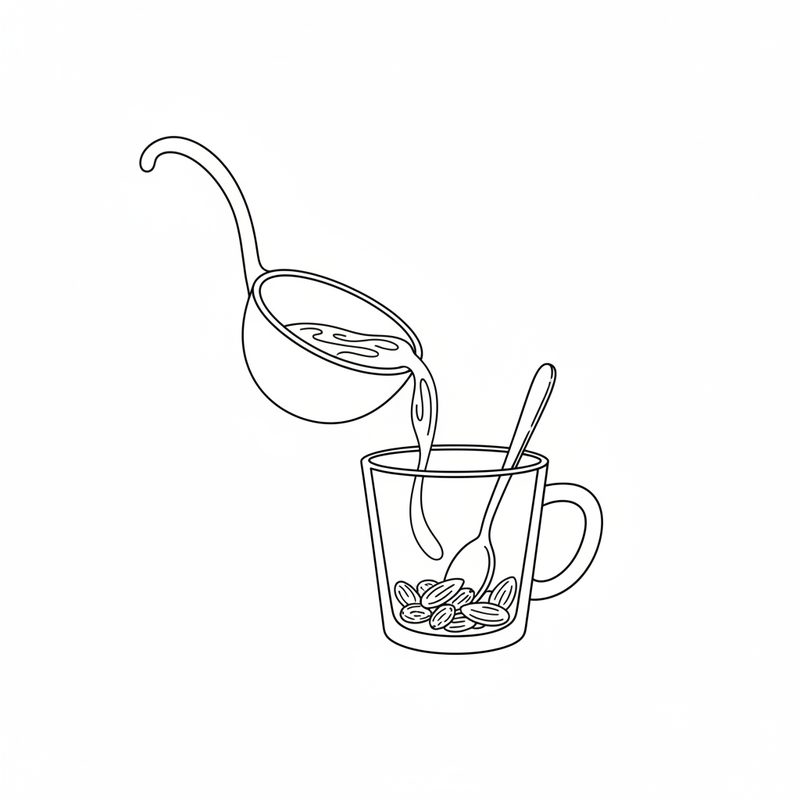
- Take the pan off the heat and stir in a splash of rum, brandy or snaps, if using. Ladle into heatproof glasses with some raisins and almonds in each, and serve with a teaspoon.
What is Danish gløgg?
Gløgg is the Danish name for hot spiced wine, drunk in the weeks leading up to Christmas. The base is red wine, sweetened and flavoured with orange and whole spices, and it is often given a small splash of spirit.
It is a social drink more than a dinner drink. Danes have it at Christmas gatherings, at markets and in bars, where glasses are sometimes set out in advance with the raisins and almonds already in them. Copenhagen even holds an annual Danish Gløgg Championship, at the Torvehallerne food market, according to VisitCopenhagen.
How is gløgg different from mulled wine?
Gløgg is the Scandinavian family of mulled wine, and the Danish version is sweeter and more heavily garnished than most. Three things set it apart.
- Syrup first. The spices simmer in sugared water and orange before the wine is added, so they can cook as long as they need without cooking the wine.
- Raisins and almonds in the glass. They plump up in the hot wine and are eaten at the end with a spoon.
- An optional spirit. Rum, brandy or snaps is often stirred in just before serving.
German Glühwein, by comparison, is described by VisitCopenhagen as lighter and more led by the wine itself, with a more discreet spice.
Danish gløgg, step by step
 Pare the peel from the orange in wide strips with a vegetable peeler, leaving the white pith behind, then squeeze out the juice.
- Put the water, sugar, orange juice, orange peel, cinnamon sticks and cloves in a saucepan. Bring to a simmer, stirring until the sugar has dissolved.
- Let the syrup simmer gently for 10 to 30 minutes, then strain out the cinnamon, cloves and peel.
- Pour the red wine into the syrup and add the raisins and almonds. Heat gently until it steams, without letting it boil: no hotter than 80°C (180°F).
- Take the pan off the heat and stir in a splash of rum, brandy or snaps, if using. Ladle into heatproof glasses with some raisins and almonds in each, and serve with a teaspoon.
Which red wine to use
Use an inexpensive, fruity red wine that you would drink as it is. Feast and West suggests Merlot or Cabernet Sauvignon. There is no point in a fine bottle, because the sugar and spice cover its detail, but a wine that tastes thin or sour cold will taste thin and sour hot.
Why gløgg must not boil
Boiling drives off the alcohol and flattens the wine. Feast and West puts the limit at 80°C (180°F), above which the alcohol starts to cook out, and every other source here says the same thing in plainer words: heat it, do not boil it.
The visual sign is steam and a few small bubbles at the edge of the pan. If the surface starts to roll, take it off the heat. This is also the reason for the syrup method: the spices get their long simmer in water, and the wine gets only a few minutes.
Non-alcoholic gløgg
Gløgg can be made without alcohol by replacing the wine with a red fruit juice. Skandibaking suggests cranberry juice, and Feast and West suggests fruit juice or a non-alcoholic red wine. Make the syrup exactly as above and leave out the spirit.
Juice is already sweet, so add the sugar gradually and taste as you go. VisitCopenhagen also describes a Copenhagen gløgg built on cloudy apple juice and cider, which shows the drink does not have to be red at all.
The version made with wine is an alcoholic drink, and gentle heating does not remove the alcohol. If children or anyone avoiding alcohol will be at the table, make a separate pot of the juice version rather than serving them a weaker cup of the wine one.
What to serve with gløgg
The classic Danish pairing is æbleskiver: round, puffed pancake balls dusted with icing sugar and dipped in strawberry jam. Nordisk names that combination as the typical one in Denmark.
Spiced Christmas biscuits work for the same reason the æbleskiver do: they are dry and not too rich beside a sweet hot drink. Try brunkager, the thin spiced brown biscuits, or pebernødder, the small crunchy spice nuts. klejner, the fried twisted pastries, are another December staple. For the Christmas Eve dessert itself, see ris à la mande.
Making it ahead and reheating
The syrup can be made in advance. Strain it, let it cool and keep it covered in the fridge, then add the wine, raisins and almonds when you are ready to heat and serve. That is how the method is built in the first place: Happy as a Dane strains the spiced syrup and only then heats it with the wine.
Leftover gløgg can be warmed again over low heat. Bring it up slowly and stop at steaming, for the same reason as the first time.
Where the quantities come from
Every number on the card comes from published recipes, checked against each other. Where at least two agreed, that figure is used. Where they did not, one source was chosen and is named below.
| Ingredient | Card | Source |
|---|---|---|
| Water | 2 dl (200 ml) | Nordisk and Feast and West agree |
| Sugar | 200 g | Happy as a Dane. The sources range from about 150 g to 275 g, so this is the middle; adjust to taste |
| Orange | Peel and juice of 1 | Happy as a Dane and Skandibaking agree |
| Cinnamon, cloves | 2 sticks, 5 cloves | Nordisk, with Feast and West (cinnamon) and Happy as a Dane (cloves) |
| Raisins | 100 g | Nordisk and Skandibaking agree |
| Almonds | 50 g | Nordisk. The others use less or do not measure |
| Serves | 4 to 8 | Skandibaking says 4, Feast and West says 8, for the same bottle |
The card gives a prep time but no cook time. The sources simmer the syrup for anything from 10 minutes to an hour and a half, which is too wide a spread to turn into one honest number. Ten to thirty minutes covers most of them; longer gives a stronger spice. Some versions also add cardamom, allspice or star anise; they are not on the card because the sources do not agree on them.
Questions people ask
How much alcohol is in gløgg?
It depends on the wine and on whether spirit is added. The syrup dilutes the wine a little, gentle heating below 80°C (180°F) removes very little alcohol, and a splash of rum or brandy adds more. Treat it as you would a glass of wine.
What alcoholic drink is Denmark known for?
In winter, gløgg. The rest of the year Denmark is best known for beer and for snaps, the clear Scandinavian spirit often flavoured with caraway or dill.
When do Danes drink gløgg?
In the weeks before Christmas, at Christmas gatherings, markets and bars, often with æbleskiver.
Can you make gløgg without alcohol?
Yes. Replace the wine with a red fruit juice such as cranberry, or with non-alcoholic red wine, leave out the spirit and use less sugar.
Do you eat the raisins and almonds in gløgg?
Yes. They soften in the hot wine and are eaten at the end with a teaspoon, which is why Danish gløgg is served with one.