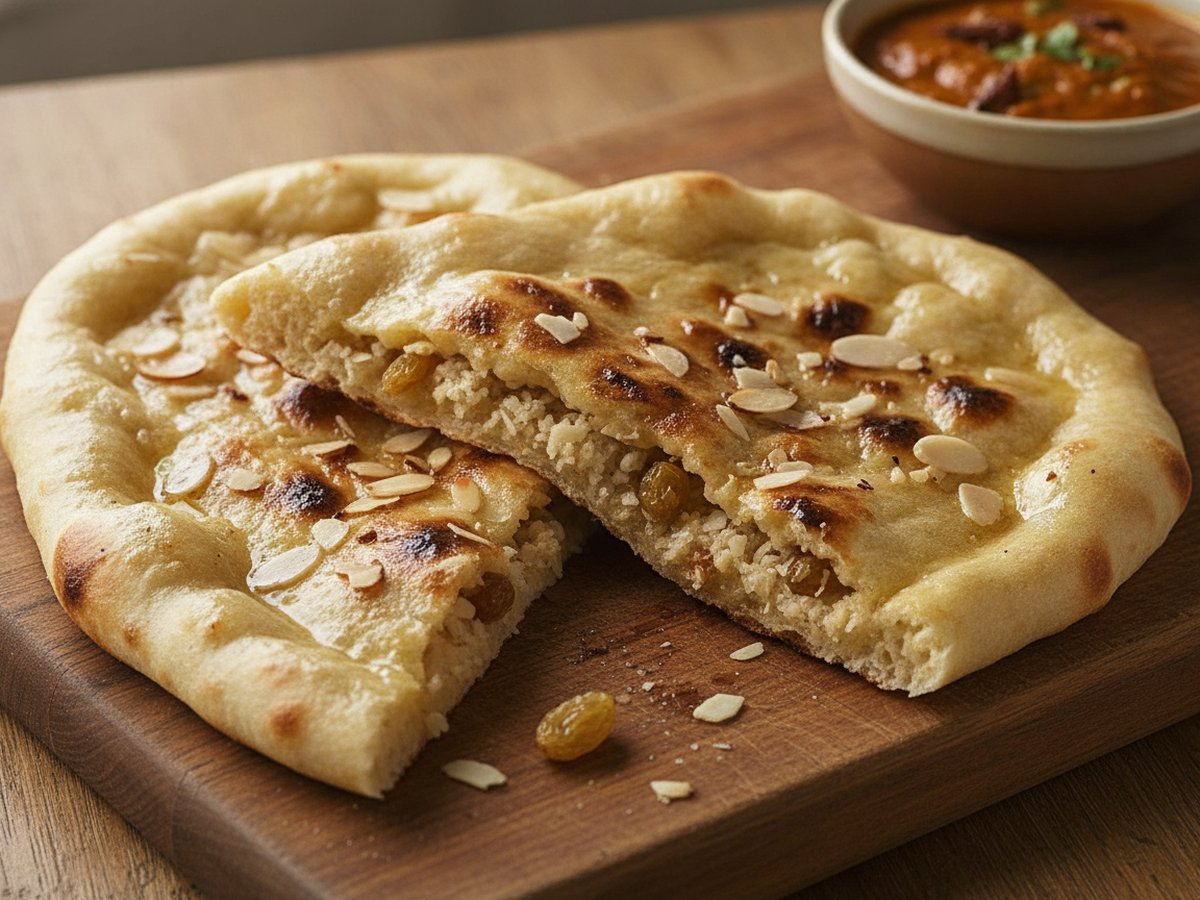
Peshwari naan is a soft yeasted flatbread with a sweet filling of ground almonds, desiccated coconut, sugar and sultanas sealed inside, cooked in a very hot dry pan until it puffs and blisters. This version makes 4 naans in about 1 1/2 hours, most of it the dough rising.
The one thing that decides whether it works is the seal. Pinch the dough completely closed around the filling and roll from the centre out with almost no pressure, and the filling stays inside instead of breaking through and scorching on the pan.
Last updated
Recipe
Peshwari Naan Recipe (Sweet Coconut and Almond Naan)
Ingredients
For the dough
For the filling
To finish
Method
- Whisk the flour, yeast, salt, sugar and baking powder in a large bowl. Add the warm water, yogurt and melted ghee and mix to a soft, slightly sticky dough.
- Knead on a lightly floured surface for 5 minutes until smooth and springy. Return to the bowl, cover and leave in a warm place for about 1 hour, until doubled.
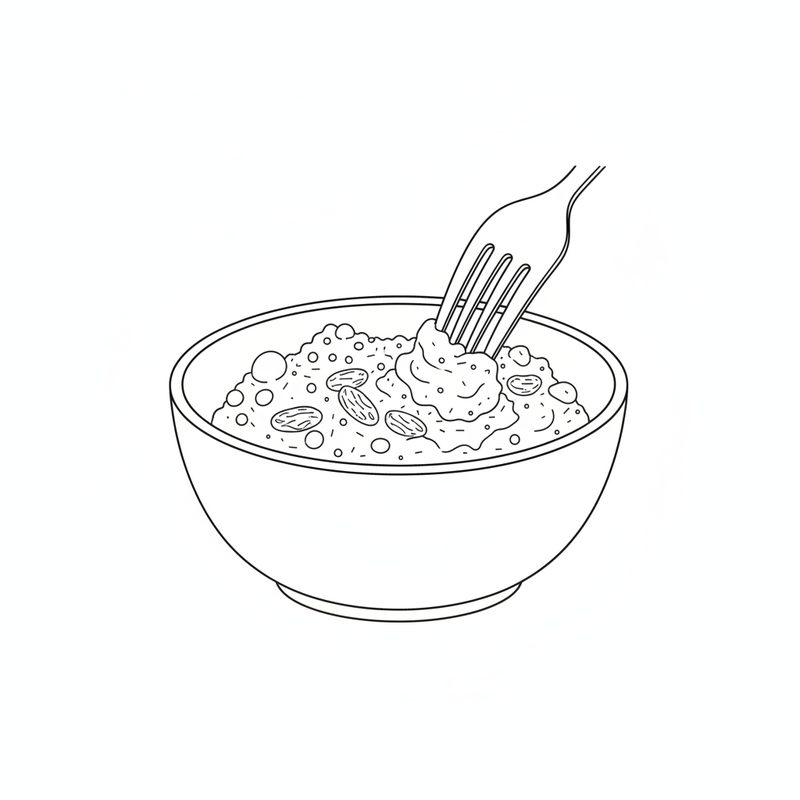
- While it rises, mash the ground almonds, coconut, sugar or honey, soft butter, sultanas and cardamom with a fork until the mixture holds together as a thick paste. Divide into 4.
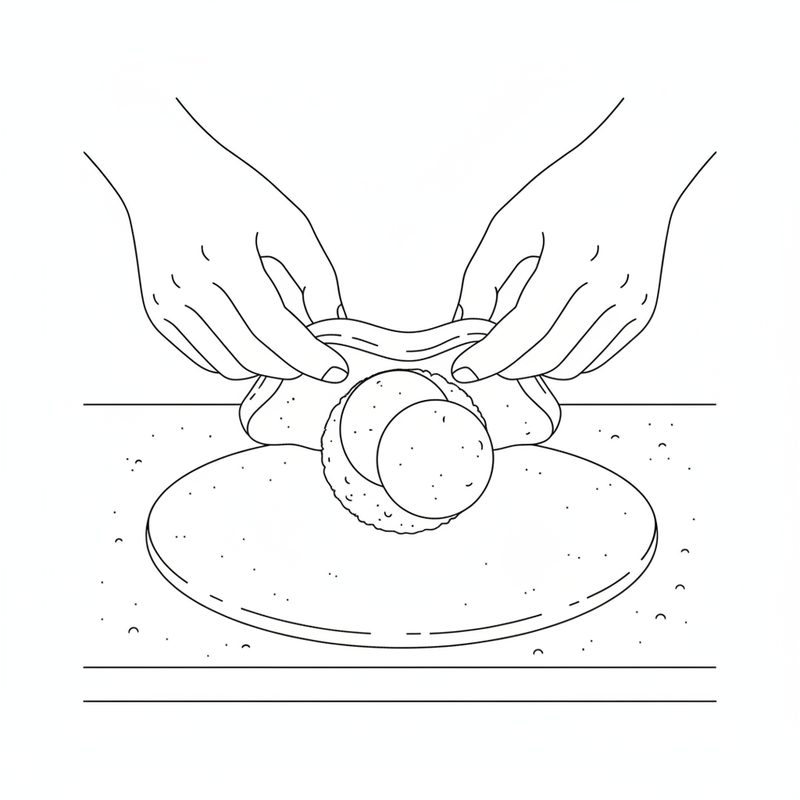
- Knock back the dough and divide it into 4 equal balls. Flatten one into a 10 cm (4 in) round, put a quarter of the filling in the centre, pull the edges up over it and pinch them completely closed.
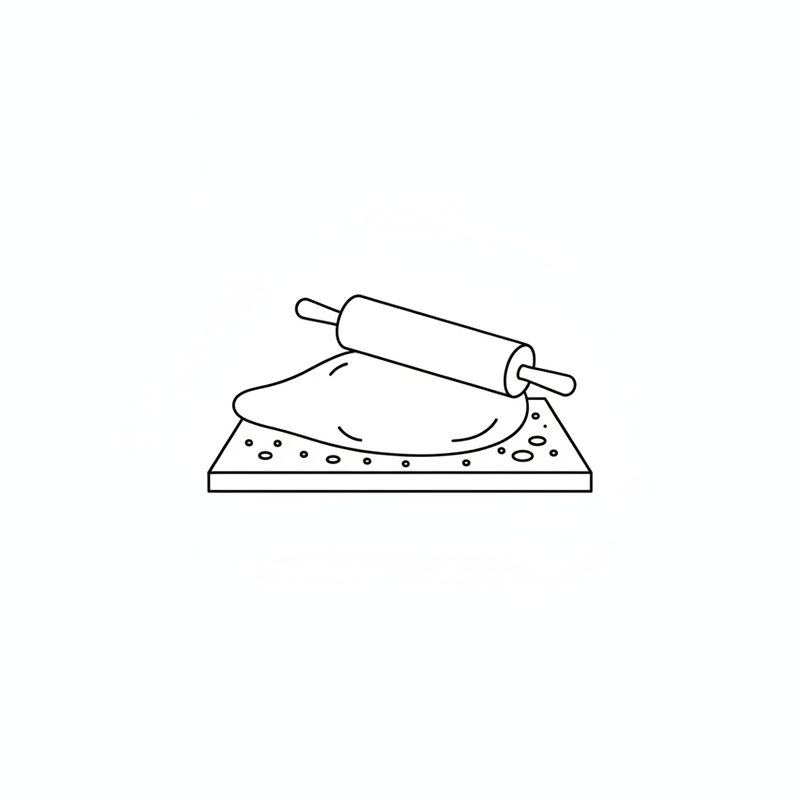
- Turn the ball seam-side down, dust with flour and roll gently from the centre outwards into an oval or teardrop, without pressing hard enough to push the filling through. Repeat with the rest, and heat a heavy dry pan over high heat.
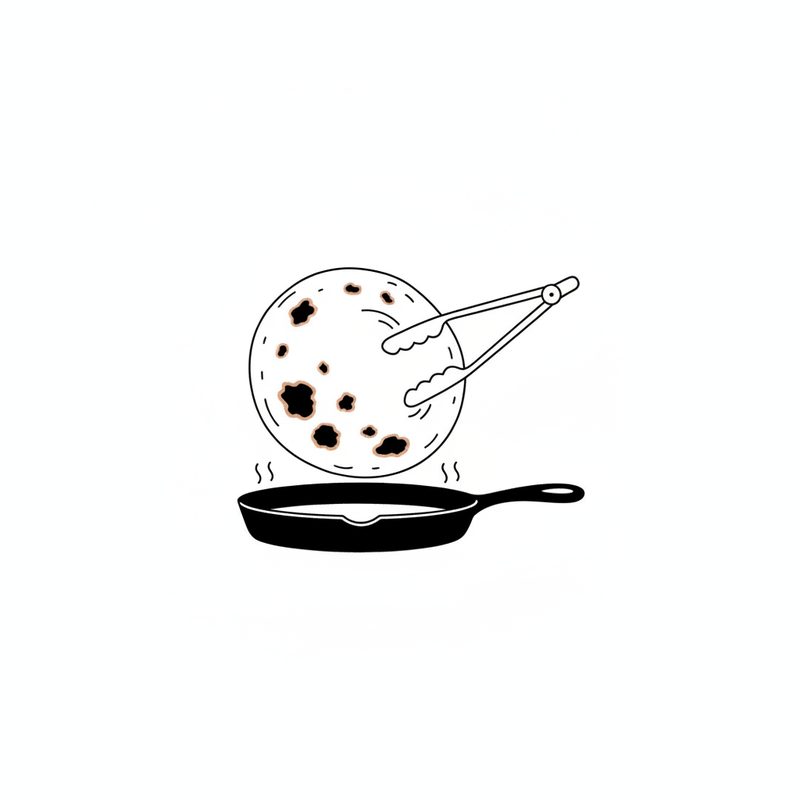
- Cook each naan in the dry pan for 1 to 2 minutes, until it puffs and the underside has dark brown spots, then turn and cook for another 1 to 2 minutes. Brush with melted butter, scatter with flaked almonds and keep covered with a cloth while you cook the rest.
What peshwari naan is
Peshwari naan is a stuffed naan with a sweet, nutty filling. The dough is the same soft yogurt-enriched bread as a plain naan; the difference is a paste of nuts, coconut, sugar and dried fruit rolled inside it.
It is served as a bread with curry, not as a dessert. The sweetness is there to sit against chilli heat and a salty gravy, which is why it is usually ordered alongside a plain or garlic naan rather than instead of one.
What the name means, and where it comes from
The name means “from Peshawar”, the city in northwest Pakistan, and it is spelled both Peshwari and Peshawari on menus. Beyond the name, the origin is contested and should be read that way.
Cooking Gorgeous notes that writing on naan in Pakistan and India does describe a Peshawari naan stuffed with nuts and raisins, but that the coconut and sugar belong to British curry houses, and that in Pakistan a Peshawari naan is often a plain tandoor bread. Fatima Cooks, a Pakistani recipe blog, describes its own research as inconclusive on whether the bread has a real link to Peshawar at all. Caroline’s Cooking reports that Veeraswamy, the UK’s first Indian restaurant, had it on the menu when it opened in 1926.
So the honest summary is this: the stuffed nut naan has South Asian roots, and the sweet coconut version most people search for is a British restaurant bread. Both are real; they are not the same thing.
Peshwari naan vs regular naan
The difference is the filling: regular naan is a plain leavened flatbread, and peshwari naan has a sweet paste sealed inside before it is rolled.
| Regular naan | Peshwari naan | |
|---|---|---|
| Dough | Yeasted or chemically leavened, often with yogurt | The same dough |
| Inside | Nothing | Ground almonds, coconut, sugar, sultanas, butter |
| Taste | Plain, lightly tangy | Sweet and nutty |
| Thickness | Thin, bubbly | Slightly thicker, because of the filling |
| Usual topping | Butter, garlic, nigella seeds | Butter, flaked almonds, sometimes a honey glaze |
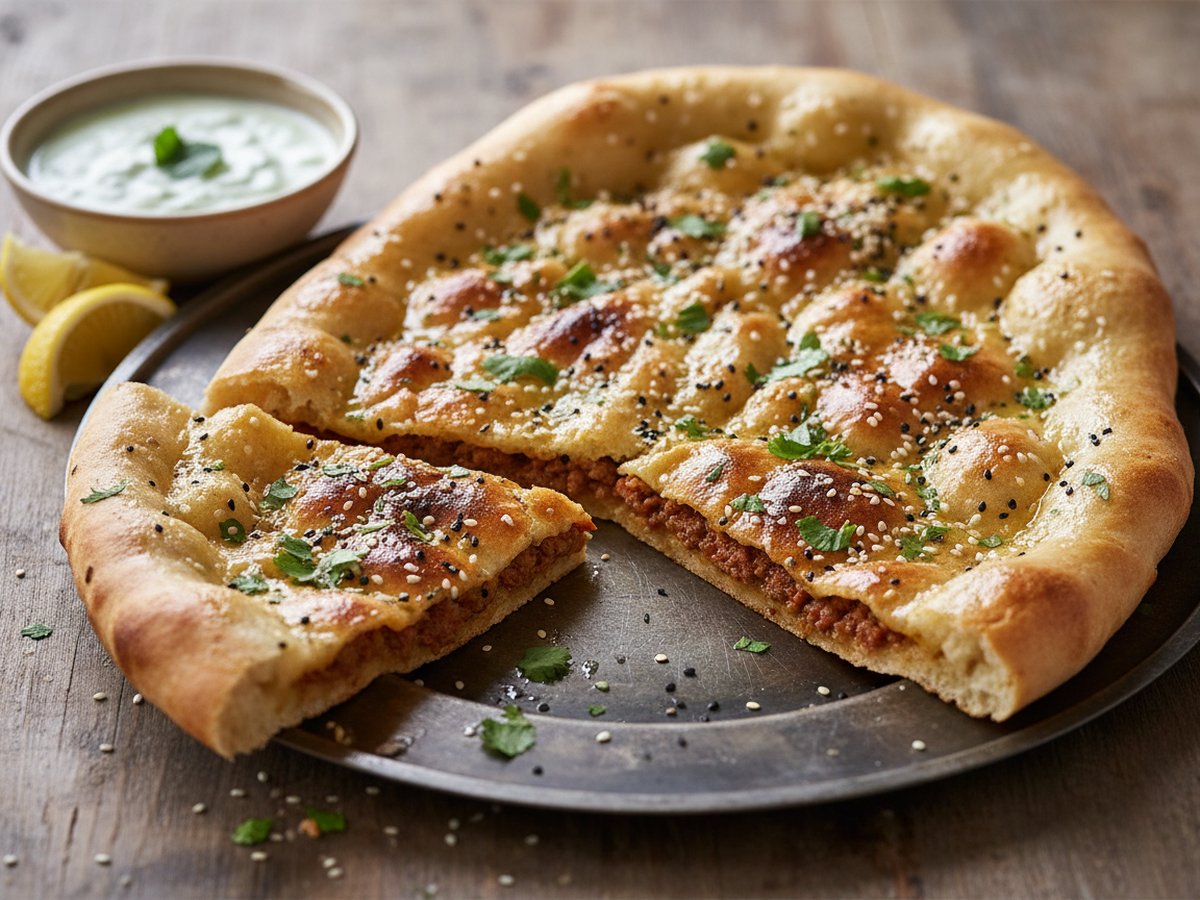
For the savoury relative built the same way, see the keema naan, which seals spiced minced meat inside the dough instead.
What goes in the filling
A peshwari filling is nuts, coconut, something sweet and a fat to bind it, with dried fruit usually added. The published recipes agree on that list and disagree on the balance, so the choice made here is stated plainly.
- Ground almonds are the base here, 75 g for 4 naans. That figure comes from one source, Easy Peasy Foodie; the others use flaked almonds blitzed to a paste or much smaller amounts of chopped nuts. Ground almonds give a smooth paste that spreads evenly and does not tear the dough.
- Desiccated coconut, 25 g. Use the fine, unsweetened kind; coarse shreds poke through the dough.
- Sugar or honey, 2 tbsp. Honey makes a softer, stickier paste; caster sugar a firmer one that is easier to seal.
- Soft butter, 35 g, which is what holds it together.
- Sultanas, 2 tbsp, chopped. They are optional; Easy Peasy Foodie leaves them out entirely.
- Cardamom, 1/4 tsp, optional, for a faint floral note.
The paste is ready when it holds a shape when squeezed. It looks too dry to come together for the first minute of mashing; keep working it with the back of a fork and the butter will bind it.
Step by step
The method is six stages: mix, rise, make the filling, seal, roll and cook. Only the last three need your full attention.
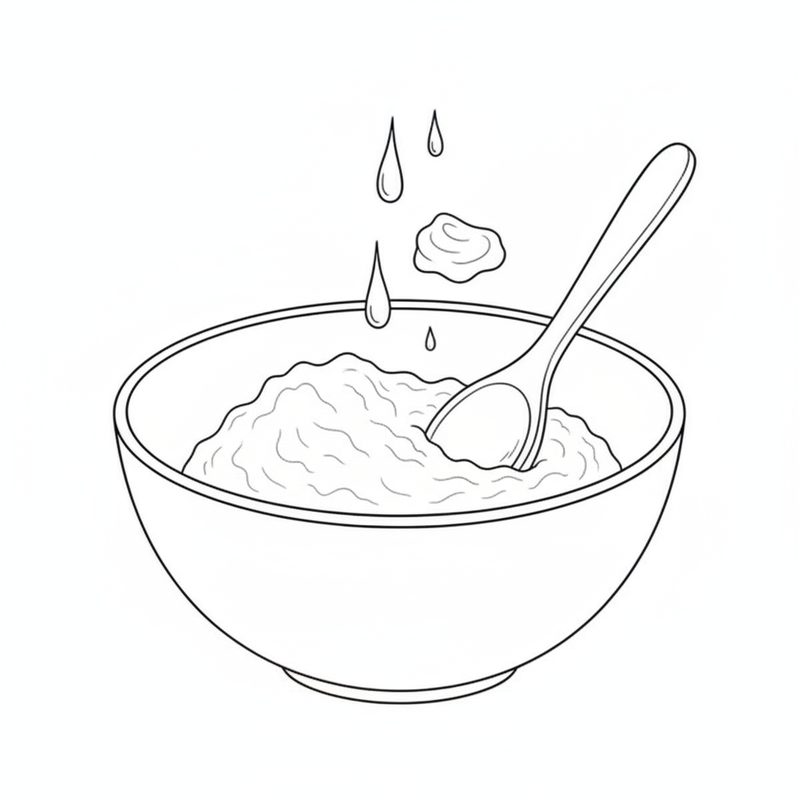
 Mix the dough soft
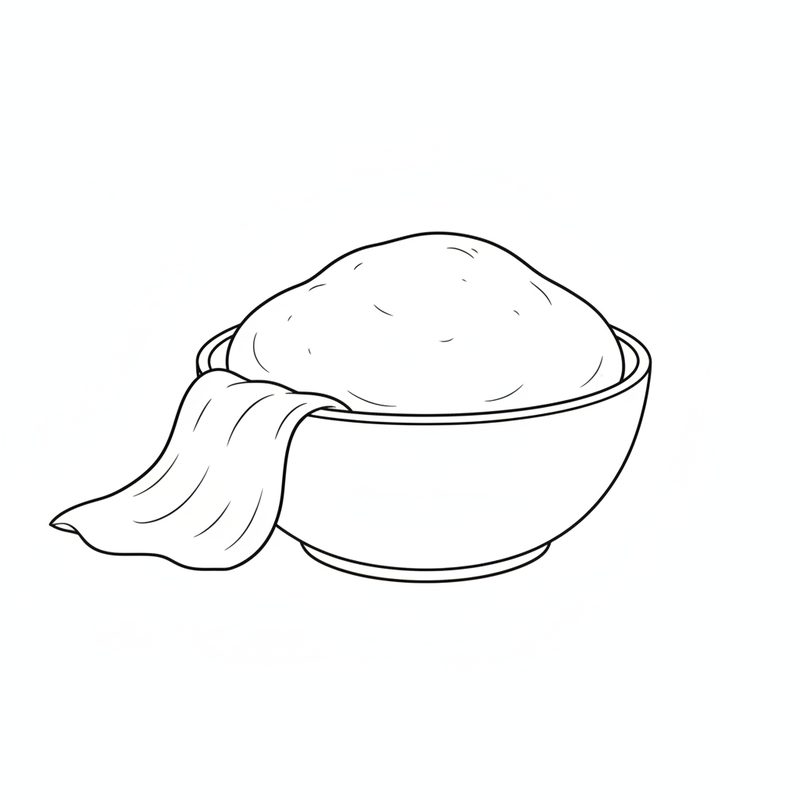
- Let it double
- Mash the filling to a paste
- Seal the filling in
- Roll gently into a teardrop
- Cook in a dry, very hot pan
The step most people get wrong
Rolling too hard is the usual failure. Once the filling is inside, the dough is a thin skin around a soft paste, and heavy pressure pushes the paste out through the weakest point.
Three things prevent it. Pinch the seam completely closed, with no gap and no thin patch. Turn the ball seam-side down before rolling. Then roll from the centre outwards with the weight of the pin alone, turning the dough a quarter turn every few strokes. A small tear is not a disaster: pinch a scrap of dough over it and carry on.
What right looks like: an even oval or teardrop with the filling showing only as a faint shadow through the dough, and a surface that is dusty with flour but not cracked.
Getting the pan right
The pan has to be very hot and completely dry. A heavy cast-iron pan or tawa over high heat is what produces the puffing and the dark spots; a pan that is only warm gives a pale, dense bread.
Cook each naan for 1 to 2 minutes, until bubbles rise and the underside has dark brown patches, then turn it for another 1 to 2 minutes. Dark brown is right. Black means the heat is too high for the next one, so lower it slightly. Because the filling contains sugar, any of it that escapes will burn quickly, which is one more reason the seal matters.
Restaurant style vs home style
Restaurant peshwari naan is slapped onto the wall of a tandoor, where it cooks in seconds at a heat no home oven reaches. That is what gives the deep blisters and the slightly smoky edge.
At home, the dry pan is the closest match and the method used here. The oven is the alternative when you are cooking a lot at once: BBC Good Food uses 220C (200C fan, gas 8) with the grill on, and Fatima Cooks uses 200C. The oven gives a more even, paler bread with fewer spots.
The shorter route, and what it costs
You can skip the yeast. BBC Good Food’s version uses self-raising flour and baking powder with yogurt and ghee, so the dough needs no rise at all and the whole recipe takes under an hour.
What you lose is the yeasted dough’s chew and its slightly fermented flavour; a chemically leavened naan is softer and more cake-like. If the bread is mainly a vehicle for curry, that trade is reasonable.
What to serve with peshwari naan
Serve it with a curry that has heat and salt, because the sweetness needs something to push against. A creamy, mild curry plus a sweet naan is a lot of richness in one meal.
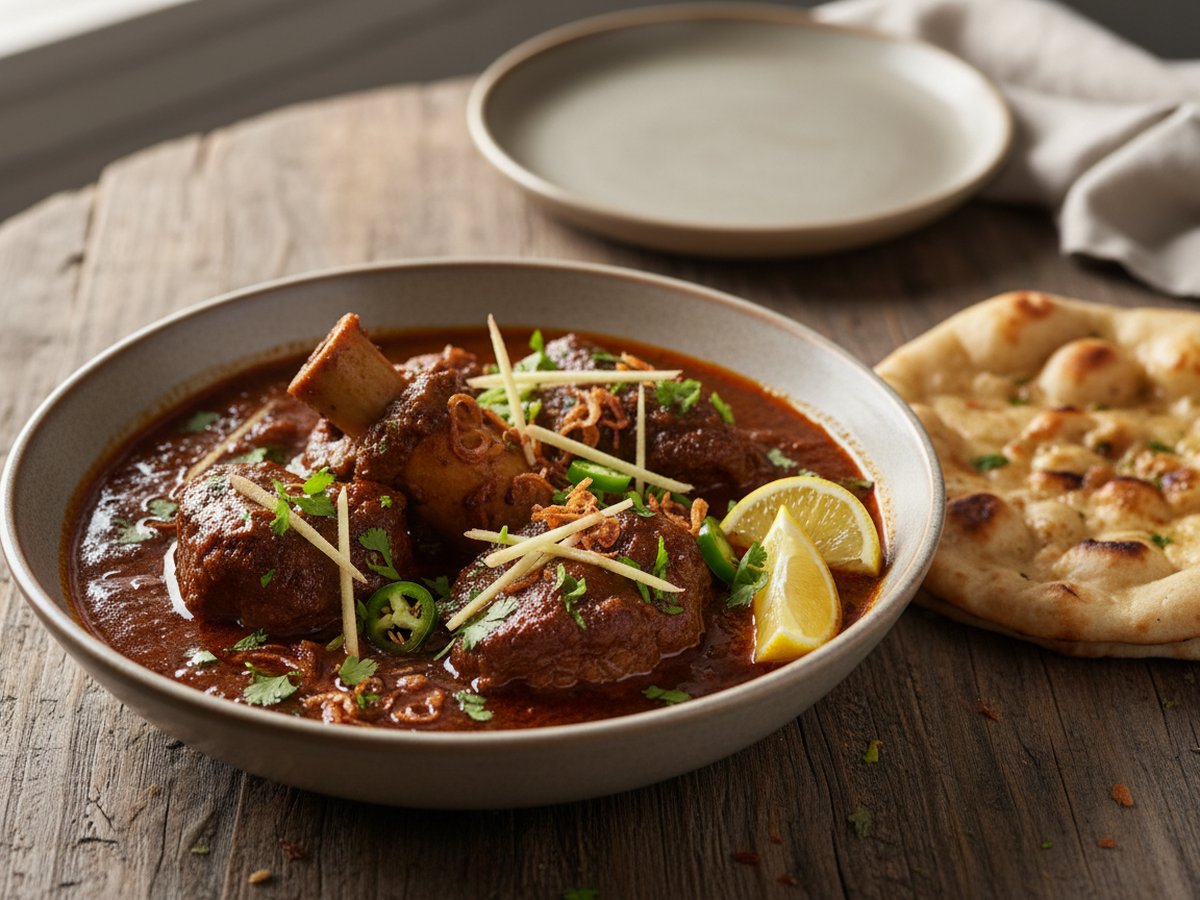
- A slow, peppery stew such as nihari.
- A tomato-and-chilli curry such as chicken karahi.
- The British curry-house pairing, chicken tikka masala.
- Tasting Table also suggests butter chicken, dal or chole.
Variations
- Honey butter glaze. Sprinkles and Sprouts and Cooking Gorgeous both brush the cooked naan with melted butter and honey, then scatter sultanas and flaked almonds over while it is still sticky.
- Cream in the filling. BBC Good Food and Cooking Gorgeous add double cream, which makes a looser, richer filling. Seal it carefully.
- Saffron, cardamom and rose. BBC Good Food adds saffron and cardamom to the filling and brushes the top with milk and rosewater.
- Mixed nuts. Pistachios or cashews can replace part of the almonds; BBC Good Food uses all three.
- Egg and milk dough. Fatima Cooks makes a richer dough with milk and an egg in place of water.
Keeping and reheating
Peshwari naan is best eaten as soon as it is cooked. Caroline’s Cooking notes that it can be made ahead and reheated, but that it is at its best fresh.
While you cook the batch, stack each naan as it comes out of the pan and keep the pile covered with a clean cloth, which traps the steam and keeps them soft. Sprinkles and Sprouts keeps them under foil in a low oven instead. The filling can be made while the dough rises and kept covered until you need it.
Questions people ask
What's in a peshwari naan?
A soft yogurt and yeast dough with a sweet filling of ground almonds, desiccated coconut, sugar or honey, butter and usually sultanas. It is brushed with butter after cooking, often with flaked almonds on top.
What is the difference between peshwari naan and regular naan?
Regular naan is a plain leavened flatbread. Peshwari naan uses the same dough but has a sweet nut and coconut paste sealed inside before it is rolled out and cooked.
What does peshwari naan mean?
It means naan from Peshawar, the city in northwest Pakistan. The sweet coconut version is widely described as a British curry-house bread, and its link to Peshawar is disputed.
What is peshwari naan eaten with?
Spicy, salty curries, where its sweetness balances the heat: nihari, karahi, chicken tikka masala, butter chicken, dal or chole.
Can you make peshwari naan without yeast?
Yes. Use self-raising flour with baking powder and yogurt, as BBC Good Food does. The dough needs no rise, and the bread comes out softer and less chewy.
Can you make peshwari naan without a tandoor?
Yes. A heavy dry pan or tawa over high heat, 1 to 2 minutes a side, gives the puffing and dark spots. An oven at 200 to 220C with the grill on also works.