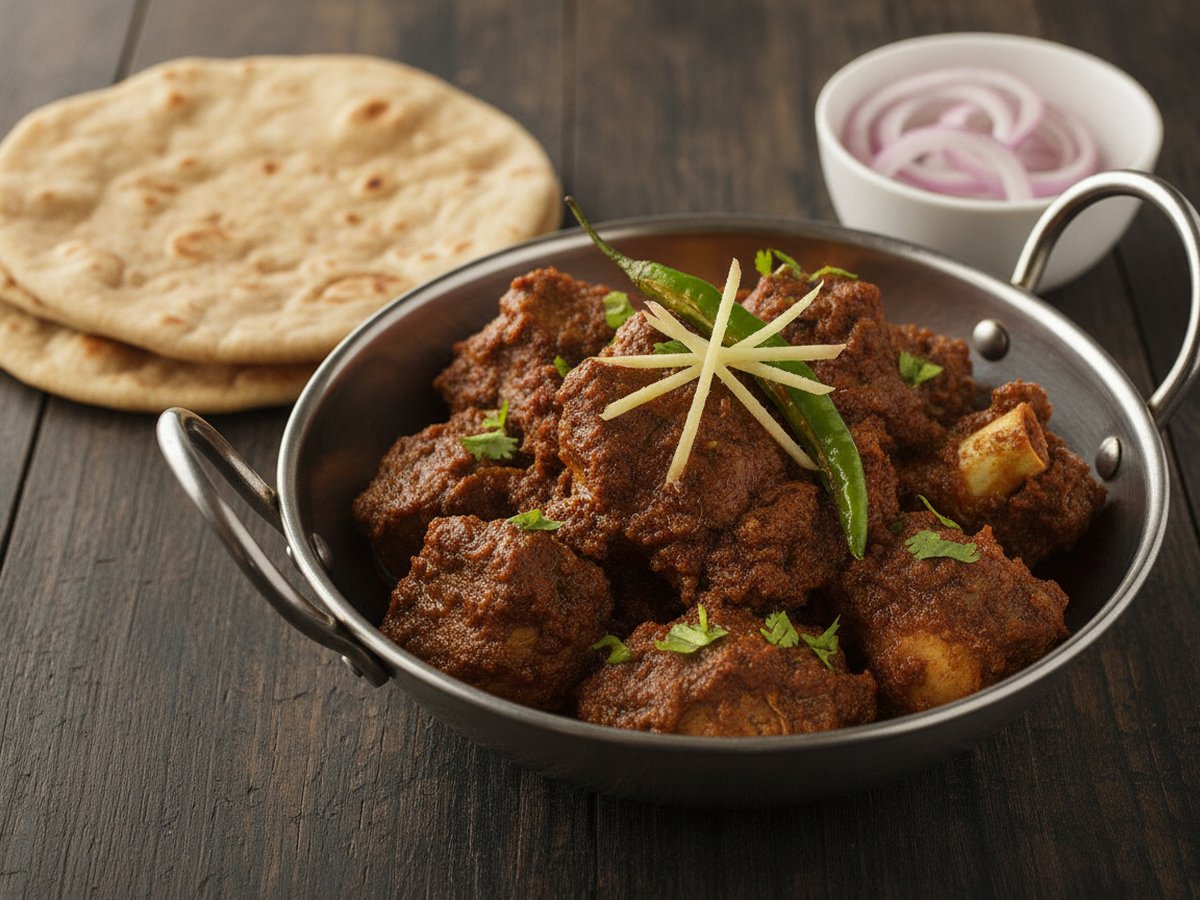
Gosht is the Urdu word for meat, and on a Pakistani menu it nearly always means mutton (goat) or lamb. Bhuna gosht is bone-in mutton simmered with onion, tomato, yogurt and spices until tender, then fried hard in its own masala until the sauce is almost gone and the oil separates. For 500 g of meat it takes about 80 minutes and serves two to three.
The one thing that decides whether it works is the last fry, the bhunai. Stop too early and you have a thin mutton curry. Keep stirring until the masala turns dark and clings to every piece, and you have bhuna gosht.
Last updated
Recipe
Bhuna Gosht (Pakistani Mutton Curry)
Ingredients
For the bhunai
To finish
Method
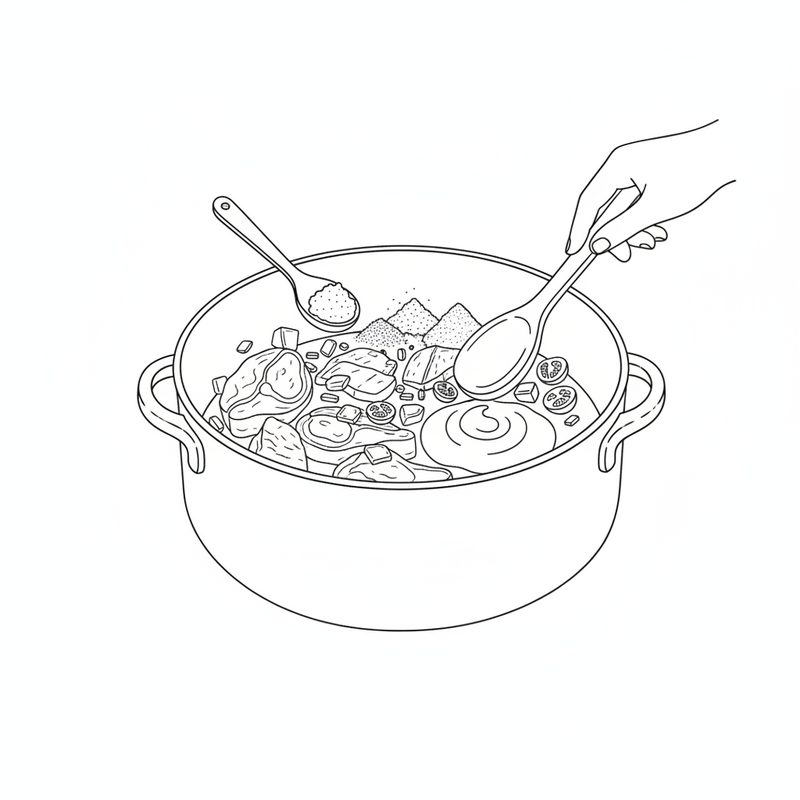
- Put the mutton, onion, tomatoes, yogurt, ginger paste, garlic paste, red chilli powder, ground coriander and salt in a heavy pot and mix well.
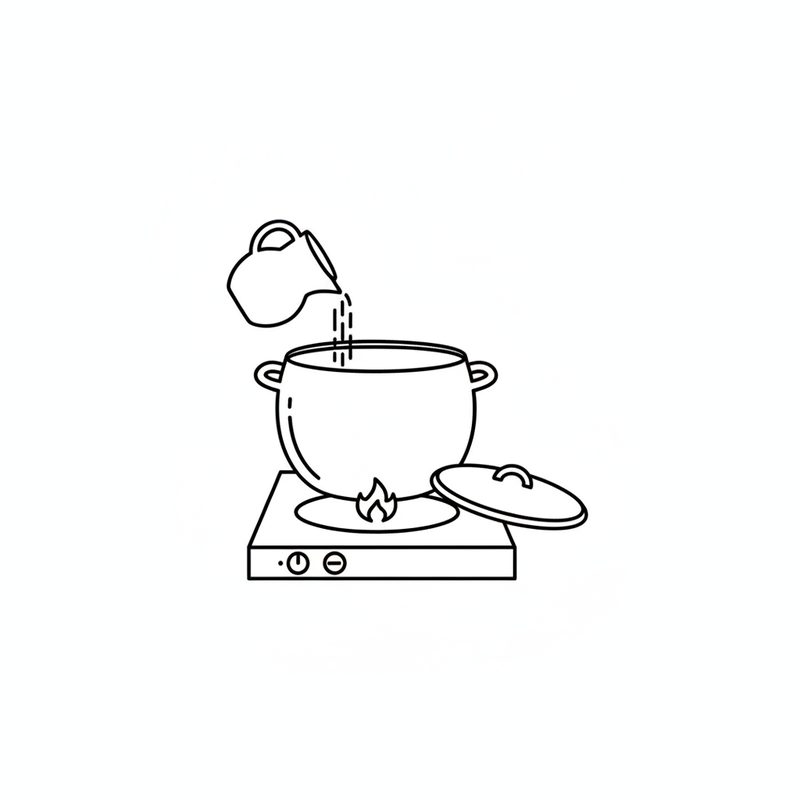
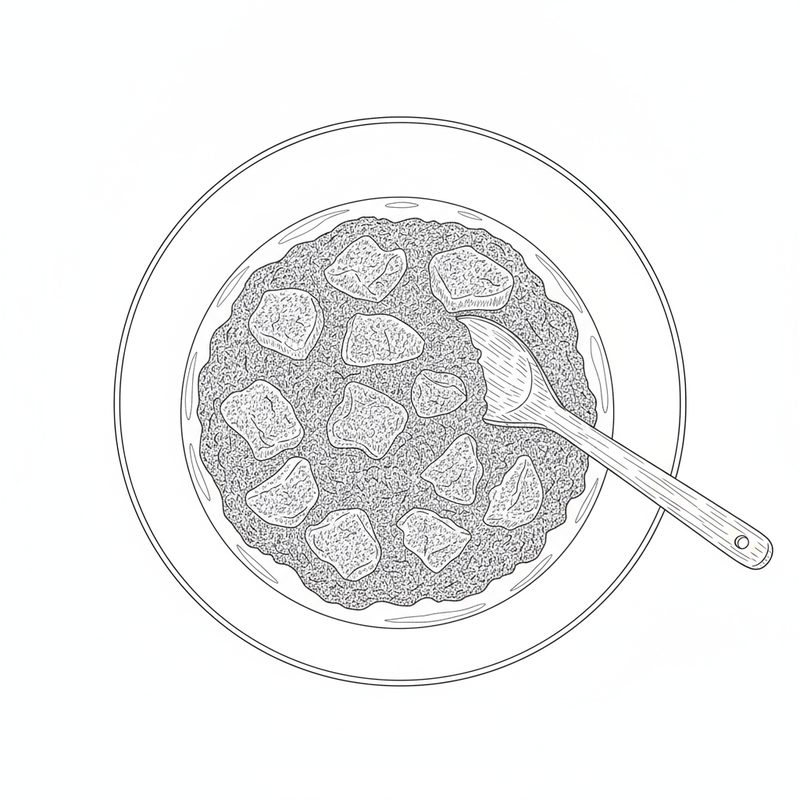
- Add the water, cover and bring to a boil, then turn the heat to low and simmer for 45 to 60 minutes, stirring now and then.
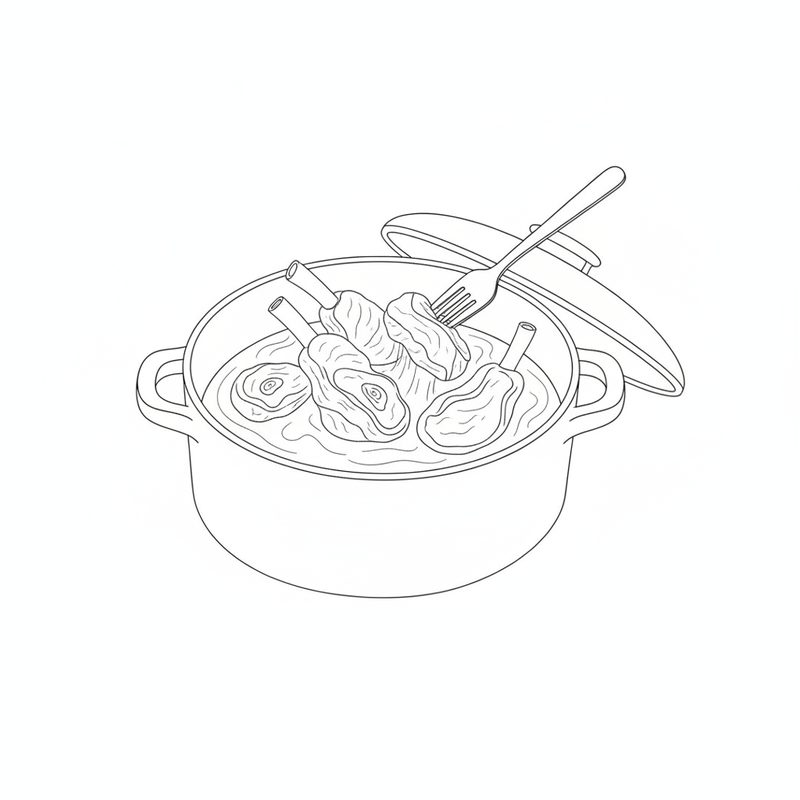
- Check the meat: it should be tender and starting to come away from the bone, and the onion and tomato should have collapsed. If not, add a splash of water and cook longer.
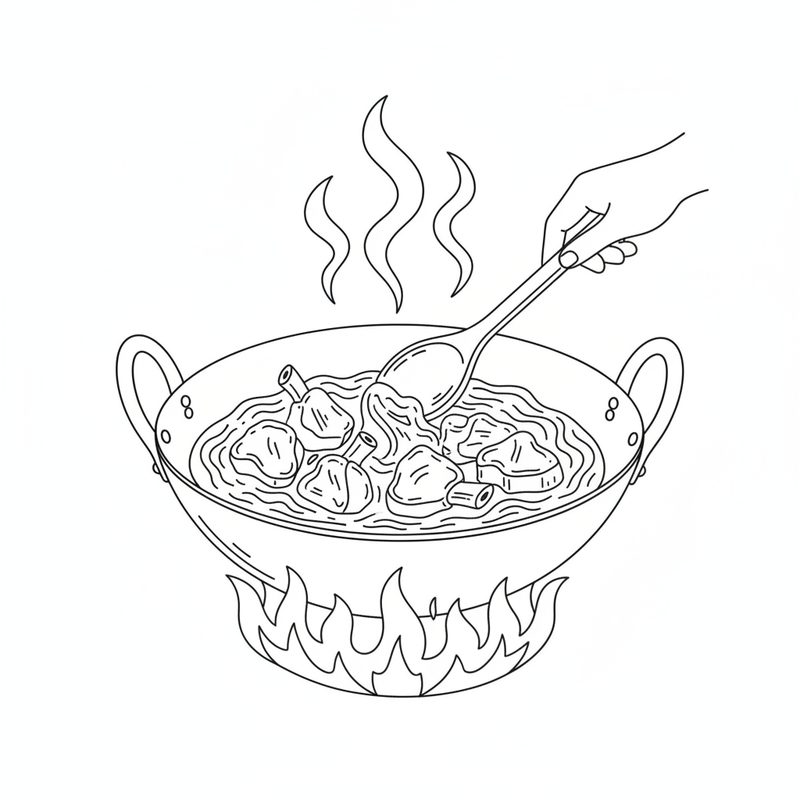
- Heat the oil in a karahi or wide pan, add the cumin seeds and cardamom and let them sizzle for a few seconds. Tip in the meat with all its sauce and turn the heat to high.
- Fry, stirring and scraping the base constantly, until the liquid has gone, the masala turns deep brown and clings to the meat, and oil separates at the edge of the pan, around 10 minutes. Stir in the Kashmiri chilli powder near the end, with a splash of water if the masala catches.
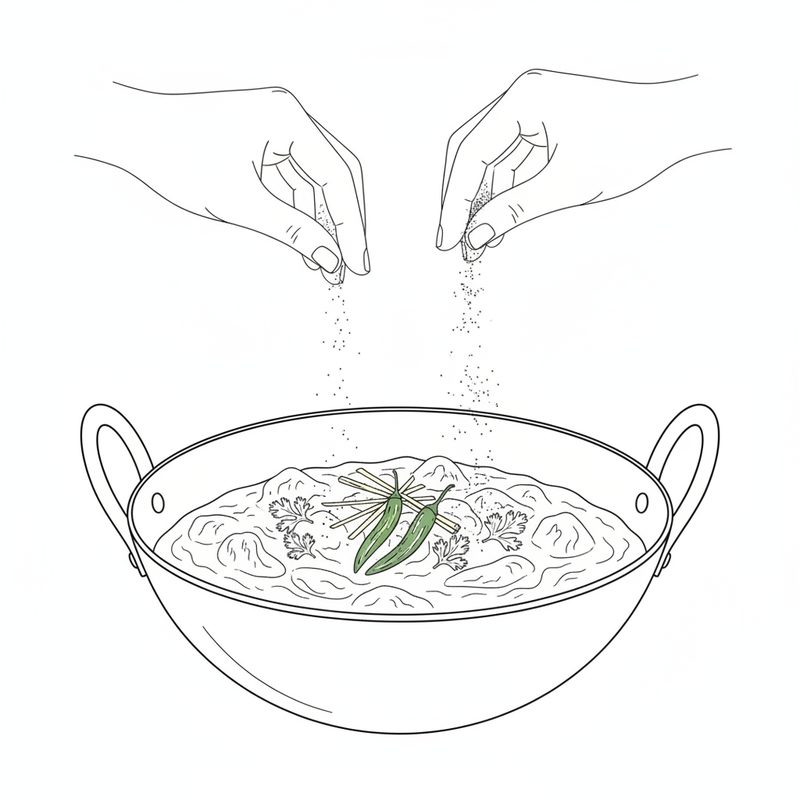
- Sprinkle over the garam masala and black pepper, stir, and cook on low for 5 minutes. Garnish with ginger, green chillies and coriander and serve hot.
What does gosht mean?
Gosht means meat. The word is shared by Urdu, Hindi and Persian, and in a dish name it tells you the main ingredient, not the method: aloo gosht is meat with potatoes, bhindi gosht is meat with okra, karahi gosht is meat cooked in a karahi.
In Pakistani kitchens the default meat is goat, which is sold as mutton. When a recipe means beef it usually says so, and some cooks distinguish bara gosht (beef) from chota gosht (goat or mutton). Lamb works in every gosht recipe, including this one.
What is bhuna gosht?
Bhuna gosht is a dry, dark mutton curry finished by frying rather than simmering. Bhuna means fried or roasted, and it names the technique: once the meat is cooked, you turn the heat up and keep stirring until the liquid evaporates and the spices fry in the released fat.
The result has very little gravy. The masala coats the meat instead of surrounding it, which is why it is eaten with roti or naan rather than spooned over rice. In British curry houses the same idea is sold as lamb bhuna, usually with more onion and tomato and a looser sauce.
Bhuna gosht, step by step
 Mix the meat with onion, tomato, yogurt, pastes and ground spices.
- Add the water, cover and simmer on low.
- Check the meat is tender before you go on.
- Fry on high heat, stirring and scraping.
- Stop when the masala is thick and the oil separates.
- Finish with garam masala, pepper and the garnish.
The step most people get wrong: the bhunai
The bhunai is the high-heat fry at the end, and most disappointing bhuna gosht is simply under-fried. The meat is tender and the colour looks right, so it gets served while there is still a pool of watery sauce in the pan.
Here is what to look for. First the sauce bubbles loosely. Then it thickens and starts to spit, and you need to stir and scrape the base without stopping. Finally the masala darkens from orange-red to a deep brown, it stops looking wet, and a thin line of oil appears around the edge of the pan. That oil line is the signal. Before it appears, the spices have only boiled; after it, they have fried.
If the masala catches before the oil separates, add a splash of water, scrape the base clean and keep going. A little sticking is how the colour builds. Black flecks that taste bitter mean the heat was too high for too long.
Why each ingredient is there
- Bone-in mutton or lamb. The bones and connective tissue give the masala body. Boneless meat works, but the finished sauce is thinner and less glossy.
- Yogurt. It adds tang and helps the masala come together. Use full-fat plain yogurt; low-fat yogurt is more likely to split.
- Onion and tomato. They cook down completely during the simmer and become the base of the masala. There are no visible pieces of either in a finished bhuna gosht.
- Cumin seeds and green cardamom. Fried in hot oil just before the bhunai, they give the dish its whole-spice fragrance.
- Garam masala and black pepper. Added at the end so their aroma is not cooked away. The black pepper is a large part of the heat.
- Kashmiri chilli powder. Optional, and added for colour rather than heat.
How the quantities on the card were chosen
Every number on the card was checked against published bhuna gosht recipes from Hinz Cooking, Fatima Cooks, BBC Good Food and Licious, scaled to 500 g of meat. Where at least two of them agreed, that figure is on the card.
The meat, yogurt, onion, tomato, red chilli, cumin, cardamom and garam masala quantities all had that agreement. Salt and black pepper are given as the range the sources span. Where the sources split, this is what was chosen:
- Ground coriander: 1 tsp, as in Hinz Cooking and BBC Good Food. Fatima Cooks uses 3 tsp for the same weight of meat. Use the higher amount if you want a more earthy, thicker masala.
- Oil: 75 ml (5 tbsp), the Fatima Cooks figure. The sources ranged from 1 tbsp to well over 5 tbsp, and this amount is enough to separate visibly at the end. You can spoon some off before serving.
- Ginger and garlic paste: 1 heaped tsp of each, from Fatima Cooks. Hinz Cooking uses 3 tsp of a combined ginger, garlic and onion paste, which comes to about the same.
- Kashmiri chilli powder: 2 tsp, from Fatima Cooks only, which is why it is optional.
- Water: 175 ml (3/4 cup), also from Fatima Cooks. Hinz Cooking cooks the meat in its marinade alone, which only works on a very low flame with a tight lid.
The cooking time is the median of the times the recipes state. Older mutton can take longer than an hour to soften, so treat the tenderness check in step 3 as the real timer.
Mutton, goat or lamb?
Any of them works. Goat, sold as mutton in Pakistani and Indian shops, is the default and has the deepest flavour. Lamb is softer and usually cooks faster, so start checking it earlier. British mutton, from older sheep, is the slowest of the three and needs the most water and time.
Ask for a curry cut: bone-in pieces from the shoulder or leg, all roughly the same size. Pieces of very different sizes will not finish at the same time.
Home style and restaurant style
This recipe is home style: the meat is simmered with everything in one pot, then fried. It needs very little attention until the last part.
Restaurant-style bhuna gosht usually starts the other way round. Whole spices go into a lot of hot oil or ghee, onions are fried deep brown, and the meat is seared before any liquid goes in. The Licious recipe follows that route. It gives a darker, richer dish, but it uses considerably more fat and needs you at the stove the whole time.
The shorter route, and what it costs
A pressure cooker shortens the simmer considerably. Cook steps 1 and 2 under pressure until the meat is tender, release, transfer to a karahi and do the bhunai exactly as written.
What you lose is a little depth. The slow simmer reduces the onion and tomato gradually, so the masala starts to build before the fry. After pressure cooking there is usually more liquid left, so the bhunai takes longer. Do not shorten it.
What to serve with bhuna gosht
Serve it with roti, paratha or naan, and something sharp on the side: sliced raw onion with lemon, or a simple raita. Because it is a dry curry, bread is a better partner than plain rice. For a larger Pakistani spread, it sits well next to chapli kabab or keema naan.
If you want a meat dish with plenty of gravy instead, nihari is the slow-cooked stew at the other end of the scale. For a whole joint rather than pieces, see the mutton leg roast.
Storing and reheating
Refrigerate bhuna gosht within two hours of cooking and eat it within three to four days, which is the USDA guidance for cooked leftovers. It also freezes well in an airtight container.
Reheat it in a pan with a splash of water over medium heat, stirring until it is hot all the way through. It is often better the next day, because the masala keeps soaking into the meat.
Questions people ask
What does gosht mean?
Gosht is the Urdu, Hindi and Persian word for meat. In Pakistani dish names it usually means mutton (goat) or lamb unless the recipe says beef.
What type of meat is gosht?
Gosht can be any meat, but in Pakistani cooking it most often means goat sold as mutton, or lamb. Beef is sometimes called bara gosht, and goat or mutton chota gosht.
Are gosht and mutton the same?
Not exactly. Gosht means meat in general, and mutton is one kind of meat. In Pakistan mutton usually means goat, which is why most gosht recipes are made with it.
How do you pronounce gosht?
Gosht is one syllable, said roughly like gohsht, with a long o and a soft t at the end.
What is gosht curry made of?
A gosht curry is meat cooked with onion, tomato, ginger, garlic and ground spices such as red chilli, coriander and garam masala, often with yogurt. Bhuna gosht uses the same base and fries it down until almost dry.
What are the most common gosht dishes?
Common gosht dishes include aloo gosht (with potatoes), bhindi gosht (with okra), karahi gosht, namkeen gosht (salt and pepper mutton), Sindhi seyal gosht, aab gosht (a Kashmiri milk curry) and bhuna gosht.
What is the difference between bhuna gosht and mutton curry?
Bhuna gosht is fried down at the end until the sauce is thick and the oil separates, so it has very little gravy. A mutton curry keeps a pourable sauce.
Can I make bhuna gosht with beef?
Yes. Use bone-in beef curry pieces and expect a longer simmer before the bhunai, since beef usually takes longer than lamb to become tender.