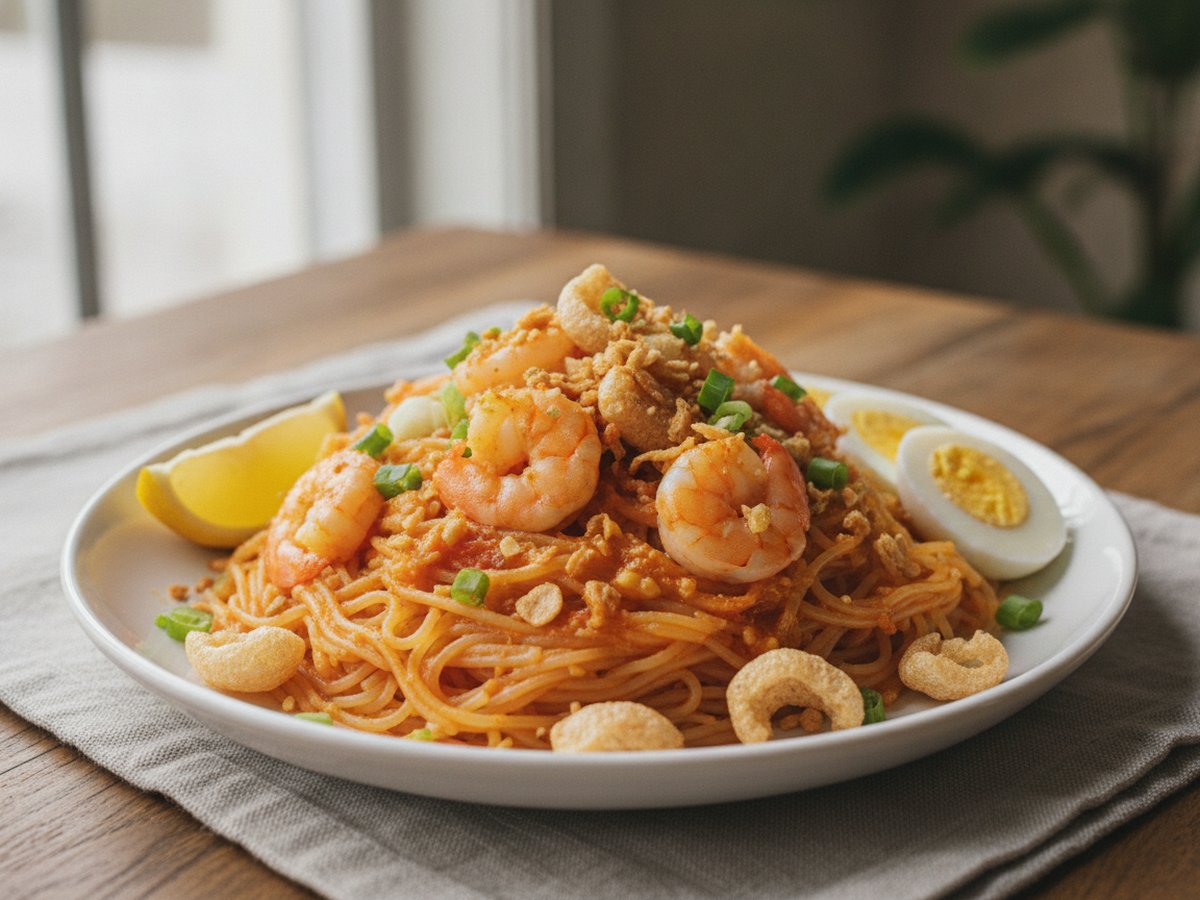
Pancit palabok is Filipino rice noodles under a thick, bright orange sauce of pork and shrimp stock, coloured with annatto. On top go shrimp, sliced egg, smoked fish flakes, crushed pork rinds and green onion, and you squeeze calamansi over it just before you eat. Salty, smoky, a little sour, and very soft.
The recipe below serves 6 and takes about an hour. Every quantity on the card was checked against three published recipes, and where they disagree this page says so.
Last updated
Recipe
Palabok Recipe (Pancit Palabok)
Ingredients
Noodles
Sauce
Toppings
Method
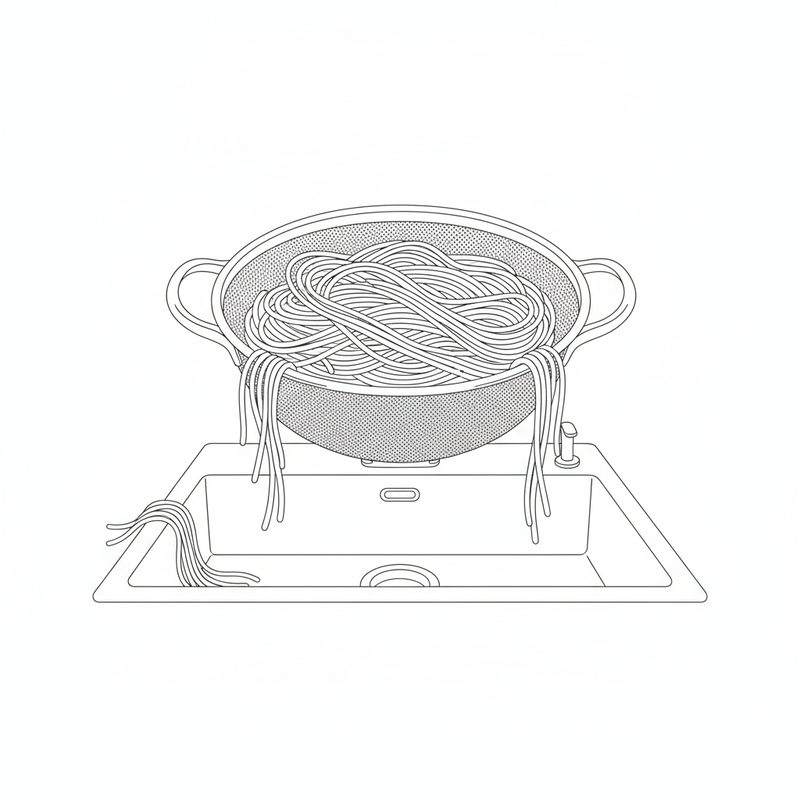
- Soak or boil the noodles as the package directs. Drain them very well and spread them on a serving platter.
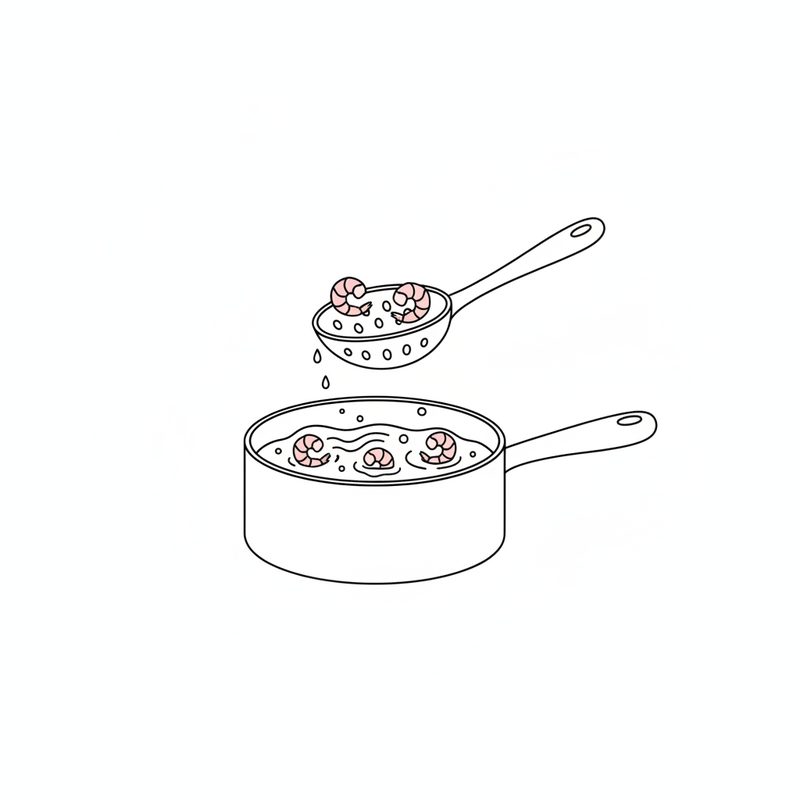
- Bring the stock to a simmer and add the shrimp. Cook just until they turn pink, then lift them out. Peel them, put the shells back in the stock and let it simmer while you start the sauce, then strain it.
- Stir the annatto powder into 1/4 cup of the hot stock until no specks remain.
- Heat the oil in a wide pan. Cook the onion and garlic until soft, then add the pork and cook, breaking it up, until no pink remains and it starts to brown.
- Pour in the strained stock, the annatto liquid, the fish sauce and the pepper. Bring it to a simmer.
- Stir the cornstarch slurry again and pour it in slowly while stirring. Keep stirring until the sauce bubbles and coats the back of a spoon. Taste, and add fish sauce if it needs salt.
- Pour the sauce over the noodles. Top with the shrimp, egg, tinapa, chicharon and green onions, and serve with calamansi or lemon to squeeze over.
What palabok is made of
Palabok is three parts: noodles, a sauce and a pile of toppings. The noodles are thin rice noodles or the cornstarch sticks sold as palabok noodles. The sauce is ground pork simmered in shrimp stock with fish sauce and annatto, then thickened. The toppings are shrimp, hard-boiled egg, tinapa (smoked fish) flakes, chicharon and green onion.
Nothing is stir-fried together. You cook each part on its own and build the dish on the plate, which is why it travels well to a party: the sauce and the toppings wait in their own containers until you are ready.
What the name means
Pancit is the everyday word for noodles. Palabok is usually glossed as garnish or embellishment, and the name fits, because the toppings are the whole point. A plate of palabok with the sauce and nothing on it is just orange noodles.
The palabok sauce: colour, stock and thickener
The sauce is ground pork, shrimp stock, fish sauce, black pepper and annatto, thickened with cornstarch or flour. That is the answer to what goes in it. The rest is about getting each part right.
Annatto, called achuete in the Philippines, gives the orange. It adds colour and a faint earthy note, not heat. Buy it as powder or paste, or steep the seeds in hot water and use the water. Dissolve the powder in a little hot stock before it goes in the pan, or you get red specks instead of an even colour.
The stock carries the flavour, so this is where the shortcut question comes up. Simmering the shells from your shrimp in the stock gives the deepest taste. Water with a shrimp bouillon cube is fine too, and two of the recipes behind this page do exactly that. Plain water with nothing in it is not fine. The sauce will taste of fish sauce and little else.
Cornstarch gives a glossy sauce and thickens fast. Flour gives a more opaque, gravy-like sauce and needs a few minutes of simmering so it stops tasting raw. Both are traditional. The card uses cornstarch.
Which noodles to use
Use thin rice noodles (bihon) or the cornstarch noodles packed as palabok or luglug noodles. The cornstarch kind and bihon both work, and the recipes behind this page use both. Bihon is the one an ordinary supermarket is more likely to stock.
Whichever you buy, follow the package for soaking and boiling times, because they vary a lot by brand. Drain the noodles very well. Water left in the noodles thins the sauce on the plate.
The toppings, and which ones matter
Chicharon and tinapa are the two that make it taste like palabok. The pork rinds add crunch against soft noodles, and the smoked fish adds the smoky note people notice first. If you cannot find tinapa, smoked trout or another flaky smoked fish works, and one of the source recipes suggests exactly that. You can also make your own chicken skin chicharon if pork rinds are hard to get.
Egg, shrimp and green onion are for colour and bite. Calamansi, or lemon if that is what you have, goes on at the table. Do not skip it. The acid is what keeps a rich plate from feeling heavy.
Some cooks add fried garlic bits, and one of the recipes checked adds napa cabbage. Both are optional.
Pancit palabok, step by step
 Cook the noodles and drain them well.
- Poach the shrimp in the stock, then lift them out.
- Soften the onion and garlic, then brown the pork.
- Sauce the noodles and pile the toppings on.
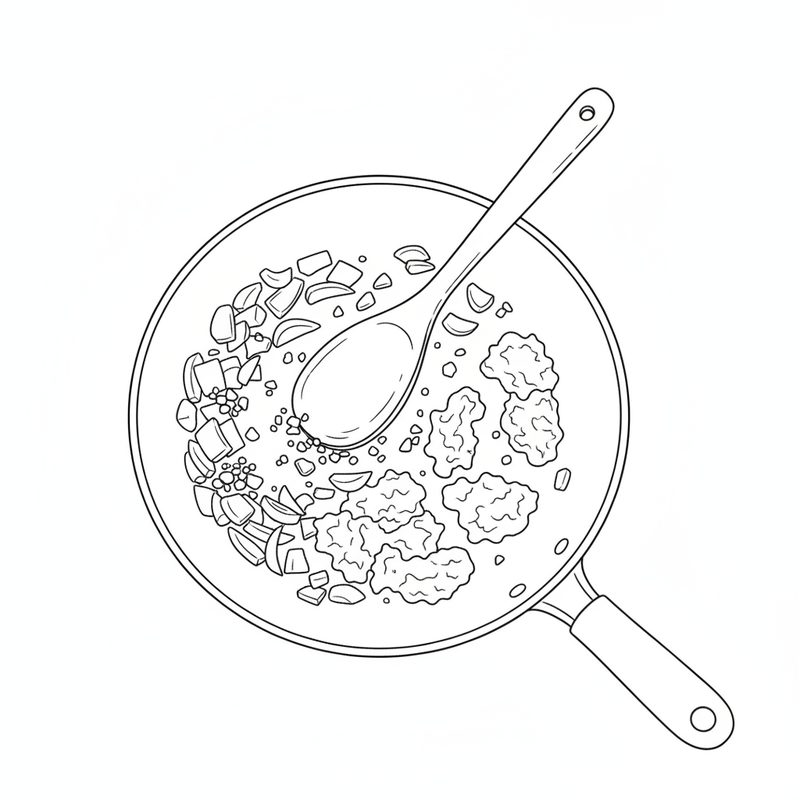
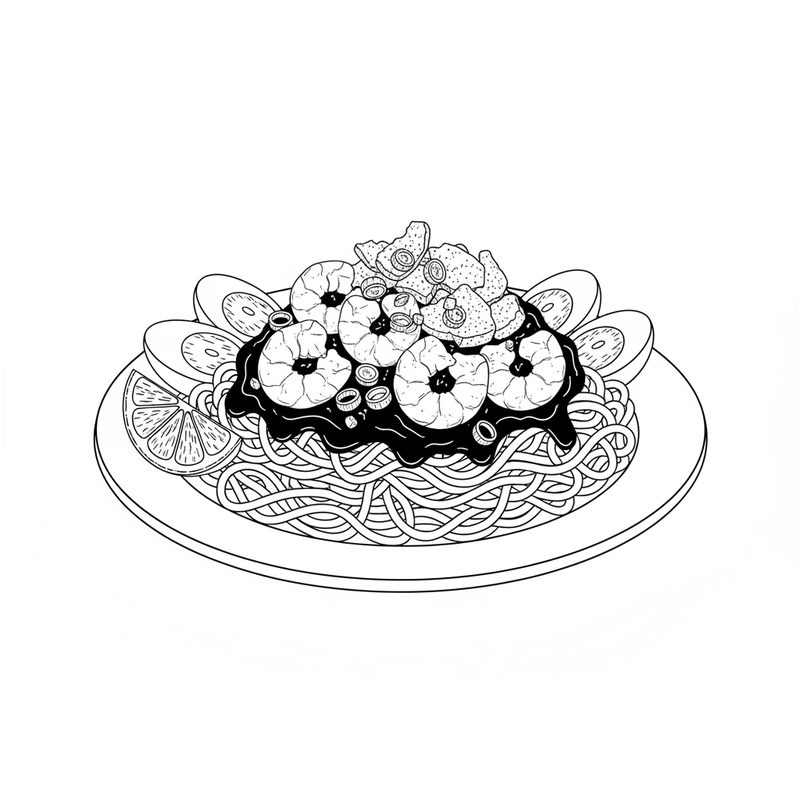
The one step to watch is the thickening. Pour the slurry in slowly while you stir, and keep stirring until the sauce bubbles again. It is ready when it coats the back of a spoon and a finger drawn through it leaves a clean line. If it goes too thick, loosen it with a splash of stock. If it stays thin, it has not come back to a simmer yet.
Where the quantities come from
The card is built on 8 oz (225 g) of noodles for 6 people. Most quantities were stated the same way by at least two of the three recipes checked. Three were not, and here is what was chosen.
- Shrimp. The recipes range from 12 pieces to 1 lb. The card uses 1/2 lb, the figure from the recipe written at the same noodle weight. Use more if shrimp is the part you love.
- Annatto. The recipes use different forms: powder, paste, or annatto water. The card uses 1 tbsp of powder. Add it a little at a time if your powder is strong; the aim is a deep orange, not red.
- Eggs. The recipes use 2, 3 or 4. The card says 2 to 3.
Times are the middle of the times the recipes state. Nutrition and calories are not on the card, because none of the recipes checked gives figures that could be verified.
Palabok and other pancit
Palabok is one of many pancit dishes, and it is the saucy, topped one. If you like it, pancit Malabon is its close cousin on this site, and there is a vegan pancit if you are cooking for someone who eats no meat or fish. At a party, palabok usually shares the table with lumpia.
Variations
Creamy palabok. A newer style finishes the pork sauce with all-purpose cream instead of a starch slurry. It is richer and paler. It is a different sauce, so treat it as its own recipe rather than a tweak to this one.
Palabok mix. Packaged palabok mixes are sold for exactly this dish. They are a fair shortcut for a weeknight. Add your own sauteed pork and a proper stock and the result is much closer to homemade.
More seafood. Mince half of the cooked shrimp and stir it into the sauce with a spoonful of tinapa flakes. One of the recipes behind this page does this, and it makes the sauce taste more of the sea.
Making it ahead, and leftovers
Palabok is party food, so it is usually made in quantity and ahead. Cook the sauce, boil the eggs and prepare the toppings earlier in the day, and keep them in separate containers in the fridge. Cook the noodles close to serving, reheat the sauce until it bubbles, then assemble.
For leftovers, store the sauce and noodles apart if you still can. Chicharon goes soft quickly once it touches sauce, so keep it dry and add fresh at the table. The sauce thickens as it cools; loosen it with a little stock or water when you reheat it.
Questions people ask
What is palabok made of?
Rice or cornstarch noodles, a sauce of ground pork simmered in shrimp stock with fish sauce and annatto, and toppings of shrimp, hard-boiled egg, smoked fish flakes, crushed chicharon and green onion, with calamansi to squeeze over.
What are the ingredients for palabok sauce?
Ground pork, shrimp or seafood stock, fish sauce, annatto for colour, black pepper, onion, garlic, and cornstarch or flour mixed with cold water to thicken it.
Is pancit palabok healthy?
It is a rich party dish rather than an everyday light meal: refined noodles, pork, pork rinds and a salty sauce. For a lighter plate, use more shrimp and egg, less chicharon, and season with fish sauce to taste.
What can I use instead of annatto?
Annatto is mostly there for colour. Without it the sauce tastes much the same but turns out beige. One of the recipes checked notes that food colouring can stand in, used in a smaller amount.
Can I make palabok the day before?
Make the sauce and toppings the day before and keep them in the fridge in separate containers. Cook the noodles and assemble on the day, so the noodles do not go soft in the sauce.