Pininyahang manok is Filipino pineapple chicken: bone-in chicken simmered in pineapple juice and fish sauce, then finished with evaporated milk, pineapple chunks, carrot and bell pepper. The sauce comes out creamy, pale gold, sweet first and salty after, and it goes over plain white rice.
This version serves 6 from 2 pounds of chicken thighs and drumsticks. It takes about 15 minutes to prep and 40 minutes on the stove, and it uses one pot.
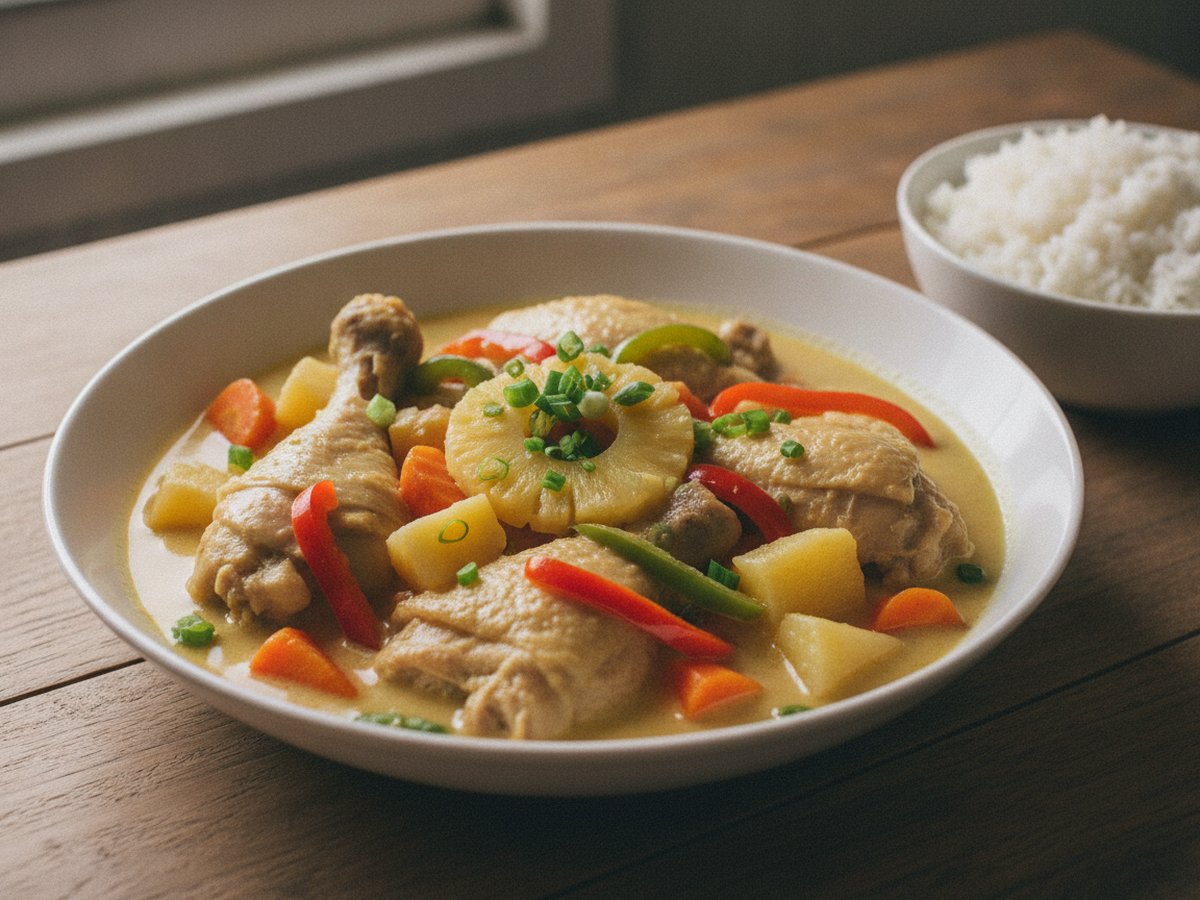
Last updated
Recipe
Pininyahang Manok (Filipino Pineapple Chicken)
Ingredients
Optional
Method
- Optional: pour the pineapple juice over the chicken and let it sit for 20 to 30 minutes while you cut the vegetables. Keep the juice.
- Heat the oil in a wide pot over medium-high heat. Brown the chicken lightly on all sides, in batches if the pot is crowded, until the skin turns pale gold. Lift it onto a plate.
- Lower the heat to medium. Cook the onion until soft, then add the garlic and stir for about 30 seconds, until fragrant. Add the tomatoes now if using.
- Return the chicken to the pot with the pineapple juice and the fish sauce. Bring to a boil, skim off the foam, then cover, lower the heat and simmer for about 20 minutes, until the chicken is nearly cooked.
- Add the carrot, and the potatoes if using. Simmer until the carrot is almost tender, about 5 minutes. Potatoes need a little longer; a knife should slide in.
- Stir in the pineapple chunks and the evaporated milk. Simmer gently, uncovered, for 5 to 8 minutes, until the sauce is creamy and slightly thicker. Do not let it boil hard.
- Add the bell pepper and cook for 1 to 3 minutes, until just tender-crisp. Taste, then season with more fish sauce and black pepper. The chicken is done at 165°F (74°C) near the bone.
- Serve hot with steamed rice.
What is pininyahang manok?
Pininyahang manok is a Filipino chicken stew cooked with pineapple. Pinya is pineapple, manok is chicken, and pininyahan means cooked with pineapple, so the name simply describes the dish. In English it is usually called pineapple chicken, but it is not the sticky, fried sweet-and-sour kind. It is a braise with a milky sauce.
The taste is a balance. Pineapple brings sweetness and a little acid, fish sauce (patis) brings salt, and the milk rounds both into something mild and creamy.
The ingredients, and what you can swap
The core list is short and the published versions agree on most of it: chicken, pineapple juice, pineapple chunks, milk, fish sauce, onion, garlic, carrot and bell pepper.
- Chicken: use bone-in thighs and drumsticks, or a whole chicken cut into serving pieces. Dark meat stays juicy through 40 minutes of simmering. Boneless breast dries out; if you use it, cut the first simmer short and check it early.
- Pineapple: canned chunks are the standard. Drain them and keep the juice, then top it up with bottled pineapple juice to get a full cup. Fresh pineapple works, but taste it first; a sour pineapple makes a sharper sauce.
- Milk: evaporated milk gives the classic creamy sauce. Fresh milk is lighter; Panlasang Pinoy uses half a cup of it. All-purpose cream is richer. Coconut milk turns it into a different, well-known version (see below).
- Fish sauce: this is where the salt comes from, so add it in two stages and taste at the end. Brands differ in saltiness.
- Bell pepper: red is sweeter and looks brighter in the pale sauce; green is a little bitter and is just as traditional.
How to cook pininyahang manok well
The method is simple: brown the chicken, soften the aromatics, simmer the chicken in pineapple juice, then add the vegetables and the milk in stages so nothing overcooks. A few checkpoints make the difference.
- Brown lightly, not deeply. You want the skin to turn pale gold and stop looking raw. Dark browning fights the soft, milky colour of the finished sauce.
- Skim the foam. When the juice first comes to a boil, grey foam rises. Spoon it off and the sauce stays clean-tasting and smooth.
- Milk goes in late. Add the evaporated milk only after the chicken is nearly cooked, then keep it at a gentle simmer. A hard, long boil can make the sauce look split and grainy.
- Pineapple chunks go in late too. Added at the start, they fall apart and lose their shape. Added with the milk, they stay as soft, juicy pieces.
- Bell pepper goes in last. One to three minutes is enough. It should still have a little bite and its colour.
- Check the chicken. It is done at 165°F (74°C) at the thickest part, near the bone, which is the USDA safe minimum for poultry. Without a thermometer, the juices should run clear and the meat should pull from the bone.
The sauce should coat a spoon thinly. If it is too thin for you, simmer it uncovered for a few more minutes before the bell pepper goes in.
How the published versions differ
Three well-known recipes were compared for this card: Recipes by Chris, Crossing Kitchens and Panlasang Pinoy. They agree on the method and on most amounts. Where they do not, here is what this card does.
| Point | What the sources say | This card |
|---|---|---|
| Chicken | All three use 2 pounds | 2 pounds |
| Pineapple chunks | 1 cup, 12 ounces, or a 20-ounce can | 12 ounces, the middle amount (Panlasang Pinoy) |
| Milk | Two use 1 cup evaporated milk, one uses 1/2 cup fresh milk | 1 cup evaporated milk |
| Fish sauce | From 1 tablespoon plus more to taste, up to 2 1/2 tablespoons | 2 tablespoons, then taste |
| Servings | Two say 6, one says 4 | 6 |
Recipes by Chris also adds ginger, chicken broth and a cornstarch slurry for a thicker sauce. Those are good additions, but only one source uses them, so they stay out of the main card.
Variations
Pininyahang manok takes well to small changes. These are the common ones.
- Pininyahang manok sa gata: swap the milk for coconut milk (gata). The sauce gets richer and nuttier. Add it at the same point as the evaporated milk and keep the simmer gentle.
- With potatoes: cubed potatoes go in with the carrot and make it a fuller one-pot meal. They need longer than the carrot, so cut them small.
- With tomato: sauté chopped tomato with the onion and garlic for a little more acidity and colour.
- Thicker sauce: stir a spoon of cornstarch into cold water and add it at the end, stirring until the sauce turns glossy.
- Marinated first: soak the chicken in the pineapple juice for 20 to 30 minutes before browning. It is a good use of the time it takes to cut the vegetables.
Storage and make-ahead
Pininyahang manok keeps in the fridge for 3 to 4 days in a covered container, which is the USDA window for cooked leftovers. Cool it quickly and refrigerate it within 2 hours of cooking.
Reheat it gently on the stove over low heat with a splash of water, stirring now and then, until it is steaming hot all the way through. A gentle reheat keeps the milk sauce smooth. The bell pepper softens on reheating; if you are cooking ahead, you can leave it out and add fresh strips when you reheat.
It is a good dish to double for the week. The flavour settles overnight and the leftovers are easy lunches over rice.
What to serve with pininyahang manok
Serve it with plenty of steamed white rice, because the sauce is the point. For a breakfast-style plate with leftovers, garlic fried rice works too: try this sinangag (garlic fried rice).
If you like this kind of everyday Filipino stew, chicken menudo is the tomato-based cousin, and beef afritada uses the same pot-and-vegetables method with beef. For something lighter, tinola is chicken in a clear ginger broth.
Questions people ask
What are the ingredients of pininyahang manok?
Chicken, pineapple juice, pineapple chunks, evaporated milk, fish sauce, onion, garlic, carrot, bell pepper and black pepper. Potatoes, tomato and coconut milk are common additions.
Can I use fresh milk or coconut milk instead of evaporated milk?
Yes. Fresh milk gives a lighter sauce, and coconut milk makes pininyahang manok sa gata, a richer version. Add either one at the same late point and keep the simmer gentle.
What is the best way to cook pineapple in this dish?
Add canned pineapple chunks near the end, with the milk. Simmered for only a few minutes, they stay whole and juicy instead of breaking down into the sauce.
Can I use fresh pineapple?
Yes. Cut it into chunks and use bottled pineapple juice for the liquid. Taste the fruit first, because a sour pineapple makes a sharper sauce.
Is there a simple pineapple chicken recipe to serve with rice?
This is one. Pininyahang manok cooks in one pot in about 40 minutes and is meant to be eaten with steamed white rice, which soaks up the creamy sauce.
Is pininyahang manok the same as Jamaican pineapple chicken?
No. Pininyahang manok is a Filipino milk-based braise seasoned with fish sauce. Jamaican pineapple chicken is a different dish from a different cuisine, and its ingredients are not covered here.
How long does pininyahang manok keep?
Three to 4 days in the fridge, covered. Reheat it gently over low heat until steaming hot all the way through.