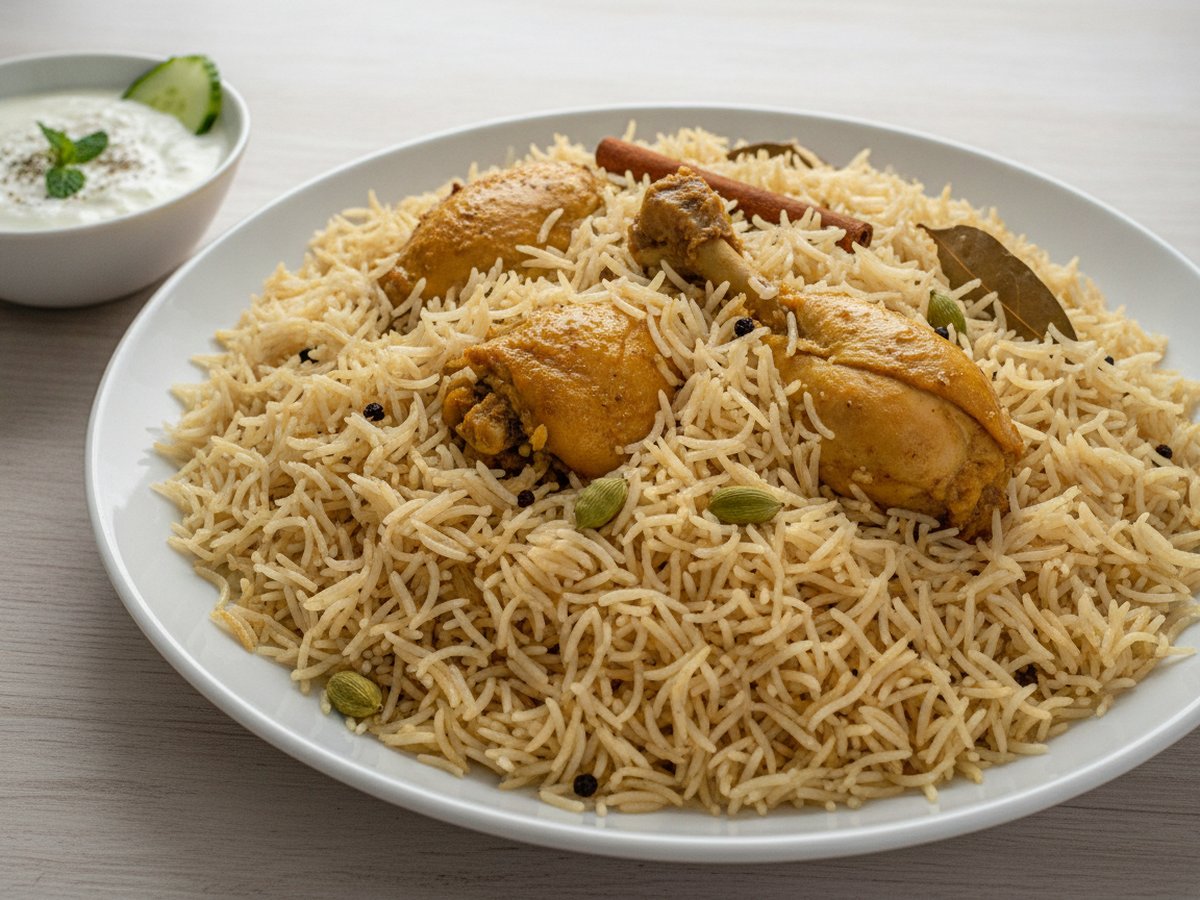
Yakhni pulao is basmati rice cooked in yakhni, the broth you get by simmering chicken or mutton on the bone with whole spices. The meat goes back into the pot, the rice drinks up the broth, and the finished pulao is pale gold, fragrant and mild rather than hot. This version uses chicken, the quicker everyday pot.
One thing decides whether it works: the amount of broth. For 2 cups of basmati you want 3 cups of strained yakhni, measured, not guessed. Too much and the grains split; too little and the bottom catches before the top is cooked.
Last updated
Recipe
Yakhni Pulao (Pakistani Chicken Pulao)
Ingredients
For the yakhni (broth)
For the pulao
Method
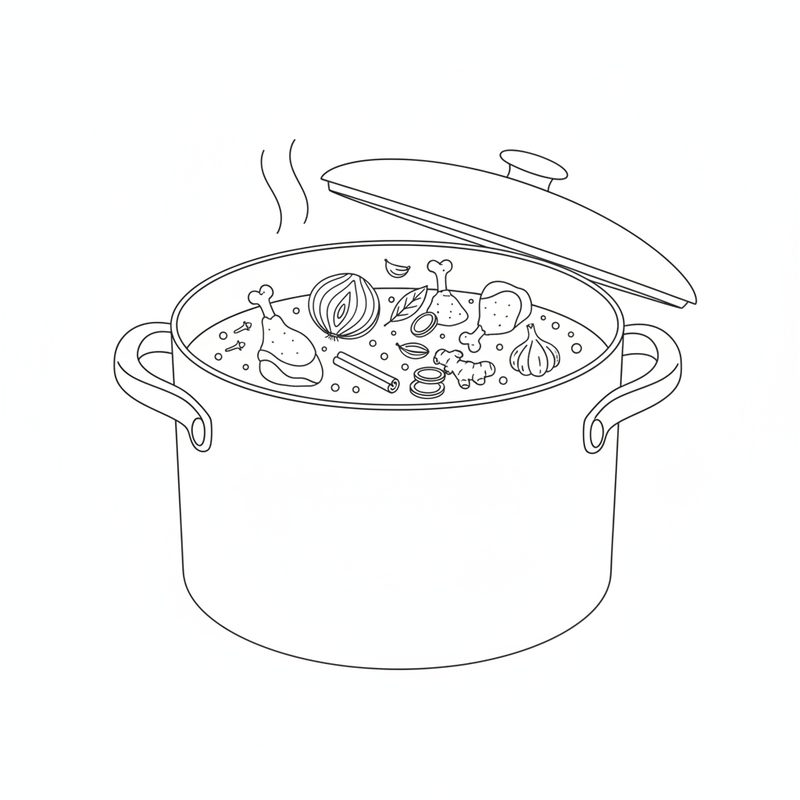
- Put all the yakhni ingredients in a large pot and bring to the boil, skimming off any scum. Lower the heat, cover and simmer gently for 20 minutes, until the chicken is cooked through but not falling off the bone.
- Meanwhile, wash the basmati until the water runs clear, then cover it with fresh water and soak for 30 minutes.
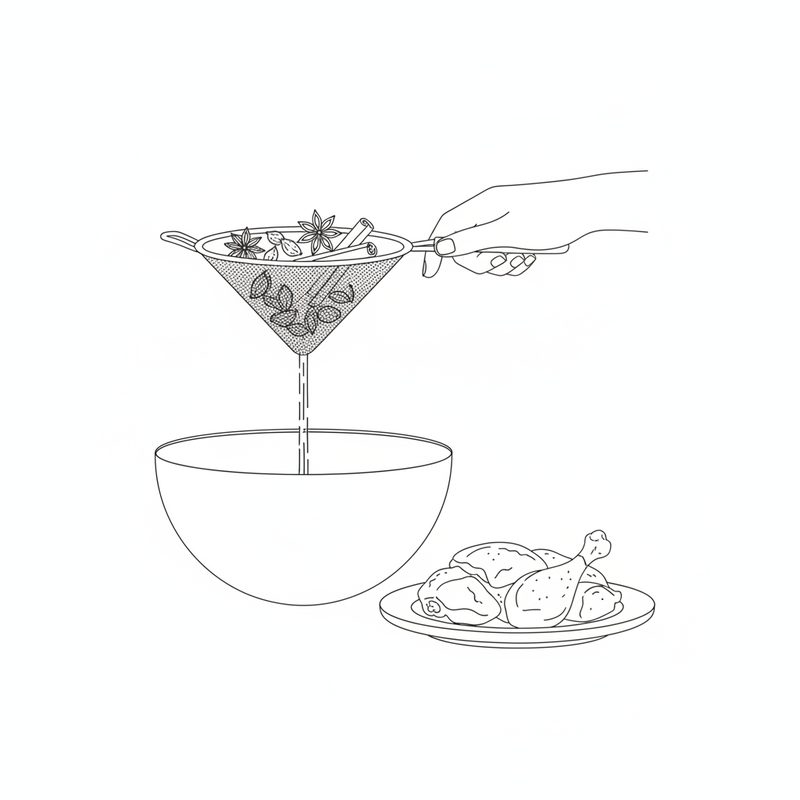
- Lift the chicken out of the broth and set it aside. Strain the broth and discard the onion and spices. Measure it: you need 720 ml (3 cups). Top up with water if it is short.
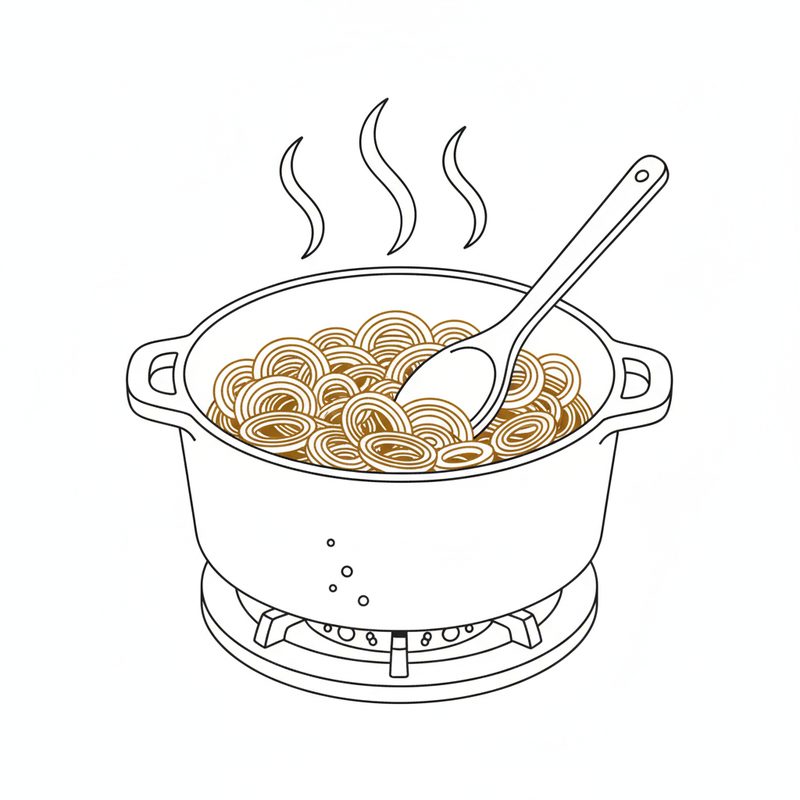
- Heat the oil or ghee in a heavy pot over medium heat. Fry the sliced onion, stirring often, for 10 to 12 minutes until deep and evenly golden brown. Lift out a quarter of it for the top.
- Add the cumin seeds, garlic and ginger and fry for a minute, until the raw smell is gone.
- Raise the heat to medium-high, add the chicken and sear it lightly for 2 to 3 minutes.
- Stir in the green chillies, yogurt and salt and cook for about 3 minutes, until the oil starts to separate at the edges.
- Pour in the measured broth and taste it: it should be a little saltier than you like, because the rice will absorb it. Bring to the boil.
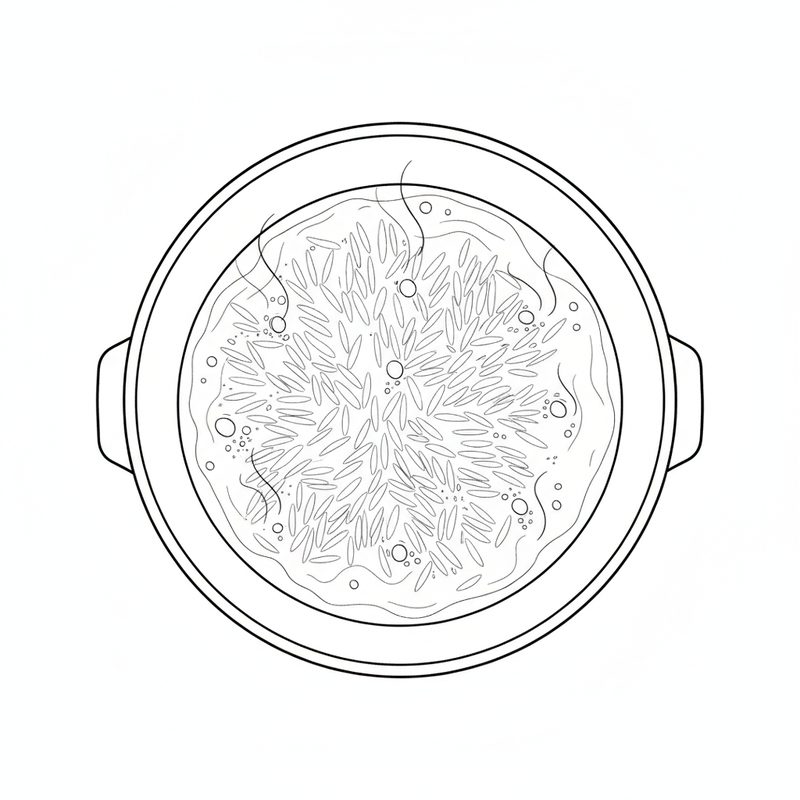
- Drain the rice well, add it to the pot and stir gently once. When it boils again, lower the heat to medium, partly cover and leave it undisturbed for about 5 minutes, until the liquid drops just below the rice and steam holes appear.
- Cover the lid with a clean kitchen towel or seal the rim with foil, set it on tightly, and cook on the lowest heat for 15 minutes. Turn off the heat and leave it closed for 10 minutes.
- Sprinkle over the garam masala, the reserved onions, coriander and mint. Lift the rice gently from the edges with a flat spoon and serve with raita.
What yakhni pulao is
Yakhni pulao is a one-pot rice dish in which the cooking liquid is a spiced meat stock. Yakhni is that stock; pulao is rice cooked in a measured amount of liquid until all of it is absorbed.
The flavour comes from whole spices rather than ground masala: cinnamon, bay leaf, green and black cardamom, cloves, cumin, coriander seed and black peppercorns go into the broth with onion, garlic and ginger. Every chicken version compared for this page builds the dish in the same order: broth first, then onions fried in oil or ghee, then the meat and broth go back in with soaked basmati, and the pot finishes on very low heat under a sealed lid. That last stage is dum, steaming in the pot’s own vapour.
Yakhni pulao vs pulao vs biryani
Yakhni pulao is a pulao whose liquid is meat broth; a plain pulao can be cooked in water, and biryani is a different method altogether.
| Yakhni pulao | Plain pulao | Biryani | |
|---|---|---|---|
| Cooking liquid | Spiced meat broth, measured | Water or stock, measured | Rice boiled in plenty of water, then drained |
| Rice and meat | Cooked together in one pot | Cooked together | Layered: part-cooked rice over a cooked masala |
| Spicing | Whole spices, mild | Usually whole spices | Ground and whole spices, often hotter |
If you want the layered, spicier dish instead, the site’s one-pan chicken biryani is the place to start.
Is yakhni the same as bone broth?
No. Both are meat simmered on the bone in water, but yakhni is a short, spiced stock made to cook rice in, not a long extraction. In the chicken versions here it simmers for 20 minutes, just until the chicken is cooked through but still on the bone: Tea for Turmeric, Yummy Tummy Aarthi and Food.com all give 20 minutes. Mutton needs far longer: Swasthi’s Recipes and Fatima Cooks both list around two hours of cooking.
The step most people get wrong: the broth-to-rice ratio
Use 1.5 cups of strained yakhni for every cup of basmati, which is 3 cups (720 ml) for the 2 cups in the card. Two of the chicken recipes compared here land on that ratio, and Tea for Turmeric notes that the right amount runs from 1.5 to 2 cups per cup of rice, depending on how aged the basmati is.
The broth is the variable, not the rice. Twenty minutes of simmering boils some of it off, so strain it, measure it in a jug, and top it up with water to 3 cups if it is short. Start at 1.5 and only move towards 2 next time if your rice is still firm at the centre after steaming.
What it looks like when it is right: after the rice goes in and the pot boils for about five minutes, the liquid drops just below the surface and small holes open in the rice where steam escapes. That is the moment to seal the lid. Do not stir after this point; stirring breaks the grains and turns them sticky.
Why the onion colour matters
The fried onions set the colour of the whole pulao. Fry them over medium heat, stirring, for 10 to 12 minutes until they are deep and evenly golden brown. Pale onions give a pale, flat-tasting pulao; onions taken on to dark brown turn it bitter.
A useful habit from the Food.com Karachi-style recipe: lift out a quarter of the fried onions before the masala goes in, and scatter them on top at the end.
Yakhni pulao, step by step
 Simmer the chicken with whole spices for 20 minutes.
- Strain the yakhni and measure 3 cups.
- Fry the onions to an even deep gold.
- Boil the rice in the broth until the surface shows.
- Seal the lid and steam on the lowest heat.

Home style or Karachi-style masala
There are two ways to build the pot, and they give noticeably different pulao.
Home style keeps the masala light: onions, ginger, garlic, green chilli and a little yogurt, with the flavour carried by the broth. Tea for Turmeric uses only a spoonful of yogurt and makes tomato optional, and Jamil Ghar uses none at all. The rice stays pale and the whole spices come through clearly.
Karachi style, as Food.com gives it, cooks tomato, half a cup of yogurt, red chilli powder, ground coriander and ground fennel into the onions before the broth goes in. It is richer and slightly redder. The card above takes its half cup of yogurt from that version for body, but leaves out the tomato and ground chilli. Add half a chopped tomato with the yogurt if you want the Karachi pot.
Green chillies are 1 to 3, with 2 as the default. Slit them rather than chopping them and the heat stays gentle.
The shorter route: broth in a pressure cooker
You can make the yakhni in an Instant Pot or pressure cooker: Jamil Ghar cooks it at high pressure for 20 minutes with a 10-minute natural release. For chicken the time saved is small, since it only needs 20 minutes on the stove; for mutton it saves well over an hour.
What you lose is control. You cannot skim the broth as it comes to the boil, so it is cloudier, and you cannot check the meat, so chicken can come out soft and falling off the bone. If you go this way, strain and measure the broth exactly as before.
Making it with mutton
The method is the same, but the yakhni takes much longer. The mutton versions compared here, from Swasthi’s Recipes and Fatima Cooks, both run to roughly two hours, because mutton has to be tender before it meets the rice. Simmer until a piece pulls easily from the bone, then strain, measure and carry on from the onion stage.
What to serve with yakhni pulao
Raita is the usual partner: mint, cucumber or vegetable raita all appear in the recipes compared here, and a chutney or a plain chopped salad of onion, tomato and cucumber works too. For a bigger spread, set it beside a chicken karahi or chicken tikka; the pulao’s mildness leaves room for a hotter dish.
Storing and reheating
Cool the pulao and refrigerate it within 2 hours, then eat it within 3 to 4 days; that is FoodSafety.gov’s guidance for cooked leftovers. Cooked rice left warm at room temperature is the main risk, so do not leave the pot out overnight.
To reheat, sprinkle over a tablespoon of water per portion, cover, and heat until steaming hot all the way through; the chicken should reach 74°C (165°F). The water replaces the steam the rice lost in the fridge.
Questions people ask
What is the difference between yakhni pulao and pulao?
Yakhni pulao is cooked in meat broth made with whole spices, so the rice carries the flavour of the meat. A plain pulao can be cooked in water or any stock.
What is yakhni pulao?
It is basmati rice cooked in yakhni, a broth of chicken or mutton simmered on the bone with whole spices, then finished with the meat on very low heat under a sealed lid.
Is yakhni the same as bone broth?
No. Yakhni is a short, spiced stock made for cooking rice, about 20 minutes for chicken. Bone broth is simmered far longer and is not built around whole spices.
How do you make the best yakhni pulao?
Measure the strained broth at 1.5 cups per cup of soaked basmati, fry the onions to an even deep gold, and never stir once the lid is sealed for steaming.
Do you need to soak the basmati?
Yes. The chicken recipes compared here soak the washed rice for about 30 minutes, which helps the grains cook evenly and stay long.
Why is my yakhni pulao mushy?
Too much broth, or stirring after the rice has gone in. Measure the broth, and leave the pot sealed and untouched while it steams.