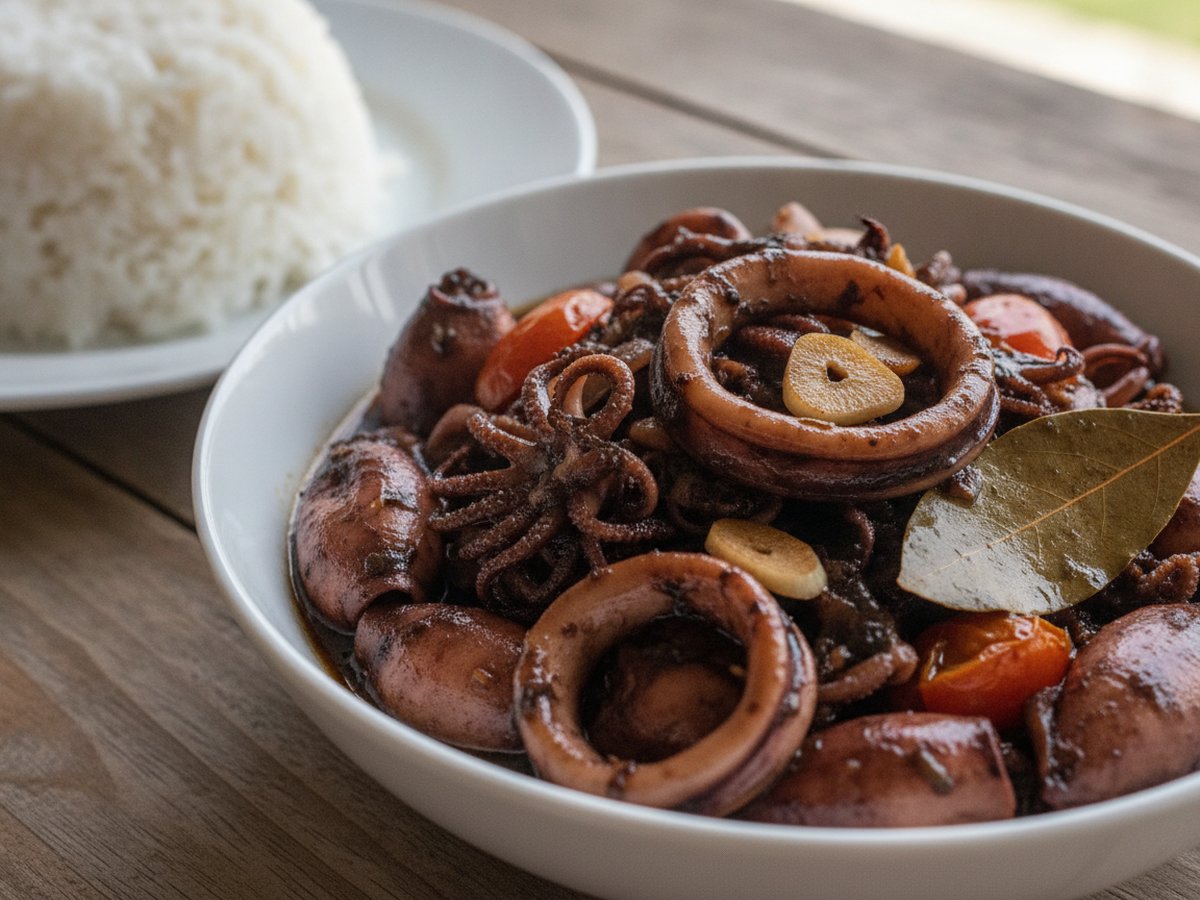
Adobong pusit (Filipino squid adobo) is squid cooked quickly in vinegar, soy sauce, garlic and onion, then turned dark and glossy with its own ink. It tastes sour first, then salty, with a deep savoury finish from the ink, and it goes over steamed white rice.
It takes about 20 minutes to clean and slice the squid and only a few minutes in the pan. This recipe uses 2 lb (about 900 g) of squid and serves 4.
Last updated
Recipe
Adobong Pusit (Filipino Squid Adobo)
Ingredients
Method
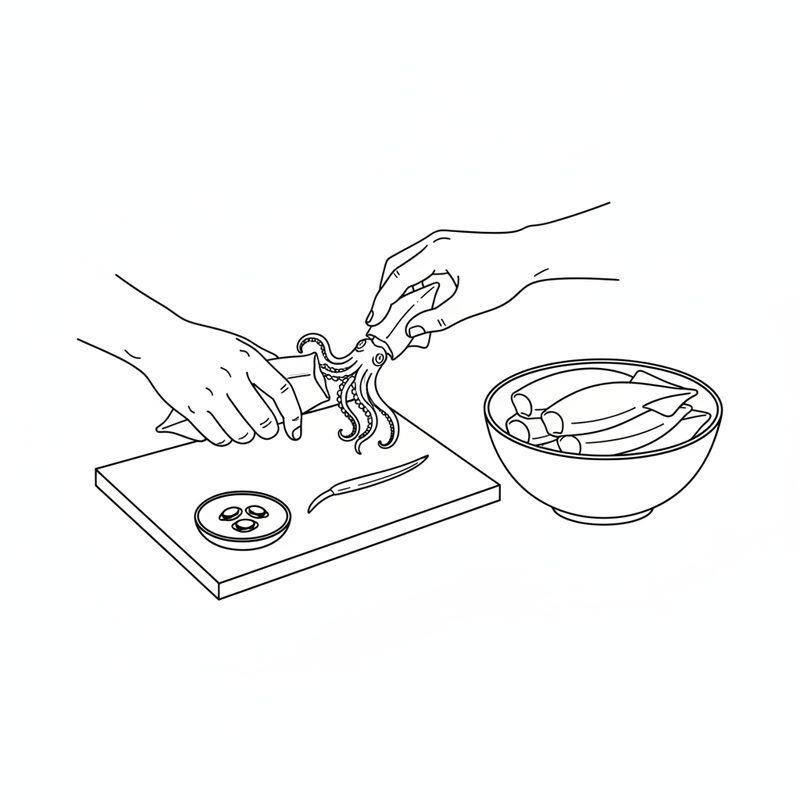
- Clean the squid: pull the head and tentacles from the body, remove the clear quill, the eyes and the hard beak, and set the ink sacs aside in a small bowl. Rinse and drain well.
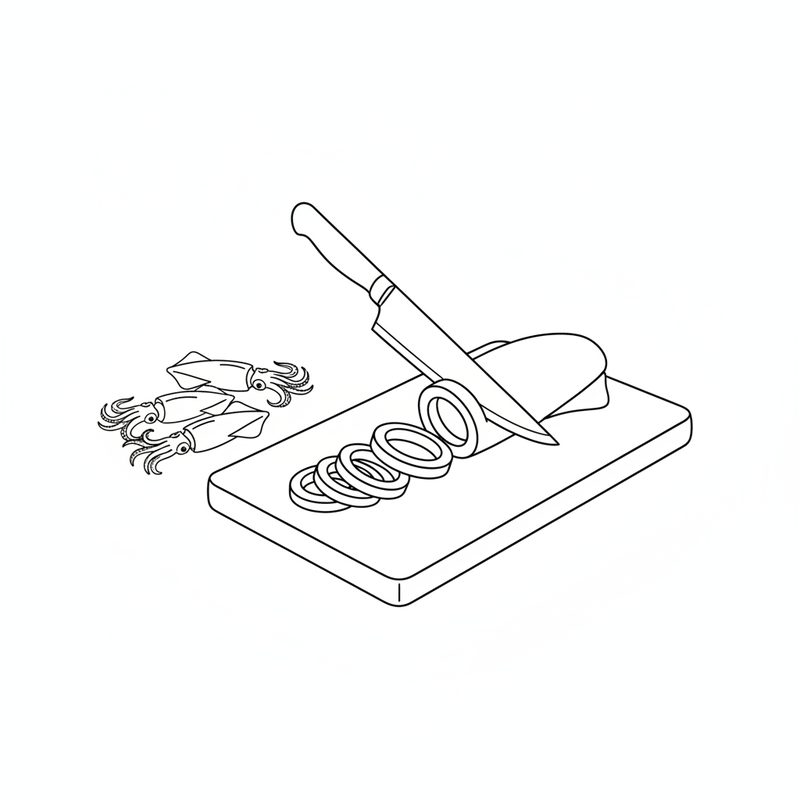
- Slice larger squid bodies into rings. Leave small squid whole.
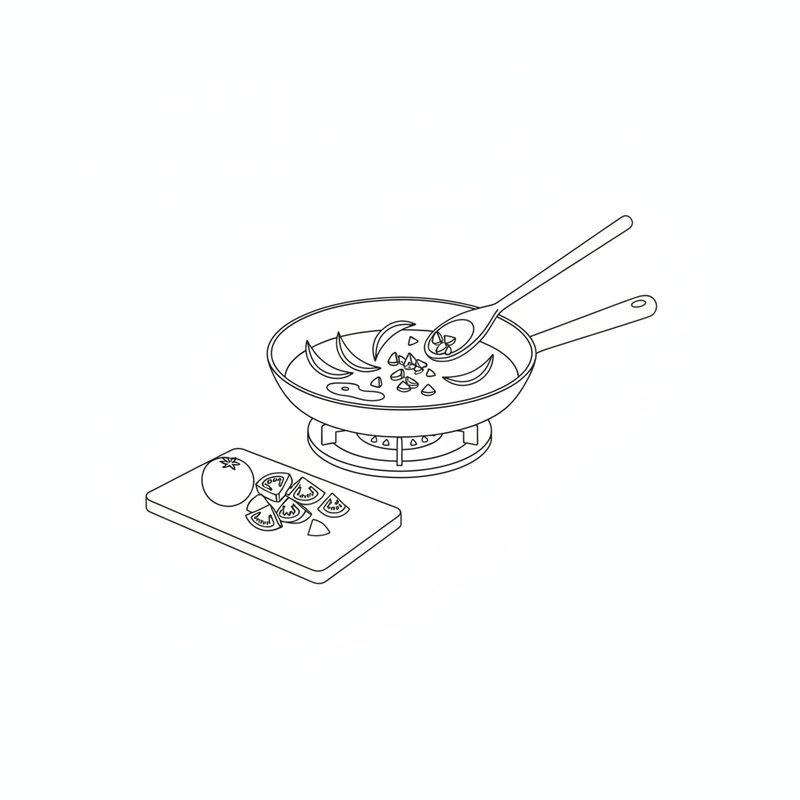
- Heat the oil in a wide pan over medium-high heat. Cook the onion for about 2 minutes, add the garlic for 1 minute, then the tomatoes, if using, until soft.
- Pour in the vinegar and soy sauce and add the bay leaves and chilli, if using. Bring to a boil and let it bubble for about a minute without stirring.
- Add the squid and sugar. Simmer, stirring, for 3 to 5 minutes, just until the squid turns opaque. Do not let it go longer.
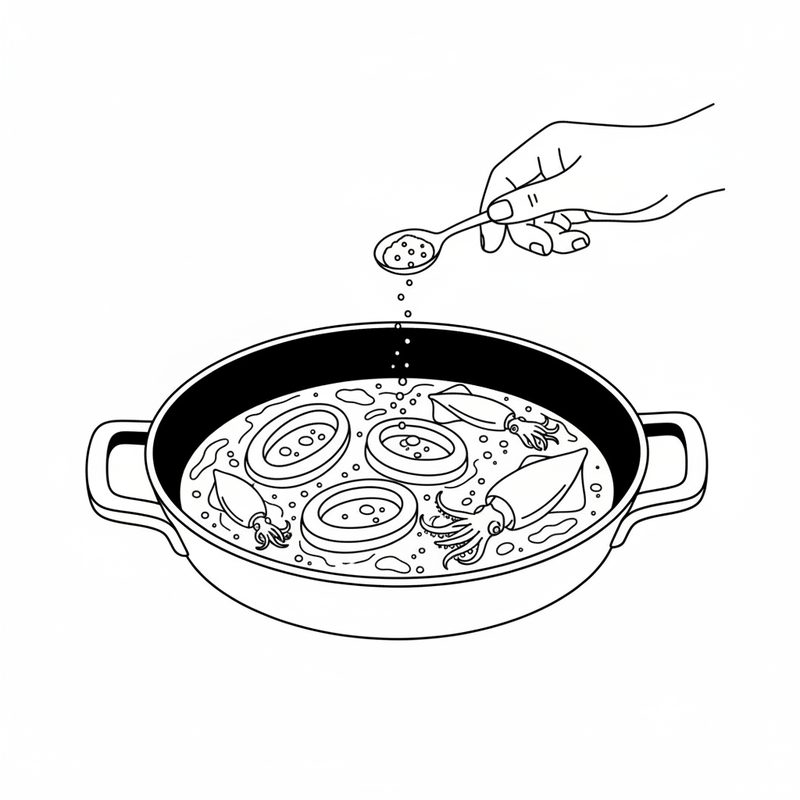
- Mash the ink sacs with a spoonful of the sauce or warm water and stir them in. Simmer for 1 to 3 minutes until the sauce is dark and glossy. Season with salt and pepper and serve with steamed rice.
What is adobong pusit?
Adobong pusit is the squid version of adobo, the Filipino way of cooking in vinegar, garlic and usually soy sauce. Pusit means squid. What sets it apart from beef adobo or adobong talong is the ink: the sacs inside each squid are saved during cleaning and stirred into the sauce at the end.
The ink is what turns the sauce from brown to nearly black. It adds a rich, briny depth that soy sauce alone does not give you.
How to clean squid for adobo
Pull the head and tentacles away from the body, and most of the insides come out with them. Then reach into the body and pull out the quill, the clear, plastic-like strip that runs along the inside.
Find the ink sac before you throw anything away. It is a small, silvery pouch attached to the insides. Lift it out gently and put it in a small bowl. If it breaks, scrape what you can into the bowl and carry on.
Cut the tentacles off just below the eyes and squeeze out the hard beak at their centre. Rinse the bodies and tentacles in cold water and drain them well. Slice large bodies into rings. Small squid can stay whole.
You can clean the squid earlier in the day and keep it covered in the fridge, with the ink sacs in their own small covered bowl.
How many minutes to cook adobong pusit
Squid needs either a few minutes or a long time, never the middle. Cooked quickly, it stays tender. Cooked for 10 or 15 minutes, it tightens and turns rubbery. Given much longer, it softens again.
This recipe takes the quick road: 3 to 5 minutes for the squid, then 1 to 3 minutes after the ink goes in. Watch the squid, not the clock. It is done the moment it turns from translucent to opaque white and the rings firm up.
That is also why the card has no cook or total time. The recipes compared for this page range from about 10 minutes of cooking to 30, because some braise the squid and some do not. That gap is too wide for one honest number.
Why you let the vinegar boil before stirring
Let the vinegar come to a boil and bubble for about a minute before you stir. It is a common adobo instruction, and the reason usually given is that it takes the raw, sharp edge off the vinegar.
If you stir straight away, the dish still works. It just tastes sharper.
How to make adobong pusit, step by step
Six steps, in the order you do them. The full quantities are in the card above.
 Pull out the head, quill and insides. Keep the ink sacs.
- Slice the bodies into rings. Small squid can stay whole.
- Soften the onion, then the garlic and tomato.
- Add vinegar, soy sauce and bay. Boil before you stir.
- Add the squid and sugar. Stop when it turns opaque.
- Stir in the ink until the sauce goes dark and glossy.

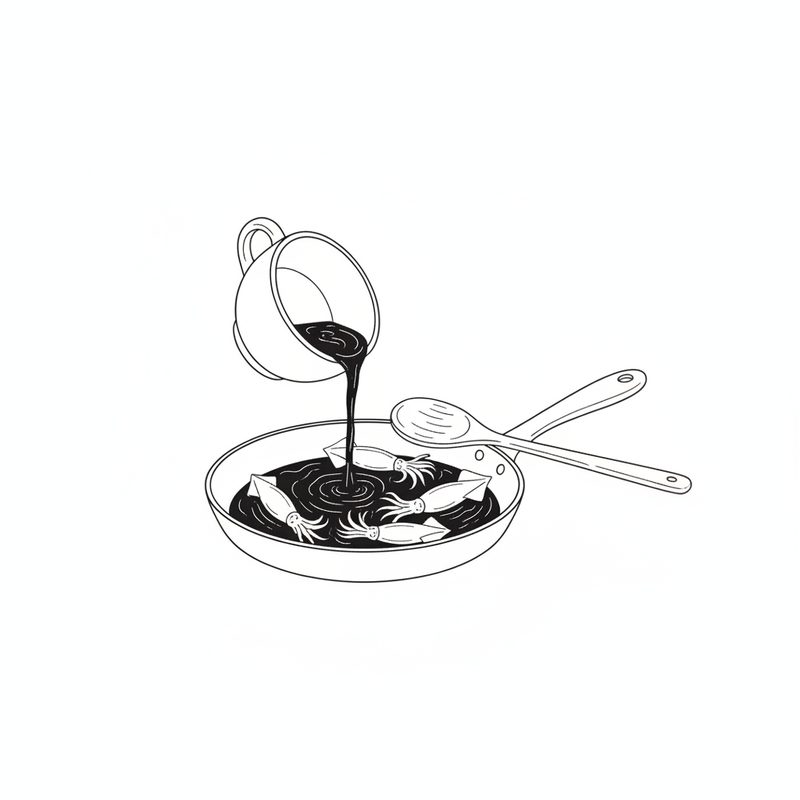
Adobong pusit without ink
Yes, you can leave the ink out. You get a brown soy-and-vinegar squid adobo instead of a black one, and the method stays the same. Skip the last step and season to taste.
Without ink the sauce is lighter and sharper, so taste it and add a little more sugar if the vinegar is too strong. Some squid is sold already cleaned with the sacs gone, so this is also the fix when there is no ink to save.
Variations
- Long braise. Some cooks cover the pan and simmer the squid for about 30 minutes until it softens again. It gives a thicker, darker sauce. Add a splash of water if the pan goes dry.
- Ginger and lemongrass. A tablespoon of each, minced, cooked in the oil before the onion. A tablespoon of fish sauce can go in with the soy sauce.
- With oyster sauce. A little oyster sauce stirred in with the soy sauce rounds out the salt and adds body. Go easy on the salt if you use it.
- Spicy. Slice a chilli, such as siling labuyo, into the pan with the bay leaves.
- With Sprite. Lemon-lime soda in place of the sugar is a version people look for. None of the recipes compared here use it, so no amount is given. If you try it, use it instead of the sugar, not as well as.
What to serve with adobong pusit
Steamed white rice is the standard, because the ink sauce is meant to soak into it. Spoon plenty of the sauce over each portion.
For a vegetable on the side, adobong kangkong is a quick green. If you like adobo sauce on everything, there is also a smoky adobo sauce to keep in the fridge.
Storing and reheating
Let leftovers cool, then keep them in an airtight container in the fridge for up to 3 days. Two of the three recipes compared give that same limit.
Reheat gently in a pan, just until hot, with a small splash of water if the sauce has thickened. The squid has already had its quick cook, and every extra minute makes it firmer.
How this recipe was put together
The amounts come from comparing three published recipes, from Panlasang Pinoy, Salu-Salo and Recipes by Nora. Each amount on the card is one that at least two of them share, apart from three:
- Soy sauce. The three use 1/2 cup, 1/4 cup and 1 tablespoon. This recipe takes Salu-Salo’s 1/4 cup, the middle value. Add more at the end if you want it saltier.
- Oil. 2 tablespoons, as in Panlasang Pinoy, the middle of the amounts given.
- Tomatoes. Only Panlasang Pinoy uses them (2). They are optional here.
The prep time is the middle value of the three. There is no nutrition information, because none of the sources give it.
Questions people ask
How long do you cook adobong pusit?
Cook the squid for 3 to 5 minutes in the sauce, until it turns opaque, then 1 to 3 minutes more after adding the ink. Squid is tender either cooked briefly or braised for about 30 minutes. In between, it goes rubbery.
Why is my adobong pusit rubbery?
It cooked too long for a quick cook and not long enough for a braise. Next time take it off as soon as it turns opaque. To rescue a rubbery batch, cover it and keep simmering gently for about 30 minutes, adding a splash of water if needed.
Do you have to use the squid ink?
No. Without the ink you get a brown soy-and-vinegar squid adobo with the same method. The ink only adds the black colour and a deeper, briny taste.
What part of the squid is the ink sac?
It is a small, silvery pouch attached to the insides you pull out with the head. Lift it out whole and keep it in a bowl until the last step.