Longganisa is a Filipino pork sausage, most often sweet and heavy with garlic, eaten at breakfast with garlic rice and a fried egg. If you have landed here looking for the Spanish or Mexican longaniza, that is a different sausage with the same ancestor. This page is the Filipino one.
The version below is skinless, which is what most people make at home. No casings, no stuffer, no special equipment. You roll the seasoned pork in wax paper and the paper does the work.

Last updated
Recipe
Longganisa
Ingredients
Method
- Put the pork, sugar, garlic, salt, soy sauce, vinegar, paprika and pepper in a large bowl. Mix with your hands until the colour is even all the way through.
- Cover the bowl and refrigerate for at least 2 hours. Overnight is better.
- Lay a sheet of wax paper on the worktop. Spoon about 2 tbsp of the mixture onto it in a line, a little in from one edge.
- Roll the paper over the meat and pull it back against itself to tighten the mixture into a cylinder about 4 inches long. Twist both ends of the paper.
- Repeat until the mixture is gone, then chill the wrapped links for 20 minutes so they hold their shape.
- Unwrap as many links as you want to cook and lay them in a single layer in a wide pan. Add water to come about halfway up them.
- Bring the water to a boil, then turn the heat down and let it simmer away completely. This takes several minutes and the links firm up as it goes.
- Add the oil to the same pan and fry the links, turning them, until browned on all sides and cooked through with no pink left in the middle.
- Serve hot with garlic rice and a fried egg.
What Filipino longganisa is made of
Ground pork, sugar, garlic, salt and vinegar, with paprika for colour. That is the whole list in the sweet style, and the sugar is what separates it from almost every other sausage you will have eaten. A kilo of pork takes around three quarters of a cup of brown sugar.
The fat matters as much as the seasoning. Use pork with 20 to 30 per cent fat, or ask for shoulder rather than anything labelled lean. Lean pork gives you a dry, crumbly link that will not brown properly.
Is longganisa Filipino or Mexican?
Both, and they are not the same sausage. The name comes from the Spanish longaniza, and Spain took it to both the Philippines and Latin America, where each place made it into something of its own. Wikipedia and Google’s own summary for this search both describe the Latin American sausage; every recipe site that ranks underneath them is Filipino.
The practical difference is sugar and garlic. Filipino longganisa in its most common form is sweet and garlicky and eaten at breakfast. Latin American longaniza leans on paprika, annatto and dried chilli, and turns up in rice dishes and with plantains. Buying one expecting the other is a genuine disappointment, which is probably why people keep asking.
What longganisa tastes like
Sweet first, then garlic, then a small sour note from the vinegar underneath. The sugar caramelises in the pan, so the outside goes sticky and dark while the inside stays soft. It is closer to a sweet breakfast sausage than to chorizo.
Sweet or garlicky: the two Filipino styles
There are two, and they pull in opposite directions. The sweet style, often called hamonado, is the one above and the one you will find in most supermarkets. The Ilocos or Vigan style goes the other way: much less sugar, far more garlic, and a lot more vinegar.
The gap is real. Across the recipes used to build this page, the sweet versions carry around 140 grams of sugar per kilo of pork and the Ilocos-style one carries 55, while its vinegar roughly doubles. If you want that version, cut the sugar to about a third and raise the vinegar to a scant half cup, and use cane vinegar if you can get it.
Why skinless is the home version
Skinless longganisa needs nothing you do not already own. Hog casings have to be ordered, soaked, rinsed, checked for holes and then stuffed, and a stuffer is a real piece of equipment. Wax paper costs nothing and takes a minute.
You give up the snap of a cased sausage and the neat uniform shape, and nothing else. Shop-bought skinless longganisa is sold exactly this way in the Philippines.
Longganisa, step by step
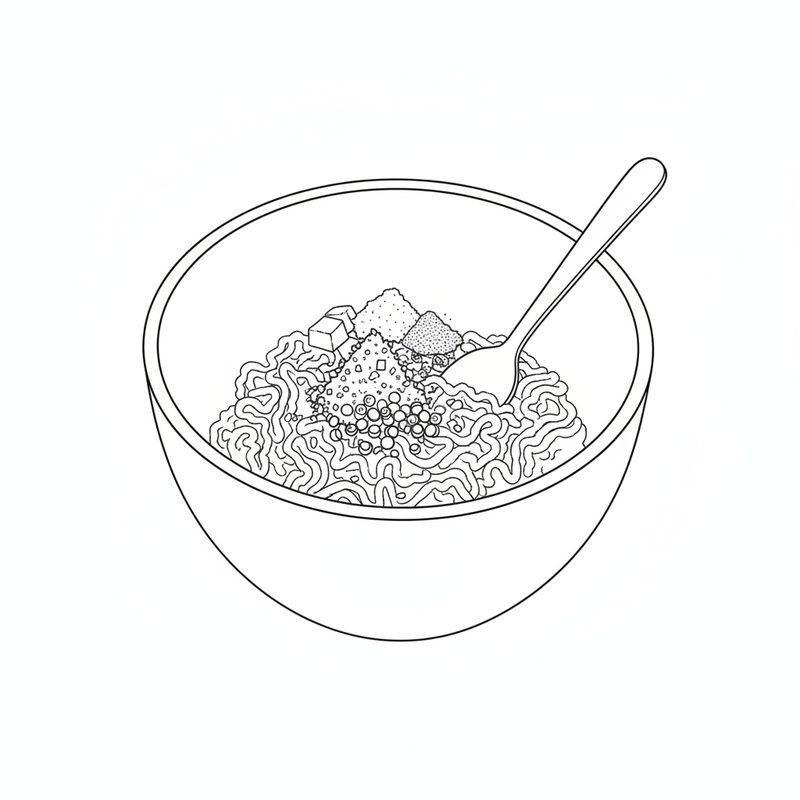
 Mix the pork with the sugar, garlic and seasonings.
- Spoon about 2 tbsp onto a sheet of wax paper.
- Roll it tight and twist both ends.
- Simmer in water, then fry in the pan.


Why you add water before you fry
The water cooks the sausage through before any browning starts. Drop a raw sweet sausage straight into hot oil and the sugar burns long before the middle is done, and you get a black outside and a raw centre.
So you simmer first, let the water go completely, and only then add the oil. By that point the links are cooked and firm, and the frying is only about colour. Four of the five recipes behind this page do it exactly this way.
Do not walk away at the end. Once the water has gone the sugar catches fast.
These are fresh sausages, not cured
Nothing here cures the meat. There is no nitrite, no curing salt, and the sugar and vinegar are for flavour rather than preservation. That means longganisa made this way is raw ground pork in a wrapper and gets treated like it.
Cook it through every time, until there is no pink left in the middle. Keep the uncooked links in the fridge or the freezer, never on the counter, and wash your hands and the bowl the way you would after handling any raw mince.
Storing and freezing
Wrapped links keep in the fridge for about three days and freeze well for a couple of months. Freeze them in their wax paper on a tray first, then bag them once they are solid, or they weld into one block.
They cook from frozen with no trouble: a little more water in the pan and a few extra minutes before it goes. That is the point of rolling them small – you take four out on a weekday morning and leave the rest alone.
For the full breakfast, serve them with sinangag, Filipino garlic fried rice, and a fried egg. If you like this kind of sweet cured-tasting breakfast pork, tocino is its closest relative on this site, and fried bangus is the third thing that turns up on the same plate.
Questions people ask
Do I need curing salt for longganisa?
No. None of the recipes behind this page uses it, and neither does this one. That also means the sausage is fresh rather than cured, so it has to be cooked through and kept cold.
Can I use casings instead of wax paper?
Yes. Soak hog casings in warm water for about 30 minutes, rinse them through, check for leaks, then stuff and tie into links. The mixture is the same; it is only the wrapper that changes.
Why is my longganisa dry?
The pork was too lean. Aim for 20 to 30 per cent fat, or use shoulder. Lean mince cannot hold the sugar and comes out crumbly.
Is it longganisa or longanisa?
Both are used and both are understood. Longganisa with the double g is the more common Filipino spelling; longanisa is closer to the Spanish original. Google treats them as the same search.