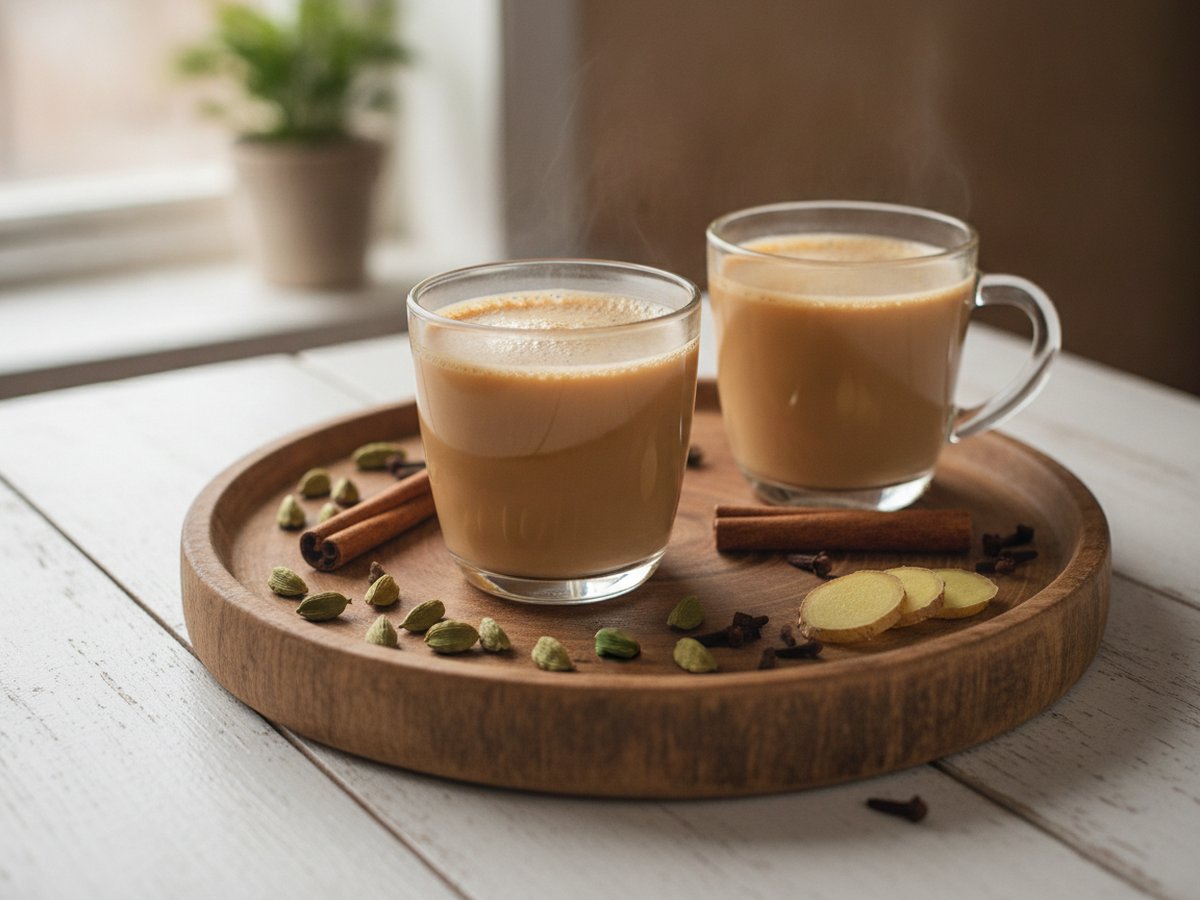
Masala chai is black tea boiled with milk, sugar and whole spices, usually cardamom, cloves, cinnamon, black pepper and fresh ginger, then strained into a cup. For two cups you need 480 ml (2 cups) of water, 240 ml (1 cup) of whole milk, 3 teaspoons of loose black tea and about 5 minutes of boiling.
The one thing that decides whether it works is boiling the tea in the spiced water before the milk goes in. Add milk to pale tea and it stays pale and thin however long you cook it afterwards.
Last updated
Recipe
Masala Chai
Ingredients
Method
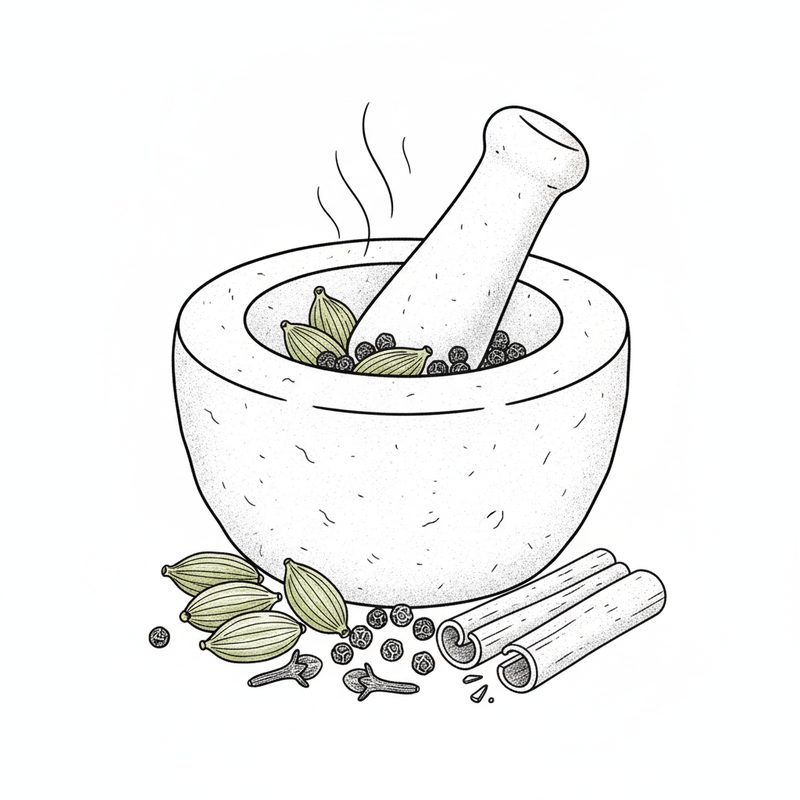
- Lightly crush the cardamom pods, cloves and peppercorns in a mortar and pestle, just enough to crack them. Break the cinnamon stick in two.
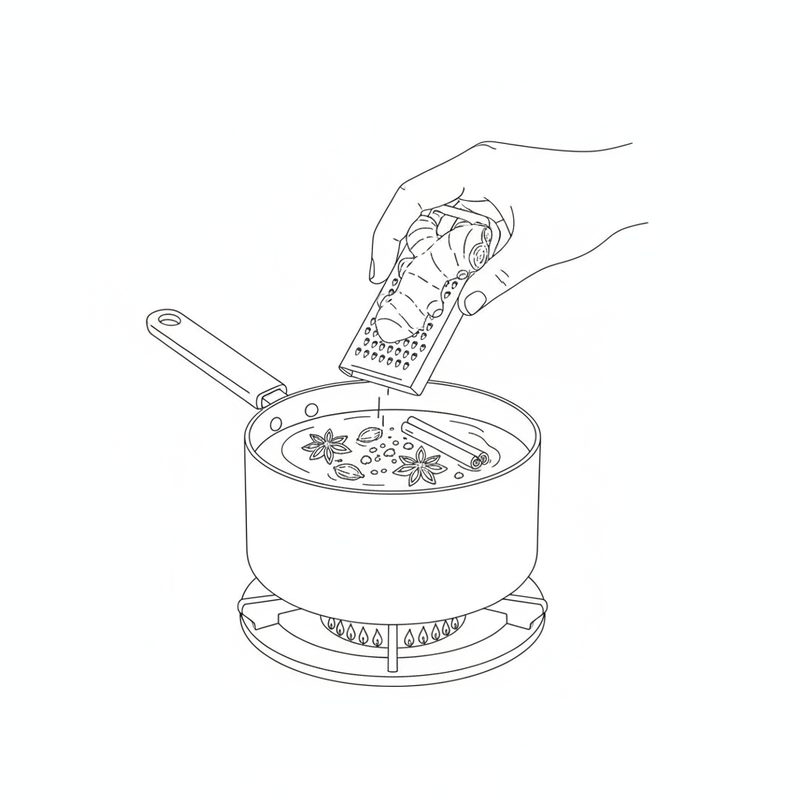
- Put the 480 ml of water in a small saucepan with the crushed spices, cinnamon and ginger and bring it to a boil.
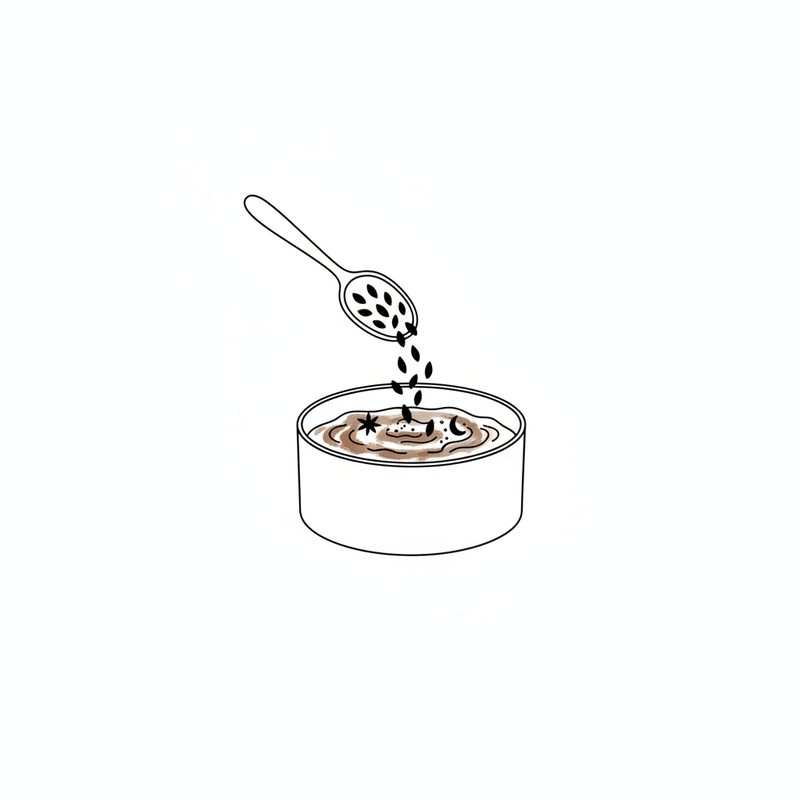
- Add the tea and boil on medium heat for 3 minutes, until the liquid is deep brown and you cannot see the bottom of the pan.
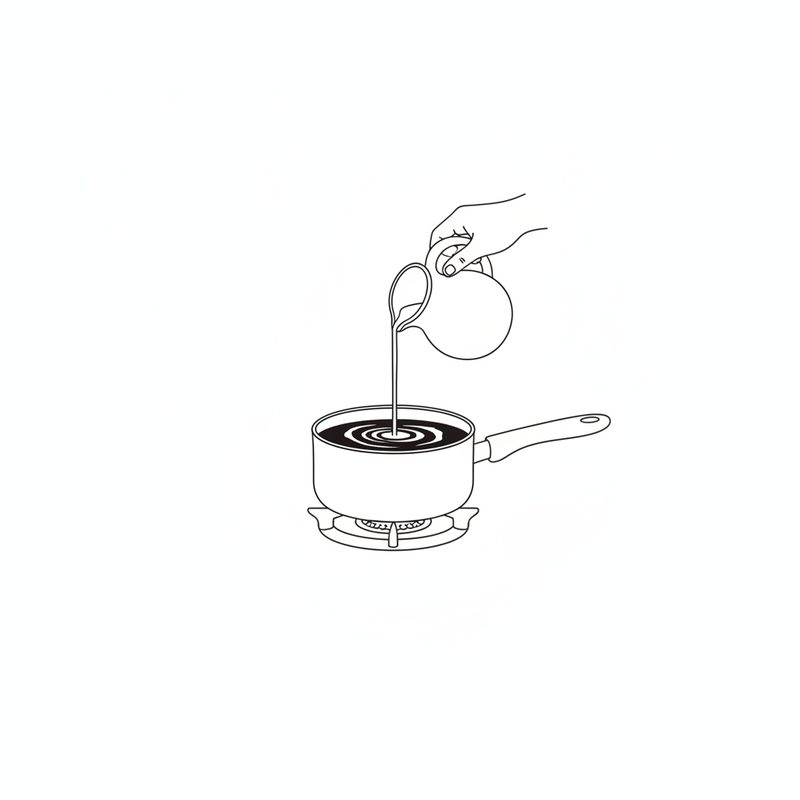
- Pour in the milk and add the sugar. Bring it back to a boil on medium-high heat, watching closely because it rises fast.
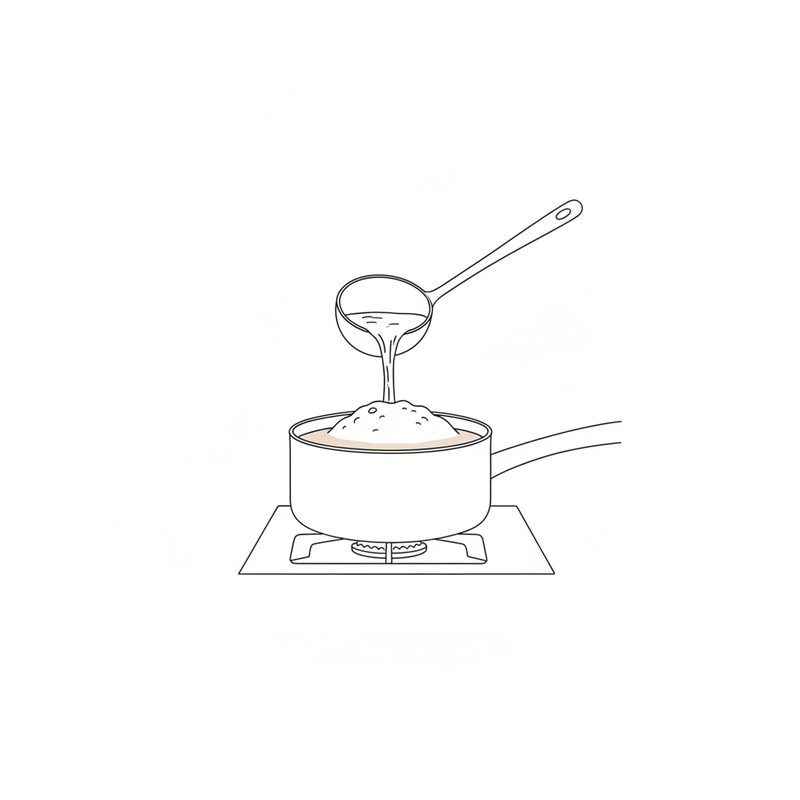
- Lower the heat and simmer for about 2 minutes, until the chai is a deep tan and a thin skin of cream starts to form. For a frothier cup, lift a ladleful high and pour it back into the pan four or five times.
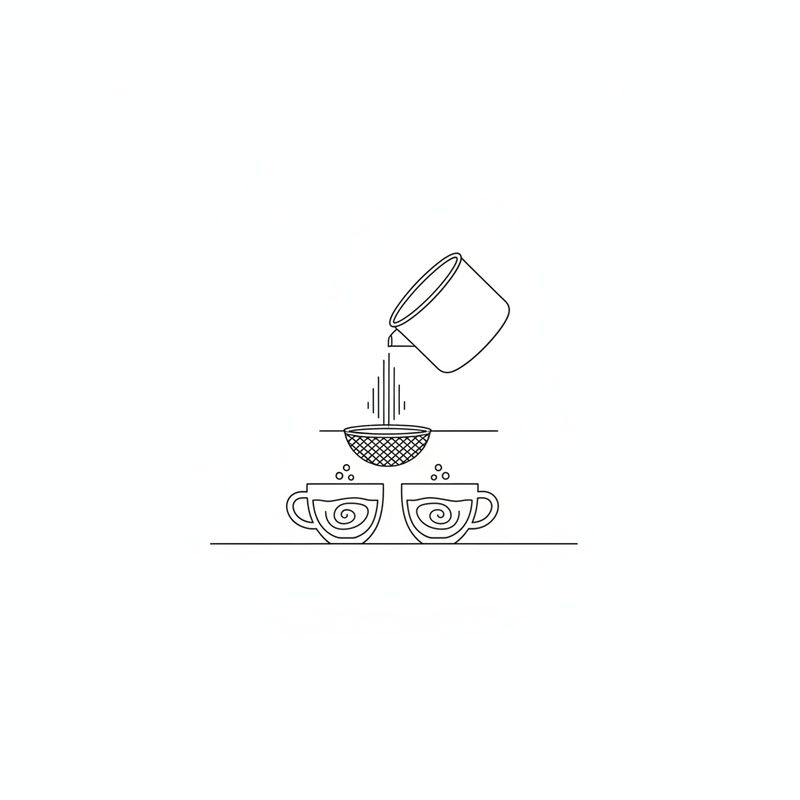
- Strain into two cups, taste, and add more sugar if needed.
What masala chai is
Masala chai means spiced tea. Masala is the word for a spice blend and chai is the word for tea, which is why “chai tea” says tea twice. In a café, “chai” often means a sweet syrup or powder stirred into steamed milk. The drink on this page is the other thing: tea leaves, milk and whole spices cooked together in one pan.
Every published version compared for this recipe uses the same four parts: black tea, milk, a sweetener and spices. They differ in which spices, how much of each and how long everything boils, and those differences are where the style of a cup comes from.
Is masala chai the same as chai?
No. Chai on its own is tea, and in everyday use it usually means black tea brewed with milk and sugar. Masala chai is that same tea with spices added. All masala chai is chai; most chai made at home on an ordinary day has no masala in it at all.
What masala chai is made of
Strong black tea, whole milk, sugar and a handful of whole spices. The spices that appear in every recipe compared here are green cardamom, cloves and cinnamon. Fresh ginger and black peppercorns appear in most of them. Fennel seeds and star anise turn up in a few and are optional.
- Tea: a robust black tea. Assam and CTC (the small rolled pellets) are the common choices because they stand up to milk. Tea bags work: three bags replace three teaspoons of loose tea.
- Milk: whole milk. It gives the body that low-fat milk does not. Oat milk is the usual dairy-free swap.
- Sweetener: plain sugar is standard. Honey and maple syrup appear in some versions, stirred in at the end.
- Spices: whole and lightly crushed, not ground to dust, so they strain out cleanly.
The step most people get wrong
They add the milk too early. The tea has to boil in the spiced water first, because that is where its colour and strength come out. Three minutes at a steady boil is what the boiled versions here agree on. The liquid should be a deep brown you cannot see the bottom of the pan through.
When it is right, the milk turns the pan a warm tan the moment it goes in, not beige. If it goes in and the colour looks like milky coffee from a vending machine, the tea was not strong enough. You cannot fix that later by boiling longer; you will only reduce the milk.
The second thing to watch is the boil-over. Milk tea rises very fast once it comes back to the boil. Keep the heat at medium once the milk is in, and stay at the stove for the last two minutes.
Boiled or steeped: two ways to make it
There are two methods in the published recipes, and they give different drinks.
Boiled, home style. Spices and tea boil hard in water, milk goes in, and the whole thing boils again. This is the method on the card. It is fast, about 5 minutes of boiling, and gives a strong, slightly tannic cup with the spices sharp at the front. Published cook times for this method run from 5 to 8 minutes; the card uses the median, 5.
Simmered or steeped. Spices simmer gently for 7 to 10 minutes first, sometimes covered, and the tea is steeped rather than boiled hard. One source warns that boiling tea makes it bitter. This takes 15 to 20 minutes and gives a rounder, softer cup that tastes more of cinnamon and ginger than of tea.
Neither is wrong. If you drink your tea strong and like the grip of tannin, boil it. If you are making it for someone who usually orders a chai latte, simmer it.
Masala chai, step by step
 Crush the whole spices.
- Add spices and ginger to the water and boil.
- Add the tea and boil for 3 minutes.
- Pour in the milk and add the sugar.
- Bring back up, then simmer; pull with a ladle if you like.
- Strain into cups.
How to get the strength right
Judge by colour, not by the clock. After the milk has come back to the boil and simmered for about 2 minutes, the chai should be a deep tan with a thin skin of cream starting to form on top. If it is still pale, give it another minute on low heat.
Spice strength is personal, so treat the card as a default. For a stronger cup, use 3 cloves instead of 2 and the full 7.5 cm (3 in) of cinnamon. For a milder one, use a 2 cm (¾ in) piece of cinnamon and skip the peppercorns. The sources split on cinnamon: two use a 3 in stick, one uses under an inch, so both are on the card. Ginger is the spice that reads as heat: 1 cm (½ in) is the default, and more than that starts to catch the back of your throat.
Sugar ranges from 2 to 4 teaspoons for two cups across the sources, with 3 as the middle. Boiled chai is more tannic than steeped tea, and a little sugar is what balances that, so taste before you decide to leave it out. If you measure in cups and spoons, the teaspoons-to-cups conversion is on the site.
Pulling the chai: the tea-stall finish
Tea-stall chai is often aerated by pouring it from a height, back and forth. At home you can do the same with a ladle: lift a ladleful high and pour it back into the pan four or five times, just before straining. It gives a light froth and makes the cup taste creamier. It is optional, and it separates a home cup from a stall cup more than any spice does.
The shorter route: chai masala powder
If you drink masala chai every day, grinding a batch of chai masala ahead saves crushing spices each morning. A typical mix is cardamom, cloves, cinnamon, black pepper, fennel and dried ginger, ground fine. It keeps in an airtight glass jar.
How much to use varies: published versions call for anywhere from ½ teaspoon to 1 teaspoon of the powder per cup of water. Start at ½ teaspoon. What you lose by taking this route is fresh ginger, which a powder cannot replace, and the ability to push one spice without pushing the others. A slice of fresh ginger in the pan alongside the powder brings most of that back.
Variations
- Fennel: ½ teaspoon of fennel seeds in the water adds a faint sweetness.
- Star anise: one or two petals, not a whole star. It is strong and takes over quickly.
- Dairy-free: swap the milk for oat milk and bring it up gently rather than at a hard boil.
- Decaf: decaffeinated black tea works the same way. Use the upper end of the tea quantity if the cup comes out weak.
What goes wrong, and what it looks like
- Pale, thin chai: the tea did not boil long enough before the milk went in, or there was not enough of it.
- Bitter, harsh chai: the tea boiled too long, or there is not enough sugar and milk to balance it.
- Gritty cup: the spices were ground too fine or the strainer is too coarse. Crush whole spices lightly instead.
- Flat, weak spice: old ground spices. Whole spices crushed just before use give far more.
- Milk all over the stove: the heat was too high after the milk went in. Medium, and do not walk away.
What to serve with it
Chai goes with anything salty and fried, and with milk sweets. In the Pakistani kitchen section of this site it sits naturally beside ras malai, or after a heavy dinner such as chicken karahi. For a caffeine-free cup at the same table, there is orange peel tea.
Storing and making ahead
Masala chai is best drunk straight away; reheated, it loses its froth and tastes flatter. If you need to get ahead, prepare the spice mix, which keeps in an airtight jar, and brew the tea itself fresh.
Questions people ask
Is masala chai the same as chai?
No. Chai means tea, usually black tea with milk and sugar. Masala chai is the same tea boiled with spices such as cardamom, cloves, cinnamon and ginger.
What is masala chai made of?
Black tea, milk, sugar and whole spices. Cardamom, cloves and cinnamon are in every version compared here; ginger and black pepper are in most.
Is masala chai high in caffeine?
It contains the caffeine of the black tea in it. How much depends on how much tea you use and how long it boils, so for less caffeine use fewer leaves, a shorter boil, or decaf black tea.
Is drinking masala chai good for you?
It is tea with milk and sugar, and that is the honest way to think about it. The sugar is the part you control: the card uses 3 teaspoons for two cups and it can be cut to 2 or left out. This page makes no health claims for the spices.
Can I use tea bags for masala chai?
Yes. Use three black tea bags in place of 3 teaspoons of loose tea, and lift them out when the milk goes in so they do not over-extract.
Why is my chai bitter?
The tea boiled too long, or there is not enough milk and sugar to balance it. Keep the tea boil to about 3 minutes and taste for sugar before serving.