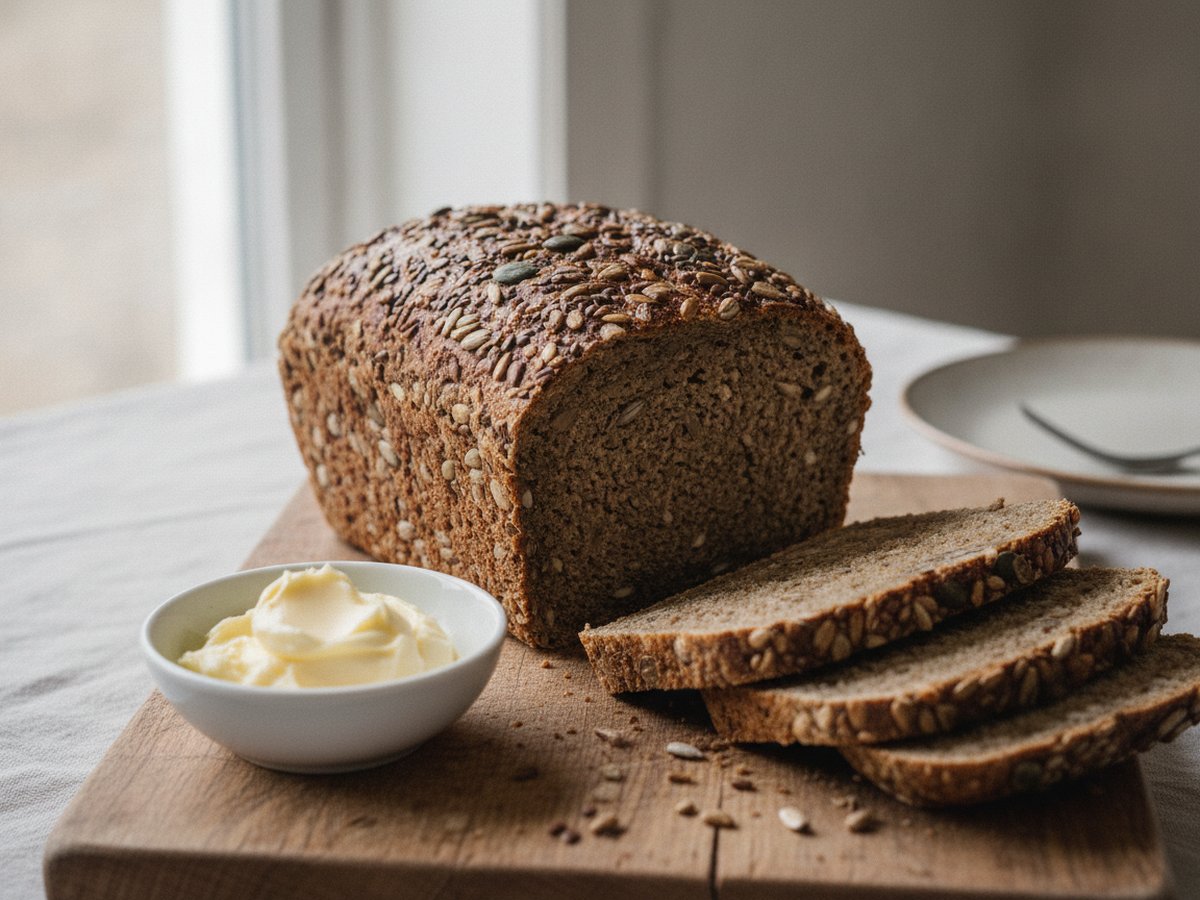
Rugbrød (roughly ROO-broth, with a soft Danish d) is Denmark’s everyday rye bread: a dark, dense, sour loaf made from rye flour and cracked rye kernels, baked in a tin and cut into thin slices. Unlike Swedish and German rye breads, it is barely sweet, and it carries little or no fat.
This recipe makes one loaf in a 2-litre tin. It needs about 30 minutes of work, a night in the fridge and roughly an hour in the oven, and it should wait until the next day before you cut it.
Last updated
Recipe
Rugbrød Recipe (Danish Rye Bread)
Ingredients
Kernels
Dough
For the tin
Method
- Put the cracked rye kernels and sunflower seeds in a large bowl, pour over 1½ dl boiling water and leave them for about 1 hour.
- Stir the yeast into ½ dl room-temperature water. Add it to the soaked kernels with the honey, hvidtøl and sourdough, and stir together.
- Add the wheat flour, rye flour and salt. Mix on low speed in a stand mixer for about 20 minutes. The dough will be heavy, wet and sticky and will not form a ball.
- Butter a 2-litre loaf tin. Scrape the dough in, then wet your hands with cold water and press the dough down and flat, right into the corners.
- Leave the tin on the counter for 30 minutes, then refrigerate it for 8 to 12 hours. It is ready when 5 to 10 small holes show on the surface; if they have not, leave it at room temperature a little longer.
- Brush the top with the melted butter. Bake at 180 °C (356 °F), conventional heat, until the centre reads 97 to 98 °C (207 to 208 °F): about 1 hour in a preheated oven. Valdemarsro starts the tin in a cold oven and bakes about 1 hour 20 minutes.
- Turn the loaf out of the tin straight away and let it cool completely on a rack. Slice it thinly, ideally the next day.
What rugbrød is, and how it is eaten
Rugbrød is a sourdough rye bread shaped by its tin: a long, flat-topped brick, usually no more than about 12 cm high. The plain old-fashioned version is rye flour alone. The loaf most people buy in Denmark today is full of whole or cracked rye kernels, often with sunflower seeds, linseed or pumpkin seeds as well.
Most Danes eat it every day, and most of it goes under smørrebrød, the Danish open sandwich. A slice is buttered first, then topped: liver pâté, pickled herring, cold cuts, egg, or a sliced meatball. The bread is there to carry the topping, which is why it is cut thin.
The crumb is close, moist and studded with grain, and the flavour is sour rather than sweet. If the rye bread you know is soft and light, expect something much heavier.
Where the numbers in this recipe come from
The quantities on the card are Valdemarsro’s, a Danish recipe written to fill exactly one 2-litre tin. They are used as published, not scaled or averaged.
That choice is deliberate. Published rugbrød recipes do not agree on quantities, because they do not agree on the loaf. Nordic Food Living bakes two loaves in decilitres with cracked wheat and linseed; Madens Verden bakes three loaves of about 800 g each; Valdemarsro bakes one. Averaging them would produce a recipe nobody has baked.
Where the sources do agree, the card follows them. The oven is 180 °C (356 °F) in Valdemarsro and Nordic Food Living, and Wilbread finishes its loaf at the same temperature. The loaf is done at a core temperature of 97 to 98 °C in both Danish sources, which matches the roughly 205 to 210 °F that Breadtopia and True North Kitchen give. The cook time on the card, one hour, is the median of the three Danish-style recipes; the prep time, 30 minutes, is the median of the three that state one.
There is no total time on the card. The sources range from about six and a half hours to 21, depending on how long each lets the dough ferment, and no single figure would be honest. Plan on starting the day before you bake.
Ingredients that are hard to find outside Denmark
Three things on the list are ordinary in a Danish supermarket and awkward elsewhere.
- Hvidtøl is a dark, sweet, very low-alcohol Danish malt beer. Outside Denmark, use a dark beer, as Wilbread and Breadtopia both do. It adds colour and malt flavour and helps the rise.
- Cracked rye kernels (knækkede rugkerner) are sold in Denmark for exactly this bread. Elsewhere, look for rye chops or cracked rye; True North Kitchen suggests rye chops or a multigrain hot-cereal mix as a stand-in.
- Sourdough means an active, bubbly starter. Valdemarsro uses an ordinary wheat starter, so you do not need a separate rye culture. If you have none, see the variations below.
Weigh the flour. Rye flour packs unpredictably into a cup, and a dense bread with a wet dough has very little margin.
Rugbrød, step by step
 Pour boiling water over the kernels and seeds and leave them for an hour.
- Mix on low speed until the dough is heavy, wet and sticky.
- Press the dough into the buttered tin with wet hands.
- After the night in the fridge, look for small holes on the surface.
- Brush the top with melted butter before it goes in the oven.
- Cool the loaf completely on a rack before you slice it.
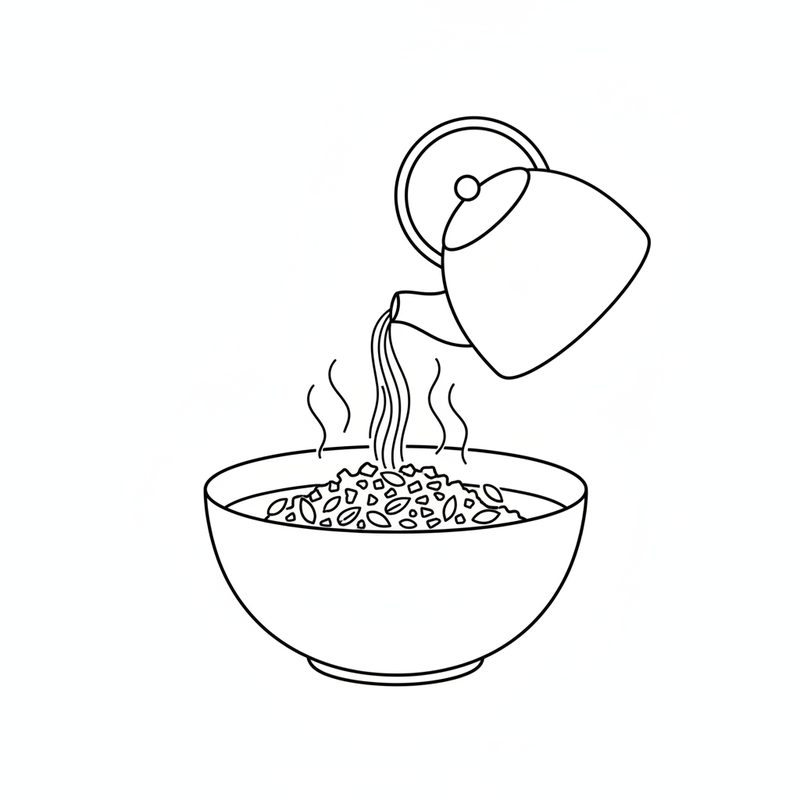
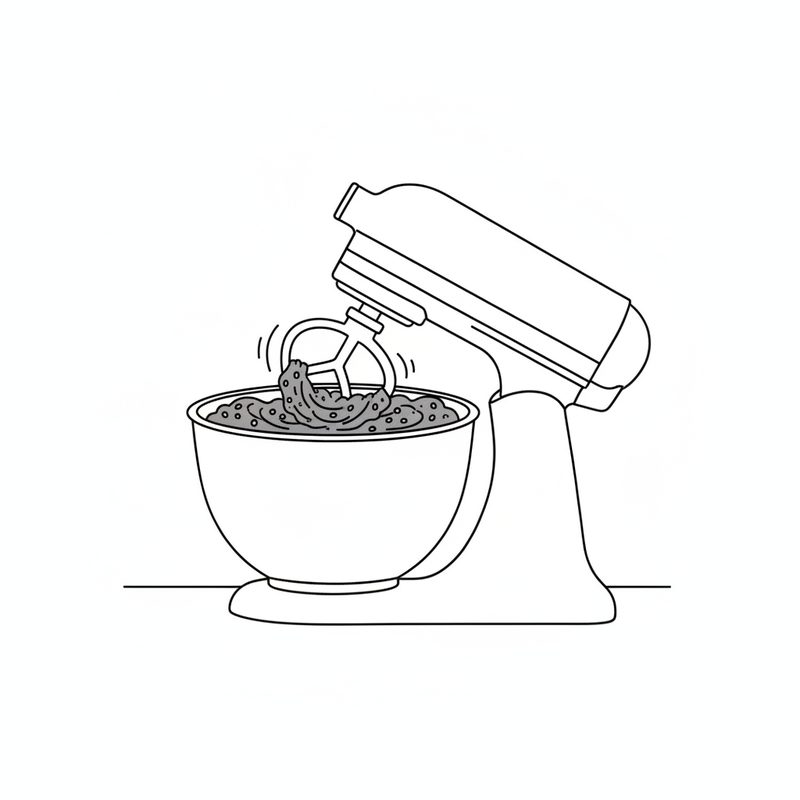
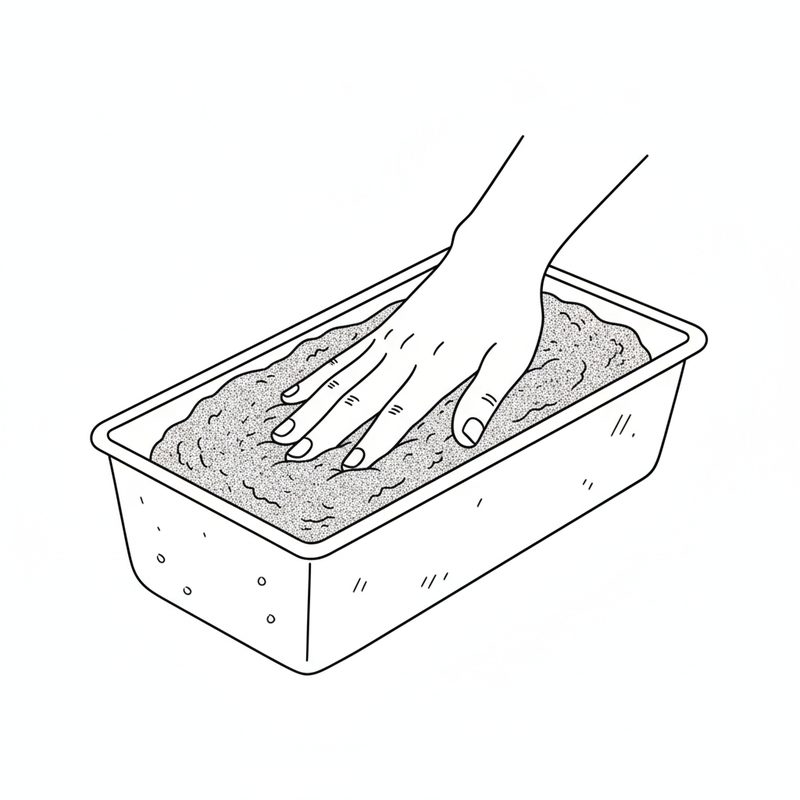
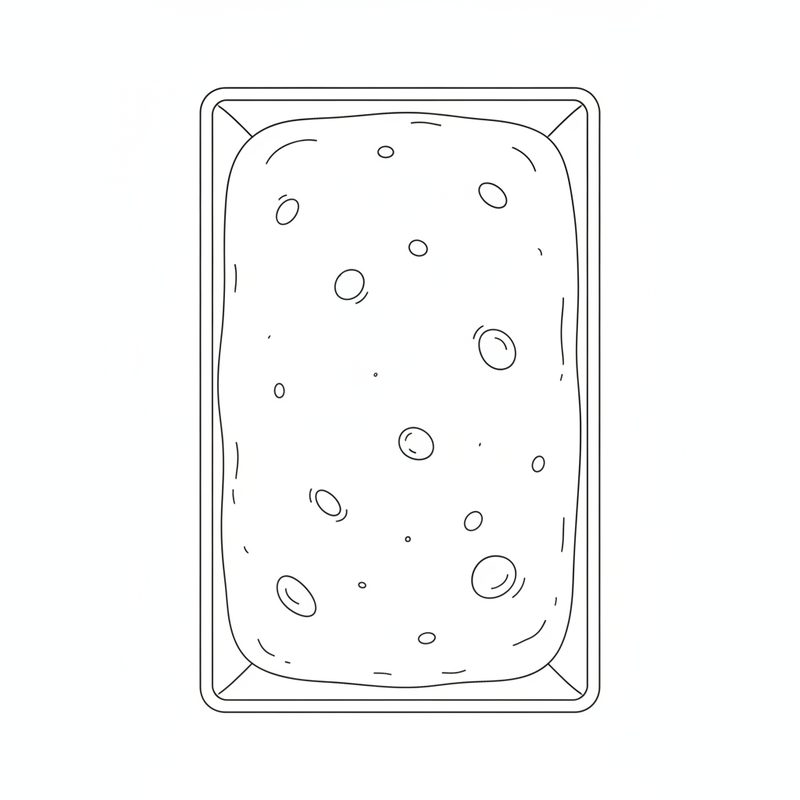
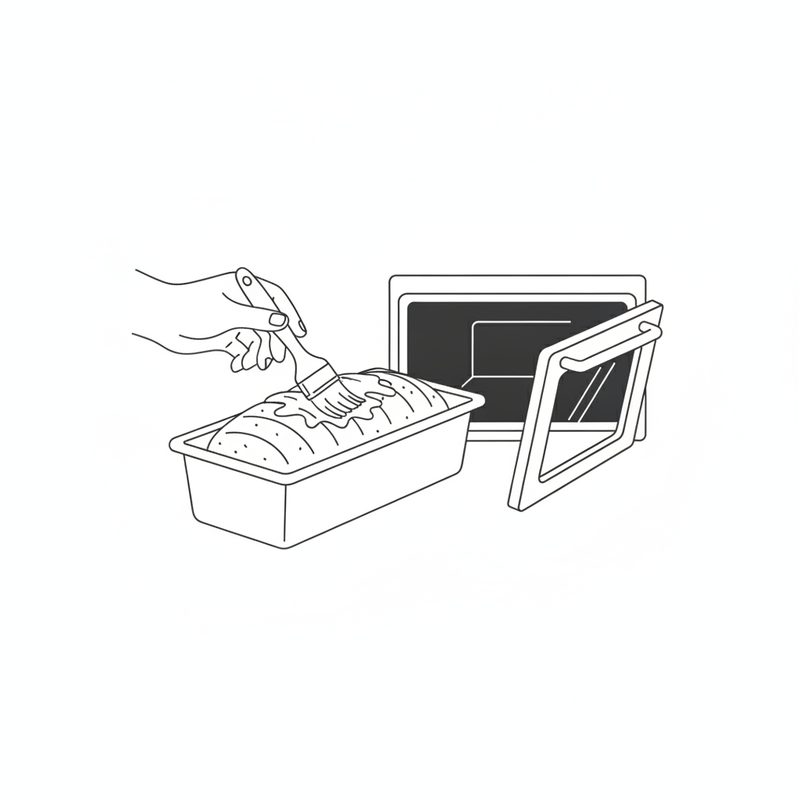
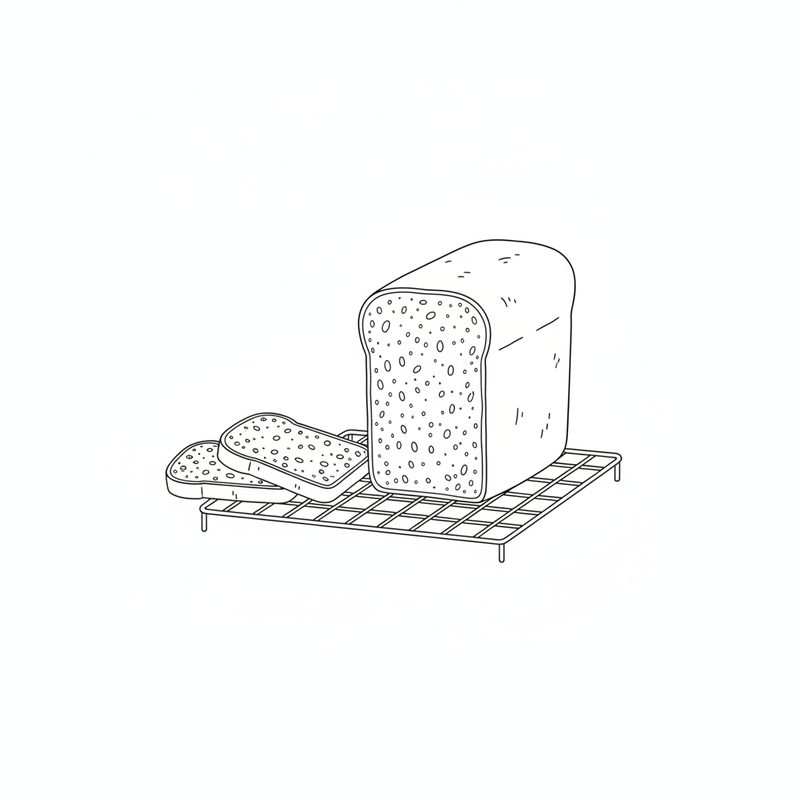
The dough is the part that surprises people. It is closer to wet clay than to bread dough. It will not form a ball, it will not pass any window test, and it should not be kneaded by hand. A long, slow mix and wet hands in the tin are all it needs.
How to tell when rugbrød is baked
Use a thermometer. The centre of the loaf should read 97 to 98 °C (207 to 208 °F). The crust goes dark long before the middle is set, so colour tells you very little.
Oven method varies more than the target temperature does. Valdemarsro puts the tin into a cold oven, sets it to 180 °C and bakes about 1 hour 20 minutes, which includes the heating time. Nordic Food Living bakes at 180 °C for about an hour. Madens Verden starts at 250 °C fan for five minutes and then drops to 200 °C. All of them land on the same core temperature, which is the number that matters.
Take the loaf out of the tin as soon as it leaves the oven and cool it on a rack, as both Valdemarsro and True North Kitchen do.
Why rugbrød goes wrong
Most failures come from three places: too long a rise, too short a bake, or slicing too soon.
Over-proofed dough turns sharply sour and can collapse, leaving holes or dense lumps inside, or a loaf that shrinks in the oven. Rye has little gluten to hold its shape, so it has a narrow window. The small holes on the surface are the signal that it is ready; do not wait for it to double.
A wet, sticky centre usually means the core never reached 97 °C. Put it back in the oven and use the thermometer.
A gummy slice from a loaf that was baked through means it was cut warm. The crumb keeps setting as it cools. Breadtopia recommends waiting 24 hours; True North Kitchen asks for at least three, and overnight if possible.
Variations
Without sourdough. Valdemarsro suggests buttermilk in place of the sourdough. The loaf rises on the yeast alone and gets its tang from the buttermilk.
Quick yeast rugbrød. Hurtig Mums publishes a plain, same-day rye loaf with no kernels at all: fresh yeast, buttermilk, rye and wheat flour, an hour’s rise in the bowl, 30 minutes in the tin, and 30 to 45 minutes at 180 °C fan. It is a lighter bread than the one on the card, closer to a rye tin loaf than to classic rugbrød, and it is ready the same afternoon.
Other seeds. The sunflower seeds can be swapped or joined by linseed, pumpkin seeds or cracked wheat. Nordic Food Living uses linseed and cracked wheat alongside the rye kernels, and Breadtopia adds pumpkin, hemp, sesame and chia. Keep the total weight of grains and seeds about the same, or the dough changes consistency.
How to store and freeze rugbrød
Rugbrød keeps for about a week at room temperature, wrapped in paper, a bread bag or a cloth, according to Breadtopia. It does not need the fridge.
It freezes well whole, halved or sliced. Sliced is the most useful: you can take out exactly what one lunch needs and it thaws in minutes. Stale ends are not wasted in Denmark either; they become øllebrød, a porridge of rye bread and hvidtøl.
What to put on rugbrød
Butter first, always, then the topping. The classic lunch plate is a few open sandwiches on thin slices, eaten with a knife and fork.
- Warm or cold leverpostej, with pickled beetroot or cucumber.
- Cold, sliced frikadeller with red cabbage or cucumber salad.
- Pickled herring with raw onion, or egg with shrimp and mayonnaise.
- Cheese, for breakfast or an afternoon slice.
For something crisp on the same table, knækbrød, the Danish crispbread is baked from much of the same pantry.
Questions people ask
Is Danish rugbrød healthy?
It is a lean, high-fibre bread. Rugbrød contains little or no added oil, is low in fat, and is rich in protein and dietary fibre, and it is not very sweet. No nutrition figures are given here because none could be sourced for this exact loaf.
What does rugbrød taste like?
Sour, malty and grainy. The sourness comes from the sourdough, the malt from the dark beer, and the chew from the whole rye kernels. It is far less sweet than Swedish or German rye bread.
How do you pronounce rugbrød?
Roughly ROO-broth, with a soft Danish d at the end. In phonetic spelling it is [ˈʁuˌpʁœðˀ]. The word simply means rye bread.
What is the most famous Danish bread?
Rugbrød. It is the everyday bread of Denmark and the base of smørrebrød, the open sandwich. Most Danes eat it daily.
Can you make rugbrød without sourdough?
Yes. Replace the sourdough with buttermilk, as Valdemarsro suggests, or bake a quick yeast rye loaf. Traditional rugbrød is a sourdough bread, so the flavour is milder without it.
Why do you have to wait before slicing rugbrød?
Because the crumb is still setting. A rye loaf cut warm is gummy even when it is fully baked. Wait at least a few hours, and ideally until the next day.