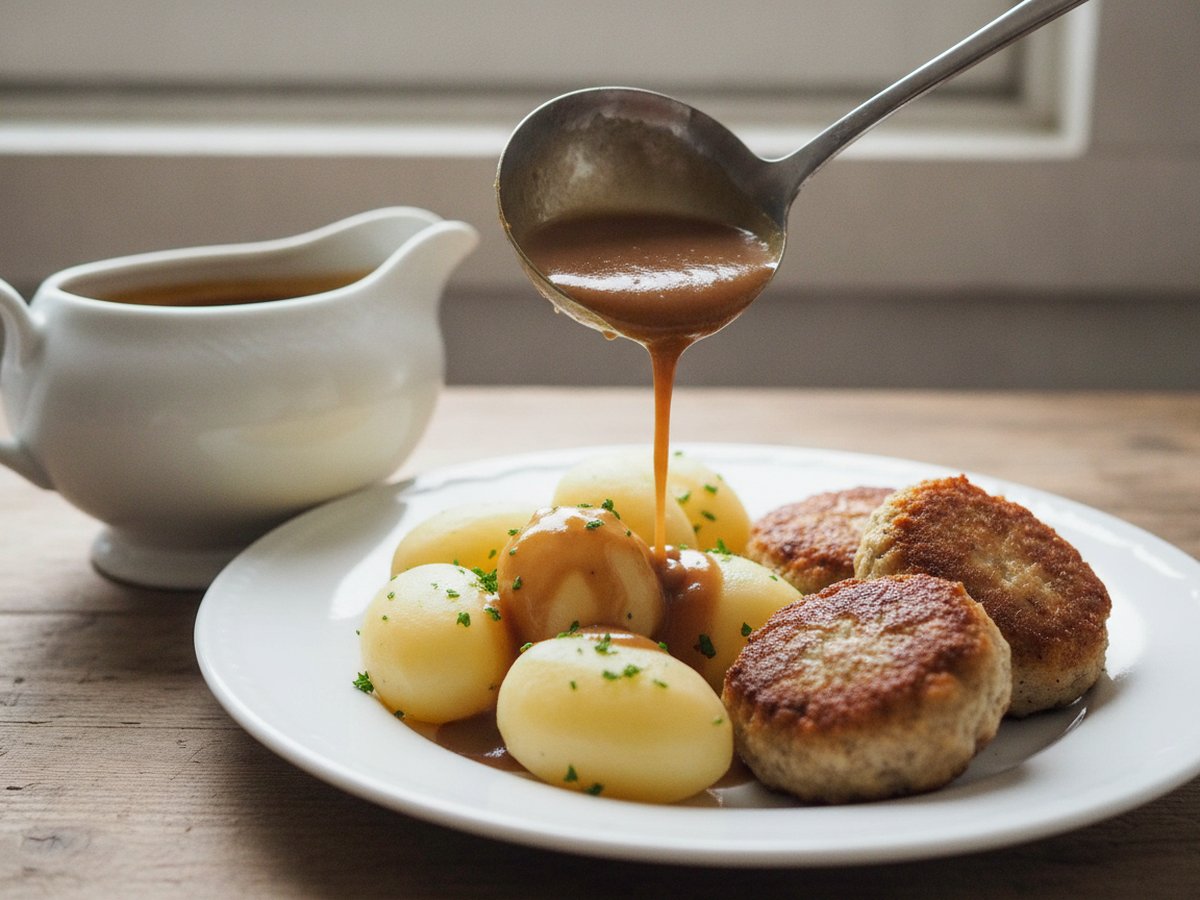
Brun sovs (say it roughly “broon sows”) is traditional Danish brown gravy: a butter and flour roux whisked with stock or the juices from the roast, rounded off with a little redcurrant jelly and coloured dark with a few drops of gravy browning. It takes about 15 minutes and is poured over boiled potatoes and meat at the everyday Danish family dinner table.
What separates it from the gravy most readers know is the finish. American and British gravy is usually seasoned and served. Brun sovs is sweetened very slightly with redcurrant jelly, and it is coloured on purpose, so the sauce looks darker than the roux alone would make it.
Last updated
Recipe
Brun Sovs (Danish Brown Gravy)
Ingredients
Method
- Melt the butter in a heavy-based saucepan over medium heat until it foams and turns golden.
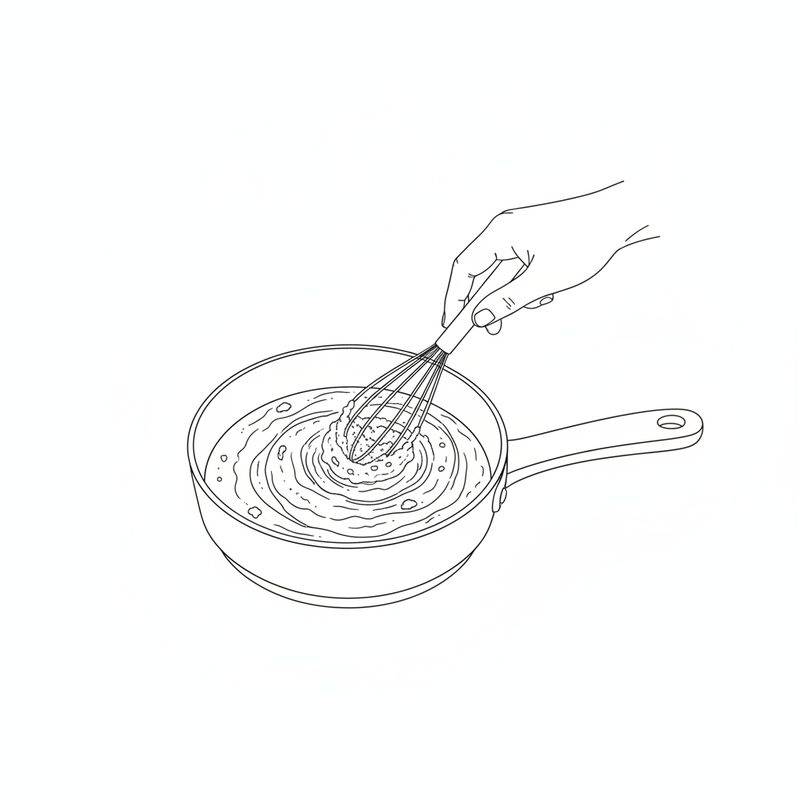
- Whisk in the flour and cook for a minute or two, whisking, until it forms a smooth, light brown paste.
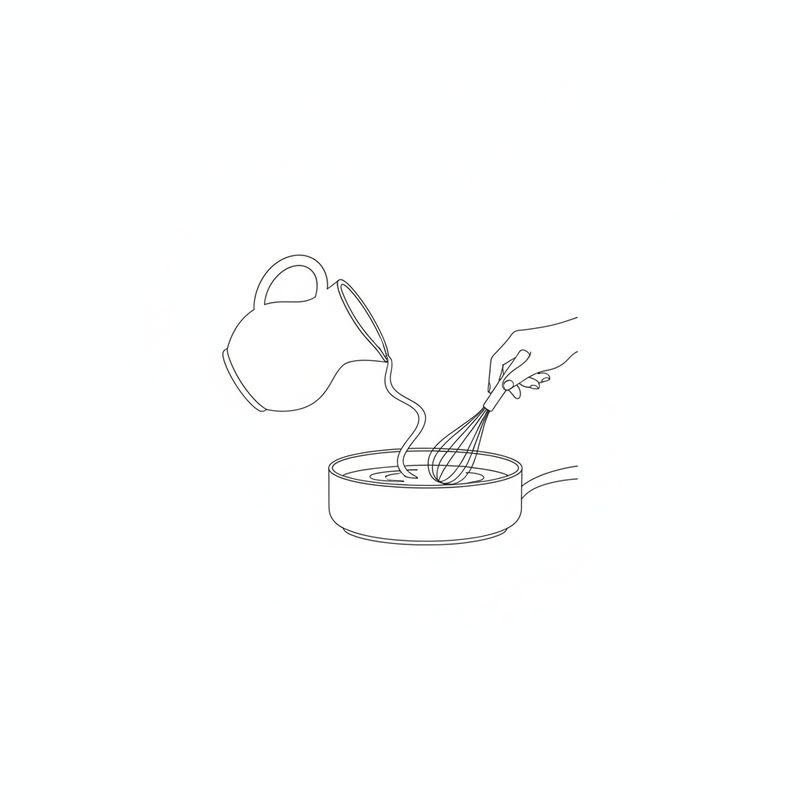
- Add the stock or pan juices a little at a time, whisking until each addition is smooth before adding more.
- Bring to a gentle simmer and cook for about 10 minutes, stirring now and then, until the sauce is glossy and no longer tastes of flour.
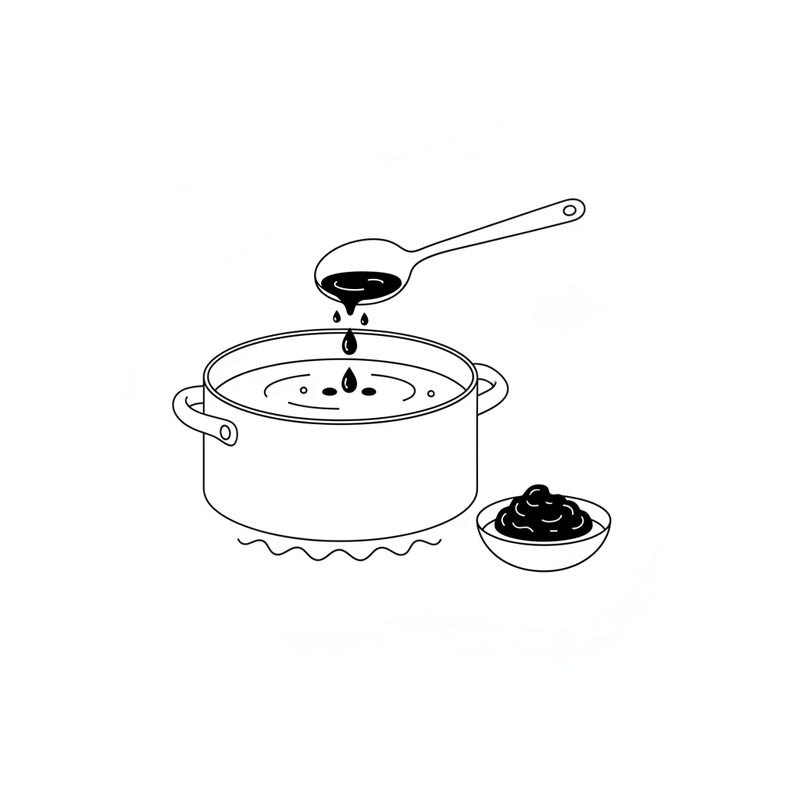
- Stir in the redcurrant jelly, season with salt and pepper, and add a few drops of gravy browning until the sauce is a deep brown. Thin with a little more stock if needed.
What brun sovs is
Brun sovs is a roux-thickened sauce built on meat stock, and in Danish cooking it is the default sauce for meat and potatoes. Wikipedia’s entry on meat-stock brown sauce describes the Danish version as stock thickened with a roux and sometimes coloured a deep brown, and notes that the stock is now often a broth made from bouillon cubes.
The stock varies by kitchen and by meat. Recipes call for beef stock or beef stock cubes (Hygge Style), veal stock (Madens Verden), pork stock (Gastrotools) or the juices from roast pork (Frederikke Wærens). Use the stock that matches the meat you are serving.
It is not the bottled British brown sauce, and it is not the French espagnole. It is closest to an American brown gravy, which is the nearest equivalent if you are cooking for someone who has never had it. Sweden has the same kind of sauce, brunsås, which Wikipedia notes is usually served with meatballs.
The ratio that matters
Use equal weights of butter and flour, then about 5 dl of liquid for every 30 g of each. That is enough brown gravy for four people, and it is the ratio this brun sovs recipe is built on.
The equal-weight roux is the one point most published Danish recipes share, whatever the batch size. Coop’s recipe uses 30 g of each, Marialottes uses 75 g of each, and the English-language Hygge Style recipe uses 60 g of each. The liquid is where recipes drift. Thicker versions use less, thinner ones more, so treat 5 dl as the starting point and adjust at the end.
Which liquid to use
The best liquid is whatever the meat left behind. After a flæskesteg or a roast duck, strain the juices from the tin, let them stand until the fat rises, and spoon the fat off before using the liquid underneath. Fat left in the juices makes the sauce greasy.
On a weekday, Danish cooks make brun sovs from stock or bouillon, and often top it up with the water the potatoes were boiled in. The potato water carries a little starch and salt, and it costs nothing. If you fried frikadeller first, pour some of that liquid into the frying pan and scrape up the brown bits before it goes into the sauce.
Brun sovs, step by step
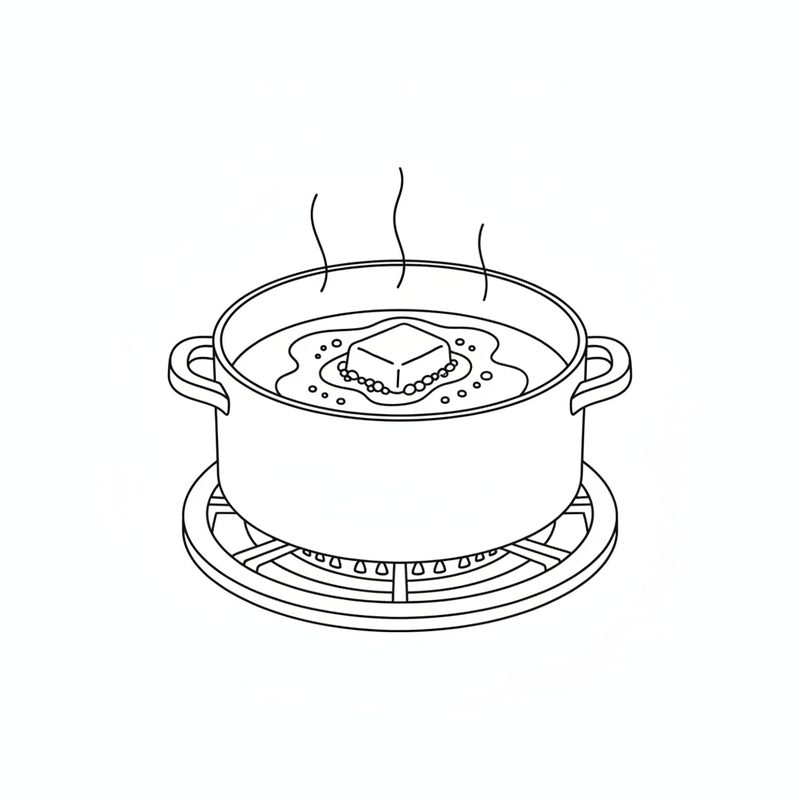
 Melt the butter over medium heat until it foams and turns golden.
- Whisk in the flour and cook it for a minute or two into a smooth, light brown paste.
- Add the liquid a little at a time, whisking until each addition is smooth before the next.
- Simmer for about 10 minutes, then season with redcurrant jelly, salt, pepper and a few drops of browning.
How to keep it smooth and avoid a floury taste
Add the flour only once the butter has stopped foaming, and whisk it for a minute or two so the roux cooks before any liquid goes in.
Add the liquid slowly. A roux takes liquid in small amounts and stays smooth; pour it all in at once and the flour forms lumps that whisking will not fully remove. If lumps do form, push the sauce through a sieve and carry on.
Then let it simmer. A sauce that has only just thickened still tastes of raw flour. Ten minutes at a gentle bubble, stirring now and then, cooks that out, and the sauce turns glossy rather than matt.
Adjust the consistency last. Brun sovs thickens as it simmers and again as it cools on the table. If it coats the back of a spoon in a thick layer, whisk in a little more stock or potato water. If it runs off like water, simmer it a few minutes longer.
Add salt at the very end, and taste first. Stock cubes, pan juices and potato water all bring salt of their own, so the gravy often needs less than you expect.
What to serve with brun sovs
Brun sovs is often served with fried or roasted meats and boiled potatoes, and the potatoes matter as much as the meat. The gravy goes over the meat, the potatoes and any vegetables on the plate. Typical dishes are:
- Frikadeller (Danish meatballs) with boiled potatoes, the everyday version
- Hakkebøf (Danish beef patties) with fried onions, where the gravy is made in the same pan
- Flæskesteg (roast pork with crackling), especially on Christmas Eve
- Andesteg (roast duck) at Christmas, with the duck juices used in the sauce
- Brunede kartofler (caramelised potatoes) and rødkål (braised red cabbage) on the side at Christmas
At a Danish Christmas dinner the same sauce is served with the pork or duck, the red cabbage and both kinds of potato; it is the sauce that brings the festive plate together. Outside Denmark, brown gravy is just as good over mashed potatoes, though boiled potatoes are what Danish recipes pair it with.
Variations
The base recipe stays the same; the finish changes from kitchen to kitchen.
- Cream or milk. Replacing part of the liquid with whipping cream or milk makes a paler, softer sauce. Coop uses half a decilitre of cream alongside 4.5 dl of stock.
- A sharp note. A spoonful of balsamic or sherry vinegar cuts through a rich roast. Use it instead of, or as well as, the jelly.
- Browned butter. Letting the butter turn nut-brown before the flour goes in gives a deeper colour and more depth of flavour, and less browning is needed.
- Fried onions. A couple of spoonfuls of crisp fried onions stirred in gives a sweeter, rougher sauce.
- Port or red wine. A splash simmered with the sauce suits roast pork and duck.
Ingredients that are hard to find outside Denmark
Gravy browning, called kulør or sovsekulør in Danish, is a colouring made from dark caramelised sugar, and it adds colour rather than taste. In Britain it is sold as gravy browning. Where you cannot buy it, brown the butter and then the roux a little longer, to the colour of light caramel. The sauce will be lighter than a Danish one but taste the same.
Redcurrant jelly (ribsgelé, called simply currant jelly in some English recipes) is the usual sweetener. If you have none, a pinch of sugar does the same job of softening the salt; it just lacks the faint fruit.
Keeping and reheating
Homemade brun sovs reheats well, so leftovers are worth keeping. Cool leftover sauce, cover it and keep it in the fridge. It sets thick as it chills. Reheat it gently in a pan and whisk in a little stock or water until it pours again.
Questions people ask
What is brun sovs made of?
Brun sovs is made of butter, flour and stock or pan juices, seasoned with salt, pepper and redcurrant jelly and coloured with a few drops of gravy browning. Some cooks add a little cream or milk.
What is the US equivalent of brown sauce?
The nearest US equivalent of Danish brown sauce is brown gravy: meat stock or drippings thickened with flour or a roux. Brun sovs differs in its finish, with redcurrant jelly and gravy browning.
What is brown French sauce?
The French brown sauce is espagnole, one of the classic mother sauces, made with a browned roux and brown stock. Demi-glace is its reduced derivative. Brun sovs is a much quicker home sauce.
How do you make a simple brown sauce?
Melt 30 g of butter, whisk in 30 g of flour, then whisk in 5 dl of stock a little at a time. Simmer for about 10 minutes and season with salt, pepper and a teaspoon of redcurrant jelly.
Can you make brun sovs without drippings?
Yes. Most everyday Danish recipes use stock or bouillon instead of roasting juices, often topped up with potato cooking water. Drippings give more flavour, but they are not required.