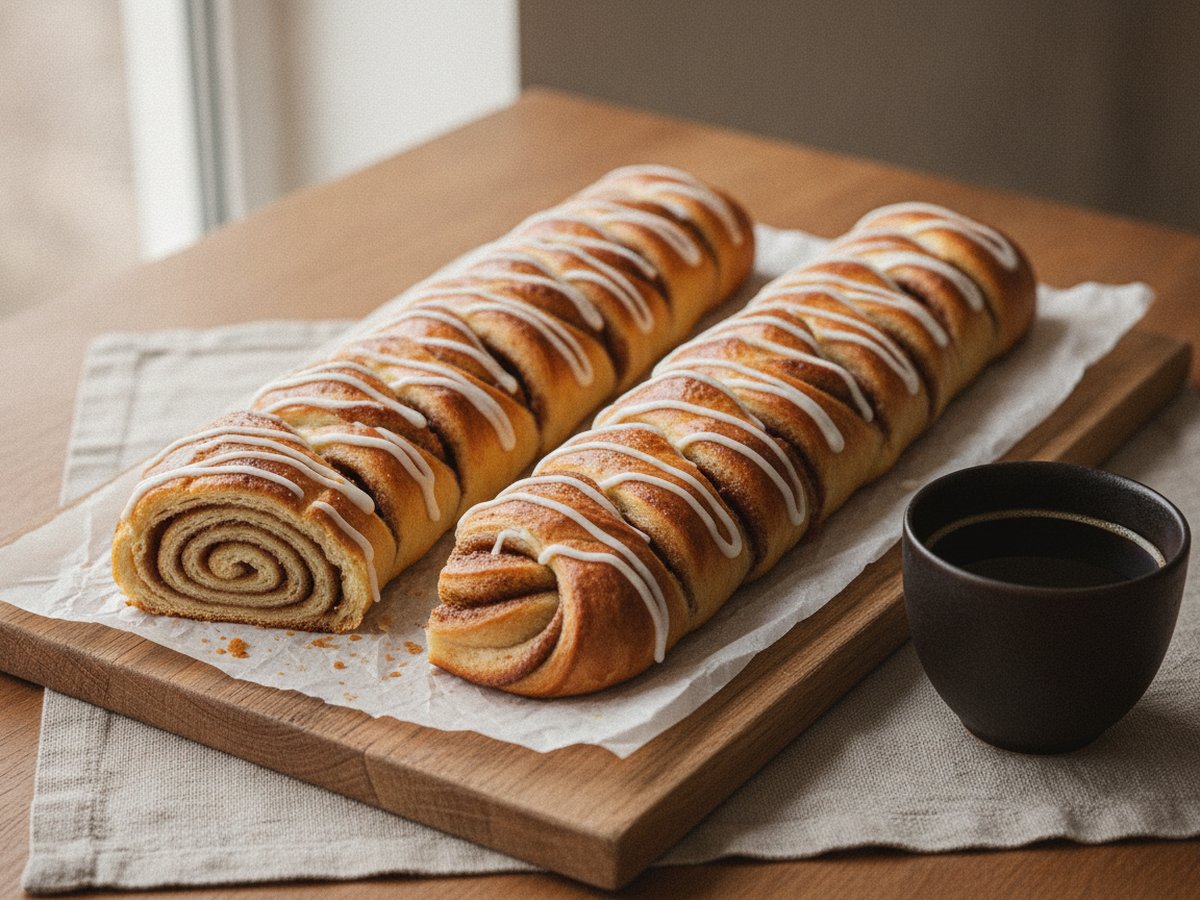
Kanelstang (ka-NEL-stang) is a Danish cinnamon pastry: a soft cardamom yeast dough rolled around butter, brown sugar and cinnamon, snipped along its length so the swirls fan out left and right, baked at 200°C (400°F) for about 20 minutes and finished with thin lines of icing. This recipe makes two sticks from 500 g of flour.
It is the same filling as a cinnamon roll, but the dough stays in one long piece. You slice it at the table, and each slice is a swirl still joined to the next.
Last updated
Recipe
Kanelstang (Danish Cinnamon Stick Pastry)
Ingredients
For the dough
For the filling (remonce)
To finish
Method
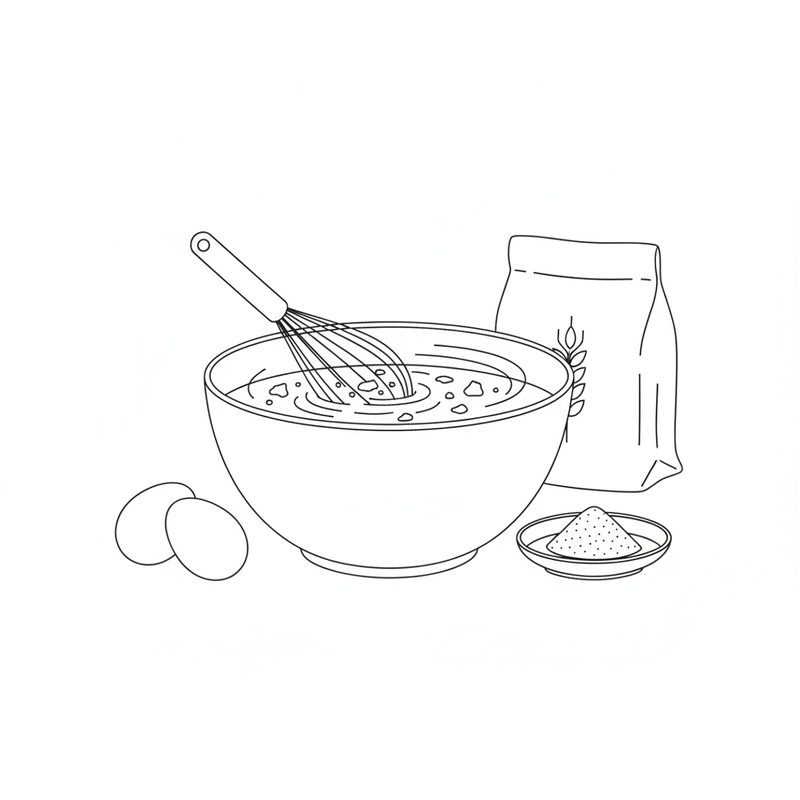
- Warm the milk until it is lukewarm, about the warmth of a finger. Pour it into a large bowl and dissolve the yeast in the milk.
- Add sugar, salt, cardamom and the two eggs, and whisk until smooth.
- Add about half the flour, then add the butter and work it into a soft dough. Add the rest of the flour a little at a time and knead the dough for 5 to 10 minutes, by hand or in a stand mixer with a dough hook, until it is smooth, elastic and leaves the sides of the bowl. Stop adding flour once it no longer sticks.
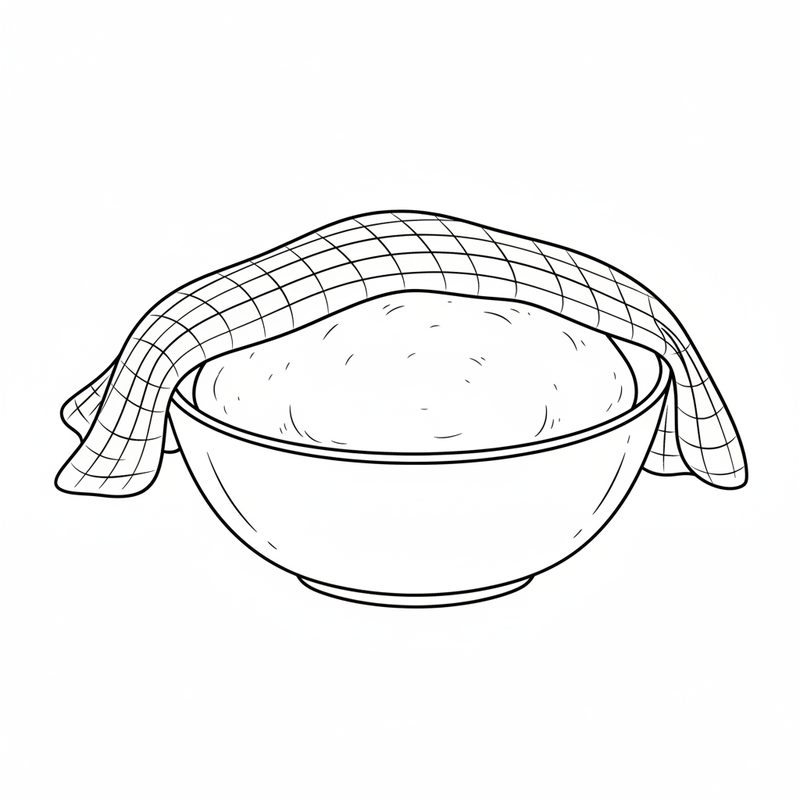
- Cover the bowl with a tea towel and let the dough rise somewhere warm until roughly doubled, 45 minutes to 1 hour.
- Meanwhile, cream the soft butter, brown sugar and cinnamon together into a smooth paste and set aside until needed.
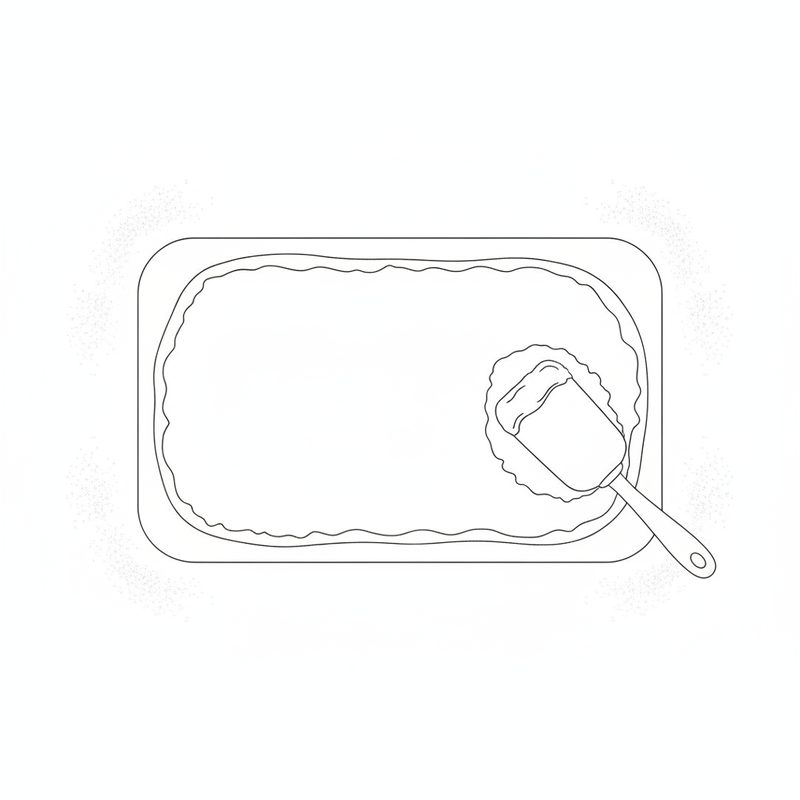
- Divide the dough in two. On a lightly floured worktop, roll each half into a rectangle of about 50 x 30 cm (20 x 12 in). Spread half the filling over each in a thin layer, leaving a border of 1 to 2 cm.
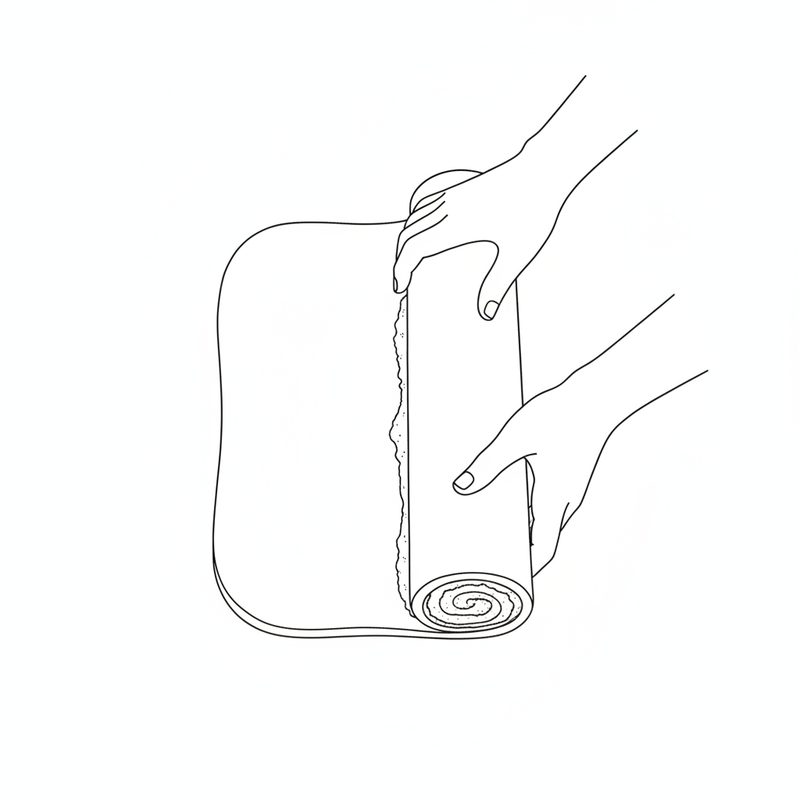
- Roll each rectangle up firmly from one long side. Place both logs seam-side down on a baking tray lined with baking paper, well apart.
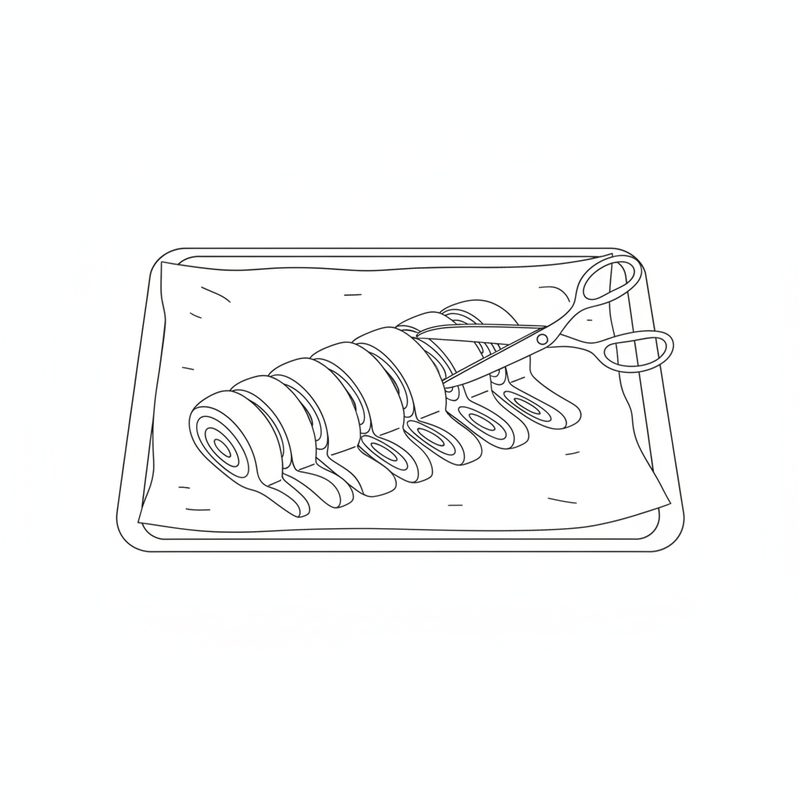
- With kitchen scissors, snip into each log every 2 cm, almost to the bottom but not through. Lay the pieces alternately to the left and the right, slightly on their sides so the spiral faces up.
- Cover loosely and let the dough rise for 30 minutes. Meanwhile, preheat the oven to 200°C (400°F), conventional.
- Brush the cinnamon sticks all over with the beaten egg as an egg wash. Bake one tray at a time on the middle or lower shelf for about 20 minutes, until deep golden brown. Cover loosely with foil near the end if the top darkens too fast.
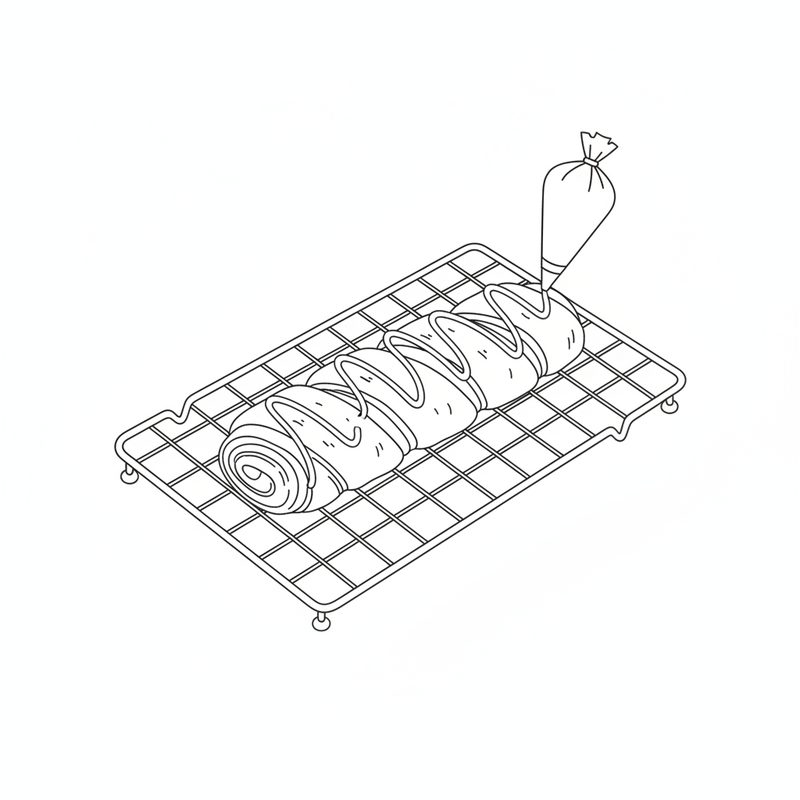
- Cool on a wire rack. Stir icing sugar with a few drops of water into a thick icing and drizzle it over in thin lines. Slice to serve.
What is kanelstang?
Kanelstang is a long Danish yeast pastry filled with remonce, the creamed mixture of butter, sugar and cinnamon that goes into most Danish cinnamon baking. The name means cinnamon stick: kanel is cinnamon and stang a stick or bar, which is how German recipes translate it too, as Zimtstange.
The shape is what sets it apart. The filled dough is rolled into a log, then cut with scissors almost to the bottom every two centimetres, and each piece is laid over to alternate sides. It bakes into a row of connected cinnamon swirls, which is why some English recipes call it a snipped cinnamon twist, although nothing is twisted: unlike cinnamon twists made from twisted strips of dough, a kanelstang is snipped and folded.
Home versions use a plain enriched dough of milk, eggs, butter and a little sugar, scented with cardamom. Some add a line of vanilla custard, nuts or pearl sugar. The version below is the plain one, without custard, which is where most of the Danish recipes start.
Kanelstang ingredients, and what to buy outside Denmark
You need plain flour (all-purpose flour in the US), fresh yeast, milk, eggs, butter, sugar, salt and cardamom for the dough, and butter, brown sugar and cinnamon for the filling. Nothing in it is hard to find, but three things are worth a word.
- Fresh yeast. Danish recipes weigh fresh yeast (gær), and 50 g for 500 g of flour is the amount two of the recipes behind this page agree on. If you can only buy dry yeast, use the amount your packet gives as equal to 50 g fresh and mix it into the flour instead of the milk.
- Brown sugar. The Danish word is brun farin, a soft, moist brown sugar. Light brown sugar is the substitute the German recipes name, and it behaves the same in the filling.
- Cardamom. Ground cardamom is fine. Seeds ground fresh in a mortar smell stronger, so stay with half a teaspoon either way. It should be noticed, not tasted first.
Use butter at room temperature for the filling, soft but not melted. When you cream soft butter with the sugar it turns into a paste that stays where you spread it. Melted butter runs to the edges and out of the dough in the oven.
Kanelstang step by step, in pictures
The whole process is one dough, two rises and one bake. The pictures follow the order of the recipe card.
 Dissolve the yeast in the lukewarm milk, then whisk in the sugar, salt, cardamom and eggs.
- Add the flour and knead it in with the butter, then cover and let the dough rise until roughly doubled.
- Divide the dough in two, roll each half into a long rectangle and spread it with half the filling, keeping a clean border.
- Roll the dough up tightly from one long side and lay it seam-down on the tray.
- Snip almost through every 2 cm and lay the pieces alternately left and right.
- Bake, cool on a rack, then drizzle the icing over in thin lines.
How to snip a kanelstang so it keeps its shape
Cut with kitchen scissors held at a slant, almost through the log but not quite, so a thin strip of dough at the bottom holds every piece to the next. Two centimetres between cuts is the spacing most recipes use.
Lay the first piece to the left, the next to the right, and carry on to the end. Each piece should lie a little on its side so the spiral faces up. That is the part that browns and catches the icing.
Snip on the baking tray, not on the worktop. A cut log is floppy and stretches out of shape if you try to lift it. Put both logs on one lined tray with plenty of space between them, because they spread as they rise.
What goes wrong, and what it looks like
The filling runs out onto the tray. Usually the butter was warmer than room temperature or the border too narrow. Leave 1 to 2 cm clear along the edges and roll firmly. Madens Verden stirs 25 g of cornflour into a filling of this size and says it helps hold the filling inside during baking; Scandinavian Cookbook and Mummum use a spoonful of cornflour or potato flour for the same reason.
The top is dark and the middle is pale. The oven runs hot or the tray sits too high. Bake on the middle or lower shelf, one tray at a time, and lay a sheet of foil loosely over the top for the last part of the bake if it colours too fast.
The dough is tight and dry. Too much flour went in. Stop adding flour as soon as the dough leaves the sides of the bowl and no longer sticks to your hands. A soft dough rolls thinner and rises better.
The swirls close up. The pieces were laid flat instead of on their side, or the second rise was too long. Thirty minutes is enough; the dough should look puffy, not doubled.
Kanelstang with custard, nuts or chocolate icing
The plain kanelstang is the base for several common versions. They change the finish, not the method.
- With custard (med creme). Spread a line of cold, thick vanilla custard along the middle of the filling before rolling. Make it the day before so it is fully set; warm custard runs.
- With nuts. Chopped hazelnuts, almonds or almond flakes go on after the egg wash, before baking.
- With pearl sugar. Brush with egg wash and sprinkle the pearl sugar over before baking. Leave out the icing, or use both.
- With chocolate icing. Stir a little cocoa into the icing sugar before adding the water.
- With marzipan. Grated marzipan beaten into the filling makes it richer and slightly almond-sweet.
If you like the remonce and want a pastry that is all about it, brunsviger, the Danish brown-sugar coffee cake, uses a similar buttery topping on a soft yeast base baked in a tin.
Kanelstang, kanelsnegle and wienerbrød: the difference
A kanelstang is one long pastry that is sliced to serve. Kanelsnegle are the same idea cut into individual rolls before baking, so every one has crisp edges and is eaten whole.
The dough is the bigger difference from bakery pastry. This kanelstang uses an enriched bread dough that is kneaded, not folded. Wienerbrød, the pastry known abroad as Danish pastry, is a laminated dough of many thin layers of butter, and a Danish kringle is shaped from that kind of dough. So a cinnamon Danish and a cinnamon roll differ mostly in the dough: layered and flaky for the Danish, soft and bready for the roll and for this kanelstang.
How kanelstang is served and stored
Kanelstang is cut across into slices and eaten with coffee. Nordic Food Living counts the two sticks from a batch this size as ten servings.
Let it cool before icing, or the icing melts into the crust instead of setting in lines. Once cold, wrap it well so the cut ends do not dry out.
To bring back a piece from the day before, Francesca Kookt sprinkles the pieces lightly with water and warms them for about 10 minutes at 120°C (250°F). Ice after reheating, not before.
Where these quantities come from
Every quantity on the card is one that at least two independent published recipes agree on, scaled to the same 500 g of flour and two sticks: Nordic Food Living, Frederikke Waerens, Klitly, Wienerbroed.com, Madens Verden, Scandinavian Cookbook, Skandibaking and Loui og Bearnaisen. The oven temperature is the 200°C four of them use. The baking time is the middle of the stated times, which run from about 13 to 30 minutes.
No two of them agree on how much icing sugar to use, from about 50 g to 100 g, so the card gives no amount. Stir icing sugar with a few drops of water until it is thick enough to pipe. The recipes also count rising time so differently that their prep and total times are not comparable, so those are left off; the two rises alone take about 1¼ to 1½ hours, going by the rise times the recipes do state.
Questions people ask
What does kanelstang mean?
Cinnamon stick. Kanel is Danish for cinnamon and stang means a stick or bar. German recipes call it Zimtstange, which is the same thing.
Is kanelstang the same as a cinnamon roll?
It has the same kind of dough and filling, but it is baked as one long, snipped pastry and sliced to serve. Danish cinnamon rolls, kanelsnegle, are cut into separate buns before baking.
How long do you bake kanelstang?
About 20 minutes at 200C (400F) in a conventional oven, until deep golden brown. The recipes behind this page range from about 13 to 30 minutes, so judge by colour.
Can I make kanelstang with custard?
Yes. Spread a line of cold, set vanilla custard along the middle of the filling before you roll it up. Many Danish versions, called kanelstang med creme, do exactly that.
Why did the filling leak out of my kanelstang?
The butter was too soft or melted, or the border was too narrow. Use soft butter, leave 1 to 2 cm clear and roll firmly. A spoonful of cornflour in the filling helps it stay inside.
Can I use dry yeast instead of fresh?
Yes. Use the amount your packet gives as equal to 50 g of fresh yeast and mix it into the flour rather than dissolving it in the milk.
How do you reheat kanelstang?
Sprinkle the pieces lightly with water and warm them for about 10 minutes at 120C (250F), then ice them if you like.