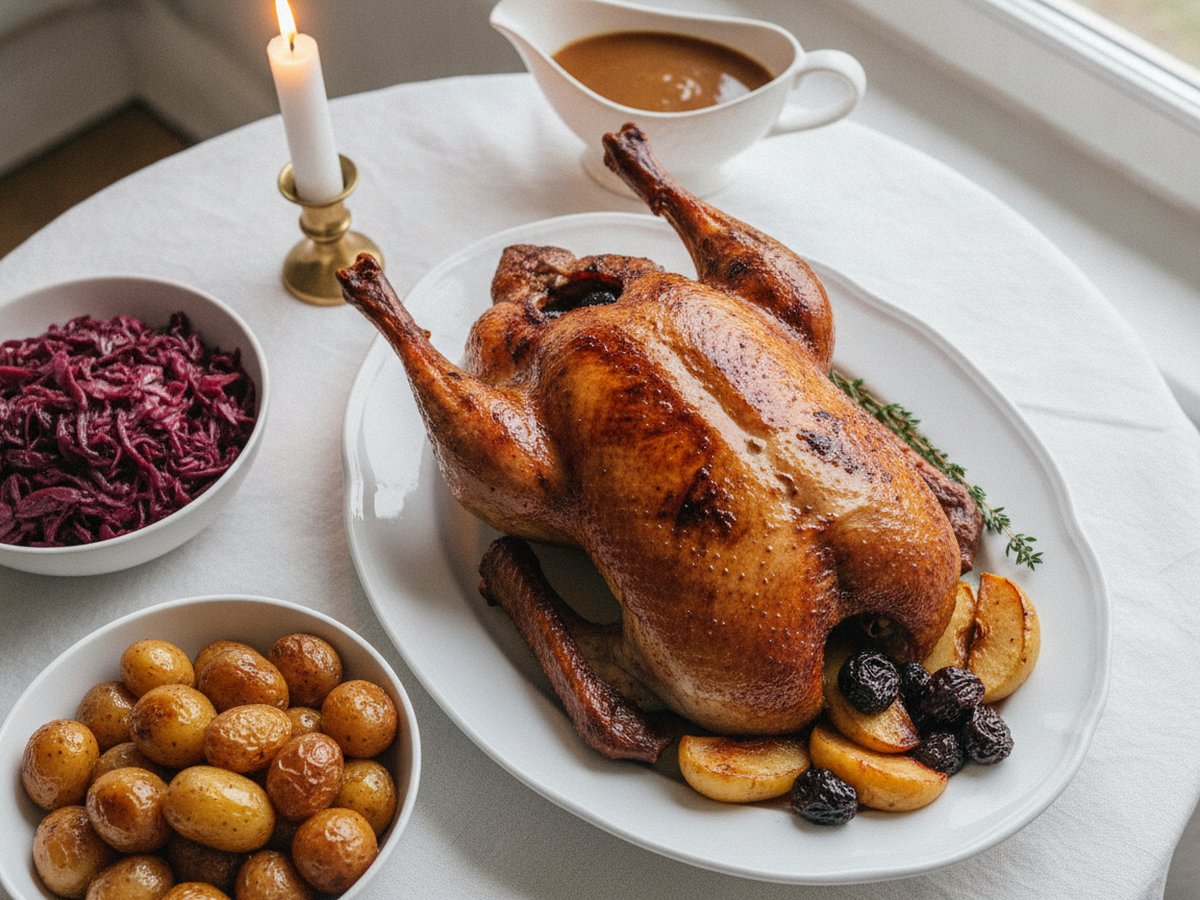
Andesteg (roughly AN-eh-sty) is a whole duck stuffed with apples and prunes, roasted on a rack over a tin of water, and carved into pieces for the Danish Christmas Eve dinner on 24 December. For a duck of about 3 kg you need three tart apples, 200 g of pitted prunes, salt, pepper and an oven at 175°C (350°F) for about two and a half hours, until the thickest part of the thigh reads 75°C (167°F).
What makes the Danish version different from most English Christmas ducks is what it leaves out. There is no orange glaze, no honey and no five-spice. The fruit in the cavity sweetens the meat from the inside, the water in the tin turns into the base for the gravy, and the duck fat is saved for the potatoes. It is served next to red cabbage and caramelised potatoes, often on the same table as flæskesteg, the Danish roast pork with crackling.
Last updated
Recipe
Andesteg Recipe (Danish Christmas Roast Duck with Apples and Prunes)
Ingredients
Method
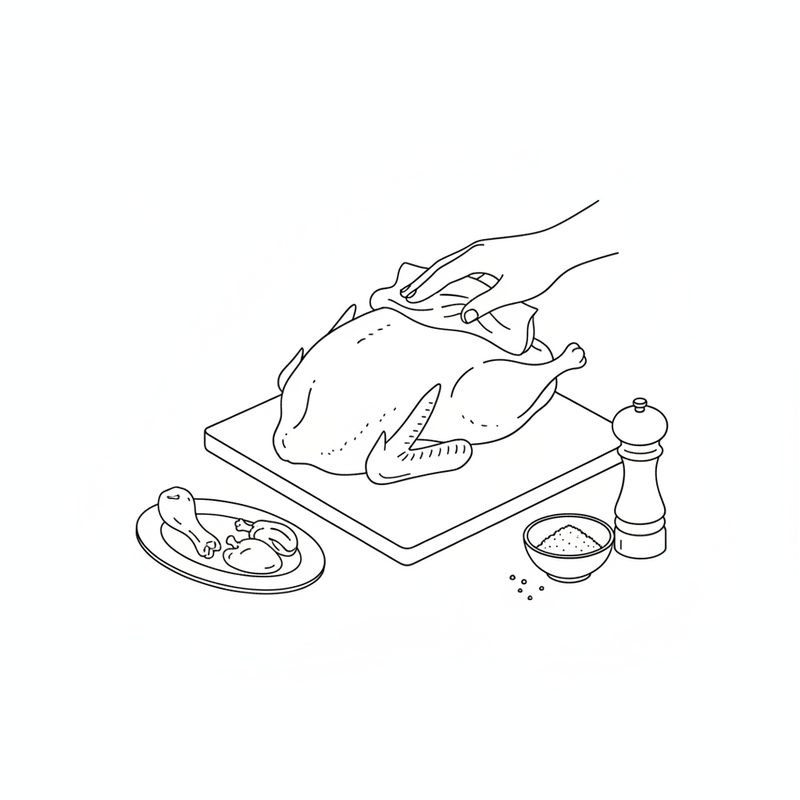
- Take the duck out of the fridge about an hour before roasting. Remove the giblets; keep the neck, heart and gizzard for the tin and set the liver aside. Cut off the wing tips and pat the duck dry inside and out with paper towels.
- Rub the duck inside and out with the coarse salt and plenty of black pepper.
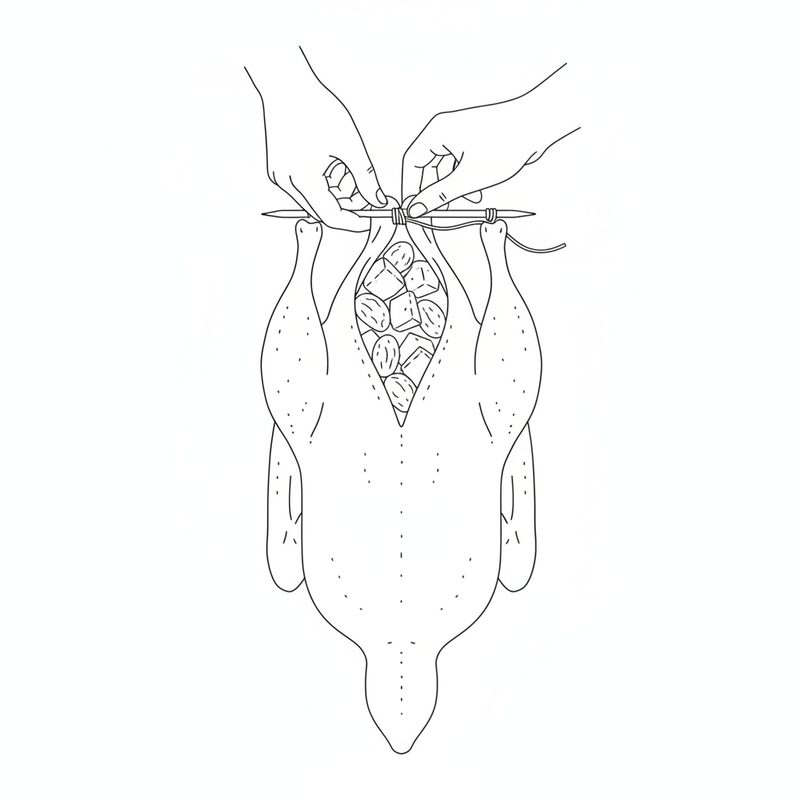
- Fill the cavity with the apple wedges and prunes (and the thyme, if using) without packing them tight. Close the opening with meat skewers or cotton string and tie the legs to the body.
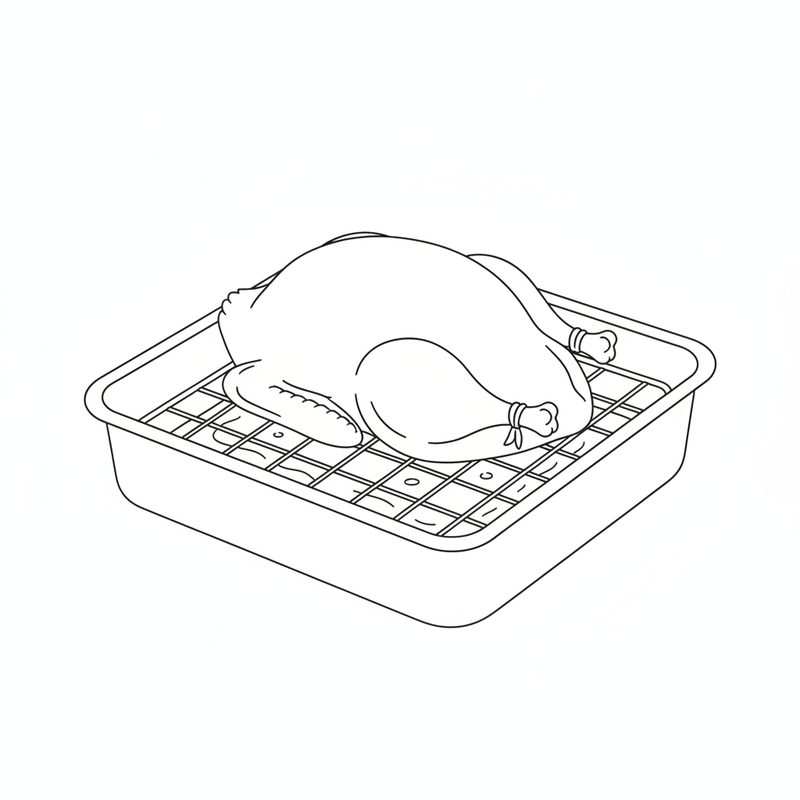
- Heat the oven to 175°C (350°F), conventional, not fan. Put half the water, the wing tips, neck, heart and gizzard in the roasting tin and set the duck breast side up on a rack above it.
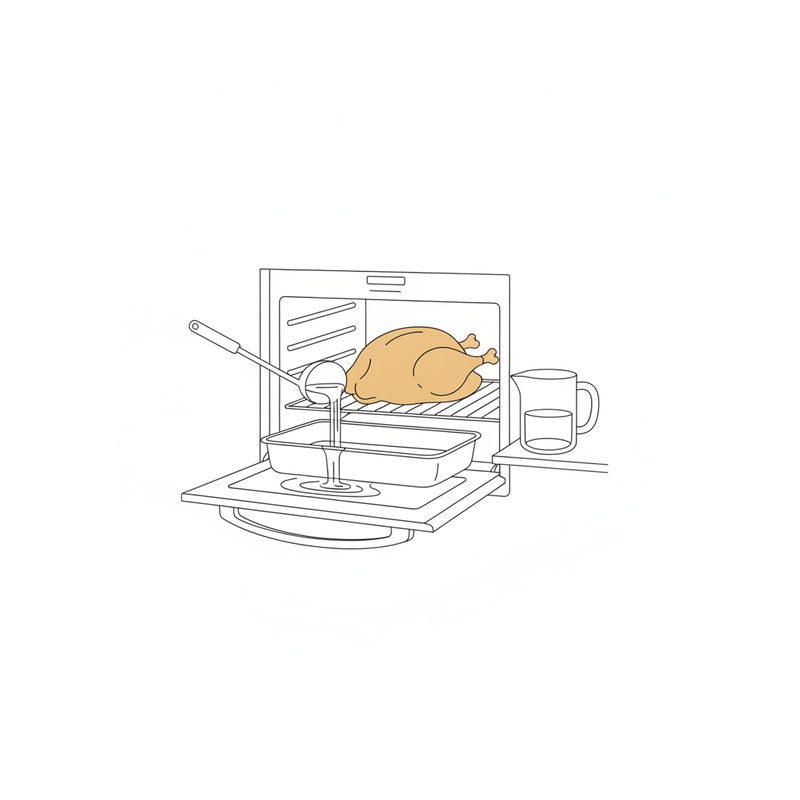
- Roast for about 2½ hours for a 3.6 kg duck, adding the rest of the water a little at a time so the tin never runs dry. The duck is done when the thickest part of the thigh reads 75°C (167°F), the juices run clear and the legs feel loose. Check the centre of the filling too.
- For crisp skin, raise the oven to about 225°C (440°F) for the last 5 to 10 minutes and watch it closely.
- Rest the duck, loosely covered, for about 30 minutes. Strain the tin, skim off the fat and save it, and boil the juices down for gravy.
- Carve the duck into drumsticks, thighs and wings, and cut each breast into 3 or 4 pieces. Serve with the apples and prunes in a bowl beside it.
What is andesteg?
Andesteg is Danish for roast duck, and in practice it means one specific dish: a whole duck filled with apples and prunes, eaten on Christmas Eve. Danish recipes from Arla and Valdemarsro both build it the same way, with the fruit in the cavity and the bird roasted on a rack above a tin of water and giblets.
Duck and roast pork are the two Christmas roasts in Danish recipe collections, and Valdemarsro writes about cooking both for the same dinner. If the table is large enough for two roasts, the flæskesteg recipe runs in the same afternoon with its own tin.
Choosing the duck, the apples and the prunes
Choose a whole duck of about 3 kg (6½ lb) with its giblets. Valdemarsro and Trine Hahnemann’s recipe in the Guardian both work with a 3 kg bird; Arla uses a Danish landand of about 3.6 kg. The neck, heart and gizzard go into the tin to flavour the gravy. Arla leaves the liver out of the tin, and Hahnemann suggests frying it separately.
Use a sharp, firm apple. Arla names Belle de Boskoop, a cooking apple that many shops outside Denmark do not stock; any tart apple that holds its shape in the oven is the nearest substitute. Peel the apples and cut them into wedges. Arla uses three, Valdemarsro four, and the difference only changes how much fruit there is to serve.
Buy pitted prunes, 200 g of them. Arla and Valdemarsro agree on that weight exactly, and pitted means nothing has to be picked out at the table.
How long does a Christmas duck take in the oven?
A duck of about 3.6 kg takes about two and a half hours at 175°C (350°F), according to Arla, which gives two and a half to three hours depending on size. Hahnemann works by weight instead: 40 minutes per kilo at 160°C, which is about two hours for a 3 kg duck.
The slow method takes much longer. Valdemarsro roasts a 3 kg duck at 125°C for three hours, then 150°C for an hour, then finishes it at 225°C for about 20 minutes, around six hours in all. Because the three sources disagree by more than a factor of two, this recipe does not print a single prep or cook time in the card. Weigh the duck, use the time above as a guide, and let the thermometer decide.
What temperature should duck be cooked to?
Roast the duck until the thickest part of the thigh reaches 75°C (167°F). Arla gives about 75°C and Valdemarsro 74 to 75°C, measured in the thigh. The juices from the thigh should run clear and the legs should feel loose in their joints.
Health Canada’s safe cooking chart sets 74°C (165°F) for poultry pieces and for stuffing cooked inside poultry, and 82°C (180°F) for whole poultry. Because this duck is stuffed, check the centre of the apple and prune filling as well as the thigh. The Guardian recipe takes its duck out at 68°C at the thigh bone, which is below all of these figures; this page does not follow it.
How do you get crisp skin on a roast duck?
Dry skin is the start of crisp skin. Pat the duck dry inside and out before salting it, as Arla and Valdemarsro both do. Arla adds that the skin can be pricked with a fork, as long as the fork does not go into the meat.
Finish with a short burst of heat. Arla turns the oven up to about 225°C (440°F), or uses the grill, for the last 5 to 10 minutes; Hahnemann raises it to 220°C for the last 20 minutes. Watch it closely at that stage, because the sugar from the fruit and the fat on the skin colour quickly.
The rack matters as much as the heat. A duck sitting in its own fat stays soft underneath. On a rack above the tin, the fat drips away into the water and the whole skin is exposed to the oven.
Making the gravy from the roasting tin
The liquid in the tin is the gravy base. The water, the giblets and the drips from the duck cook together for the whole roasting time, so top the water up as it reduces; neither Arla nor Hahnemann lets the tin run dry.
Strain the tin into a jug or a clear bowl and let the fat rise. Valdemarsro chills the strained liquid so the fat can be lifted off cold, which is the cleanest way to do it when the duck is roasted the day before. Skim the fat into a jar and keep it: it is the fat for the potatoes and for the red cabbage. Boil the remaining juices down and season them.
Andesteg step by step, in pictures
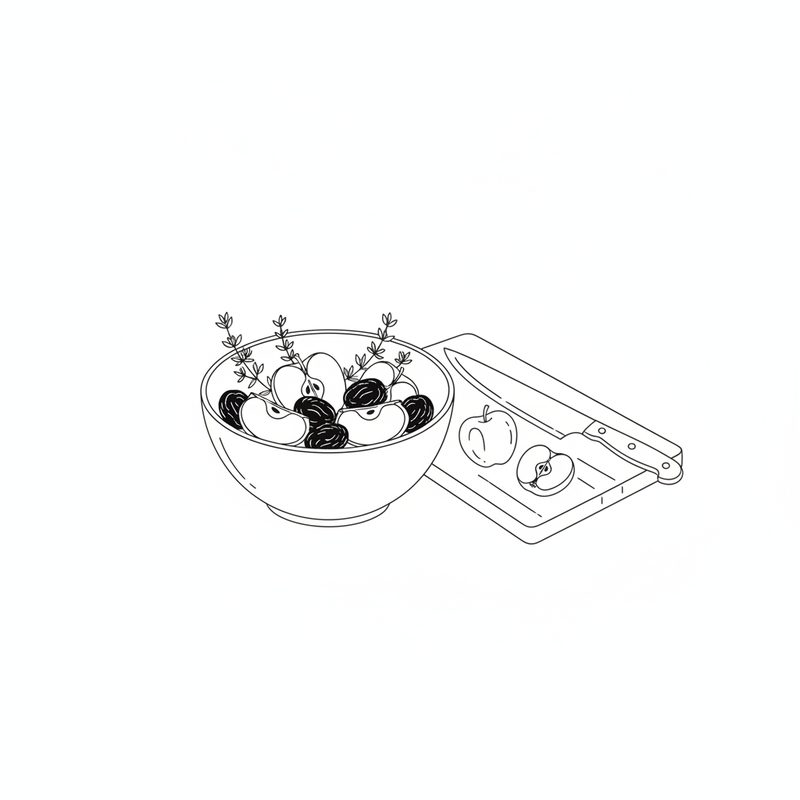
The six drawings below follow the card: dry and season, fill, set on the rack, roast with water in the tin, and rest the duck while the gravy is made.
 Dry the duck inside and out and keep the giblets for the tin.
- Cut the apples into wedges and have the prunes ready.
- Fill the cavity loosely and close it with a skewer or string.
- Set the duck breast up on a rack over the roasting tin.
- Keep water in the tin and top it up as it reduces.
- Rest the duck while the skimmed juices become gravy.
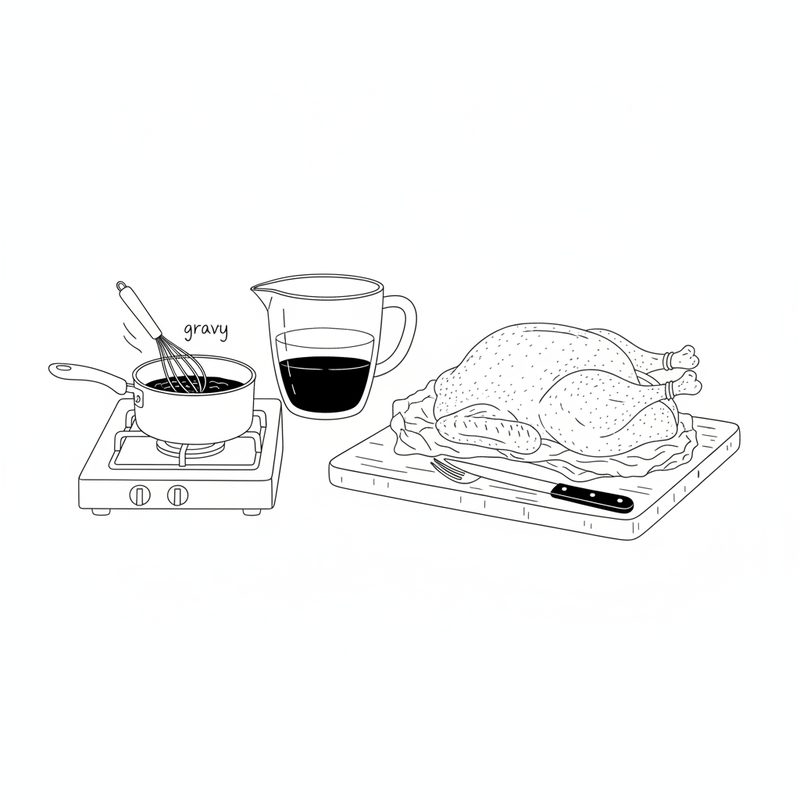
What to serve with andesteg
Serve andesteg with braised red cabbage, caramelised potatoes and the gravy from the tin. Hahnemann serves hers with red cabbage, a kale salad, caramel potatoes and gravy, and that is the standard Christmas Eve plate.
The caramelised potatoes are brunede kartofler, small boiled potatoes turned in melted sugar and butter. The apples and prunes from inside the duck go to the table in their own bowl. To finish, there is ris à la mande, the cold rice pudding with cherry sauce and one whole almond hidden in the bowl.
Variations
- Slow roast. Valdemarsro roasts the duck breast down at 125°C first, turns it breast up after an hour, and raises the heat in stages to 225°C at the end. Arla gives a shorter slow version: 15 minutes at 225°C, then about four hours at 150°C.
- Red onion in the filling. Valdemarsro adds red onion wedges to the apples and prunes and puts carrots, celery, leek, bay leaves and thyme in the tin for a richer gravy.
- Beetroot and warm spices. Hahnemann fills the duck with beetroot, apple, red onion and four prunes, with coriander seed, allspice, cloves, thyme and bay.
- Just the breast. If a whole bird is too much, a single duck breast cooked in a pan is a different recipe, but the same apples and prunes go well beside it.
Making it ahead and storing leftovers
Andesteg can be roasted the day before. Arla and Valdemarsro both do it: carve the cooled duck, lay the pieces in an ovenproof dish, cover and refrigerate. The next day Arla brushes the pieces with duck fat and reheats them at about 200°C for about 20 minutes, then crisps the skin under the grill. Valdemarsro warms them covered at 125°C first and crisps them at 225°C.
Valdemarsro gives the cooked duck two days in the fridge. A frozen duck needs time before any of this: Arla allows two to three days to thaw a whole one in the fridge, on a tray to catch the liquid.
Questions people ask
How long does a Christmas duck take in the oven?
About two and a half hours at 175°C (350°F) for a duck of about 3.6 kg, according to Arla. Trine Hahnemann works on 40 minutes per kilo at 160°C. The slow Valdemarsro method takes around six hours at lower temperatures. Use a thermometer rather than the clock.
What internal temperature should a roast duck reach?
75°C (167°F) in the thickest part of the thigh, the figure Arla and Valdemarsro use. Health Canada lists 74°C (165°F) for stuffing cooked inside poultry and 82°C (180°F) for whole poultry, so check the centre of the filling as well.
Do you need to soak or brine a duck before roasting it?
No. None of the Danish recipes this page is built on soaks the duck. They dry it well, rub it with salt and pepper inside and out, and roast it on a rack so the fat drains away.
How do you keep roast duck tender?
Keep water in the roasting tin for the whole time, take the duck out at 75°C in the thigh rather than later, and rest it for about 30 minutes before carving.
How many people does one duck feed?
A duck of about 3 kg feeds 4 to 5 people. Hahnemann gives 4 to 5 servings and Valdemarsro 4 to 6, depending on what else is on the table.
Is duck or pork the Danish Christmas dinner?
Both. Danish Christmas recipe collections such as Valdemarsro cover andesteg and flæskesteg, sometimes cooked for the same dinner, and both are served with red cabbage, caramelised potatoes and gravy.
Can I roast the duck the day before?
Yes. Carve it, refrigerate the pieces covered, then reheat them brushed with duck fat at about 200°C for about 20 minutes and crisp the skin under the grill, as Arla describes.