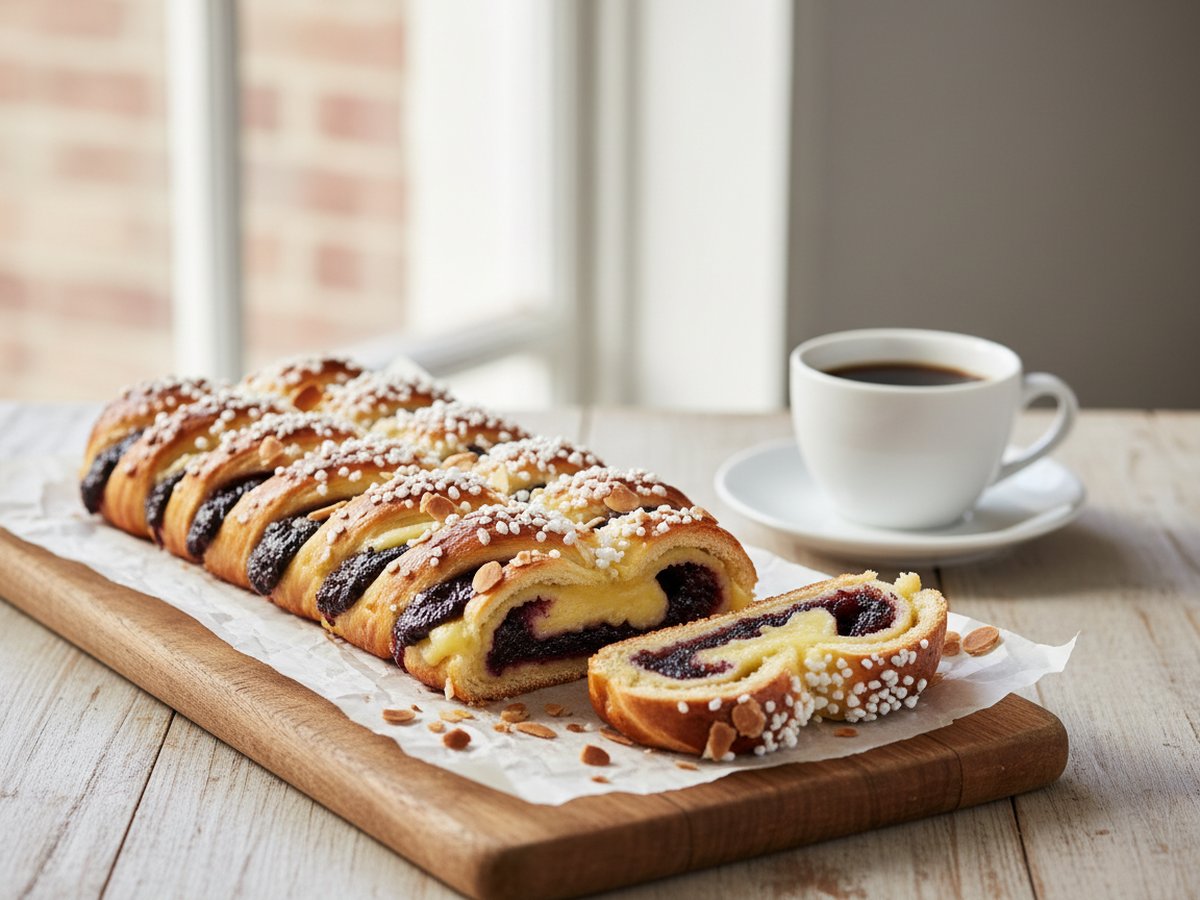
Sveskestang (roughly SVES-keh-stang) is a long Danish pastry bar: a soft cardamom yeast dough wrapped or braided over a thick prune puree, often with a stripe of custard underneath, then brushed with egg and finished with pearl sugar and almonds. It bakes in 20 to 25 minutes and is cut into slices for coffee.
If you searched for a prune danish and expected single, round American pastries with a spoonful of prune filling in the middle, this is the Danish relative. It uses the same flavours in one large bar, made from an enriched yeast dough rather than laminated pastry, which makes it a much easier bake at home.
Last updated
Recipe
Sveskestang (Danish Prune Pastry)
Ingredients
Dough
Prune filling (sveskemos)
Custard (optional)
Topping
Method
- At least 2 hours ahead, or the night before, soak the prunes in the water.
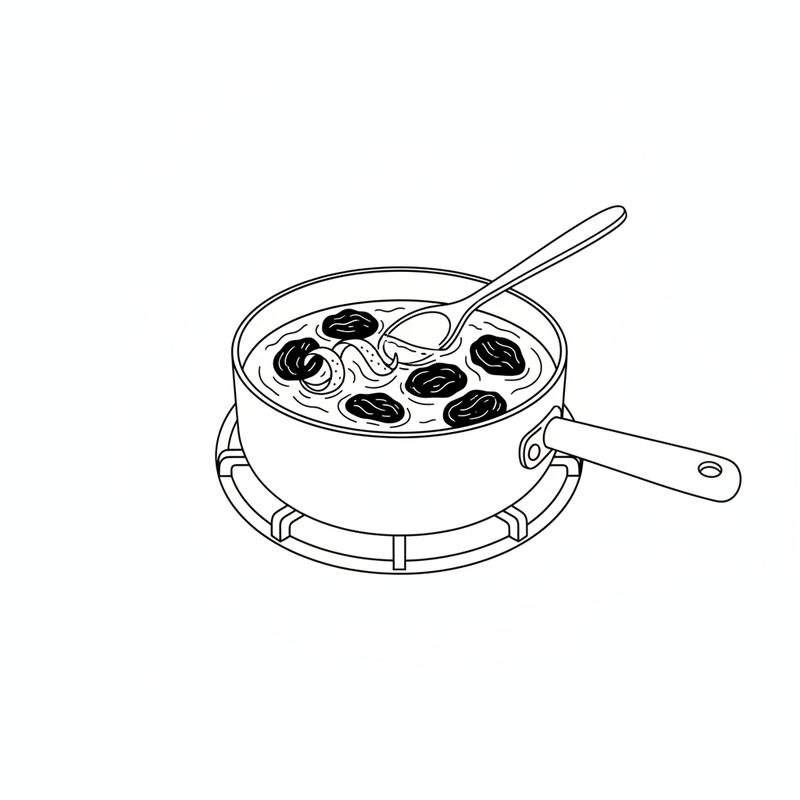
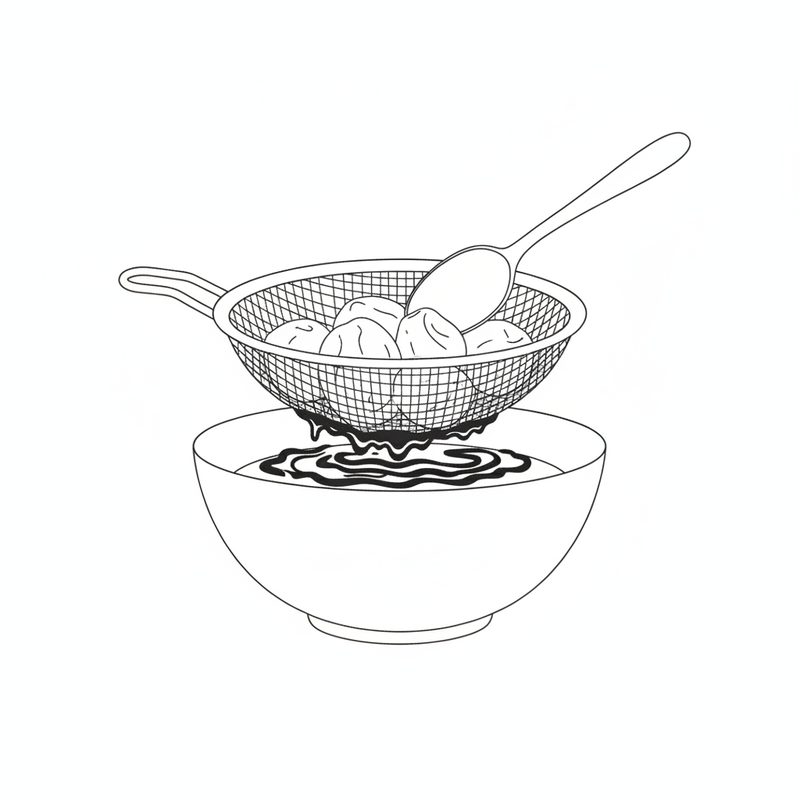
- Add the lemon zest and simmer the prunes in their soaking water over low heat for 15 to 25 minutes, until very soft. Lift them out, press them through a sieve (or blend them) and sweeten the puree to taste while it is warm. Leave it to cool completely.
- Warm the milk until finger-warm and stir in the yeast. Beat the egg and stir it in with the sugar, salt and cardamom.
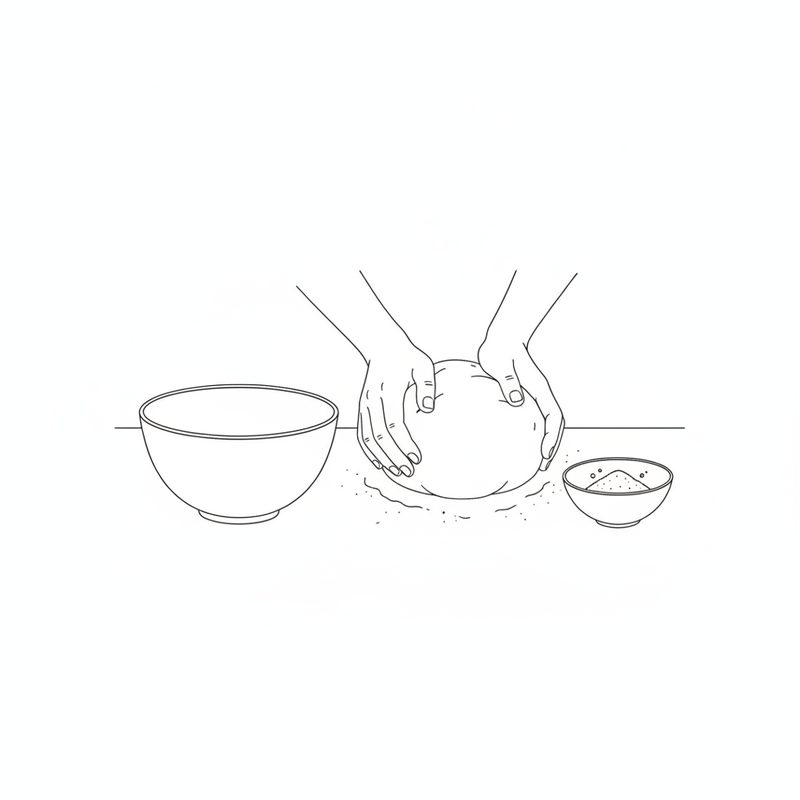
- Rub the butter into half the flour until it looks like breadcrumbs, then stir it into the yeast mixture. Add the rest of the flour a little at a time and knead until the dough is soft and smooth. Cover and leave to rise somewhere warm for about 1 hour.
- If using custard, whisk the custard powder into the milk for 1 minute until thick and chill it for 20 minutes.
- Knock the dough back and roll it out on baking paper to a rectangle of about 30 x 35 cm. Spread the custard in a stripe down the middle, lengthways, and spread the cold prune puree on top.
- Cut strips about 10 cm long into the dough on both sides, starting about 3 cm from the filling. Fold the strips diagonally over the filling, alternating left and right, and tuck the ends underneath.
- Slide the paper onto a baking tray, cover and leave to rise for 30 to 45 minutes. Heat the oven to 200 °C (390 °F) conventional or 190 °C (375 °F) fan.
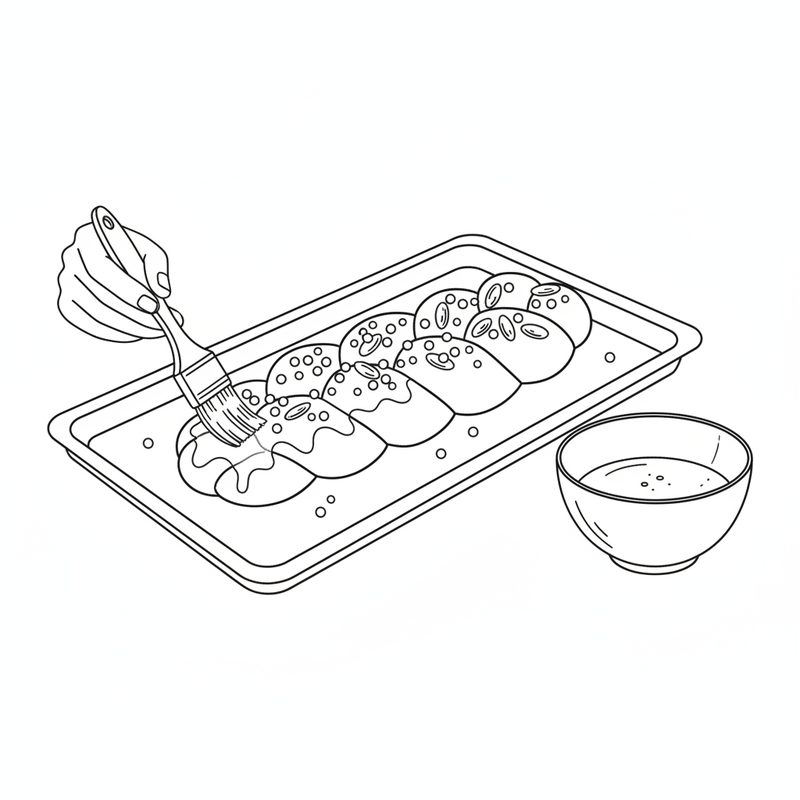
- Brush with beaten egg and sprinkle with pearl sugar and almonds. Bake for 20 to 25 minutes, until deep golden brown. Cool on a rack for at least 10 minutes before slicing.
What sveskestang is
Sveskestang means prune bar. Svesker are prunes and a stang is a bar or stick, the same word used for the long, sliceable pastries sold in Danish bakeries.
It belongs to the family of Danish coffee breads made from a sweet yeast dough, alongside the Danish kringle. It is plainer than laminated wienerbrød, because the butter is worked into the dough instead of folded through it in layers.
The published versions agree on the core: cardamom in the dough, prunes down the middle, egg wash on top. They differ on the details. Dr. Oetker spreads custard under whole prunes and braids the dough over them. A 1972 recipe published on the Danish blog Vi bager gammeldags uses a sieved prune puree and simply folds the two sides of dough over it. Skandibaking braids the dough over custard and a quick prune jam.
Sveskestang or American prune danish?
An American prune danish is usually an individual pastry: a round or square of laminated danish dough, or sometimes puff pastry, with a well of thick prune filling in the centre. Prune filling of this kind is often sold as lekvar.
A sveskestang is one long bar that serves a table, and the dough is a soft yeast dough rather than flaky layers. The filling is the same idea in both: prunes cooked until soft, then mashed or pureed until thick enough not to run. The prune puree in this recipe works in either shape.
The dough
The dough is a sweet yeast dough with egg, butter and ground cardamom. Cardamom is the flavour that makes it taste Danish rather than like a plain sweet bread, and two of the three recipes used here agree on half a teaspoon.
The sugar is where the recipes part ways. Dr. Oetker uses 25 g, Skandibaking 50 g and the 1972 recipe 80 g. This card uses the middle figure, 50 g. The filling and the pearl sugar on top are sweet, so the lower amount also works.
Fresh yeast is what the Danish recipes call for. Outside Denmark instant yeast is easier to buy; Skandibaking gives 2 teaspoons of instant yeast for its slightly larger dough. Keep the milk finger-warm, not hot. Hot milk kills yeast.
The prune filling
The filling here is a classic Danish sveskemos, a sieved prune puree, from the 1972 recipe. The prunes soak for at least two hours, ideally overnight, then simmer with lemon zest until they fall apart. That soaking time is not included in the total time on the card, so start it the evening before.
Sweeten the puree while it is still warm and taste as you go. The 1972 recipe allows up to 125 g sugar for 125 g prunes, which is very sweet; with custard underneath, many bakers will want less. The puree must be completely cold before it goes on the dough, or it softens the dough and leaks.
There are two faster routes. Skandibaking chops the prunes and simmers them briefly with a little sugar, water and an optional splash of port or sherry until the liquid has cooked off. Dr. Oetker skips cooking altogether and lays pitted prunes straight on the custard. Ready-made prune puree also works; the 1972 recipe says about 3 dl is enough.
Shaping the braid
Roll the dough to a rectangle of about 30 by 35 cm and put the filling in a stripe down the middle, lengthways. Then cut strips about 10 cm long into the dough on both sides, starting about 3 cm from the filling, as Dr. Oetker describes.
Fold the strips diagonally over the filling, one from the left, then one from the right, until the whole bar is covered. Tuck the ends underneath so the filling cannot escape. Shape it on the baking paper you will bake it on, because a filled, braided bar is awkward to move.
If braiding feels fiddly, fold one long side of the dough over the filling and then the other, overlapping in the middle. That is how the 1972 recipe does it, and it bakes the same way.
Sveskestang, step by step
 Soak the prunes, then simmer them with lemon zest.
- Press the soft prunes through a sieve.
- Knead the cardamom dough until soft and smooth.
- Brush with egg, then pearl sugar and almonds.
Oven temperature and baking
Bake the sveskestang for 20 to 25 minutes, until it is a deep golden brown all over, including the sides. The three recipes do not agree on temperature: Dr. Oetker uses 200 °C (390 °F) conventional heat, Skandibaking 190 °C (375 °F) fan, and the 1972 recipe a hotter 225 °C (435 °F).
A pale bar is underbaked in the middle, where the filling keeps the dough moist. If the top browns before the sides, lay a sheet of baking paper loosely over it for the last minutes. Let it cool for at least 10 minutes before slicing, so the custard and prunes set.
Variations
The 1972 recipe finishes the cooled bar with an orange glaze and coarsely chopped almonds instead of pearl sugar. Dr. Oetker uses flaked hazelnuts. Pearl sugar can be hard to find outside Scandinavia; Skandibaking suggests regular, turbinado or brown sugar instead.
A quick version uses ready-rolled puff pastry instead of yeast dough. Isabellas makes one with 275 g puff pastry and a cognac prune filling, baked at 175 °C for about 30 minutes and served with whipped cream. It is flakier and less bready than the yeast version.
Prunes are also a Danish Christmas ingredient, stuffed into the roast duck in andesteg. If you want custard without prunes, Danish spandauer put it in individual pastries.
Storing and reheating
Sveskestang is best on the day it is baked. Dr. Oetker recommends warming leftovers in the oven before serving, which brings back the soft crumb. With custard inside, keep leftovers in the fridge.
Questions
What is the difference between Danish pastry and puff pastry?
Danish pastry dough contains yeast, and puff pastry does not. Both are folded with layers of butter, but the yeast makes Danish pastry softer and more bready, while puff pastry rises only from steam between its layers. The dough in this sveskestang is a simpler yeast dough with no butter layers at all.
What type of pastry is used for a prune danish?
American prune danishes usually use laminated danish dough, sometimes puff pastry as a shortcut. A Danish sveskestang uses a soft, enriched cardamom yeast dough with the butter worked in, as in this recipe.
Can I use this prune filling for kolaches or hamantaschen?
Yes. The sieved prune puree is thick once cold, which is what a kolache or hamantaschen filling needs. Cook it down a little longer if it looks loose.
Can I make sveskestang ahead?
Make the prune puree and the custard a day ahead and keep them in the fridge. The dough and the bake are best done on the day, since yeast pastry is at its best freshly baked.
What is served with sveskestang?
Coffee. It is a coffee-table pastry, sliced and served lukewarm or at room temperature in the afternoon. The Isabellas puff pastry version adds whipped cream.