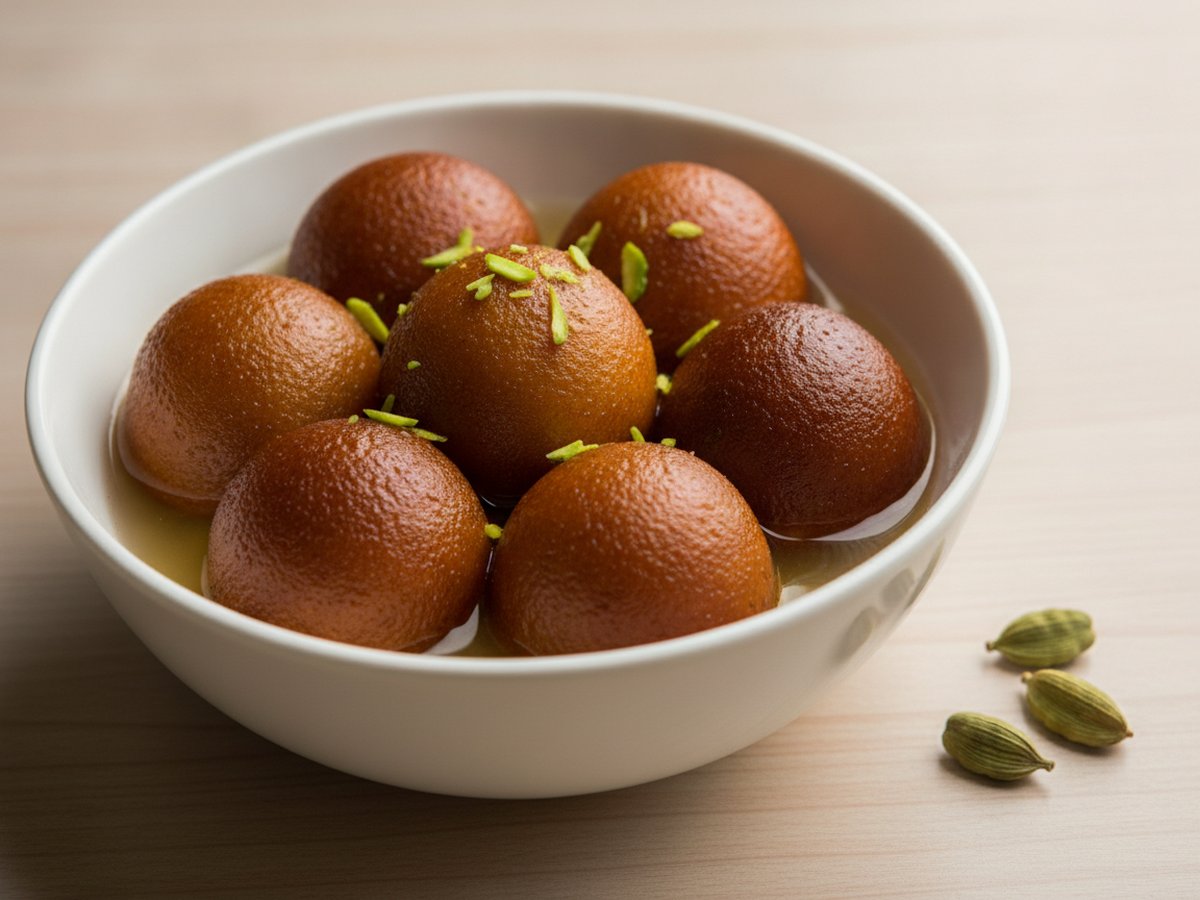
Gulab jamun are small balls of milk dough, fried slowly until deep brown and then soaked in a warm sugar syrup scented with cardamom and rose water. They come out soft and spongy all the way through, and each bite releases syrup. The home version below uses milk powder instead of khoya, so it needs nothing you cannot buy in an ordinary supermarket.
One thing decides whether they work: the heat of the oil. Fry them hot and they brown in a minute while the centre stays raw and hard. Fry them gently and they cook through, swell, and drink the syrup.
Last updated
Recipe
Gulab Jamun (Milk-Dough Dumplings in Rose Syrup)
Ingredients
For the syrup
For the dough
To fry and finish
Method
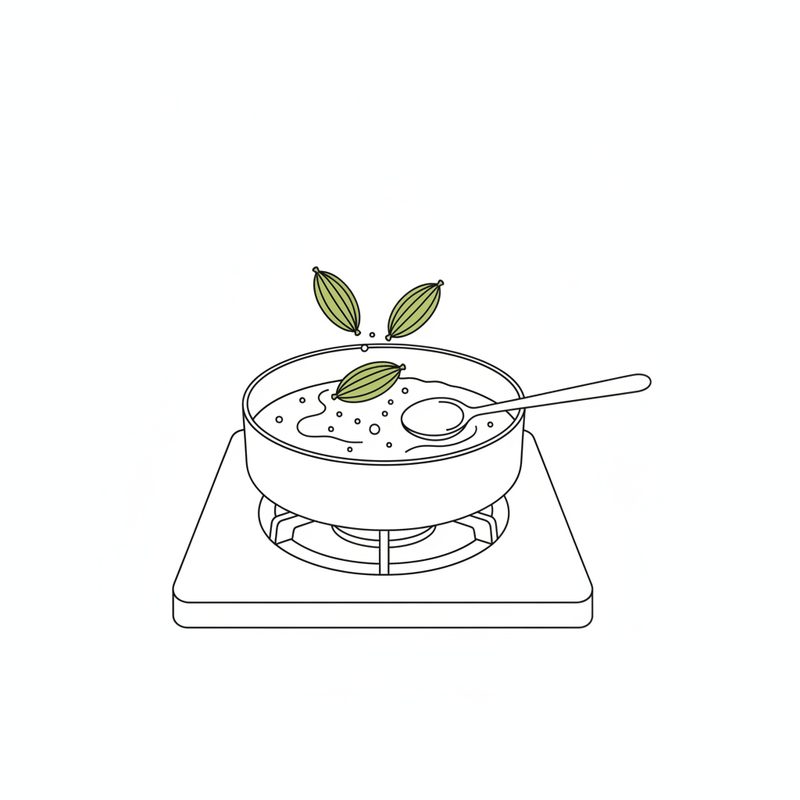
- Put the sugar, water, crushed cardamom pods and saffron in a saucepan over low heat and stir until the sugar dissolves. Boil for about 5 minutes, until the syrup feels slightly sticky between two fingers but does not form a thread. Take it off the heat, stir in the rose water and keep it warm.
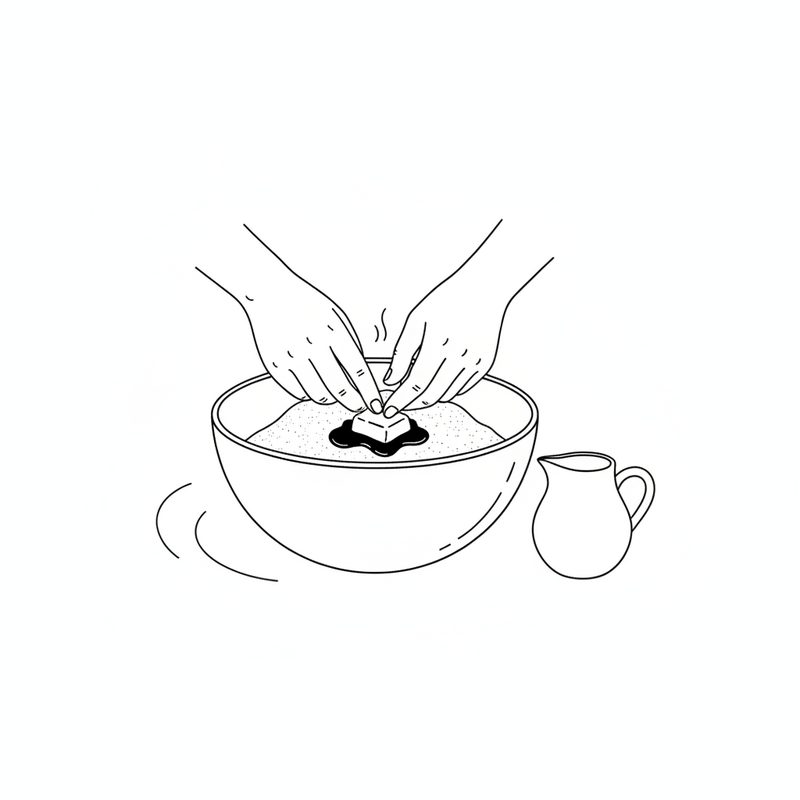
- Mix the milk powder, flour, baking powder and ground cardamom in a bowl. Add the melted ghee and rub it in with your fingertips until evenly mixed.
- Add the milk a little at a time and bring everything together into a soft, smooth, slightly sticky dough. Do not knead it hard. Stop adding milk as soon as it holds together.
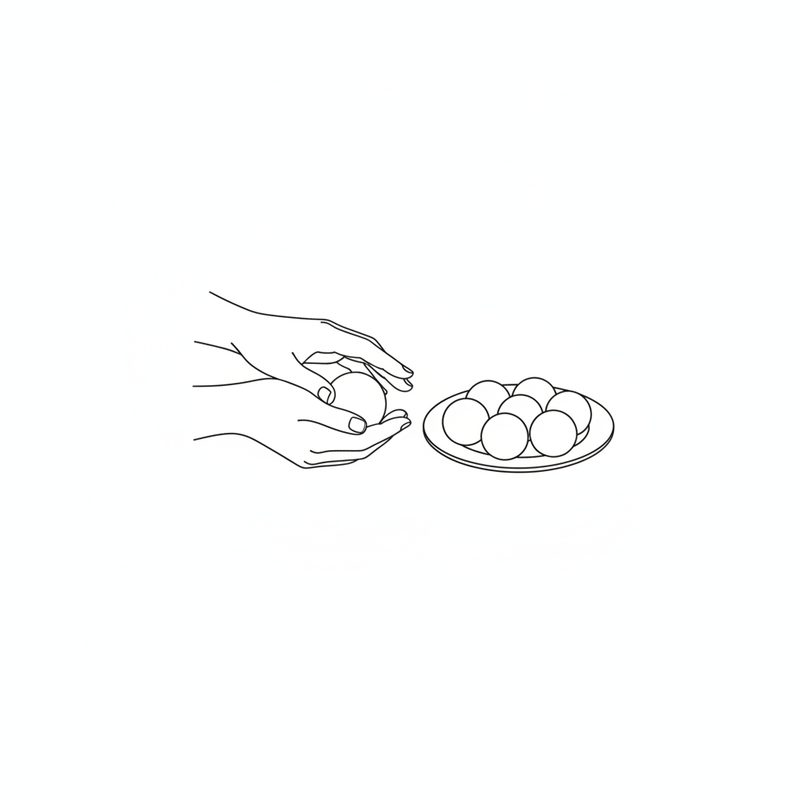
- Grease your palms and divide the dough into 25 equal pieces. Roll each into a smooth ball with no cracks or lines on the surface. Keep them covered while you heat the oil.
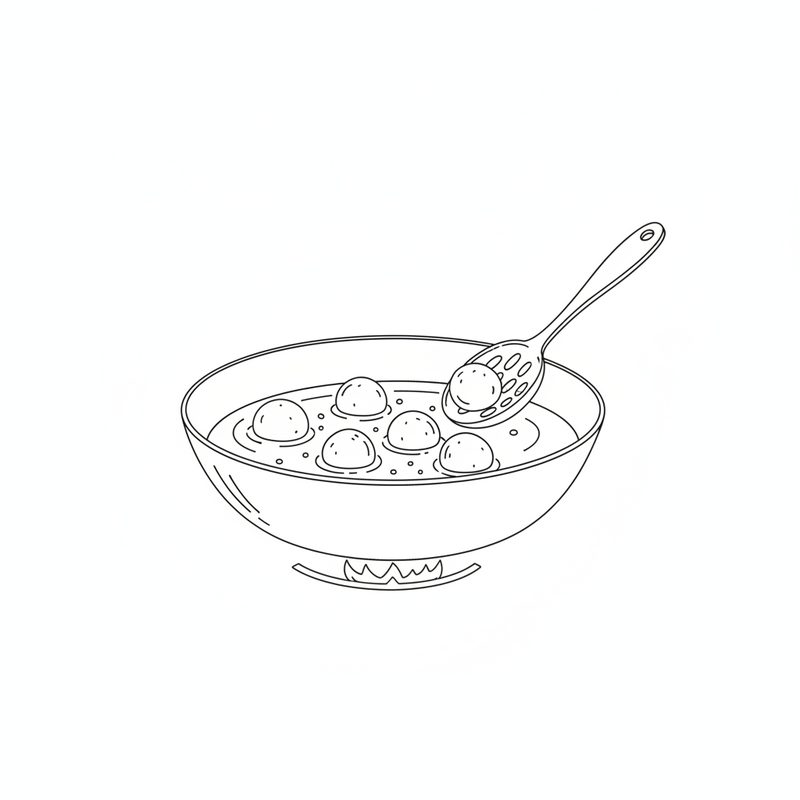
- Heat the oil to 150°C, or until a small piece of dough rises slowly to the top without browning. Fry the balls in batches for about 3 minutes, moving them gently all the time, until deep golden brown. They will swell as they fry.
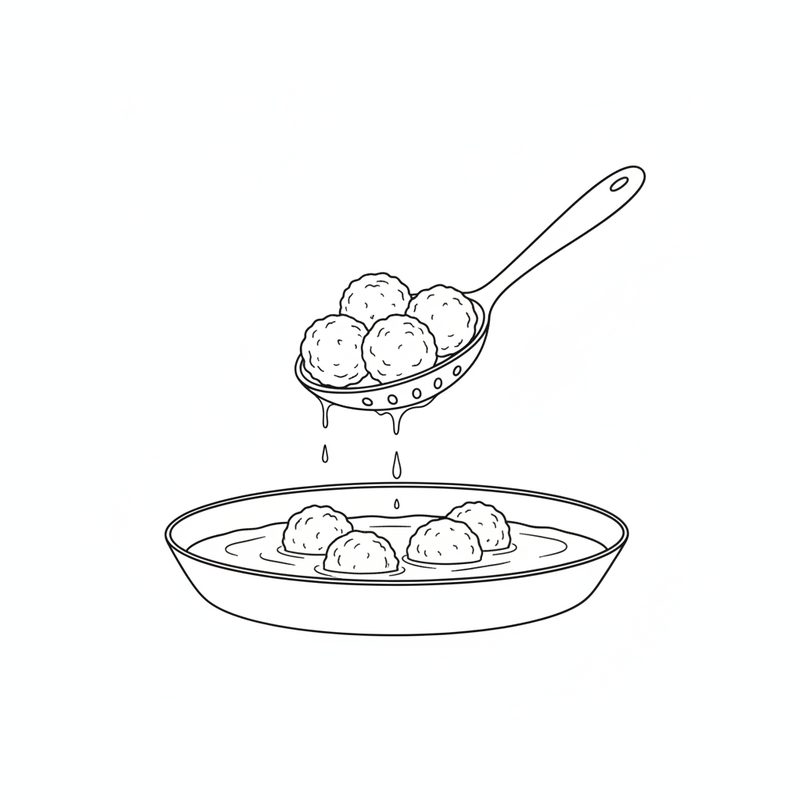
- Lift the fried balls out with a slotted spoon and drop them straight into the warm syrup. Soak for at least 45 minutes, or 2 to 3 hours for syrup right to the centre. Serve warm or at room temperature, topped with chopped pistachios.
What gulab jamun is
Gulab jamun is a South Asian sweet of fried milk-solid dumplings soaked in sugar syrup. It is served across Pakistan and India at Eid, Diwali, weddings and birthdays, and it is one of the sweets almost every mithai shop keeps on the counter.
The name describes the dish. Gulab means rose, for the rose water in the syrup, and jamun is a small dark purple fruit whose colour the fried balls are said to resemble. Stories about where the sweet first came from differ, and this page does not try to settle them.
The traditional dough is made from khoya, milk cooked down slowly until only the solids are left. Most home recipes today replace khoya with milk powder, a little flour and a little fat. That is the version on the card.
The step most people get wrong
Most failed gulab jamun are fried too hot. The outside darkens fast, the ball looks done, and the inside is still dense dough that the syrup cannot get into. Later the balls sink, stay hard, or split open in the syrup.
The recipes compared for this page give two ways to get the heat right. One fries at 150°C. Another drops a small piece of dough into the oil first: it should rise to the top slowly, without changing colour. If it shoots straight up and starts browning, the oil is too hot, so take the pan off the heat for a minute.
Right looks like this: the balls sit at the bottom for a moment, rise slowly, and grow noticeably bigger while they colour. Keep them moving with a spoon so they brown evenly. The gffoodservice.co.nz recipe gives about 3 minutes per batch at 150°C, and says the balls roughly double in size as they fry.
Milk powder or khoya: home style and shop style
Shop gulab jamun are usually made with khoya and often fried in ghee. Khoya gives a denser, richer, slightly grainy centre that holds up to a long soak. That is the version bought by the kilo for a wedding.
Home style uses milk powder. It makes a softer, lighter, more spongy ball, and the dough comes together in a few minutes. The trade-off is that milk powder dough is more delicate: it needs gentle handling and gentle heat.
Use full-fat milk powder if you can. One of the recipes compared here says plainly not to use nonfat dry milk; another uses nonfat powder and makes up the fat with cream. Full-fat powder with the small amount of ghee on the card is the simpler of the two routes.
Why the dough must be soft and crack-free
The dough should be soft, slightly sticky and smooth, close to a soft pastry dough. Add the milk gradually and stop as soon as it holds together. Too much milk makes a dough that will not hold its shape; too little gives a dry dough that cracks.
Do not knead it hard. Bring it together, then roll the balls with lightly greased palms until the surface has no lines or cracks. Any crack left on the raw ball opens up in the oil, and the ball either splits or soaks unevenly. The balls swell in the oil, so roll them smaller than you want them to end up.
Getting the syrup right
The syrup should be light, not thick. Boil it only until it feels slightly sticky between two fingers, and stop before it reaches one-string consistency. A thick syrup coats the outside and never gets inside the ball.
It should be warm when the balls go in, not boiling and not cold. Hot balls into warm syrup is the combination the recipes agree on. Boiling syrup can break the soft balls apart, and cold syrup is absorbed far more slowly.
Cardamom and rose water are the standard flavours. A pinch of saffron is optional and turns the syrup gold. Add the rose water once the syrup is off the heat, so the scent does not boil away.
Gulab jamun, step by step
 Make the syrup and keep it warm.
- Rub the ghee into the dry mix.
- Roll smooth, crack-free balls.
- Fry slowly in oil that is only medium hot.
- Move the hot balls straight into warm syrup.
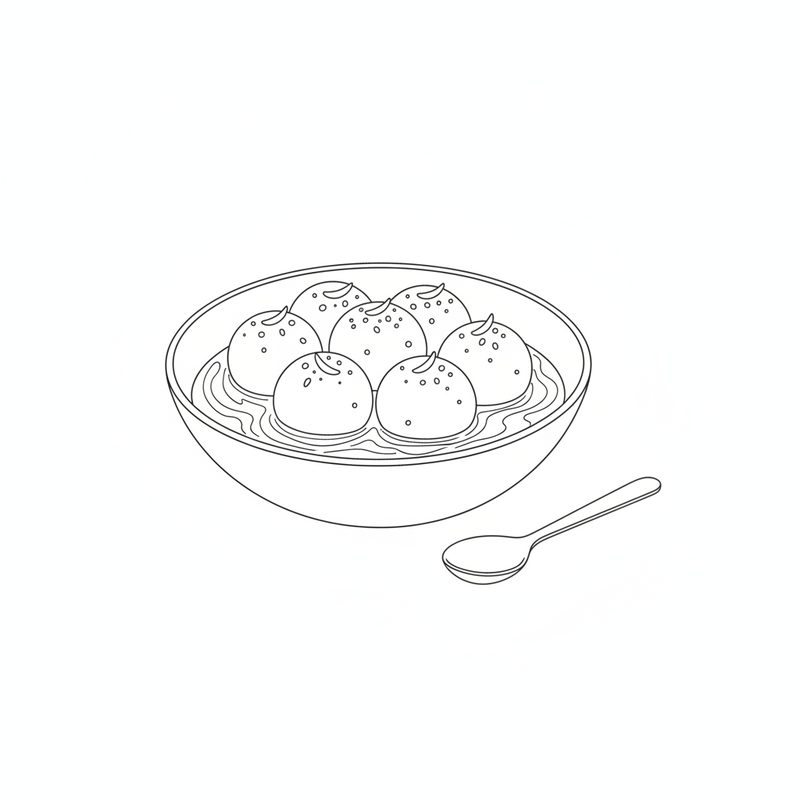
- Soak, then serve with pistachios.
Where the card numbers come from
The quantities on the card come from comparing published recipes from Serious Eats, gffoodservice.co.nz, Indian Healthy Recipes, Cook with Manali and Tea for Turmeric. The dough follows gffoodservice.co.nz: 200 g milk powder to 50 g flour, the same proportion Serious Eats uses to within a few grams. The milk, 80 ml for 200 g of powder, is also where those two agree.
The syrup is 400 g sugar to 480 ml water, from Serious Eats, with gffoodservice.co.nz close behind at 440 g sugar and 500 ml water. Four cardamom pods and 1 teaspoon of rose water appear in both Serious Eats and Indian Healthy Recipes.
Three numbers come from a single source, and they are named here so you know. The 1/4 teaspoon of baking powder and the 1 tablespoon of ghee are the gffoodservice.co.nz amounts; the other recipes use different raising agents and fats. The yield of 25 small balls is also the gffoodservice.co.nz figure for this amount of dough.
The cook time is the median of the cook times the recipes state. Prep time is left off the card on purpose: the stated prep times run from 10 to 55 minutes, which is too wide a spread to print one number honestly.
How long to soak gulab jamun
Soak them for at least 45 minutes, and for 2 to 3 hours if you want syrup right to the centre. The shortest soak in the recipes compared is 45 minutes, until the balls look glossy. Indian Healthy Recipes rests them for 3 hours before serving.
A well-soaked ball is heavier than it was, darker, and soft enough to cut with the side of a spoon.
A shorter route
A boxed gulab jamun mix is the quickest way: you add milk, roll and fry. The frying and soaking rules on this page still apply in full. What you lose is control over the dough: you cannot choose the fat, the sweetness of the dough or the cardamom in it.
Serving and storing
Serve gulab jamun warm or at room temperature, two or three to a bowl with a spoonful of syrup and some chopped pistachios. They are also served warm next to vanilla ice cream.
Keep leftovers in their syrup, covered, in the fridge. Warm them gently before serving, because the syrup firms up when cold and the balls taste dense straight from the fridge.
Gulab jamun, ras malai and chai
Gulab jamun belongs to the same family of milk sweets as ras malai. Both are soft milk dumplings soaked in a sweet liquid: gulab jamun is fried and soaked in syrup, while ras malai is poached and served in sweetened, thickened milk. On a tray of sweets for Eid, the two sit well side by side.
With a sweet this rich, a cup of masala chai or a pink Kashmiri chai is the usual partner.
Questions people ask
What does gulab jamun taste like?
Gulab jamun tastes sweet and milky, with cardamom and rose from the syrup. The texture is soft and spongy, and the syrup runs out when you bite into it.
What is gulab jamun called in English?
Gulab jamun has no standard English name. It is usually described as milk dumplings or fried milk balls in rose syrup, and most English menus simply use the name gulab jamun.
Is gulab jamun healthy?
No, gulab jamun is a treat rather than a healthy food. It is fried dough made from milk solids, soaked in sugar syrup, so it is high in sugar and fat. Serve it in small portions at celebrations.
Why is gulab jamun so expensive?
Shop gulab jamun is costly because of its ingredients and labour. Khoya takes a large amount of milk cooked down for a long time, the balls are often fried in ghee, and each one is rolled and fried by hand.
Why are my gulab jamun hard inside?
Hard centres usually come from oil that is too hot or a dough that is too dry. The outside browns before the inside cooks, so the syrup cannot soak in. Fry on lower heat and add milk until the dough is soft and slightly sticky.
Why did my gulab jamun crack or break?
Cracks come from balls that were not rolled smooth, or from a dough that was too dry. Breaking in the syrup usually means the syrup was boiling. Roll each ball until the surface has no lines, and keep the syrup warm rather than boiling.
Can I use nonfat milk powder?
You can, but the dough then needs extra fat. Serious Eats uses nonfat milk powder and adds heavy cream. With full-fat milk powder, the small amount of ghee on the card is enough.