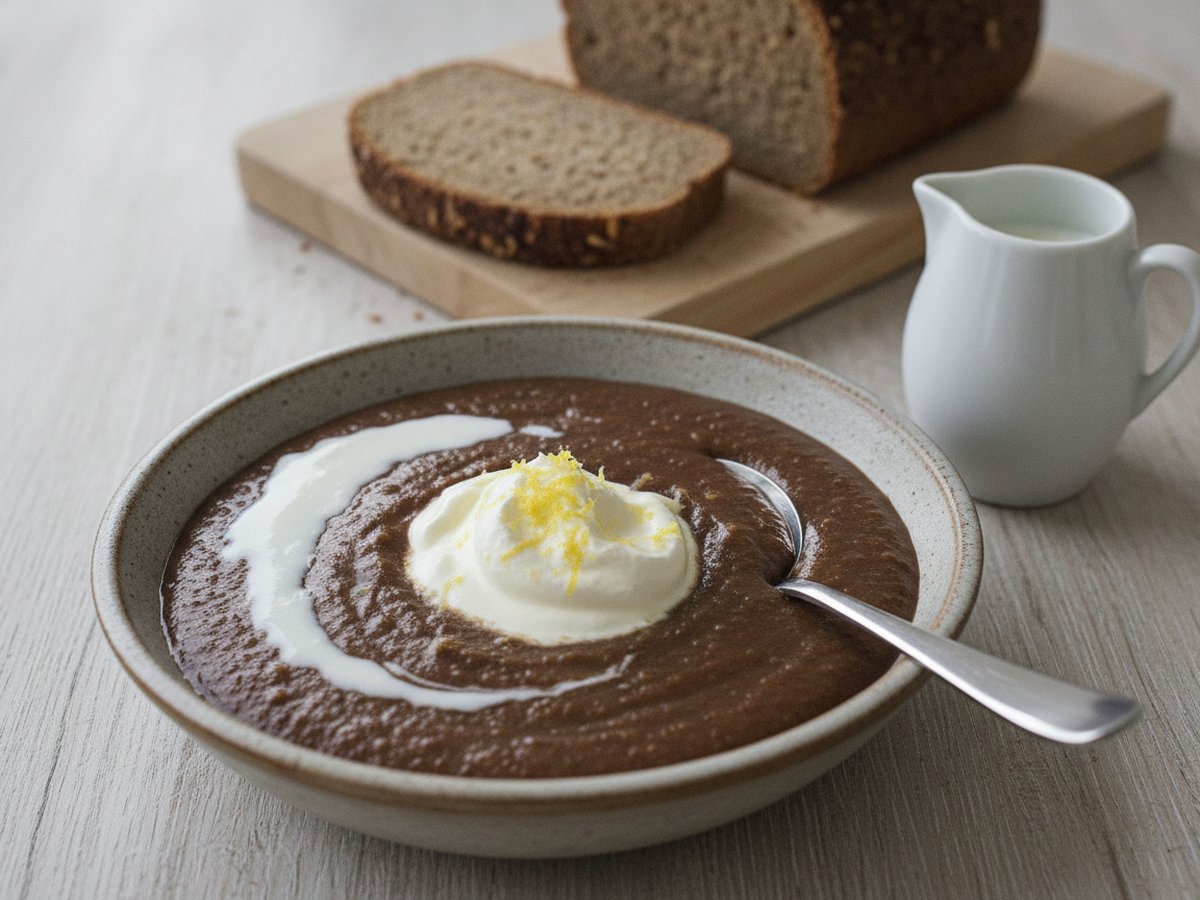
Øllebrød (say it roughly “URL-eh-bruhth”, with a soft Danish d at the end) is a Danish porridge of dark rye bread soaked in water and hvidtøl, a sweet, low-alcohol Danish beer, then boiled until it falls apart, sweetened, and eaten hot with cold whipped cream or milk. This recipe uses 300 g of bread and serves four.
If the porridge you know is oats, this is a different thing. It is darker, a little sour from the rye, malty from the beer, and the cold cream melting into the hot bowl is the point of it. In Denmark it is breakfast, and it exists to use up rye bread that has gone too dry to slice.
Last updated
Recipe
Øllebrød (Danish Rye Bread and Beer Porridge)
Ingredients
Porridge
To serve
Method
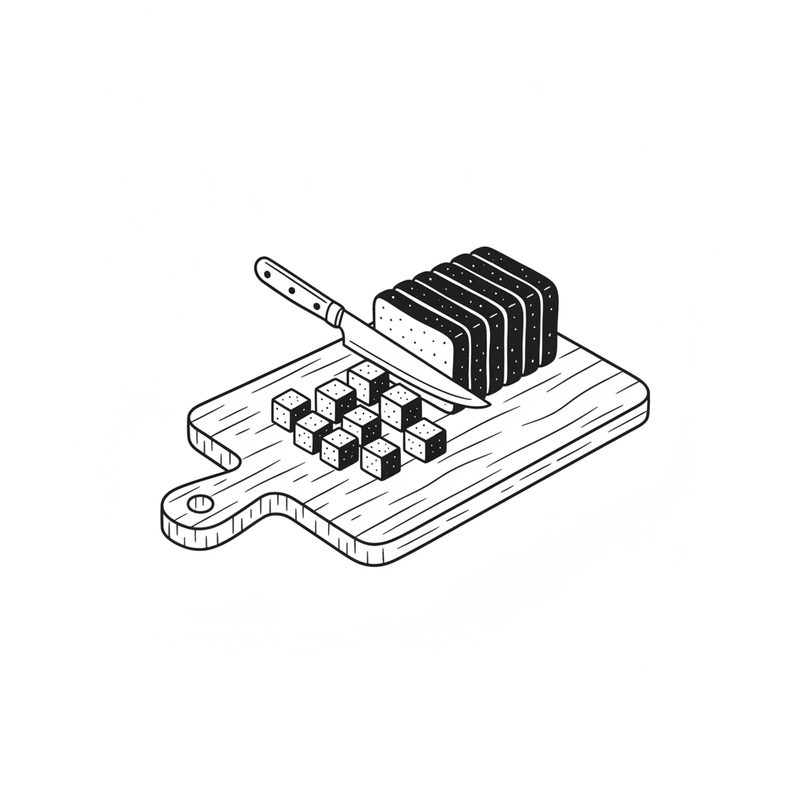
- Cut the rye bread, crust and all, into small cubes.
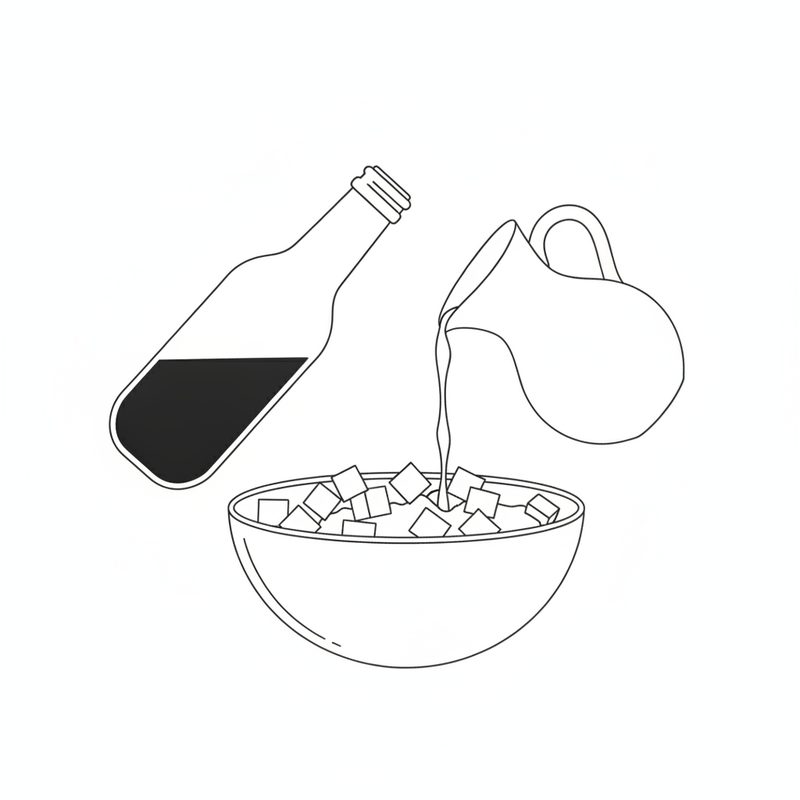
- Put the bread in a bowl or saucepan and pour over the water and hvidtøl. Leave it to soak for at least 15 minutes, or cover it and leave it in the fridge overnight.
- Tip everything into a saucepan if it is not already in one, bring it to the boil, then simmer gently for about 10 minutes, whisking often so the bread breaks down and does not catch on the bottom.
- Whisk until smooth, or blend it or press it through a sieve for a silky porridge. Stir in the sugar and the lemon zest and juice, taste, and add more sugar, or a little water if it has become too thick.
- Whip the cream until it just holds soft peaks. Serve the porridge hot, with a spoonful of cold whipped cream or a little cold milk on top.
What is øllebrød?
Øllebrød is bread-and-beer porridge: the name joins øl (beer) and brød (bread). The bread is Danish rugbrød, the dense, dark sourdough rye eaten every day in Denmark, and the beer is traditionally hvidtøl.
Nothing else is essential. Some cooks add lemon, some use orange peel and a cinnamon stick, as Arla does, and some leave the beer out and use only water. The method underneath is the same in every published version: soak, boil, whisk, sweeten, serve with something cold and creamy.
It is a thrift dish. A loaf of rugbrød keeps for days, but the last third goes hard, and øllebrød is where it goes. That is also why the quantities in Danish recipes vary: for four people, Familie Journal uses 200 g of bread and Coop 400 g. This recipe uses 300 g, the amount Madens Verden and Maduniverset both give for four, with two 33 cl bottles of hvidtøl as Coop and Mambeno use. Water is how you adjust the thickness at the end.
Øllebrød, step by step
 Cut the rye bread, crust and all, into small cubes.
- Put the bread in a bowl or saucepan and pour over the water and hvidtøl. Leave it to soak for at least 15 minutes, or cover it and leave it in the fridge overnight.
- Tip everything into a saucepan if it is not already in one, bring it to the boil, then simmer gently for about 10 minutes, whisking often so the bread breaks down and does not catch on the bottom.
- Whisk until smooth, or blend it or press it through a sieve for a silky porridge. Stir in the sugar and the lemon zest and juice, taste, and add more sugar, or a little water if it has become too thick.
- Whip the cream until it just holds soft peaks. Serve the porridge hot, with a spoonful of cold whipped cream or a little cold milk on top.
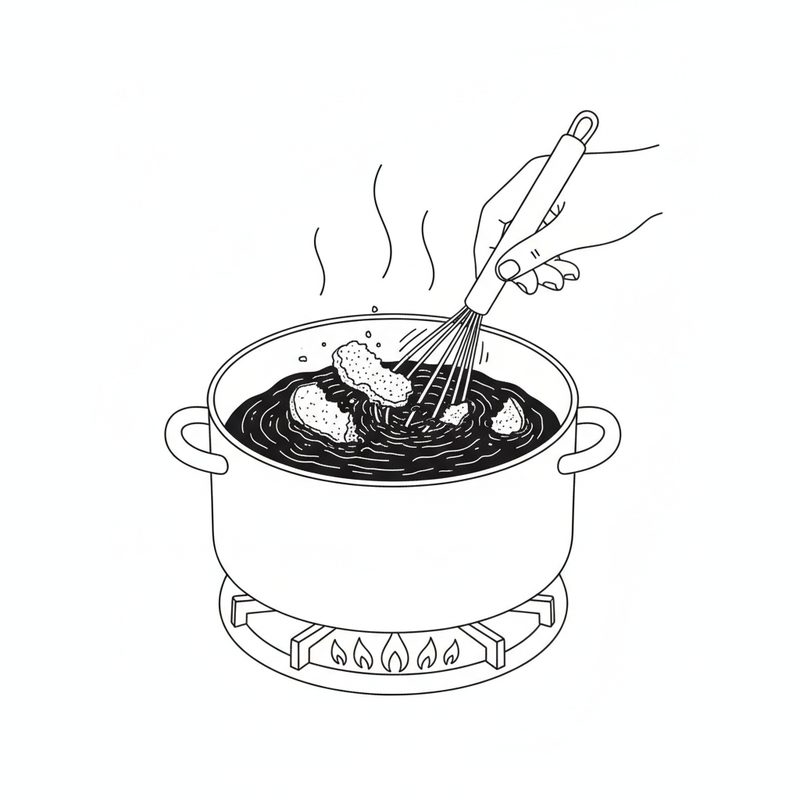
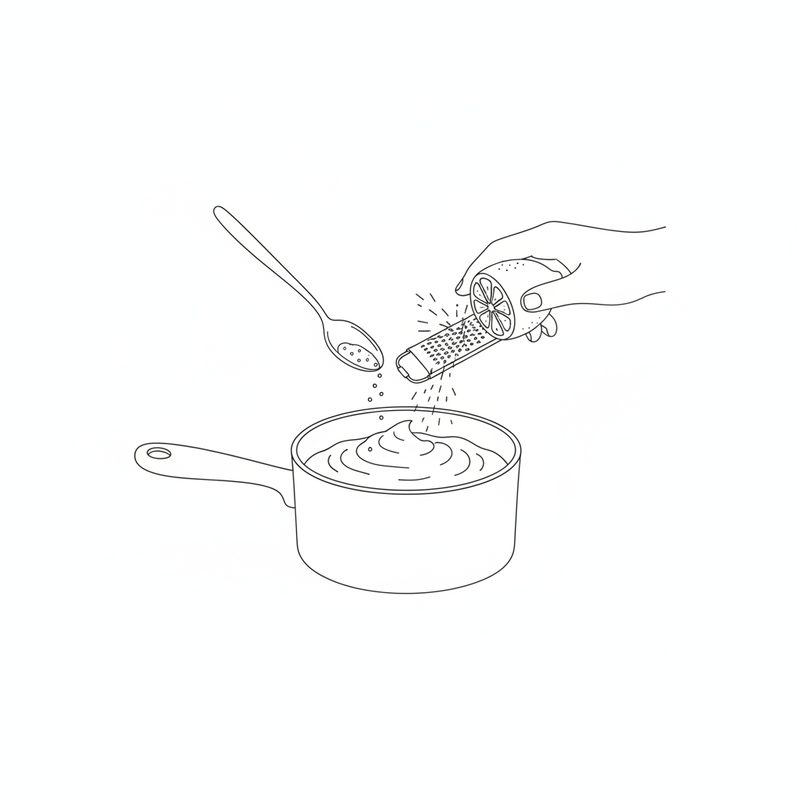
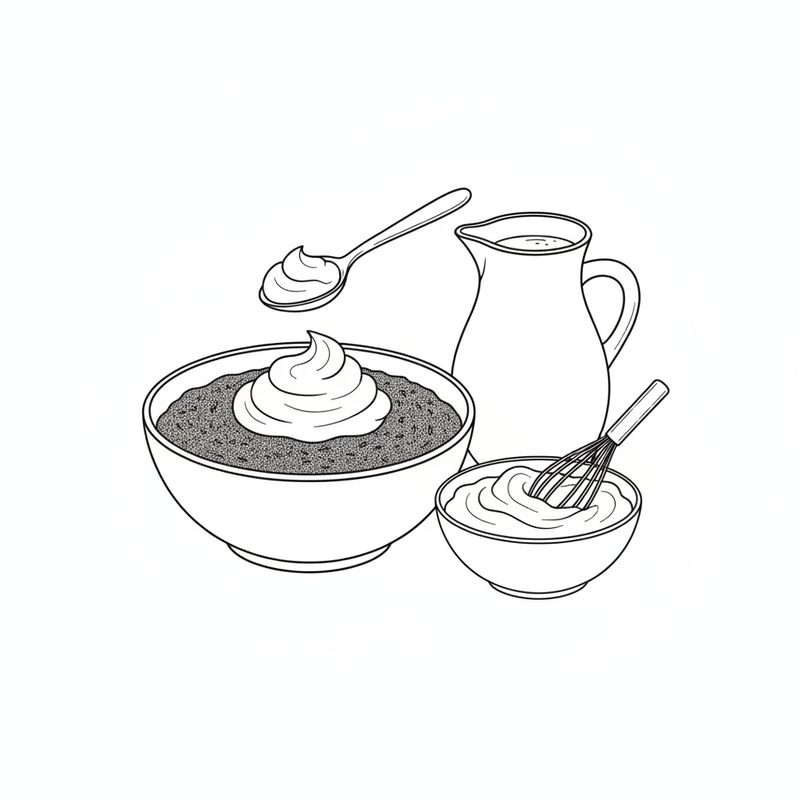
The porridge is ready when the cubes have disappeared and a spoon dragged through it leaves a trail that slowly closes. It thickens as it stands, so stop a little looser than you want it in the bowl.
Which beer to use, and what to use instead
Use hvidtøl if you can get it. It is sweet, dark and only lightly alcoholic, which is why øllebrød needs so little sugar. Outside Denmark it is genuinely hard to find, and Scandinavian shops are the likeliest place.
The nearest real substitutes, in order:
- Malt beer or a malt drink. Arla’s recipe uses Danish maltøl in place of hvidtøl. A non-alcoholic malt drink, the kind sold as malta, is the closest thing most supermarkets outside Scandinavia stock.
- A dark beer. Madens Verden says an ordinary dark beer works, and Saveur’s version uses a stout or porter. Both are more bitter than hvidtøl, so taste before serving and expect to add more sugar. Saveur balances it with malt syrup and apple juice.
- No beer at all. Use all water. My Danish Kitchen makes its øllebrød with only water and sugar, and it is still recognisably the same dish, just plainer.
Which rye bread to use
Use dark Danish-style rye bread without seeds, and the staler the better. Arla and Frederikke Wærens both specify rugbrød without kernels: whole grains and seeds do not break down, and the porridge stays gritty however long you whisk it.
If you bake your own, the end of a loaf of Danish rye bread (rugbrød) is exactly what this is for. Rugbrød is also the base of smørrebrød, the Danish open sandwich, whose name means butter and bread. That is what makes rye the bread of Denmark: it is eaten at lunch nearly every day, so there is nearly always some left over.
Light, soft “rye” bread made mostly from wheat flour is not a good substitute. It turns gluey rather than creamy and has none of the sourness.
What to serve on top
Cold whipped cream is the standard topping, and the contrast with the hot porridge matters more than the sweetness. Madens Verden and Coop both whip 2.5 dl of cream for four bowls.
- Cold milk or single cream, poured around the edge, for an everyday bowl.
- Æggesnaps, egg yolk whipped with sugar until thick and pale, as My Danish Kitchen and Familie Journal serve it. The yolk is raw, so use pasteurised eggs, and leave it out for small children, pregnant women and anyone elderly or unwell.
- A spoonful of jam, which Coop suggests alongside the cream.
If you like risengrød, the Danish rice porridge, this is its darker, sourer relative. For a cold Danish bowl in summer, there is koldskål, the sweet buttermilk soup.
Smooth or rough
Whisking alone gives a porridge with a little texture left in it, which is how most Danish home recipes serve it. For a completely smooth bowl, Arla presses the porridge through a sieve, and My Danish Kitchen blends it. Blend it before adding the lemon, then return it to the pan to season.
If it is too thick, add water a few tablespoons at a time and bring it back to a simmer. If it is too thin, simmer it a few minutes longer, whisking, because it will not thicken on its own until it cools.
Storing and freezing øllebrød
Øllebrød freezes well, and both Arla and Familie Journal recommend freezing it in single portions so a quick breakfast is always there. Thaw it in the fridge and reheat it in a pan with a splash of water, whisking, since it sets firm as it cools.
Kept in the fridge, it does the same: expect a thick block that loosens again once it is hot. Whip the cream fresh.
Questions people ask
What is øllebrød made of?
Dark Danish rye bread, water and hvidtøl (a sweet, low-alcohol Danish beer), sweetened with sugar and often seasoned with lemon. It is served with cold whipped cream or milk.
How long should the bread soak?
At least 15 minutes, which is what Coop allows; Familie Journal soaks it for 2 to 3 hours and Madens Verden recommends overnight in the fridge. Longer soaking gives a smoother porridge in less cooking time.
Can you make øllebrød without beer?
Yes. Use water in place of the beer, or a non-alcoholic malt drink. With water alone it is plainer, so season it with a little more lemon or sugar.
Is øllebrød alcoholic?
Hvidtøl is only lightly alcoholic, and simmering reduces the alcohol but does not remove all of it. For a porridge with none at all, use a non-alcoholic malt drink or water.
Can you freeze øllebrød?
Yes. Freeze it in single portions, thaw it in the fridge and reheat it in a pan with a splash of water.