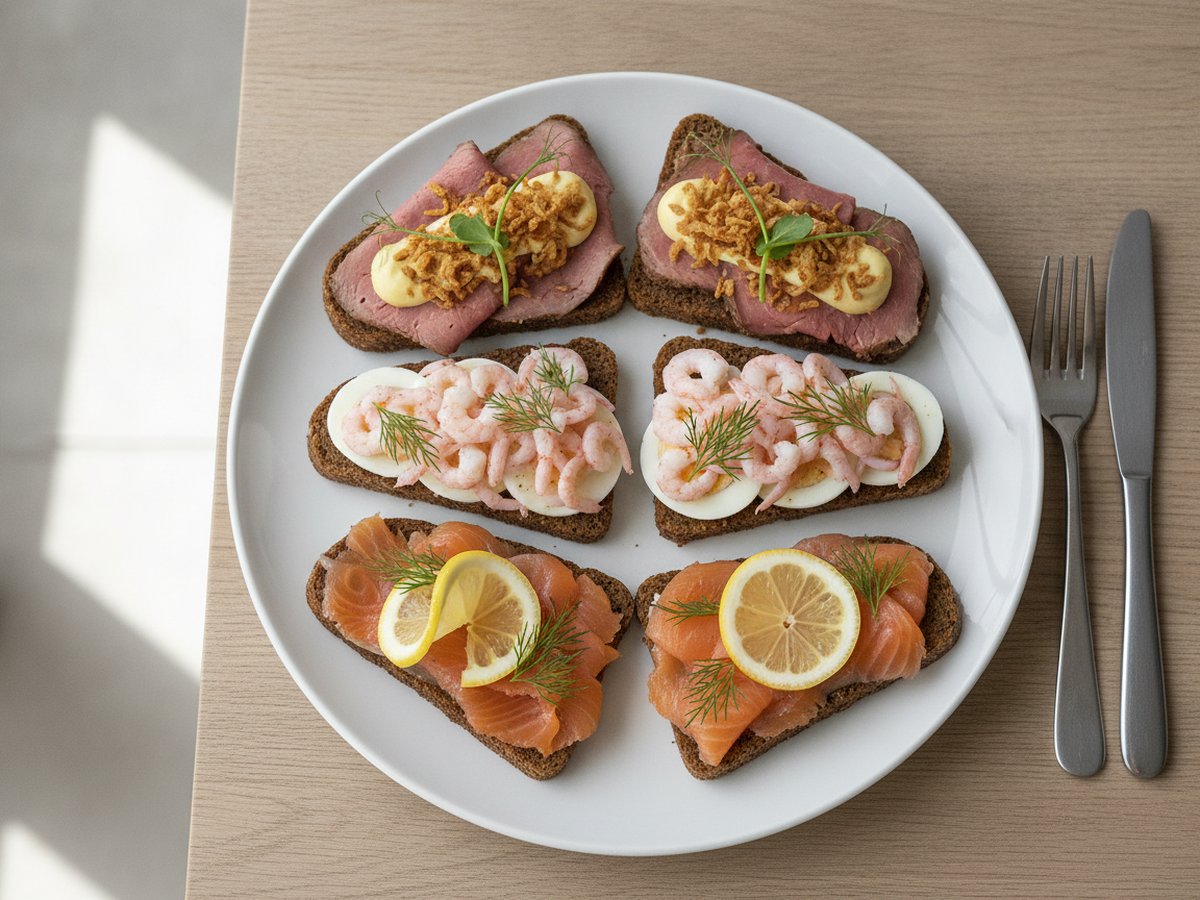
Smørrebrød (roughly SMUR-uh-brudh) is the Danish open sandwich: one thin slice of dense, buttered rye bread with a topping laid over it, eaten from a plate with a knife and fork. The word comes from smør og brød, butter and bread. This recipe makes six, two each of three classics: roast beef with remoulade, egg with prawns, and smoked salmon.
What separates it from the open sandwich you may know is the bread and the order. The base is always the same sour, dark rye, cut thin and buttered to the edges, and nothing goes on top of the topping. The work is in the assembly, not the cooking: the only things made from scratch here are a small bowl of remoulade and one hard-boiled egg.
Last updated
Recipe
Smørrebrød Recipe (Danish Open-Faced Sandwiches)
Ingredients
Bread
Remoulade
Roast beef (2 slices)
Egg and prawn (2 slices)
Smoked salmon (2 slices)
Method
- Make the remoulade: stir the mayonnaise, cornichons, capers, parsley, lemon juice, mustard and curry powder together in a small bowl. Cover and chill while you prepare the rest.
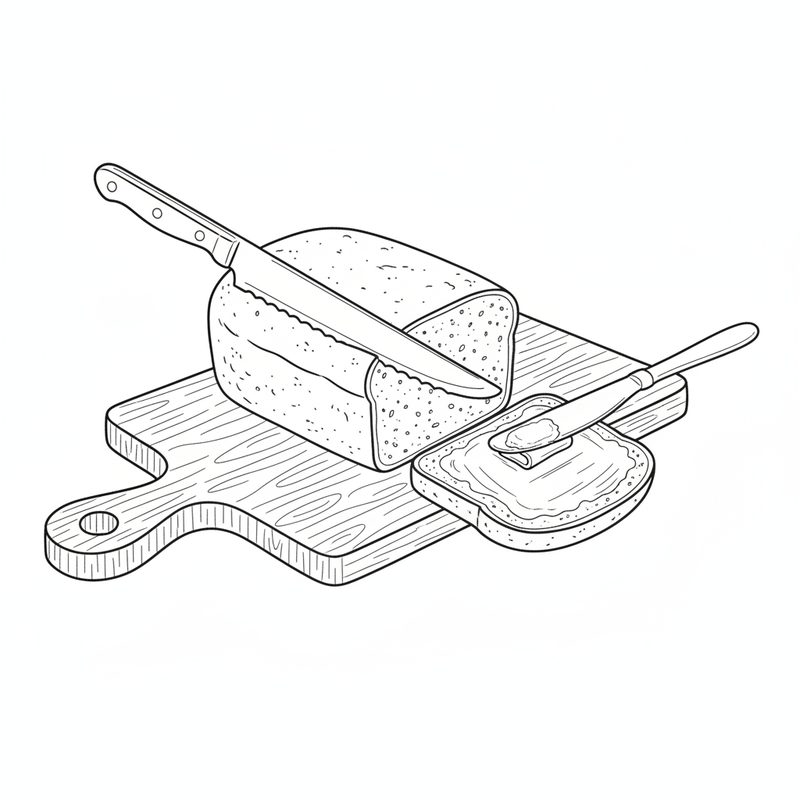
- Cut the rye bread into slices about 1 cm (⅜ in) thick if it is not already sliced. Spread every slice with softened butter right to the crust.
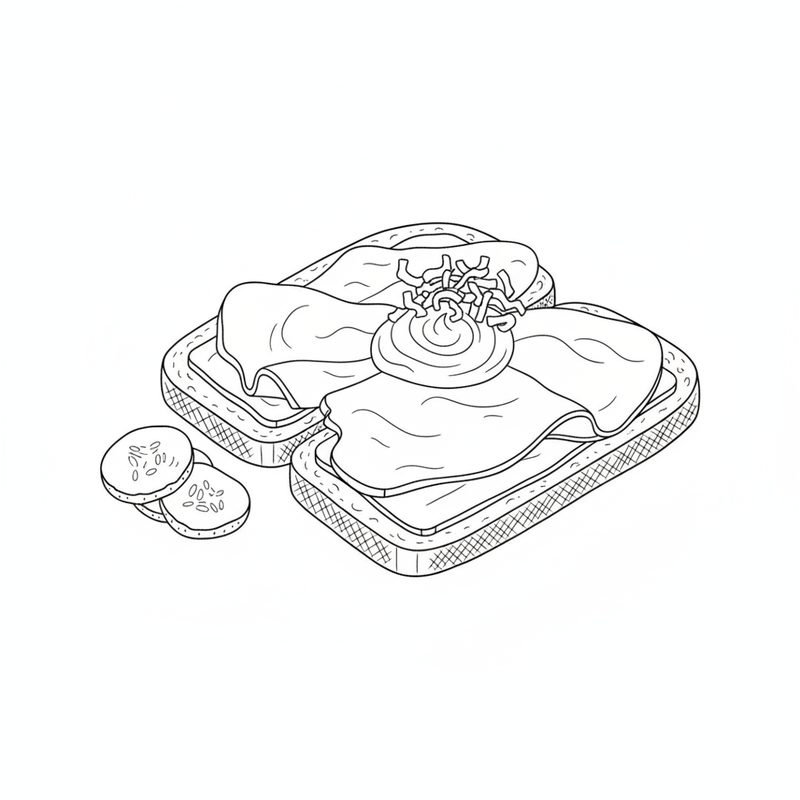
- Roast beef: fold 3 slices of roast beef in loose waves over each of two buttered slices, rather than laying them flat. Spoon 1 tbsp remoulade on each and scatter 1 tbsp crispy onions over it. Finish with pea shoots or cress and a few slices of cornichon.
- Egg and prawn: spread 1 tbsp mayonnaise on each of two buttered slices. Cover with slices of the hard-boiled egg, heap half the prawns on each and top with dill.
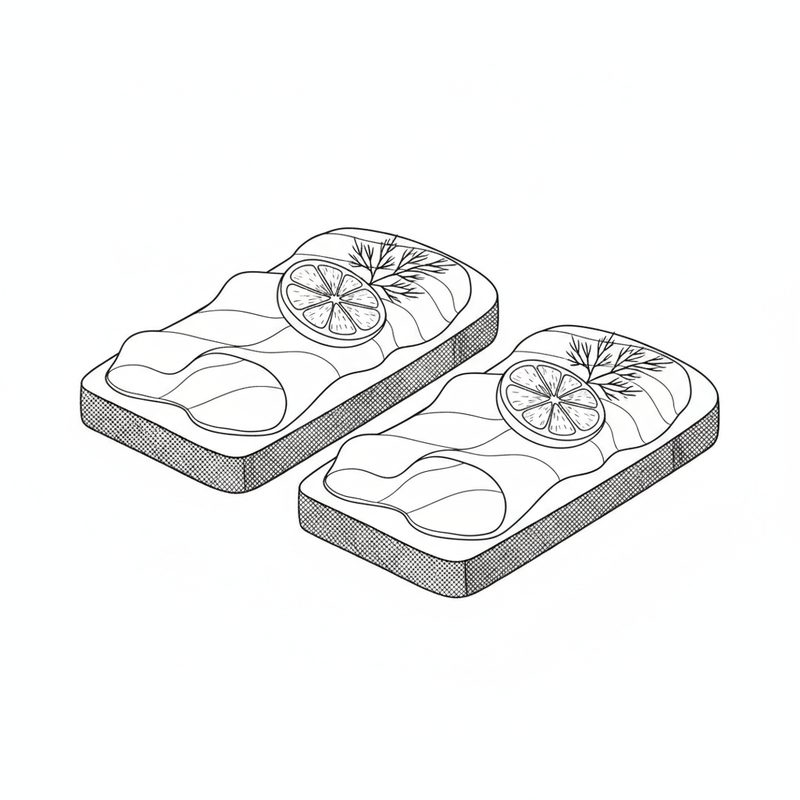
- Smoked salmon: drape the salmon in folds over the last two buttered slices so it covers the bread. Add a thin twisted lemon slice and a sprig of dill to each.
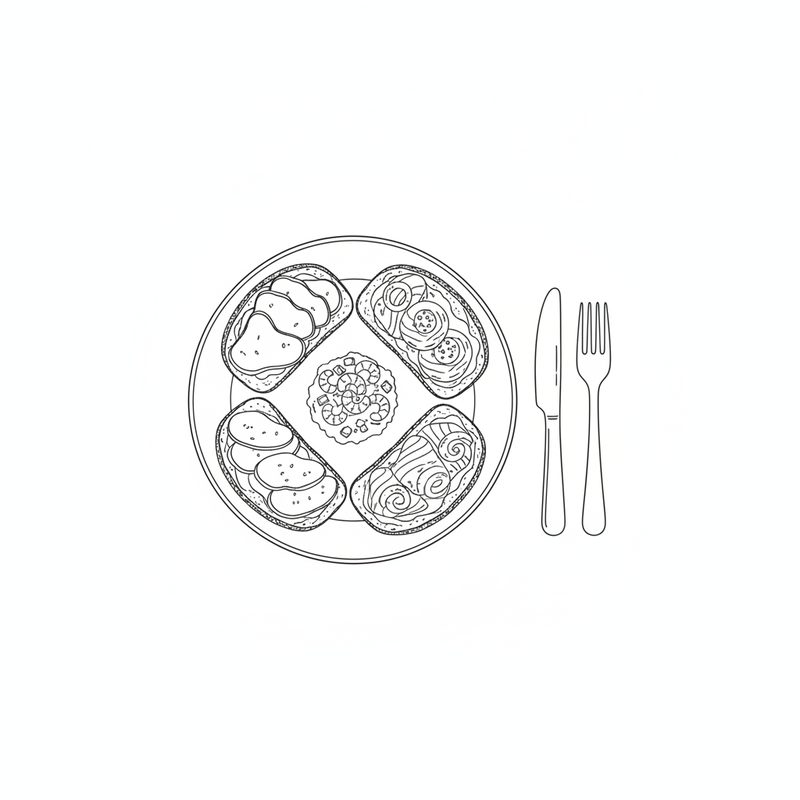
- Plate the six slices, fish first, and serve straight away with a knife and fork.
What smørrebrød is
Smørrebrød is a single slice of buttered rye bread, usually Danish rugbrød, covered with one main topping and a garnish. Wikipedia lists the name’s origin as smør og brød, “butter and bread”, and the same dish exists in Norway as smørbrød and in Sweden as smörgås.
The butter is not decoration. Zwilling’s recipe points out that it adds flavour and also stops wet toppings soaking into the bread, which is why it goes right to the crust on every slice.
Because the bread is dense and the topping is generous, smørrebrød is eaten sitting down, with cutlery. It is a meal, not a snack held in one hand.
The classic smørrebrød toppings
The classic toppings are pickled herring, roast beef with remoulade, egg with prawns and smoked salmon. Wikipedia, Zwilling and Caroline’s Cooking each name at least two of them, and Wikipedia’s list of traditional toppings adds most of the rest below.
- Pickled herring (sild), plain, spiced or curried, with raw onion rings and dill. Wikipedia notes Danish herring is slightly sweeter than Dutch or German herring.
- Roast beef (roastbeef), thin slices with remoulade, crispy onions and grated horseradish.
- Egg and prawns (æg og rejer), sliced hard-boiled egg under a heap of small peeled prawns, with mayonnaise and dill.
- Smoked salmon, with lemon and dill. Some versions add a smear of horseradish cream cheese underneath.
- Liver paste, leverpostej, the pork liver paste Wikipedia lists among the traditional toppings.
- Meatballs, sliced cold frikadeller, a common way to use up leftovers from a hot meal.
- Roast pork with sweet and sour red cabbage and a slice of orange.
- Potato, sliced cold boiled potatoes with mayonnaise and chives.
The three in the card below were chosen because they need almost no cooking and cover fish, egg and meat in one plate. Herring is left out of the card only because jarred Scandinavian pickled herring is not stocked everywhere; where you can get it, add two slices with raw onion rings and dill.
Where the numbers in this recipe come from
The card scales everything to two slices per topping and checks each quantity against at least three published recipes: Zwilling, Caroline’s Cooking, Food & Travel, Kvalifood, Arla and Manu’s Menu.
- Roast beef: 3 thin slices per slice of bread. Zwilling, Caroline’s Cooking and Food & Travel all use exactly this.
- Remoulade: 1 tablespoon per slice. Zwilling and Food & Travel agree.
- Crispy onions: 1 tablespoon per slice. Food & Travel and Arla agree; Zwilling uses less.
- Egg: 1 hard-boiled egg for two slices. Zwilling and Caroline’s Cooking agree.
- Prawns (80 g) and smoked salmon (about 100 g) for two slices are Zwilling’s figures. The other sources either use shell-on prawns or count salmon in slices, so there is nothing to compare them with directly.
- The remoulade follows Caroline’s Cooking. Its 60 ml (¼ cup) of mayonnaise matches Manu’s Menu, and its teaspoon of Dijon mustard matches Kvalifood. Pickle and caper amounts vary widely between recipes, so use the card’s as a starting point.
The card gives no prep or total time. The three sources that state one say 10, 30 and 45 minutes, and a spread that wide says more about what each recipe includes than about how long this takes. With the egg already boiled and shop-bought crispy onions, assembly is quick. Butter is also left unmeasured: Zwilling uses 80 g for eight slices, Caroline’s Cooking about a tablespoon for six. Spread it thinly but completely.
Smørrebrød, step by step
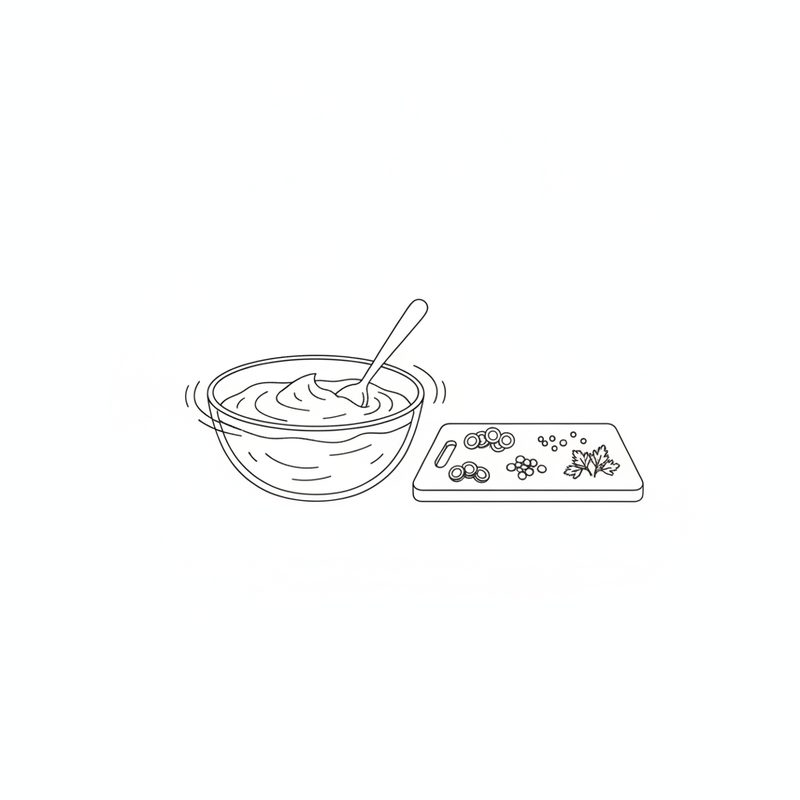
 Stir the remoulade together and chill it.
- Slice the rye thin and butter it to the edges.
- Roast beef: fold, then remoulade and crispy onions.
- Egg and prawn: mayonnaise, egg slices, prawns, dill.
- Smoked salmon: drape, then lemon and dill.
- Plate them and serve with a knife and fork.

Which bread to use
Use Danish rye bread, rugbrød: a dense, dark, sourdough rye loaf full of whole grains, sliced about 1 cm (⅜ in) thick. It is firm enough to hold a wet topping and sour enough to cut through butter, mayonnaise and fish.
Outside Denmark it is often hard to find. The site’s own rugbrød recipe makes a loaf at home. Caroline’s Cooking suggests pumpernickel as the nearest shop-bought substitute. A soft, light sandwich rye will work, but it bends under a wet topping.
White bread does appear: Wikipedia notes that egg and prawns and smoked salmon are sometimes served on white bread instead of rye. Rye is still the default for everything else.
What sauce goes on smørrebrød
The three sauces you will meet most are remoulade, mayonnaise and horseradish cream. Remoulade goes on roast beef, mayonnaise under egg and prawns, and horseradish cream under smoked salmon or roast beef.
Danish remoulade is not French rémoulade. It is a mayonnaise sauce with chopped pickles and capers, coloured yellow with curry powder or turmeric: Caroline’s Cooking uses curry, Manu’s Menu and Kvalifood use turmeric. Either works; the colour is part of how it is recognised.
For horseradish cream, Arla mixes freshly grated horseradish into cream cheese, and Zwilling uses ready-made horseradish cream cheese. Freshly grated horseradish over roast beef, with no cream at all, is also standard.
How smørrebrød is served, and in what order
Serve smørrebrød on plates with a knife and fork, two slices per person for a light meal. Caroline’s Cooking counts two slices as a serving, and the card is built the same way.
When several kinds are on the table, eat the fish first. Wikipedia describes the order for a fuller meal as fish toppings such as herring, prawns or smoked salmon, then cold cuts and salads, and cheese last. That is also the order the plate below is laid out in, from salmon and prawn to roast beef.
Making smørrebrød ahead
Assemble smørrebrød shortly before serving. Everything else can be prepared in advance: the remoulade, the boiled egg, the sliced beef and the garnishes all keep covered in the fridge.
The butter slows the bread going soft but does not stop it. A slice topped with prawns and mayonnaise an hour early will be damp underneath when it is cut.
Prawns, smoked salmon, roast beef and mayonnaise are all perishable. The USDA advises that perishable food should not sit at room temperature for more than 2 hours, or 1 hour above 32 °C (90 °F). Leftover assembled slices do not keep well; leftover toppings, stored separately and cold, do.
Is smørrebrød healthy?
Smørrebrød is as healthy as its topping. The base is dark rye, often whole-grain, and an open sandwich uses one slice of bread instead of two.
The weight comes from butter, mayonnaise and fatty fish or meat. This page gives no calorie or nutrition figures, because none of the recipes it is based on publishes them, and a number nobody measured is worse than none.
Questions people ask
How do you pronounce smørrebrød in English?
Roughly SMUR-uh-brudh, with the stress on the first syllable and a soft final d. The Danish pronunciation is written [ˈsmɶɐ̯ˌpʁœðˀ] in IPA.
What does smørrebrød mean in English?
It means butter and bread. The word comes from the Danish smør og brød, which is what every smørrebrød starts with: a slice of rye bread spread with butter.
What is Danish smørrebrød?
It is an open-faced sandwich made on one thin slice of buttered Danish rye bread with a single main topping, such as pickled herring, roast beef with remoulade, egg with prawns or smoked salmon, and a garnish. It is eaten with a knife and fork.
What bread is used for smørrebrød?
Danish rye bread, rugbrød, sliced about 1 cm thick. Pumpernickel is the closest common substitute. White bread is sometimes used for prawn and salmon toppings.
Do you eat smørrebrød with your hands?
No, it is normally eaten with a knife and fork. The bread is dense and the topping covers it completely, so it does not hold together in the hand.