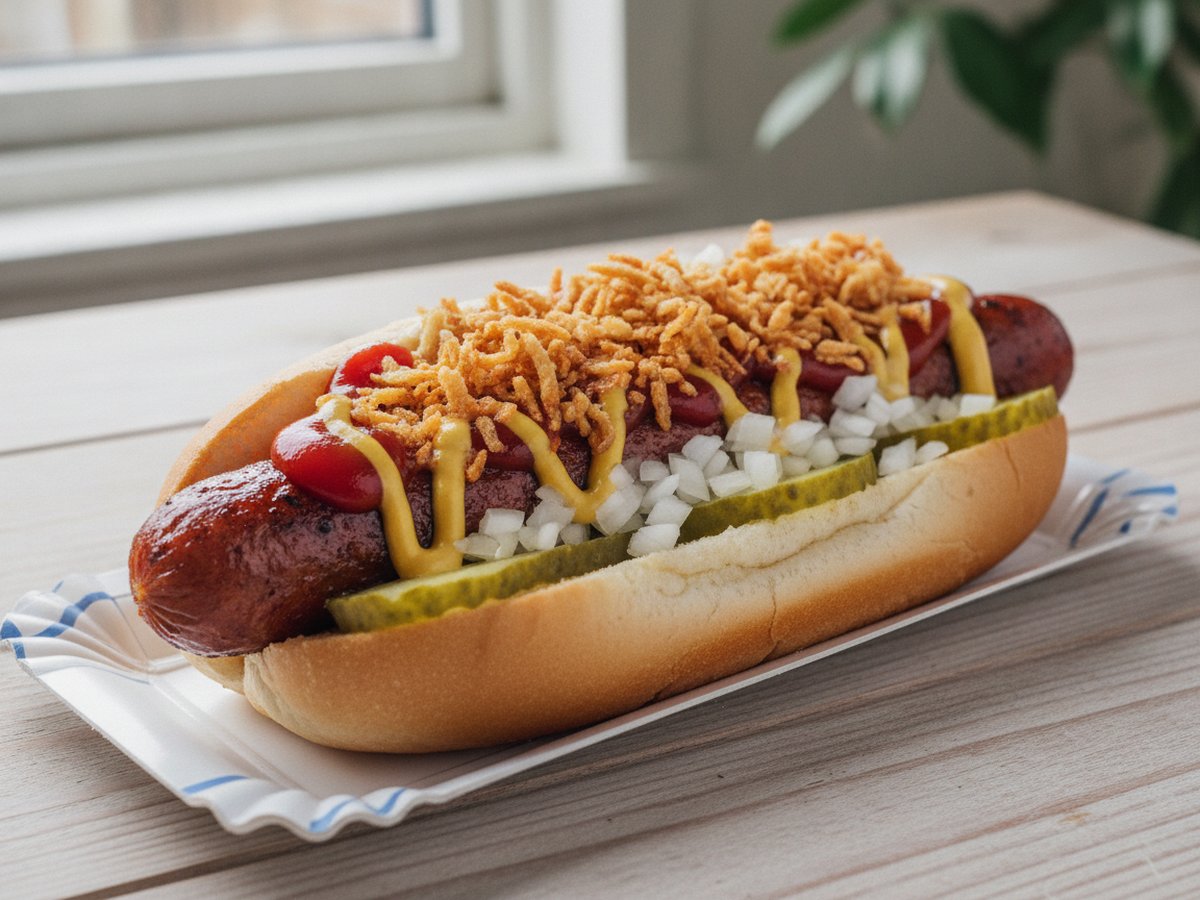
A Danish hot dog, ristet pølse (roughly RISS-tet PUL-seh), is a fried pork sausage in a soft bun, covered in a fixed set of toppings: ketchup, mustard, Danish remoulade, finely chopped raw onion, crispy fried onions and thin slices of pickled cucumber. All six go on every time. That is the difference from the hot dog most readers know, where you pick one or two.
This recipe makes four. The remoulade is made from scratch and takes a few minutes; everything else is bought and assembled. Every number on the card comes from published recipes, named further down, and where they disagree the page says so.
Last updated
Recipe
Danish Hot Dog Recipe (Ristet Pølse)
Ingredients
Hot dogs
Danish remoulade
Method
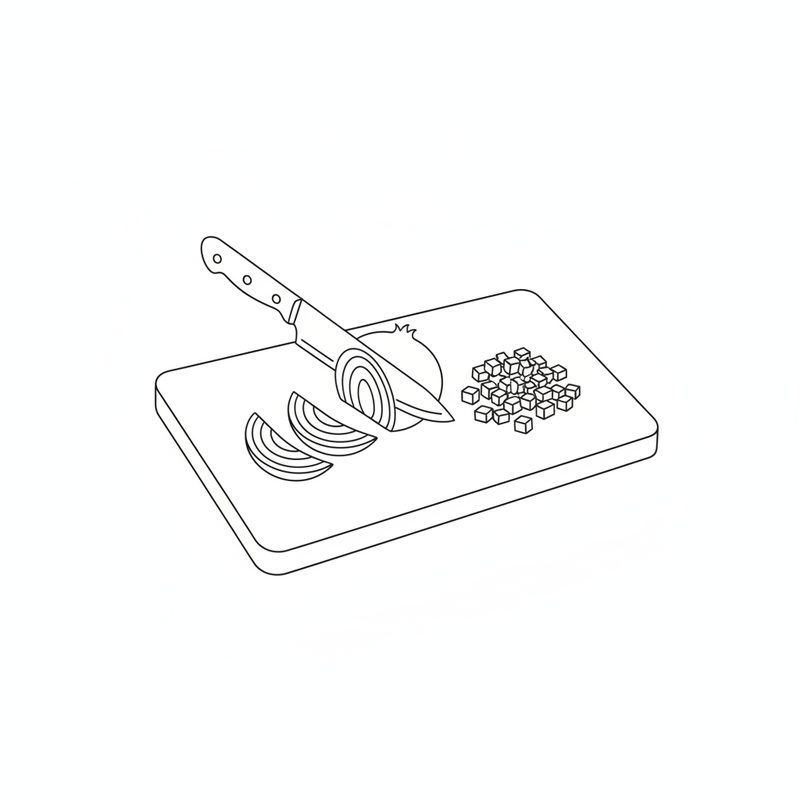
- Chop the onion very finely, almost to a mince, and set it aside in a small bowl.
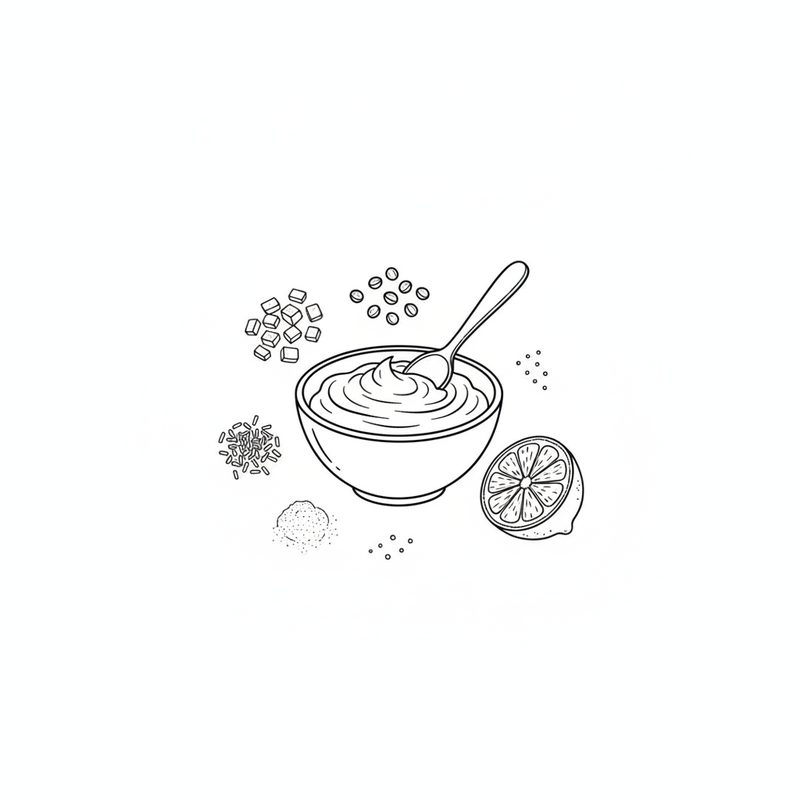
- Make the remoulade: stir together the mayonnaise, chopped pickled cucumber, capers, finely chopped onion, Dijon mustard, lemon juice, curry powder and turmeric, and the parsley if using. Leave it to stand for at least 10 minutes so the colour develops.
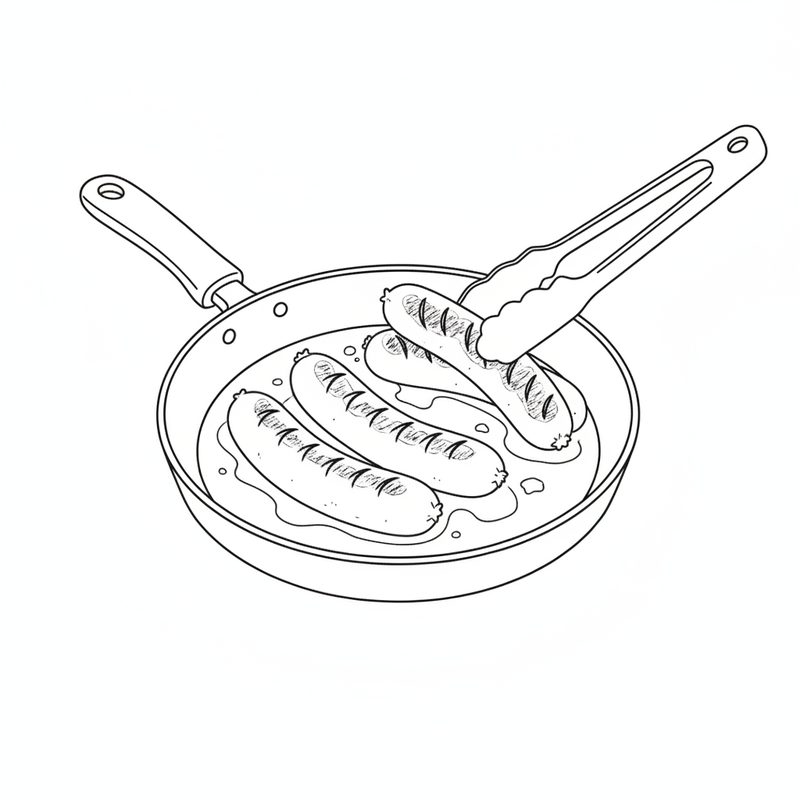
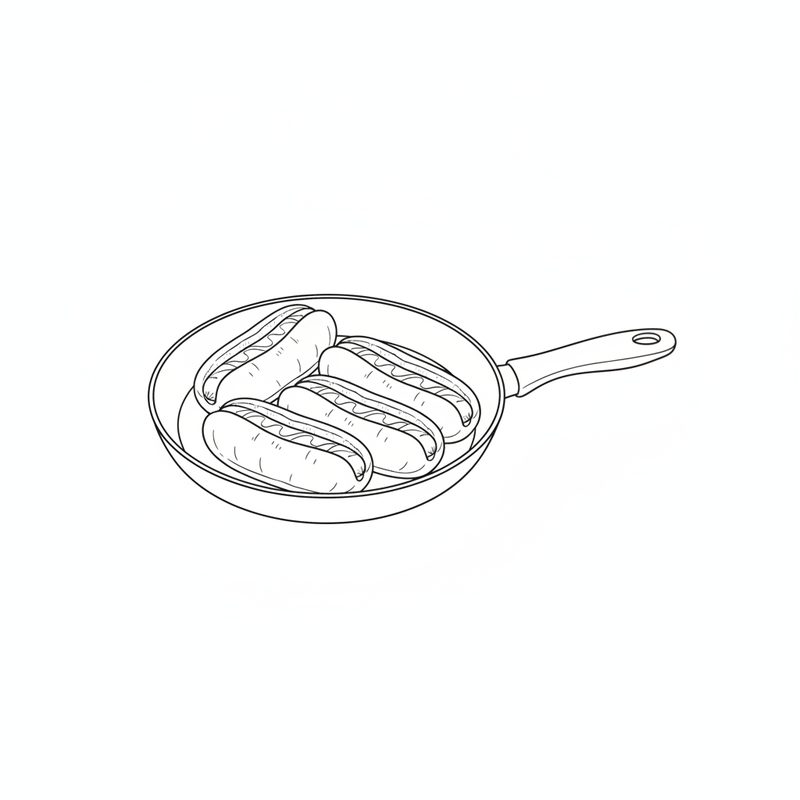
- Heat a little butter or oil in a frying pan over medium heat. Fry the sausages, turning them often, until browned on all sides and heated through, about 8 minutes.
- While the sausages fry, warm the buns, cut side down, in a dry pan or in a low oven, until soft and warm but not crisp.
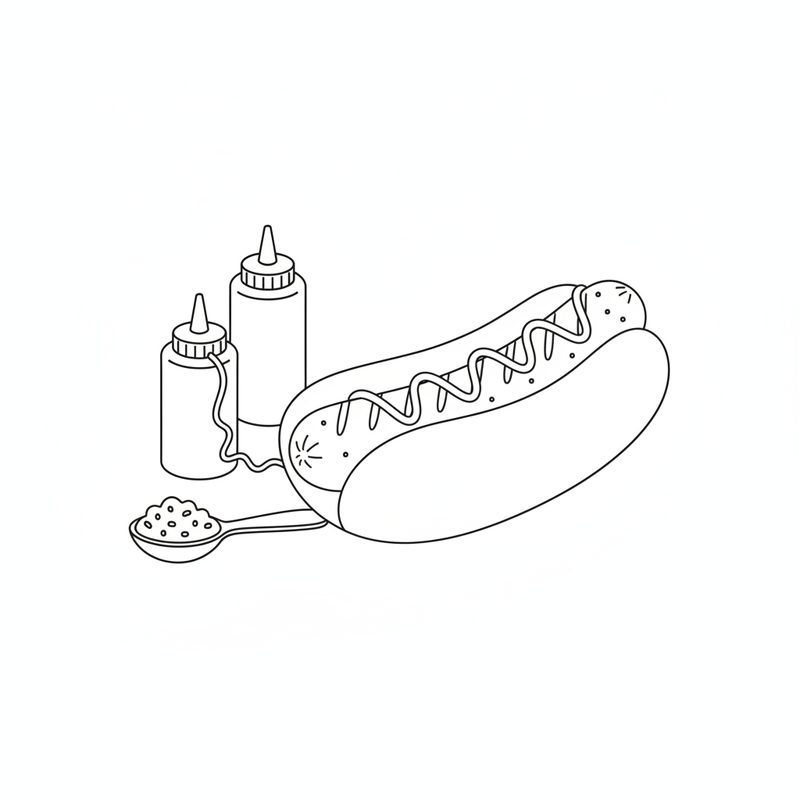
- Put a sausage in each bun. Squeeze a thin line of ketchup, mustard and remoulade along the length of each sausage.
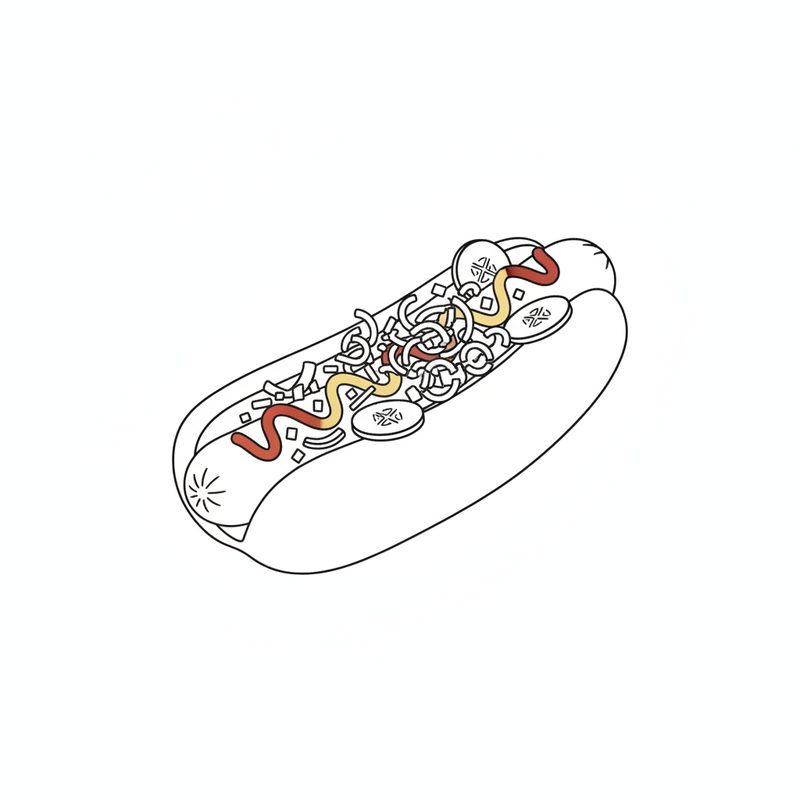
- Scatter the raw onion over, then the crispy fried onions, and lay 3 or 4 slices of pickled cucumber along the top. Eat at once.
What makes a hot dog Danish
The toppings, in quantity and in order. A Danish hot dog carries three sauces and three crunchy things, layered so that each bite has some of all of them. The sausage itself is a fairly ordinary pork sausage; the remoulade, the two kinds of onion and the pickled cucumber are what make it recognisably Danish.
It is street food. In Denmark it is bought from a pølsevogn (PUL-seh-vow-n), a hot dog stand, and eaten standing up. Making it at home means doing the stand’s job: having every topping ready before the sausages go in the pan, because the whole thing should be assembled hot and eaten at once.
Ristet pølse, rød pølse and fransk hotdog
They are three versions of the same order, and the difference is the sausage or the bun. Ristet pølse is a sausage fried until browned and slightly crisp, which is what this recipe makes. Rød pølse is the bright red sausage, boiled rather than fried; Honest Cooking boils it for about 5 minutes instead of frying.
A fransk hotdog is different again: a long, crisp bread roll with a hole pushed into one end, filled with sauce, and the sausage pushed in after it. If the picture you have in mind has onions spilling off the sides, it is the ristet version.
The sausage and the bun
Use a good pork sausage that browns well. In Denmark that is a grillpølse; outside Denmark, Scandinavian shops sell Danish-style sausages, and a good frankfurter or wiener is the nearest common substitute. The Sydney Morning Herald’s version uses extra-long frankfurters so they stick out of the bun at both ends, which is how they are usually served.
The bun should be plain, soft and white. Nothing seeded, nothing brioche-sweet. It only needs warming, not toasting hard, because a crisp bun cracks when it is this loaded.
Danish remoulade for hot dogs
Danish remoulade is a mayonnaise sauce with chopped pickles, capers, onion and curry powder, which gives it its yellow colour and its faint warmth. It is not French rémoulade and it is not tartar sauce, though it sits closer to the second.
In Denmark it is usually bought ready-made. Outside Denmark it is genuinely hard to find, so the card makes it. The recipe makes more than four hot dogs need; the rest is good with fish cakes, cold roast beef or chips. Keep it covered in the fridge and use it within the date on the mayonnaise jar.
Let it stand for at least 10 minutes before using. The Sydney Morning Herald points out that the colour from the turmeric deepens the longer it sits, so if you can make it an hour ahead, do.
Danish hot dog, step by step
 Chop the onion very fine.
- Stir the remoulade and let it stand.
- Fry the sausages until browned all over.
- Warm the buns.
- Sausage in the bun, then the three sauces.
- Raw onion, crispy onion, pickled cucumber.
The order of the toppings
Sauces first, then the wet onion, then the dry crunch, then the pickles on top. Ketchup, mustard and remoulade go in thin lines along the length of the sausage. The raw onion goes on next so it sticks to the sauce. The crispy onions follow, and the pickled cucumber slices are laid along the top last, so they hold everything down.
Two things go wrong. Too much sauce, and the bun goes soft before you finish. Crispy onions added first, and they sit in the sauce and turn chewy. Thin lines and the right order fix both.
Pickled cucumber and crispy onions
The pickled cucumber should be sweet-sour and thinly sliced, not a dill spear. Honest Cooking uses sweet pickles, which is the closest supermarket match. Danish agurkesalat, quick-pickled cucumber in sweetened vinegar, is the same idea made at home and works well here.
Crispy fried onions are called ristede løg in Danish. Elsewhere, the crispy fried onions sold for green bean casserole, or the Asian fried shallots the Sydney Morning Herald uses, do the same job. True North Kitchen uses crispy shallots. Raw onion is not optional; the two kinds of onion are the point.
What to serve with it
Nothing on a plate; it is eaten by hand. Tara’s Multicultural Table serves it with a glass of chocolate milk. If you want more Danish street food from a bakery counter, pølsehorn are sausages baked inside soft dough, and the guide to traditional Danish foods in Copenhagen puts the hot dog in context with the rest.
Making it ahead and storing it
Only the remoulade and the chopped raw onion can be made ahead. Make the remoulade up to a day before and keep it cold; chop the onion an hour or two before and keep it covered. The sausages and buns should be warmed at the last minute, and an assembled hot dog does not keep: the bun soaks through and the crispy onions soften within minutes.
Where the numbers come from
The card is built from four published recipes: Honest Cooking, True North Kitchen, the Sydney Morning Herald and Tara’s Multicultural Table. For the remoulade, the 230 g of mayonnaise, the capers, the chopped pickles, the onion and the lemon juice are where at least two of them agree. Curry powder ranges from a pinch to 1 teaspoon across them; the card uses the middle value, the Herald’s ½ teaspoon. The Dijon mustard is the Herald’s 2 teaspoons, and the turmeric is the Herald’s alone.
The toppings follow Honest Cooking’s one teaspoon of each sauce per hot dog; the Herald’s fried shallots work out at the same teaspoon each. The yield of four is True North Kitchen’s; the others make five, six and ten. The frying time is the median of 5, 8 and 7 to 10 minutes. Prep and total time are left off the card on purpose: the sources give 5 to 20 minutes of prep and 10 to 88 minutes in total, depending on what they make from scratch, and a spread that wide is not a number worth printing.
Like any sausage, it must be hot all the way through. If you use raw, fresh sausages rather than the usual cooked hot dog sausages, cook them until they reach 71°C (160°F) in the centre, the USDA’s safe temperature for ground pork. For more Danish pork, try frikadeller.
Questions people ask
What are Danish red hot dogs?
They are rød pølse, a bright red pork sausage that is boiled rather than fried and served in a bun with the same toppings as the fried version.
What is on a Copenhagen hot dog?
Ketchup, mustard and Danish remoulade, then finely chopped raw onion, crispy fried onions and thin slices of pickled cucumber. All six toppings go on every hot dog.
What is Danish sausage called?
Pølse. A fried one is a ristet pølse, a boiled red one is a rød pølse, and the grilling sausage most stands fry is a grillpølse. A pølsevogn is the stand that sells them.
What are the typical toppings on a Danish hot dog?
Three sauces and three crunchy things: ketchup, mustard and remoulade, plus raw onion, crispy fried onions and sweet pickled cucumber, added in that order.
Can I use store-bought remoulade?
Yes. Danish remoulade is sold ready-made in Denmark and in some Scandinavian shops elsewhere. Do not substitute French rémoulade; it is a different sauce.