Danish remoulade (roughly reh-moo-LAY-the, with a soft d) is a yellow, mayonnaise-based sauce full of finely chopped pickles and vegetables, coloured with turmeric and sharpened with mustard and lemon. It takes about 10 minutes to mix and 30 minutes in the fridge, and it goes on roast beef smørrebrød, hot dogs, fish cakes and fried fish.
If you know remoulade from France or New Orleans, the Danish one is a different sauce. It is bright yellow rather than pale or pink, it is slightly sweet, and it has a fine crunch from cabbage, carrot and gherkin.
Last updated
Recipe
Danish Remoulade
Ingredients
Optional
Method
- Chop the carrot, pointed cabbage, gherkins, red onion and chives very finely, to pieces about the size of a grain of rice. Pat the gherkins and cabbage dry on a clean cloth so the sauce does not turn watery.
- In a bowl, stir the mayonnaise and sour cream together with the mustard, lemon juice, sugar, salt and turmeric until the mixture is an even yellow.
- Fold in the chopped vegetables, and the capers or curry if you are using them. Add a little more turmeric for a deeper yellow, then season with salt and pepper.
- Cover and chill for 30 minutes before serving. The colour deepens and the sauce firms slightly as it sits.
What is Danish remoulade?
Danish remoulade is a cold condiment made from mayonnaise, usually loosened with a little sour cream, skyr or crème fraîche, then filled with finely chopped pickled cucumber and crisp vegetables. Turmeric gives it the yellow colour, and some versions add curry powder as well.
It is a table condiment, not a cooking sauce. In Denmark it is sold ready-made and served the way ketchup is: on hot dogs, beside fries and on open sandwiches.
Danish remoulade vs French and Louisiana remoulade
All three are cold sauces with the same name, but they taste and look different.
| Style | Base | Colour | What goes in |
|---|---|---|---|
| Danish | Mayonnaise, often with sour cream or skyr | Bright yellow | Pickles, cabbage, carrot, onion, mustard, turmeric, sometimes curry and capers |
| French | Mayonnaise | Pale, flecked green | Herbs (parsley, chives, chervil, tarragon), capers, cornichons, sometimes anchovy |
| Louisiana | Mayonnaise or oil | Tan to pink | Creole mustard, a little ketchup, cayenne, paprika |
The French and Louisiana descriptions follow the Wikipedia entry on remoulade, which cites Larousse Gastronomique for the French version. The yellow colour and the chopped vegetables are what make the Danish version Danish.
Danish remoulade ingredients
The card follows the recipe published by Nordic Food Living, an English-language site about Danish food, because it is the closest to the vegetable-heavy remoulade sold in Denmark. Its mustard, lemon juice and turmeric amounts were checked against the other published recipes listed below and match at least one other source each.
- Mayonnaise and sour cream. Mayonnaise carries the sauce. A spoonful of sour cream (about 18% fat) keeps it from tasting greasy. Skyr or plain yogurt does the same job.
- Gherkins. Pickled cucumber is the backbone of every version compared here. Dill pickles work but make the sauce sharper.
- Pointed cabbage. In Danish, spidskål. It can be hard to find outside northern Europe. Nordic Food Living says any crisp cabbage works, and Valdemarsro, a large Danish recipe site, suggests white cabbage or cauliflower.
- Carrot, red onion and chives. Small amounts, for crunch and a little sweetness.
- Turmeric. Mostly for colour. Start with the teaspoon and add more only if you want a stronger yellow; the colour deepens as the sauce rests.
- Mustard, lemon juice and sugar. These set the balance between sour and sweet. Use a strong mustard; Dijon is fine.
This is a small batch, enough for a few sandwiches. Double everything for a crowd.
How to make Danish remoulade, step by step
There is no cooking. Everything is chopped, stirred and chilled.
 Chop the vegetables very finely and pat them dry.
- Stir the mayonnaise base with mustard, lemon, sugar, salt and turmeric.
- Fold in the vegetables and adjust the colour and seasoning.
- Cover and chill for 30 minutes.
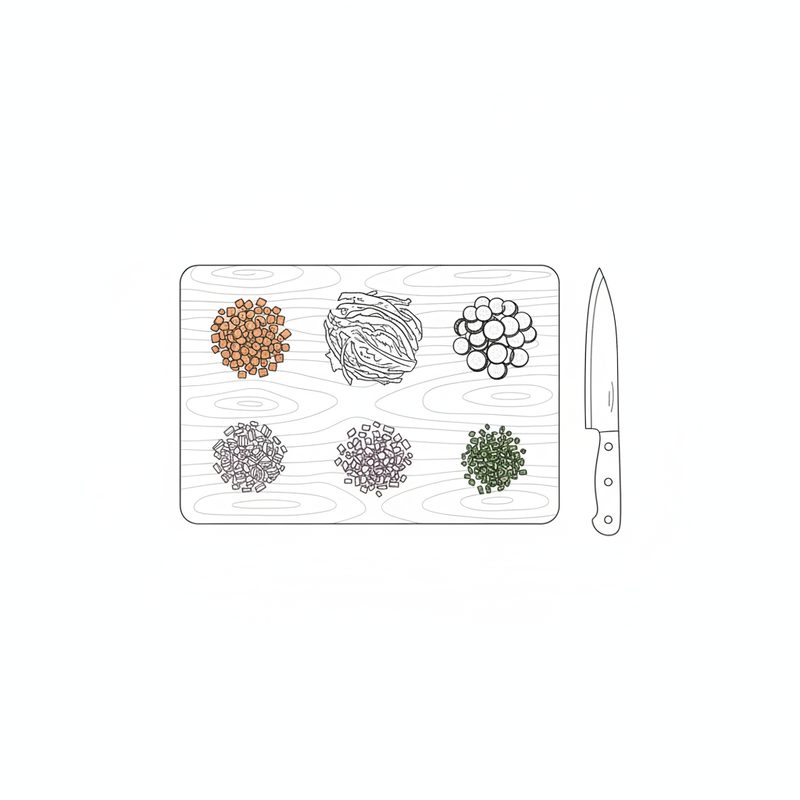
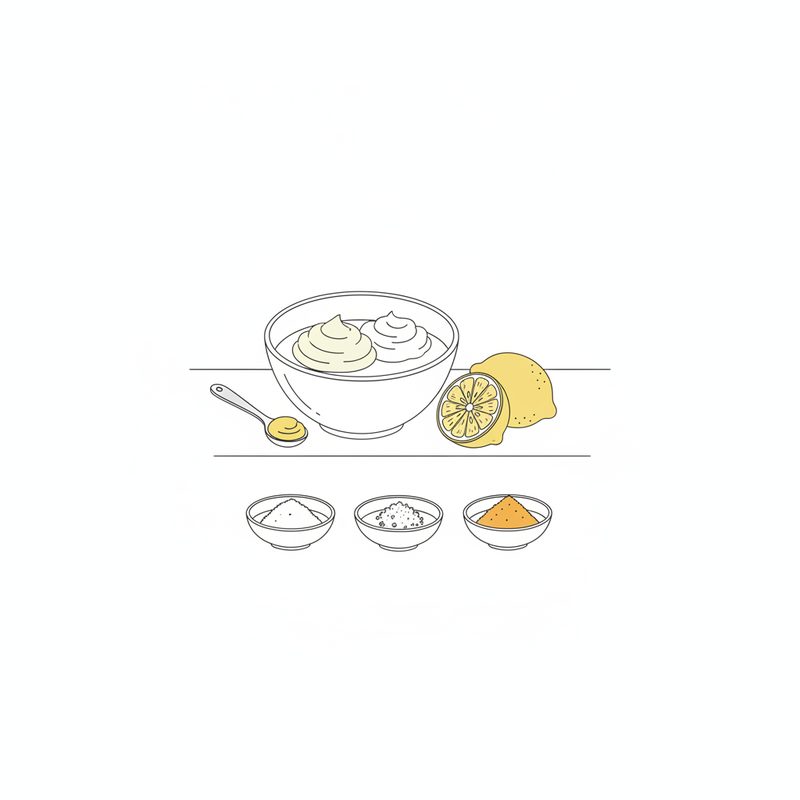
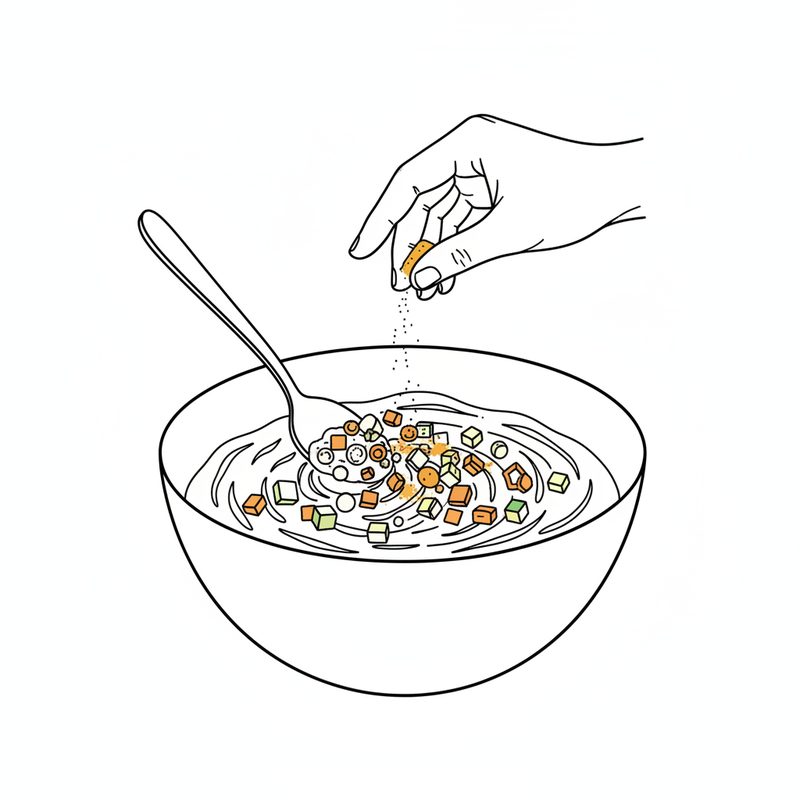
The chopping matters more than anything else. Pieces that are too large make a salad in mayonnaise, not a sauce. A food processor is fine if you pulse it and stop before the vegetables turn to paste.
Where the numbers come from
Five independent published recipes were compared. They make batches of very different sizes, from about four tablespoons of mayonnaise to more than three decilitres of base, so the card uses one recipe whole rather than mixing amounts from several.
- Mustard, 1 tsp: Nordic Food Living, True North Kitchen and More Than Meatballs all use 1 tsp. Skandi Baking uses 1.5 tsp.
- Lemon juice, 1 tbsp: Nordic Food Living and More Than Meatballs agree. Skandi Baking uses a squeeze.
- Turmeric, 1 tsp: Nordic Food Living and Valdemarsro agree. More Than Meatballs uses half that.
- Sugar, 1/2 tsp: from Nordic Food Living. Valdemarsro and Skandi Baking use 1 tsp, but for larger batches.
- Gherkins, 1 tbsp: from Nordic Food Living. True North Kitchen and More Than Meatballs use 2 tbsp in a base two to three times bigger.
- Capers, 1 tbsp (optional): True North Kitchen’s amount. Nordic Food Living lists capers only as an optional addition.
- 10 minutes to prepare, 30 minutes to chill: the median of the published times. Nordic Food Living, True North Kitchen and More Than Meatballs each give 10 minutes of work, Skandi Baking 20. Chilling times run from 30 minutes to an hour.
The card gives no yield and no nutrition figures, because the source recipe states neither.
What goes wrong, and what it looks like
Watery sauce. Wet gherkins and cabbage release liquid as they sit, and the remoulade turns thin and separates at the edge of the bowl. Skandi Baking squeezes the vegetables before mixing; patting them dry on a cloth does the same.
Dull or greenish colour. Too little turmeric, or a lot of green herbs. Add turmeric a pinch at a time and give it the full 30 minutes before you judge it.
Too sharp. Dill pickles and plenty of lemon push it towards tartar sauce. A little more sugar brings it back towards the Danish balance.
What to serve with Danish remoulade
Remoulade goes with fried, roasted and cold food.
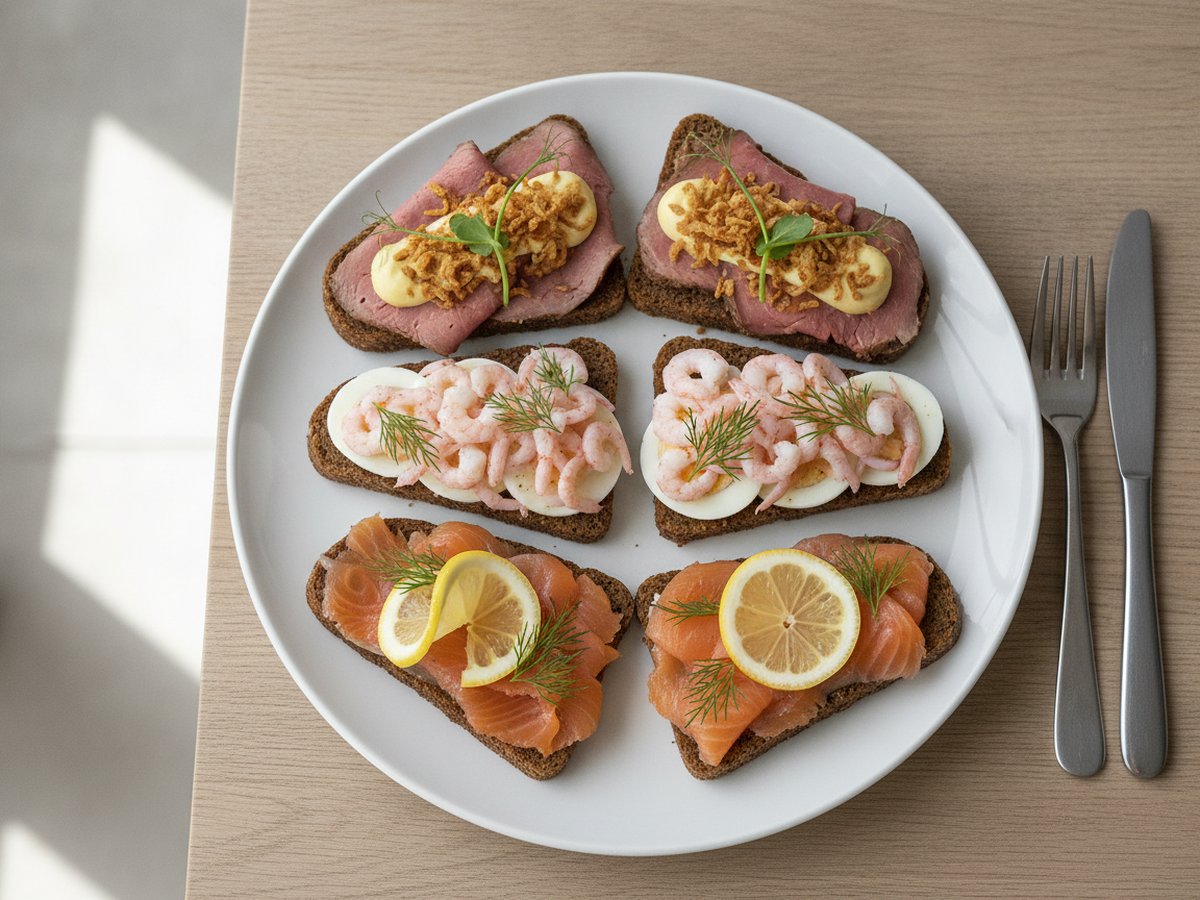
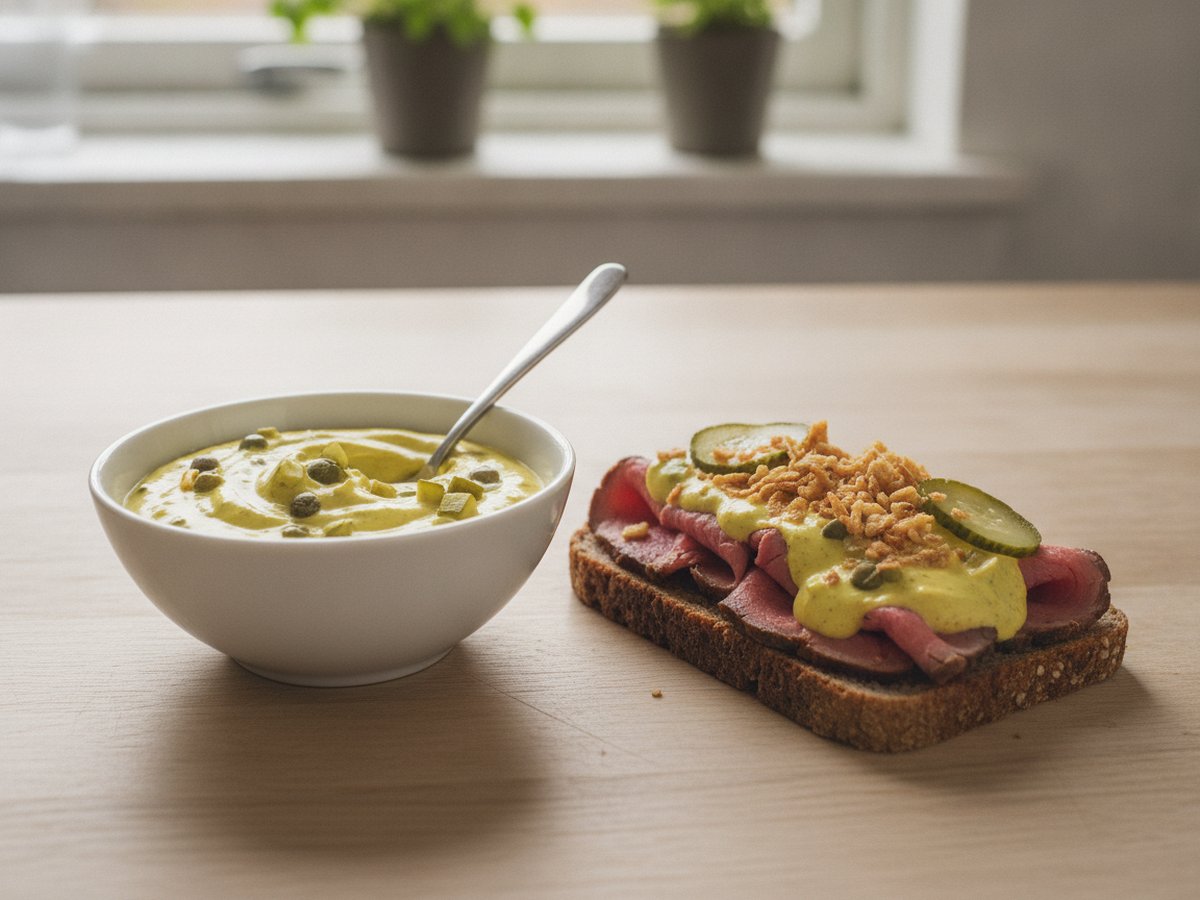
- Roast beef smørrebrød: thin roast beef on Danish rye bread, a thick line of remoulade, crispy fried onions and a few slices of pickle. See the smørrebrød guide for how open sandwiches are built.
- Hot dogs: remoulade, ketchup, mustard, raw and fried onions and sliced pickles are the standard set on a Danish hot dog.
- Fish: fiskefrikadeller (fish cakes), breaded plaice and pan-fried fish on rye.
- Chips: as a dip, beside or instead of ketchup.
For more of what Danes eat alongside it, see traditional Danish foods to try in Copenhagen.
Variations
- Curry: a pinch of mild curry powder adds warmth without heat. True North Kitchen uses a full teaspoon in a larger batch.
- Apple: Skandi Baking and Valdemarsro both grate in a little apple for sweetness.
- Crème fraîche base: Valdemarsro reverses the usual balance and uses mostly crème fraîche with a little mayonnaise, which gives a lighter, tangier sauce.
- Quick-pickled vegetables: Valdemarsro also suggests steeping the cabbage, carrot and apple in a little cider vinegar for 30 to 60 minutes, then draining them before mixing.
- Herbs: parsley or dill instead of chives, or a little tarragon.
How long does homemade remoulade keep?
Keep it covered in the fridge. True North Kitchen says up to 2 days in an airtight container; Skandi Baking says to use it within 3 to 4 days. Two days is the cautious figure, and it is the one to follow if your mayonnaise is homemade.
Questions people ask
What is remoulade sauce made of?
Danish remoulade is made of mayonnaise, often with a little sour cream or skyr, mixed with finely chopped pickles and vegetables such as cabbage, carrot and onion, plus mustard, lemon juice, sugar and turmeric for its yellow colour.
Is remoulade the same as Thousand Island dressing?
No. Thousand Island is a pink dressing coloured with ketchup or chili sauce. Danish remoulade has no tomato in it; it is yellow from turmeric and gets its texture from chopped pickles and vegetables.
Is remoulade the same as tartar sauce?
They are close relatives. Both are mayonnaise with chopped pickles, but Danish remoulade is yellow, slightly sweet and often contains cabbage and curry, while tartar sauce is pale and sharper.
Is Danish remoulade spicy?
No. Turmeric is there mainly for colour, and any curry powder is used in small amounts for warmth rather than heat.
Where can you buy Danish remoulade outside Denmark?
Jarred Danish remoulade is sold by Scandinavian specialty grocers and online. It takes about 10 minutes to make at home from ingredients most supermarkets carry.