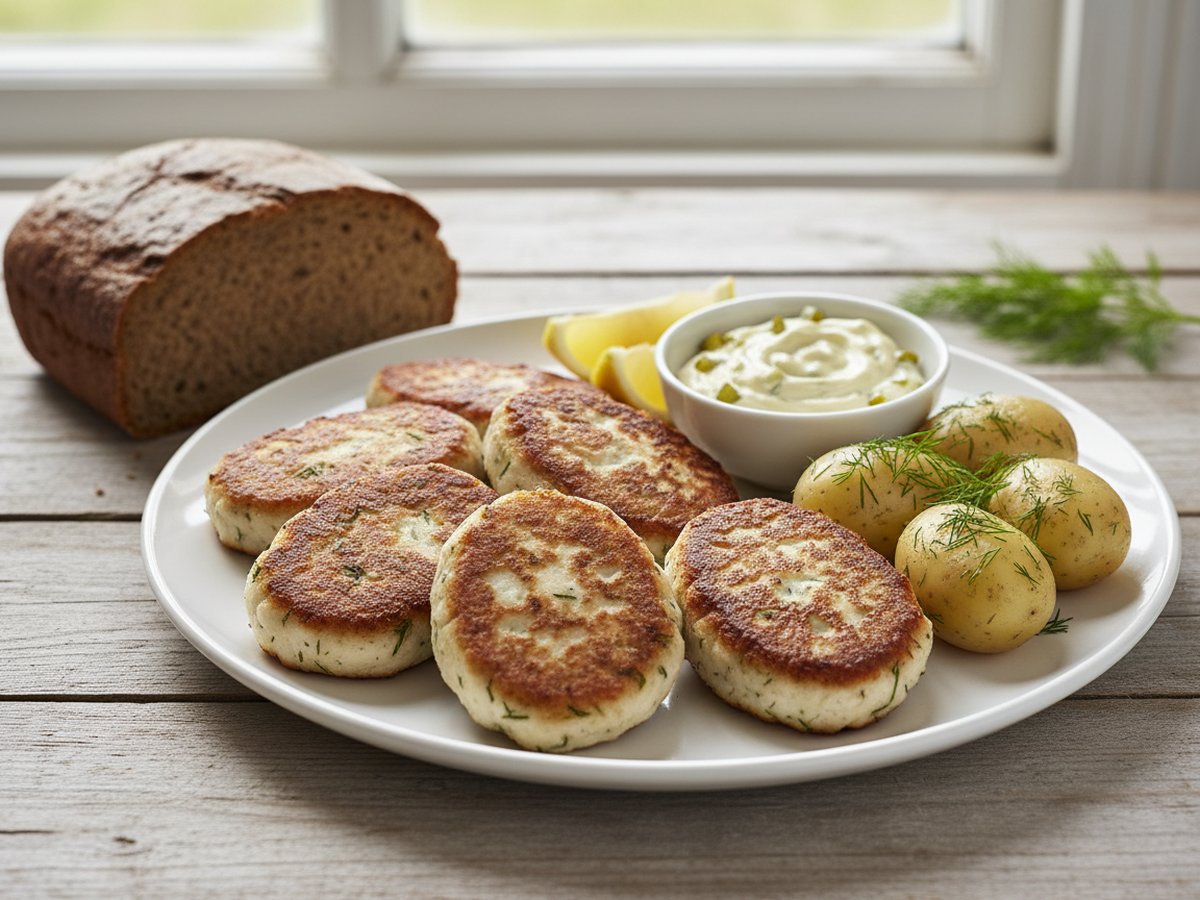
Fiskefrikadeller (roughly FEES-keh-free-ka-DEL-ler) are Danish fish cakes: 500 g of white fish blended with two eggs, a little cream, flour, onion, dill and lemon zest, spooned into ovals and fried in butter for 4 to 5 minutes a side. They are served warm with remoulade and lemon, or cold on rye bread.
What makes the Danish version different is what it leaves out. None of the four versions compared here uses mashed potato or a breadcrumb coating. The mixture is soft, closer to a thick batter than a dough, and it is shaped with a spoon straight into the pan, the same way frikadeller are.
Last updated
Recipe
Fiskefrikadeller (Danish Fish Cakes)
Ingredients
Method
- If the fish is frozen, thaw it in the fridge overnight. Pat the fillets dry, check them for bones and cut them into chunks.
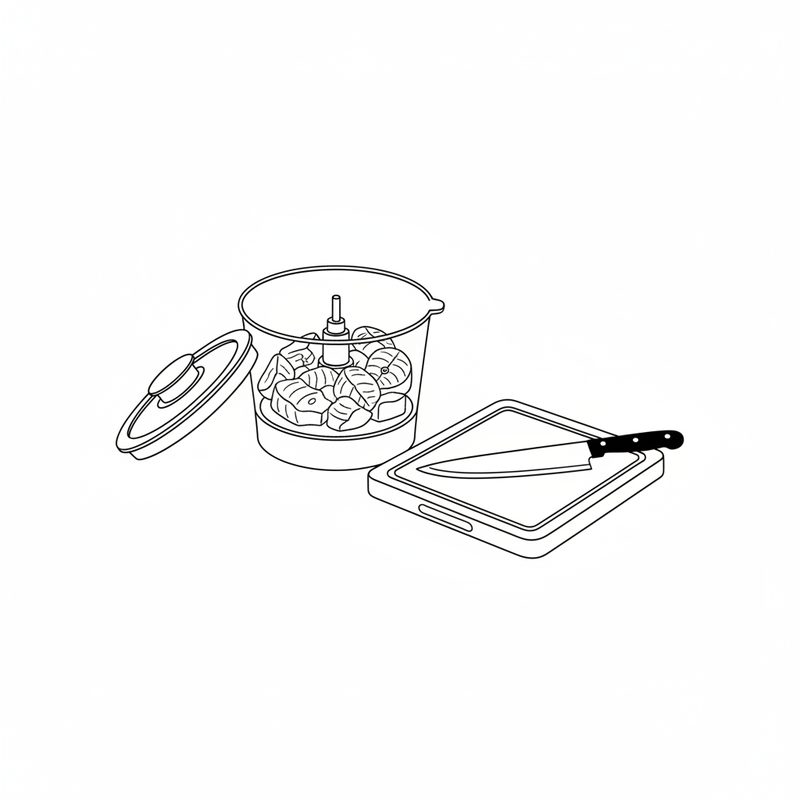
- Put the fish and the salt in a food processor and pulse in short bursts to a coarse, sticky paste. Do not run it to a smooth purée. Without a processor, chop the fish very finely with a sharp knife.
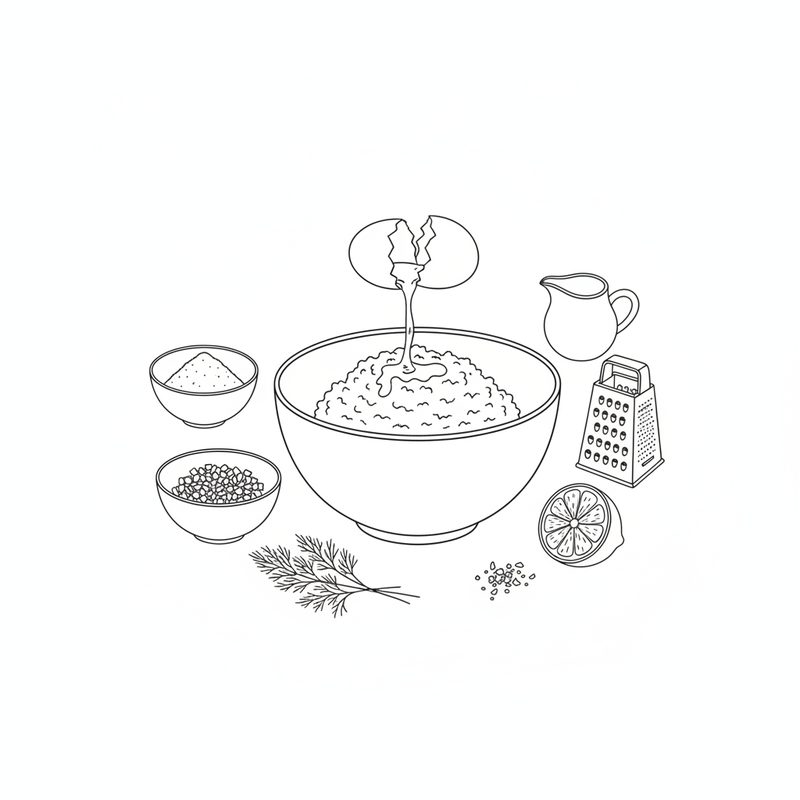
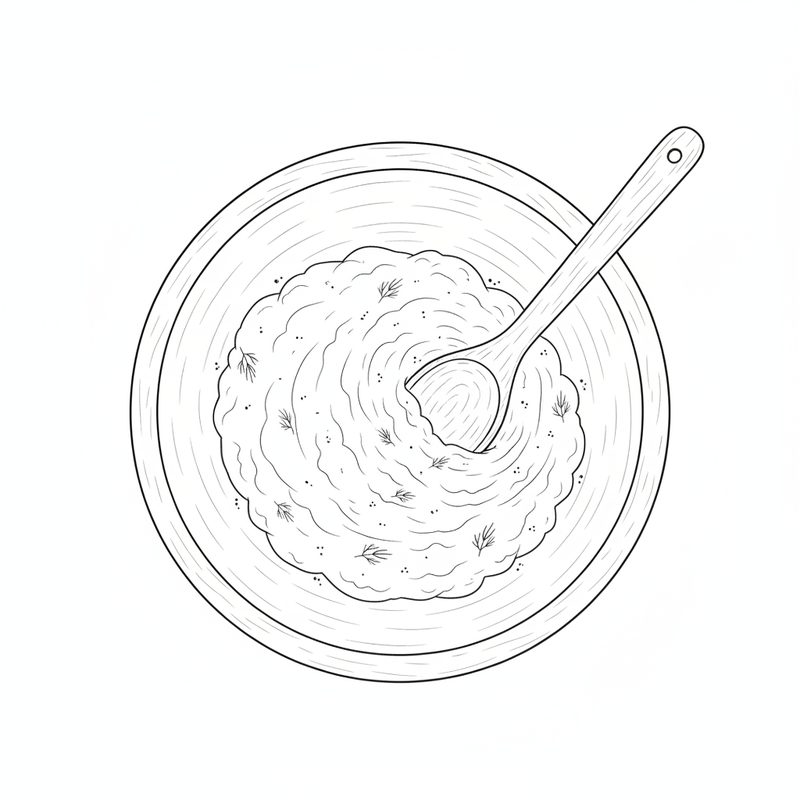
- Tip the fish into a bowl. Add the eggs, cream, 3 tbsp of the flour, the onion, dill, lemon zest and pepper, and stir until evenly mixed. The mixture should be soft and thick and hold its shape on a spoon.
- If it is too loose to hold a shape, stir in the remaining flour, or cover the bowl and chill it for 20 to 30 minutes.
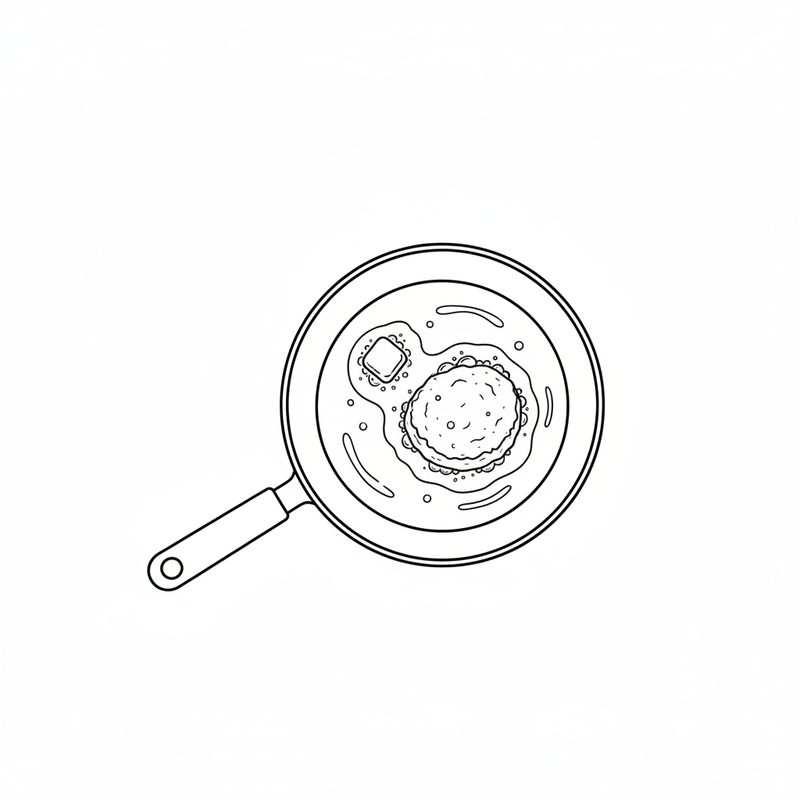
- Heat the butter and oil in a large frying pan over medium heat until the butter foams. Fry one teaspoon of mixture as a test, taste it, and add more salt to the bowl if needed.
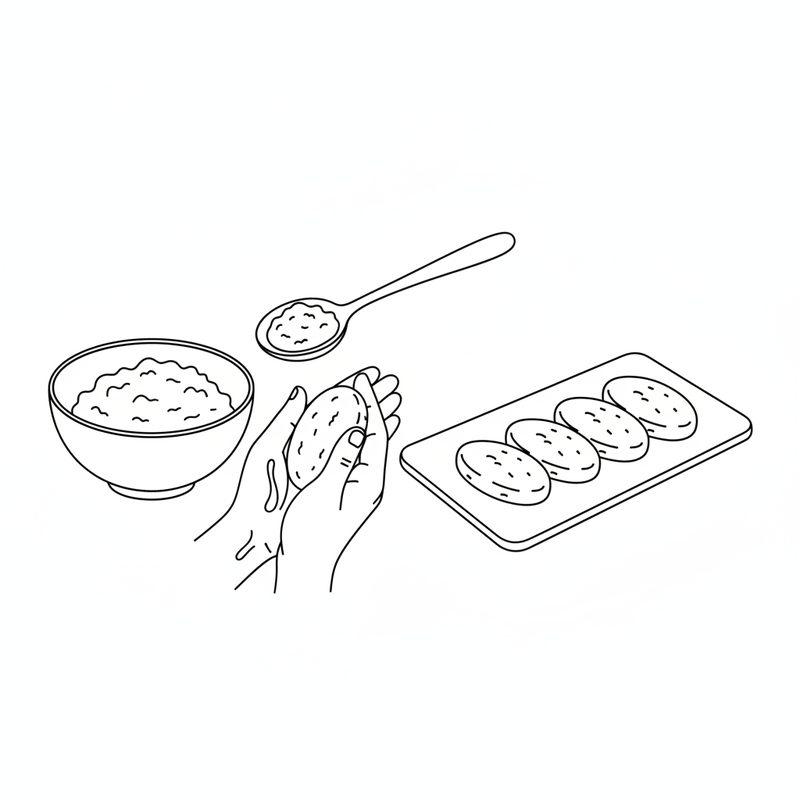
- Dip a tablespoon in cold water, scoop a heaped spoonful of the mixture and smooth it into an oval about 2 cm thick with a wet hand. Put it straight into the pan. Repeat without crowding the pan.
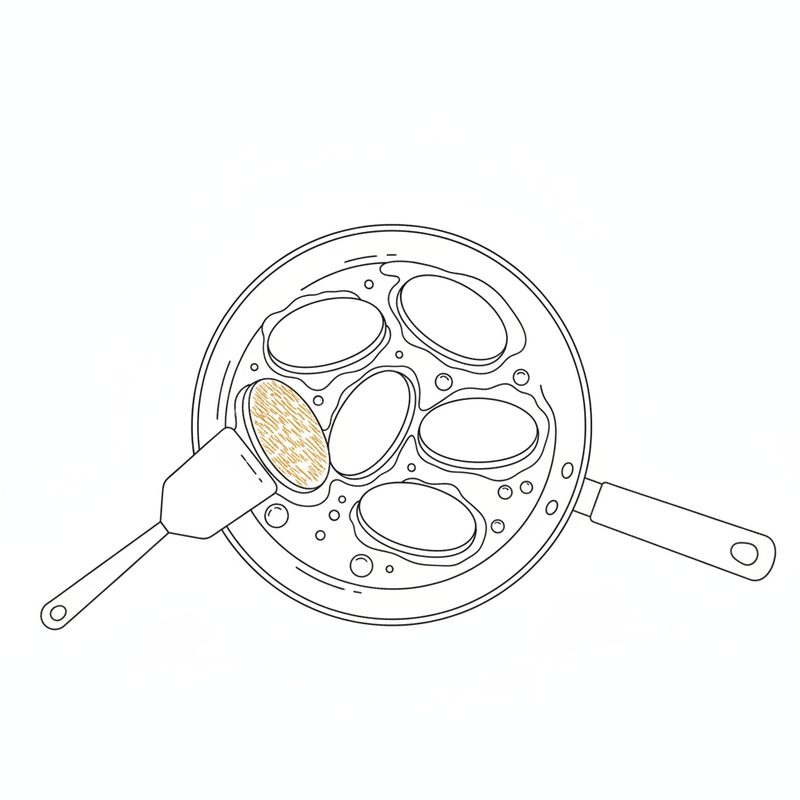
- Fry for 4 to 5 minutes, until deep golden underneath, then turn once and fry 4 to 5 minutes more. The cakes are done when the centre is opaque and reads 63°C (145°F).
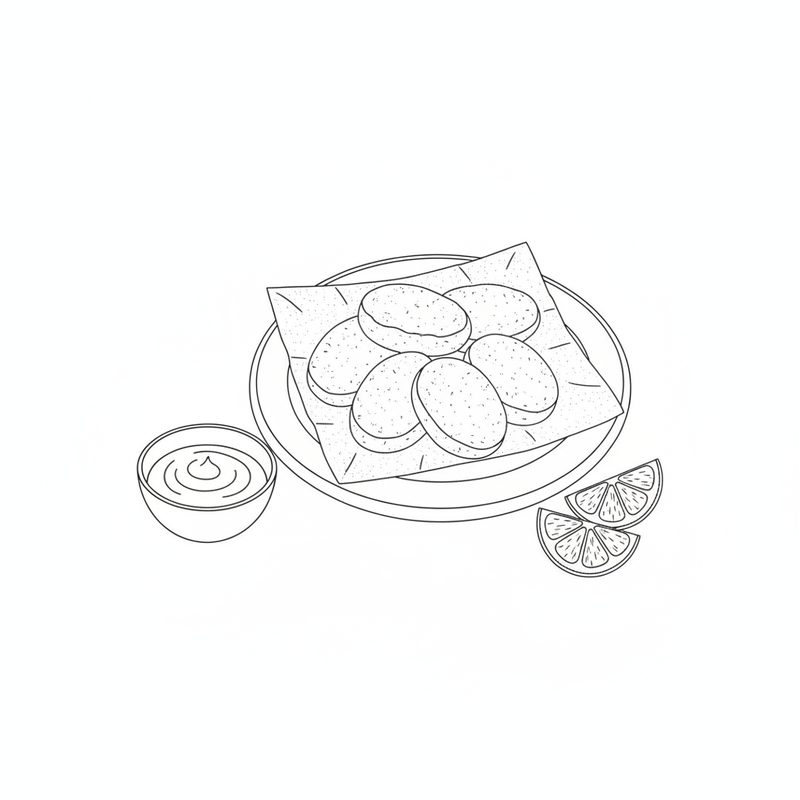
- Drain on a paper-lined plate and keep warm while you fry the rest, adding a little more butter between batches. Serve with remoulade and lemon wedges.
What are fiskefrikadeller?
Fiskefrikadeller are pan-fried patties of minced white fish, bound with egg, cream or milk and flour. The name is simply “fish frikadeller”: the method is the one used for the pork meatballs of the same name, applied to cod or pollock.
Four published versions were compared for this recipe: The Nordic Dish, the Danish cookbook author Trine Hahnemann, BBC Food and Skandibaking. All four use lean white fish, egg, onion and dill or parsley, and all four fry the cakes in a pan. Three of the four bind the fish with cream or milk and flour. The quantities on the card below are the ones at least two of those sources agree on, scaled to 500 g of fish.
Madguru, a Danish food site, calls them an everyday classic. They are eaten hot with potatoes, or cold on buttered rye bread.
Which fish to use
Use a lean, firm white fish: cod, pollock (saithe) or haddock. The sources split between cod (BBC Food, Skandibaking) and pollock (Hahnemann), and The Nordic Dish accepts any of the three.
The fillets should be skinless and boneless. Run a finger along each one before it goes into the processor; a pin bone that survives into a soft fish cake is easy to miss when eating.
Frozen fish is fine. Skandibaking thaws it in the fridge overnight, or in a bowl of cold water for a few hours. Pat it properly dry afterwards, because thawed fish carries more water, and water is what makes the mixture too loose to shape.
Knife or food processor
A food processor is the quick way, and it is what The Nordic Dish, BBC Food and Skandibaking use. Pulse the fish in short bursts rather than running the machine. You want a coarse, sticky paste with small pieces still visible, not a smooth purée. The coarse texture is what gives the cakes some bite.
Without a processor, chop the fish very finely with a sharp knife, which is Hahnemann’s first suggestion. It gives a slightly looser, flakier cake.
Getting the mixture right
The finished mixture should be soft and thick: it holds its shape on a spoon and slumps only slightly. It will feel wetter than a meatball mixture. That is correct, and it is why the cakes stay tender.
If it runs off the spoon, add flour a tablespoon at a time, or cover the bowl and chill it for 20 to 30 minutes. The Nordic Dish chills every batch for that reason; the cold firms the cream and the fish so the cakes hold together in the pan.
Flour is the one quantity the sources do not settle on a single number. The Nordic Dish uses 3 tablespoons per 500 g of fish and Hahnemann the equivalent of about 4, so the card gives 3 to 4 tablespoons (20 to 30 g). BBC Food uses roughly twice that, which gives a firmer, breadier cake. Start with 3 and add the fourth only if the mixture needs it.
Season with the test cake, not by tasting raw fish. Skandibaking fries one small spoonful first; do the same, taste it, and add salt to the bowl before shaping the rest.
How to fry fiskefrikadeller
Fry them in butter with a spoonful of oil over medium heat, for 4 to 5 minutes on each side. That is the time The Nordic Dish and BBC Food both give. The oil stops the butter burning before the cakes are cooked through.
The butter should be foaming when the first cake goes in. A pan that is too cool lets the cakes stick and spread; a pan that is too hot browns the outside while the middle is still raw. Leave each cake alone until the underside is deep golden and it releases from the pan, then turn it once.
Cook the fish through. The centre should be opaque and flake when pressed, and the US FDA gives 63°C (145°F) as the safe internal temperature for fish. Hahnemann makes larger cakes, fries them 7 to 8 minutes a side and finishes them for 10 minutes in a 180°C (355°F) oven; if yours are thicker than about 2 cm, that is the way to do it.
Fry in batches without crowding the pan, and keep the finished cakes warm on a paper-lined plate in a low oven.
Fiskefrikadeller step by step, in pictures
The drawings follow the card: process the fish, mix, test, shape, fry and drain.
 Cut the fish into chunks and pulse it to a coarse paste.
- Add the eggs, cream, flour, onion, dill and lemon zest.
- Stir until the mixture is thick, soft and holds together.
- Fry one small test cake and taste it for salt.
- Shape ovals with a wet spoon and a wet hand.
- Fry 4 to 5 minutes, turn once, and fry the other side.
- Drain on paper and serve with remoulade and lemon.
What to serve with fiskefrikadeller
Serve them with Danish remoulade and lemon wedges. Three of the four sources compared here serve them with remoulade, the mayonnaise-based sauce with chopped pickles and a little curry.
For a hot dinner, add boiled new potatoes with butter and dill. Hahnemann serves hers with potatoes, a herb dressing and a sweet-sour cucumber salad, which is a good choice when the cakes are the whole meal.
Cold, they belong on rye bread. A slice of buttered rugbrød with a fish cake, a spoonful of remoulade and a slice of lemon is smørrebrød in its simplest form.
Variations
- Capers. BBC Food stirs a tablespoon of chopped capers into the mixture with the dill.
- Breadcrumbs instead of flour. Skandibaking uses panko, one egg and no cream, which gives a firmer, drier cake. The Nordic Dish also allows breadcrumbs or potato starch in place of the flour.
- Parsley instead of dill. The Nordic Dish and Skandibaking both use parsley, alone or with the dill.
- Milk instead of cream. Whole milk works in the same quantity; the cakes are slightly less rich.
- Spring onion. Hahnemann uses two spring onions in place of ordinary onion.
Storing, freezing and reheating
Keep cooked fiskefrikadeller in a covered container in the fridge and eat them within 3 to 4 days, the limit FoodSafety.gov gives for cooked fish. They are good cold, so there is no need to reheat them for lunch.
To freeze, cool the cooked cakes, freeze them in a single layer on a tray, then pack them into a bag. FoodSafety.gov gives 4 to 6 months for cooked fish in the freezer. Thaw them in the fridge.
To reheat, warm them in a frying pan with a little butter or in a 180°C (355°F) oven until hot in the middle. USDA guidance is to reheat leftovers to 74°C (165°F).
Do not leave the raw mixture standing. Mix it, chill it if needed, and fry it the same day.
Questions people ask
What fish is best for fiskefrikadeller?
Lean white fish: cod, pollock (saithe) or haddock. The sources compared for this recipe use cod or pollock, and either works. Use skinless, boneless fillets, fresh or thawed and patted dry.
Why do my fish cakes fall apart?
The mixture is too wet, the pan is too cool, or the cakes were turned too early. Add a tablespoon of flour, chill the mixture for 20 to 30 minutes, heat the butter until it foams, and turn each cake only once the underside is golden and releases.
What is the difference between frikadeller and fiskefrikadeller?
Frikadeller are Danish meatballs, usually made with pork. Fiskefrikadeller use the same spoon-shaped, pan-fried method with white fish, cream and dill instead of meat.
Can you freeze fiskefrikadeller?
Yes, once they are cooked. Freeze them on a tray, then bag them; FoodSafety.gov gives 4 to 6 months for cooked fish. Reheat until hot through, to 74°C (165°F).
Do you eat fiskefrikadeller hot or cold?
Both. Hot for dinner with potatoes and remoulade, and cold on buttered rye bread as an open sandwich.
Can I make fiskefrikadeller without cream?
Yes. Use the same amount of whole milk, as The Nordic Dish allows, or follow Skandibaking and bind the fish with one egg and panko breadcrumbs instead.