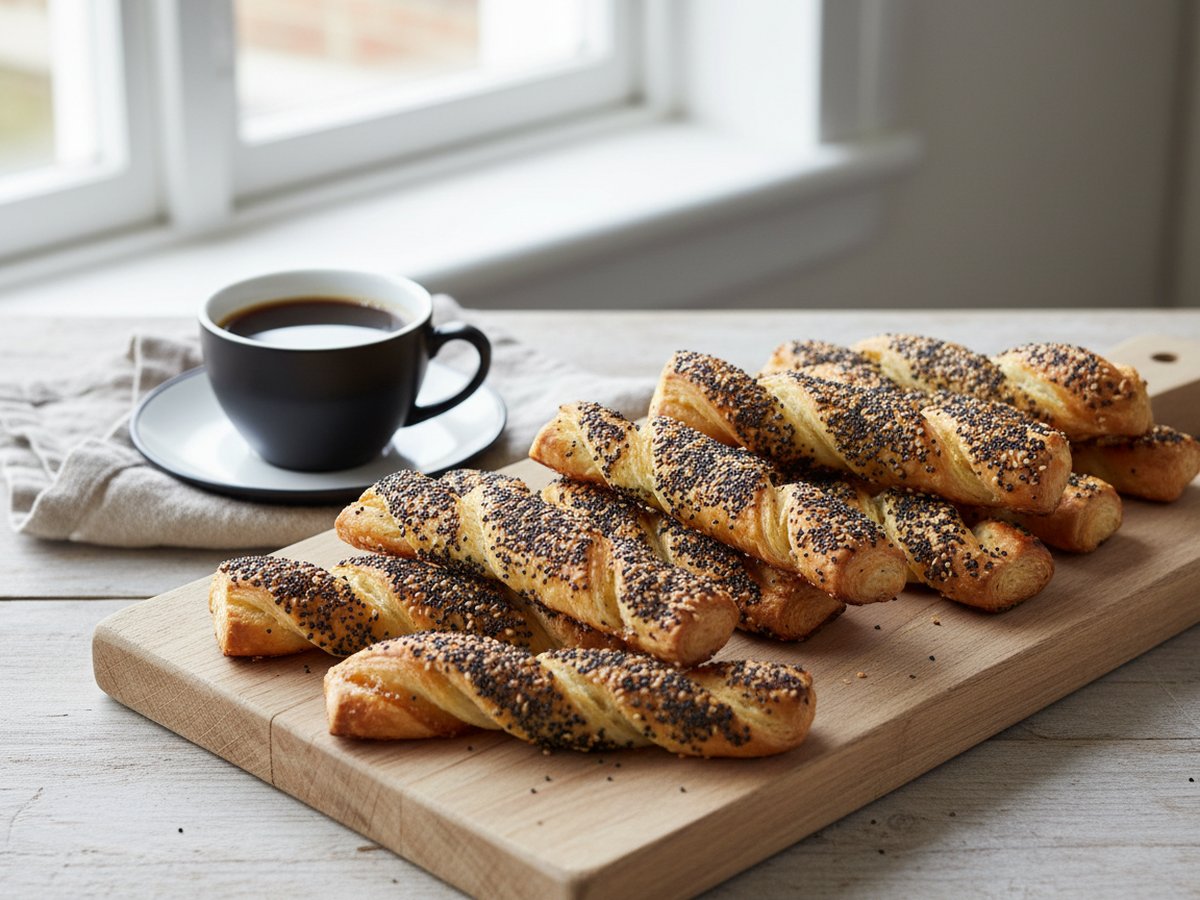
Frøsnapper (roughly FRUH-snap-per) are Danish pastry twists: laminated wienerbrød dough folded over a thin layer of butter and sugar, covered in poppy and sesame seeds, cut into strips and twisted before baking. This recipe makes 12 and bakes in about 20 minutes at 190°C (375°F); most of the time goes into the dough.
If you know tebirkes, you know most of this already. Frøsnapper use the same dough and the same kind of filling, but the dough is folded once instead of in three, the seeds are a mix of poppy and sesame, and the twist exposes more edge, so they bake crisper.
Last updated
Recipe
Frøsnapper (Danish Seeded Pastry Twists)
Ingredients
Dough (Skandibaking's same-day wienerbrød)
Remonce (filling)
Topping
Method
- Stir the yeast into the warm water with 1 tbsp of the dough sugar and leave for 5 to 10 minutes until frothy. Mix in the rest of the sugar, the eggs and the salt, then the flour. Knead for about 5 minutes into a soft, slightly sticky ball. Cover and leave at room temperature for about 1 hour.
- Press and roll the cold butter between two sheets of baking paper into a square about 15 cm (6 inches) across. Roll the dough into a square about 20 cm (8 inches) across, set the butter on it diagonally and fold the corners over to enclose it. Roll into a rectangle at least 40 cm (16 inches) long, fold in three like a letter, wrap and chill for 15 to 20 minutes. Turn the dough 90 degrees and repeat twice more, chilling after each fold.
- Beat the 75 g soft butter, 50 g sugar and the vanilla into a smooth paste. Roll the dough out 3 to 6 mm thick and trim it into an even rectangle. Spread the remonce over one half, leaving a clear border at the edges.
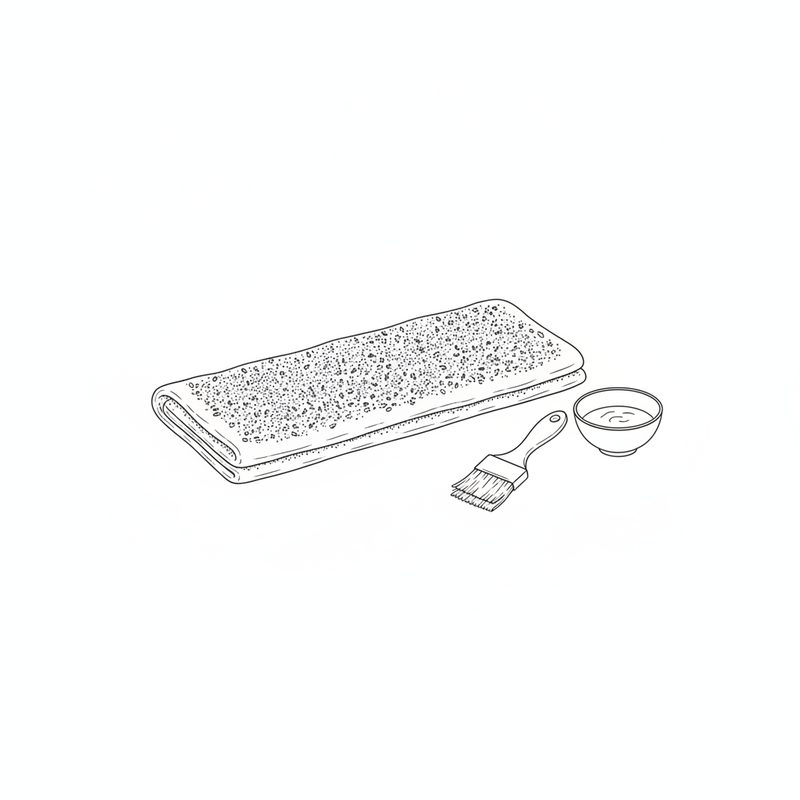
- Fold the bare half over the filling and press the edges together. Brush the top with beaten egg and cover it completely with a mix of poppy and sesame seeds, pressing them in lightly. Keep the rest of the egg.
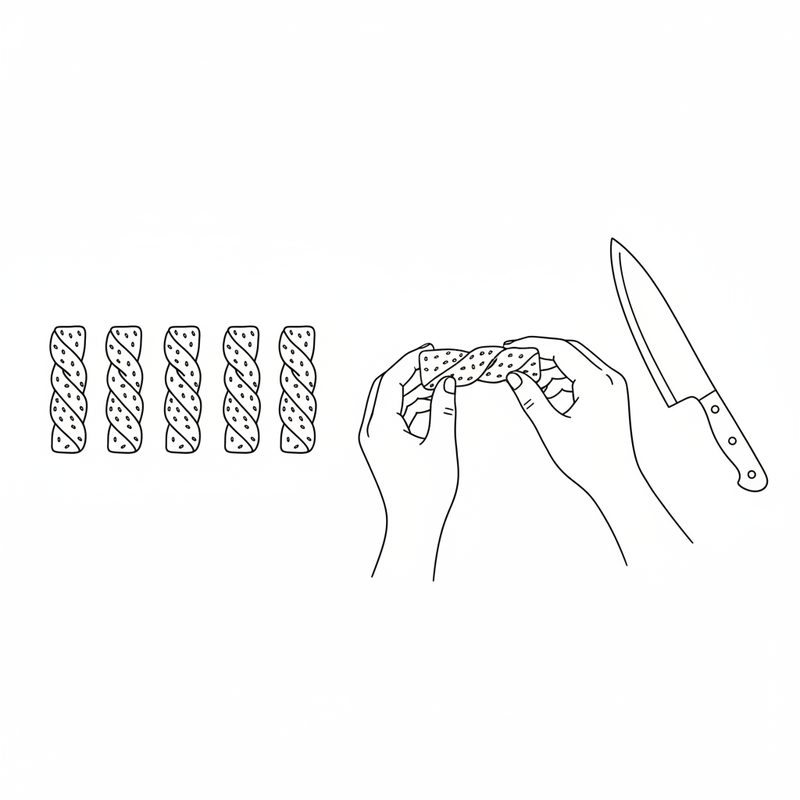
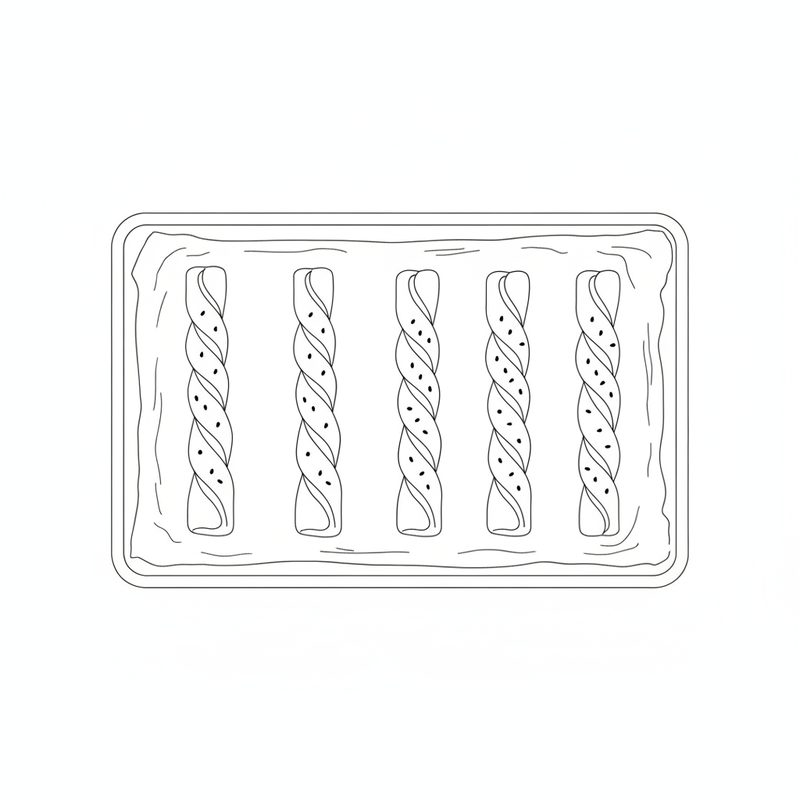
- Cut into 12 strips. Twist each strip 1 to 1½ turns and lay them on two baking trays lined with baking paper, 6 on each. Cover loosely and leave to rise until about doubled, light and wobbly when the tray is nudged; allow 1 to 2 hours. Heat the oven to 190°C (375°F) towards the end.
- Brush the bare dough exposed by the twists with the remaining egg. Bake for about 20 minutes, one tray at a time on the middle shelf, until deep golden and crisp. Cool on a wire rack.
What is frøsnapper?
Frøsnapper is a flat, twisted strip of Danish pastry with a butter-and-sugar filling and a crust of poppy and sesame seeds. It is made from wienerbrød, the laminated yeast dough behind most Danish bakery pastries, and it is eaten with coffee in the morning or the afternoon.
Baked, the outside is crisp and dark with seeds, the layers inside are soft, and the filling shows as a sticky, caramelised line along the twisted seam. There is no icing and no custard. Nordic Food Living describes it as a standard item in Danish bakeries.
It belongs to a small family made from the same dough: tebirkes, spandauer and the Danish kringle all start where this recipe starts. If you have made one of them, the only new part here is the shaping.
What does frøsnapper mean?
Nobody agrees. Frø is Danish for seed, and it is also Danish for frog, so a literal reading gives either “seed snapper” or “frog snapper”. Nordic Food Living translates it as frog snapper and says plainly that the origin of the name is unknown. Skandibaking says the word has no meaning beyond this pastry.
The seed reading is the one that matches the pastry, which is mostly seeds on the outside. The plural in Danish is frøsnappere.
Remonce: the butter and sugar filling
Remonce is soft butter beaten with sugar until smooth, spread in a thin layer inside Danish pastries. Here it is 75 g butter, 50 g sugar and half a teaspoon of vanilla for 12 pastries.
The sugar is the agreed figure: Skandibaking uses 50 g and Nordic Food Living uses 4 tablespoons, which is the same amount. The butter is not agreed. Skandibaking uses 75 g, Nordic Food Living 125 g, so the card follows Skandibaking, whose dough it also uses.
A marzipan version exists. Priscilla Martel fills hers with a cream of grated almond paste, sugar, butter, egg and a spoon of flour, which is closer to the filling in tebirkes. Almond paste and marzipan are easy to buy outside Denmark; if you use either, keep the layer thin.
The dough, and why this one
The dough on the card is Skandibaking’s same-day wienerbrød, used whole. None of the frøsnapper recipes compared here gives a dough on the same page except Priscilla Martel’s; the others point to a separate base recipe. One complete, published dough is used rather than a mix of numbers nobody has baked together.
Two of its numbers are confirmed by a second source. The butter for laminating is 226 g in Skandibaking and 225 g in Priscilla Martel, and both put 50 g of sugar in the dough. They differ on flour, 400 g against 325 g, so expect a slightly firmer dough than Priscilla Martel’s.
Use the butter with the most fat you can buy. Skandibaking asks for European-style butter of at least 83% fat, because butter with more water in it is harder to roll into an even sheet.
Cold is the rule throughout. Chill the dough for 15 to 20 minutes after every fold. If the butter starts to show through or the dough springs back when you roll it, put it back in the fridge for ten minutes before carrying on.
The shortcut: puff pastry
Yes, you can make frøsnapper with ready-made puff pastry, and it takes under half an hour. Yuzu Bakes uses one sheet of puff pastry, about 35 x 23 cm, spreads the creamed butter and sugar over half, folds it, presses the seeds on, cuts six strips, twists each twice and bakes them at 200°C (400°F) for 10 to 15 minutes.
Puff pastry has no yeast, so the result is flaky rather than soft and layered like the real thing. It is a good weekday version. It is not what a Danish bakery sells.
Frøsnapper, step by step
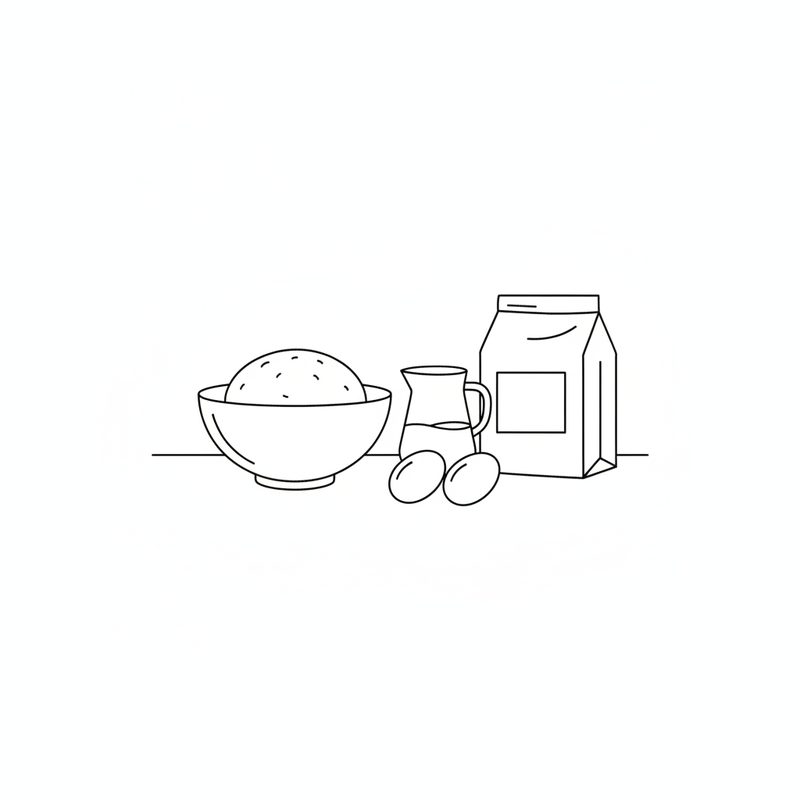
 Mix and knead the yeast dough, then let it rise for about an hour.
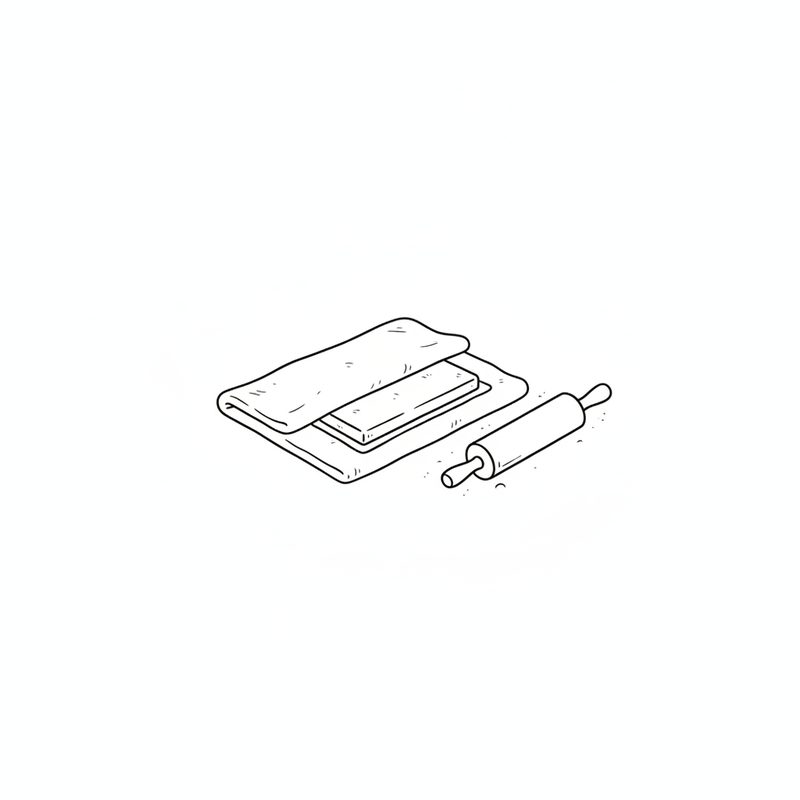
- Close the cold butter inside the dough and fold in three, three times.
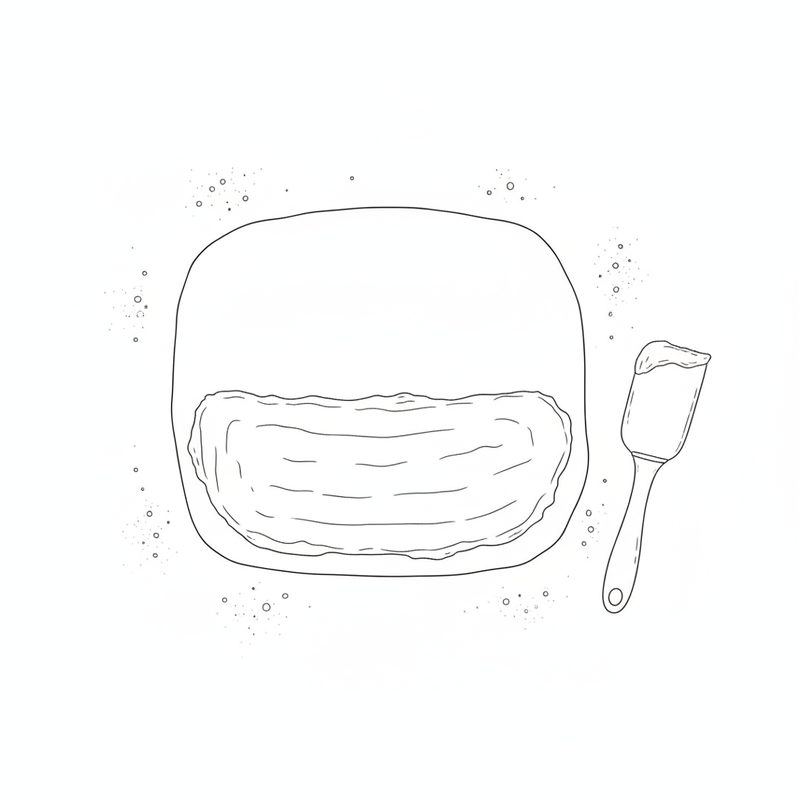
- Roll out and spread the remonce over half the sheet.
- Fold, brush with egg and cover completely in poppy and sesame seeds.
- Cut into 12 strips and twist each one a turn or a turn and a half.
- Rise until doubled and wobbly, then bake until deep golden.
Where the numbers come from
Every number on the card comes from a published recipe, chosen by agreement between at least two sources, or taken from one named source when they did not agree.
| Number | Value | How it was chosen |
|---|---|---|
| Dough | Skandibaking, whole | Laminating butter and dough sugar match Priscilla Martel; flour does not |
| Remonce sugar | 50 g | Skandibaking 50 g, Nordic Food Living 4 tbsp |
| Remonce butter | 75 g | Skandibaking; Nordic Food Living uses 125 g |
| Yield | 12 pastries | Skandibaking; Nordic Food Living cuts 15 |
| Twist | 1 to 1½ turns | Skandibaking and Nordic Food Living; Priscilla Martel twists 3 or 4 times |
| Oven | 190°C (375°F) | Skandibaking and Priscilla Martel; Nordic Food Living starts at 220°C |
| Bake time | About 20 minutes | Median of 15 (Skandibaking), 20 (Nordic Food Living) and 25 to 30 (Priscilla Martel) |
Prep and total time are left off the card on purpose. The sources run from 5 minutes with bought puff pastry to 12 hours with an overnight dough, and one number would be wrong for most kitchens. With this same-day dough, Skandibaking puts the dough alone at just under six hours, most of it resting, rising and chilling.
The rise is given by look, not by the clock. Nordic Food Living rises the twists for 30 to 40 minutes, Priscilla Martel for 1 to 1½ hours and Skandibaking for at least 2 hours. Warm kitchens are fast and cold ones slow; the twists are ready when they have about doubled and wobble when you nudge the tray.
What goes wrong, and what it looks like
Butter pools on the tray. Under-proofing is the usual cause, and Skandibaking says so from its own bakes. Wait for the wobble. Rise them somewhere cool rather than warm, or the butter melts out of the layers before the oven can set them.
Filling runs out at the seam. Some always will, because the twist opens the seam. Skandibaking accepts a little leakage on this shape. A lot of it means the remonce was too thick or spread right to the edges; leave a clear border and press the edges together after folding.
Bald patches with no seeds. The egg wash was patchy or the seeds went on after the egg dried. Brush and seed straight away and press the seeds in lightly with your palm. Priscilla Martel dips the egg-washed dough straight into a plate of seeds, which covers it evenly.
Pale where the twist opened. The bare dough exposed by twisting has no egg on it. Brush those parts just before baking, as Skandibaking and Nordic Food Living both do.
Bready, no layers. The butter warmed up during folding and blended into the dough. Chill between every fold and roll with even, light pressure.
Serving, storing and freezing
Serve frøsnapper with coffee or tea, at breakfast or in the afternoon, on the day they are baked. They are eaten as they are, with nothing spread on them.
Keep leftovers in an airtight bag or box, as Nordic Food Living does; the crust softens overnight. A few minutes in a hot oven or a toaster oven brings back some of the crispness, which is Skandibaking’s fix.
To freeze, Priscilla Martel seals the baked pastries well and freezes them for up to one month, then thaws and reheats them before serving.
Questions people ask
What is the difference between frøsnapper and tebirkes?
Both are wienerbrød with a remonce filling and a seed topping. Tebirkes are folded in three and topped with poppy seeds only; frøsnapper are folded once, topped with poppy and sesame seeds, cut into strips and twisted. Skandibaking calls frøsnapper a twisted version of tebirkes.
What is a Danish called in Denmark?
Wienerbrød, which means Vienna bread. Frøsnapper, tebirkes and spandauer are all kinds of wienerbrød.
Why is it called a Danish in English but Vienna bread in Danish?
English names the pastry after Denmark; Danish names it after Vienna. The history behind the two names is not settled by the recipes compared here, so this page does not tell it.
Is frøsnapper a common pastry in Denmark?
Yes. Nordic Food Living describes frøsnapper as a standard item in Danish bakeries, alongside the other wienerbrød such as tebirkes and spandauer.
Can I make frøsnapper with puff pastry?
Yes. Yuzu Bakes uses one sheet of puff pastry with creamed butter and sugar, cuts six strips, twists them twice and bakes them at 200°C (400°F) for 10 to 15 minutes. Puff pastry has no yeast, so the result is flakier and less soft than wienerbrød.
Can you freeze frøsnapper?
Yes. Priscilla Martel freezes the baked pastries well sealed for up to one month, then thaws and reheats them before serving.